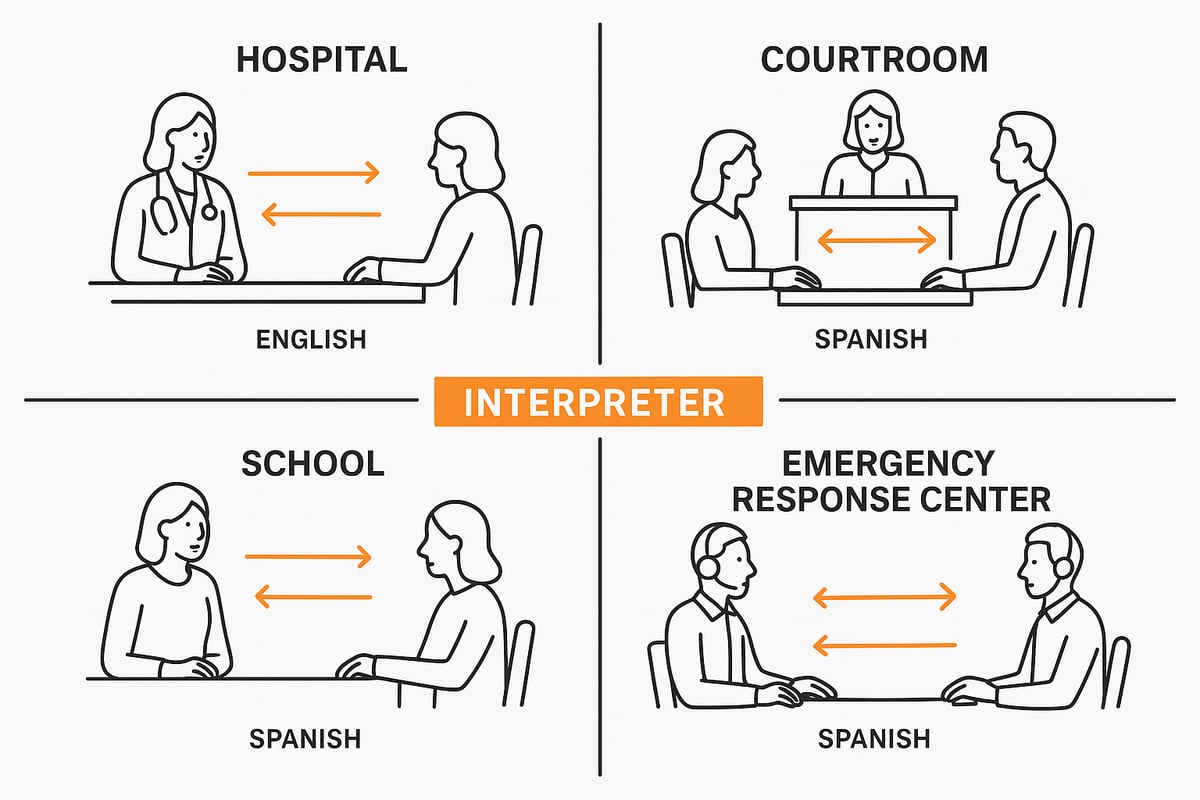

In a world where communication can be the difference between confusion and clarity, having access...
In today’s fast-paced, interconnected world, the ability to communicate across languages is essential. Whether you are responding to emergencies, managing a global team, or seeking new business opportunities, a language interpreter can be the bridge that removes barriers and unlocks success. This guide is designed to equip you with the knowledge and tools to navigate multilingual challenges in 2026. Discover how interpreters are evolving, the latest technologies shaping the field, and the skills you need to find the right solution. Start breaking language barriers and open the door to seamless communication and global opportunity.
The Evolving Role of Language Interpreters in 2026
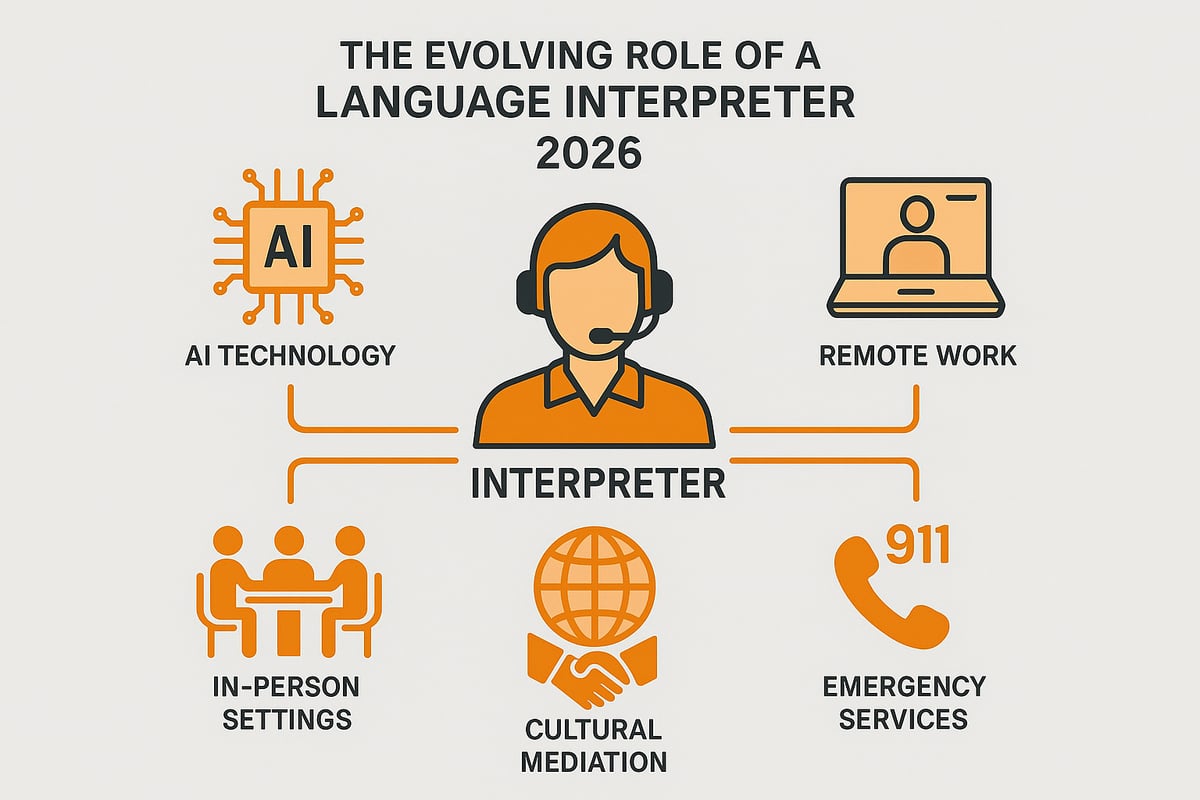
In 2026, a language interpreter is no longer just a bridge between two languages. Their role is evolving rapidly, blending advanced technology with deep cultural understanding. As we move further into a connected world, interpreters are becoming essential partners in business, healthcare, public safety, and beyond.
The Shift from Traditional to Tech-Enabled Interpretation
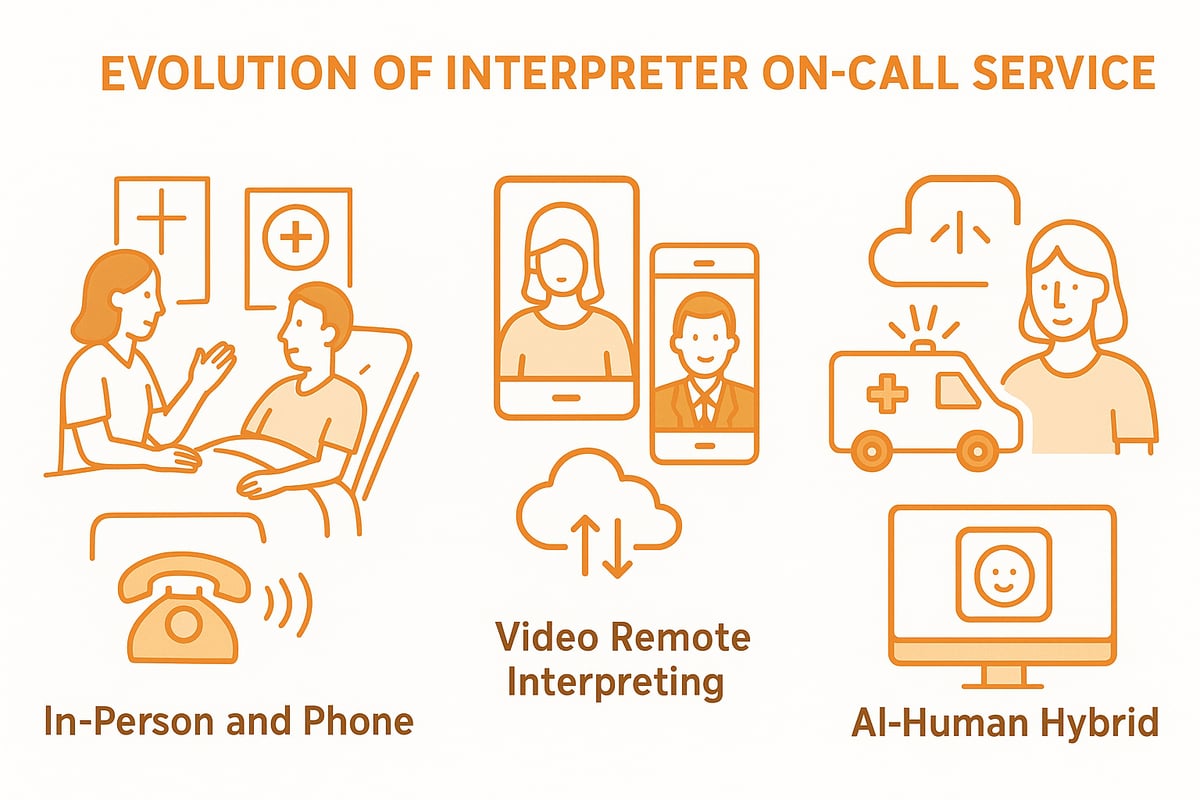
The profession of a language interpreter has transformed significantly. Traditionally, interpreters worked face-to-face in courtrooms, hospitals, or meetings. Now, digital platforms and AI are reshaping their daily work. Remote and hybrid models allow interpreters to provide real-time support across continents.
Demand for instant, on-demand services is soaring, especially in telehealth, virtual courtrooms, and international business. For example, during a virtual medical consultation, a language interpreter can join remotely, ensuring patients understand every word. According to Statista, the global language services market is projected to reach $73.6 billion by 2026.
Interpreters are now vital in emergency response, public safety, and crisis management. They facilitate 911 calls, disaster hotlines, and first-responder communications. Increasingly, they act as cultural mediators, not just language converters. Their presence ensures accurate, nuanced communication in sensitive situations.
New technologies are enhancing their work. Platforms integrating AI and human expertise enable interpreters to respond faster and more accurately. For a deeper look into this blended approach, see AI and Human Interpreters in 911 Communication.
Key Industries Relying on Interpreters
A language interpreter is crucial across many sectors. In healthcare, interpreters provide life-saving support during emergencies, advocate for patients, and enable telemedicine for diverse populations. Legal professionals depend on interpreters for court proceedings, depositions, and immigration hearings, where precision is critical.
Businesses use interpreters for international negotiations, HR processes, and global customer support. In education, interpreters help multilingual classrooms, assist during parent-teacher conferences, and support diverse learning environments.
Emergency services, including 911 centers and disaster response teams, increasingly rely on a language interpreter to ensure clear communication during crises. Government and public agencies also report growing needs, especially as communities become more multilingual.
This demand is driving new opportunities for interpreters who hold specialized certifications and deep subject matter expertise. The importance of a language interpreter in each of these fields will only continue to grow.
Challenges Facing Modern Interpreters
Modern interpreters face unique challenges each day. Maintaining accuracy and neutrality is vital, especially in high-pressure scenarios like medical emergencies or legal cases. Navigating cultural nuances and sensitive topics demands both empathy and skill.
A language interpreter must adapt quickly to evolving technology platforms and new communication tools. With the shift to remote and hybrid services, mastering digital workflows is now essential. At the same time, interpreters must protect confidentiality and manage data security, particularly when handling personal or sensitive information.
The role requires ongoing learning, adaptability, and a commitment to ethical standards. As the profession evolves, a language interpreter’s ability to overcome these challenges will define their success and impact.
Types of Language Interpretation: Modes, Settings, and Specializations
Navigating the world of multilingual communication requires understanding the many ways a language interpreter can bridge gaps across cultures and industries. The right interpretation mode, setting, or specialization ensures messages are delivered accurately and respectfully, no matter the context.
Simultaneous vs. Consecutive Interpretation
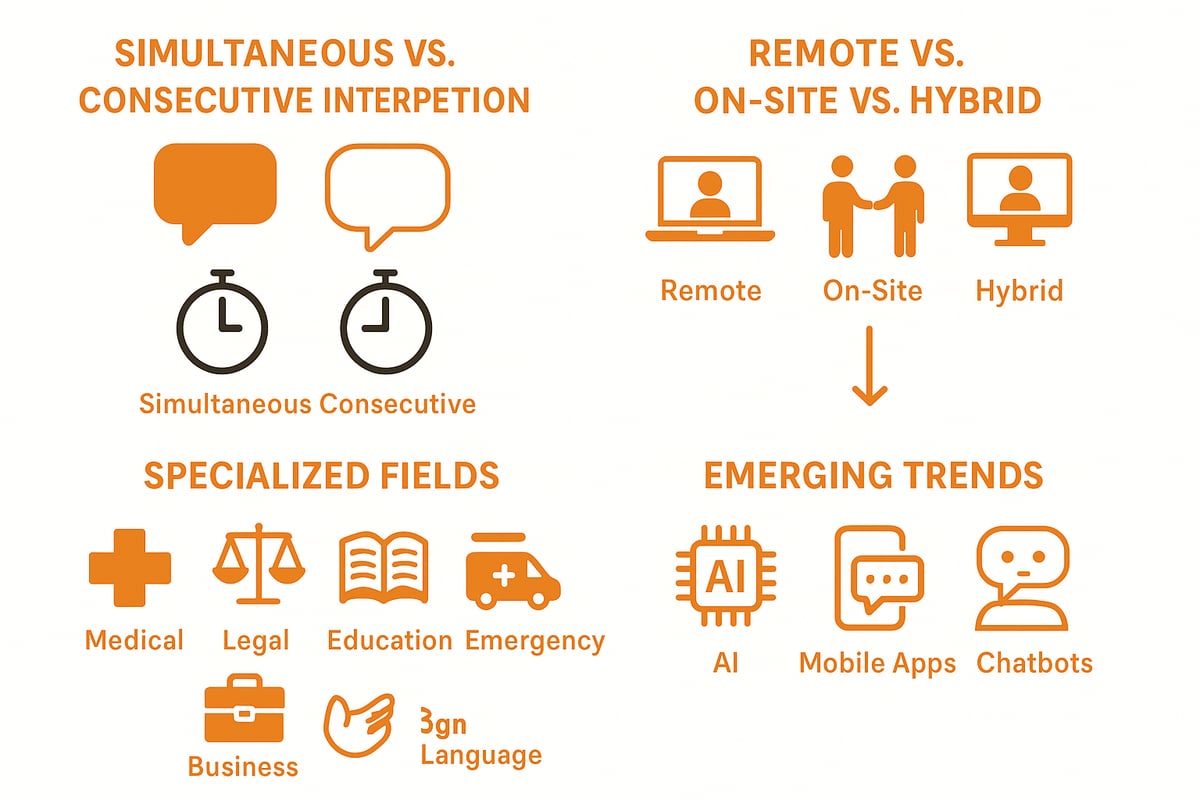
A language interpreter typically works using either simultaneous or consecutive interpretation. Simultaneous interpretation happens in real time, with the interpreter speaking while the original speaker is still talking. This method is common at major conferences, such as the United Nations, where speed and flow are critical.
Consecutive interpretation, in contrast, involves the interpreter listening to a segment before translating it once the speaker pauses. This is often used in medical consults or legal depositions, where accuracy takes priority over speed.
| Mode | When Used | Pros | Cons |
|---|---|---|---|
| Simultaneous | Conferences, large meetings | Fast, seamless communication | Requires special equipment, training |
| Consecutive | Medical, legal, interviews | High accuracy, easier for note-taking | Slower, pauses disrupt flow |
Choosing a language interpreter skilled in the right mode is essential. Simultaneous interpreting ensures minimal delay, while consecutive interpreting supports detailed, sensitive discussions.
Remote, On-Site, and Hybrid Interpretation
The landscape for a language interpreter has changed rapidly, especially since the pandemic. Remote interpreting, delivered by phone or video, now offers accessibility, speed, and cost savings for businesses, healthcare, and courts. However, tech barriers and connectivity issues can pose challenges.
On-site interpretation, with the interpreter physically present, remains vital for high-stakes scenarios or when technology is limited. Hybrid models combine both, enabling flexibility and broader coverage. For example, some courtrooms use on-site interpreters for main proceedings, while remote experts handle less frequent languages.
For those seeking real-time and on-demand interpreter services, Interpreter On Call Solutions highlights how technology empowers organizations to respond quickly to any language need.
Specialized Interpreting Fields
Not every situation calls for the same expertise. A language interpreter may specialize in medical, legal, community, educational, emergency, business, or sign language interpretation. Each field demands unique skills and certifications.
- Medical interpreters often require certification and must understand complex health terminology.
- Legal interpreters navigate courtrooms, depositions, and immigration hearings, where precise vocabulary and confidentiality are critical.
- Community interpreters support public services and social work, adapting to diverse cultural backgrounds.
- Educational interpreters help in multilingual classrooms and parent-teacher meetings.
- Sign language interpreters bridge communication for the deaf and hard of hearing.
Certification and ongoing training are vital for a language interpreter in these fields, ensuring both linguistic and subject matter expertise.
Emerging Trends in Interpretation
Technology is transforming what a language interpreter can achieve. Video remote interpreting (VRI), AI-assisted tools, and mobile apps are making interpretation more accessible and scalable. Multilingual chatbots and real-time captioning are becoming common, especially in customer support and healthcare.
According to recent industry research, 60 percent of organizations plan to expand their use of remote interpreting by 2026. These innovations empower a language interpreter to serve more people, more quickly, and often with greater accuracy.
Staying ahead of emerging trends allows organizations and interpreters to deliver the best possible multilingual experiences, no matter the setting.
Essential Skills and Qualifications of a Professional Interpreter
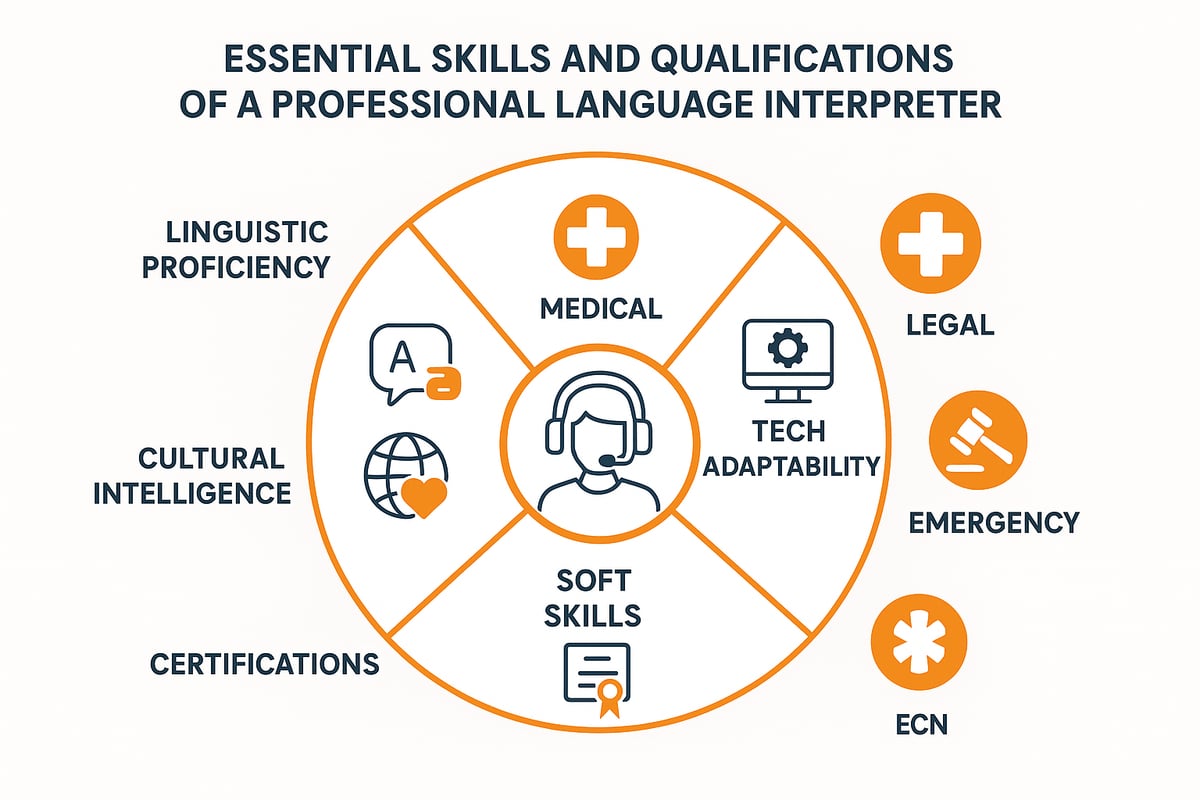
A language interpreter is more than a bridge between words. They are skilled professionals who enable accurate, meaningful communication in high-stakes environments. To succeed in 2026, a language interpreter must master a blend of core linguistic, cultural, technical, and interpersonal skills. Let’s break down what sets top interpreters apart.
Core Linguistic Competencies
At the heart of every successful assignment, a language interpreter demonstrates exceptional command of both the source and target languages. Native or near-native fluency is crucial, as is a deep understanding of grammar, idioms, and technical vocabulary.
Interpreters often face industry-specific terminology, such as legal jargon or medical terms. For example, legal interpreters must know courtroom language and procedure, while medical interpreters need precise knowledge of anatomy and treatment processes.
A language interpreter also adapts quickly to regional dialects and speech patterns. This flexibility ensures messaging remains accurate and clear, no matter the context.
Cultural Intelligence and Sensitivity
A language interpreter goes beyond words, interpreting the intent, tone, and cultural nuances behind every message. Cultural intelligence means understanding non-verbal cues, customs, and taboos that may affect communication.
For example, when interpreting for refugees or during crisis response, sensitivity to trauma and cultural backgrounds is essential. Misunderstanding a gesture or idiom can lead to confusion or even offense.
A language interpreter must remain alert to these subtleties, ensuring communication supports trust and respect between all parties.
Certification and Professional Standards
Professional standards matter in every field, but for a language interpreter, certification is often non-negotiable. Major credentials include those from the American Translators Association (ATA), the Certification Commission for Healthcare Interpreters (CCHI), and various state or national authorities.
Ongoing training and continuing education help interpreters stay current with new terminology and best practices. In healthcare and legal settings, regulations demand strict adherence to qualification standards. As explored in Breaking Language Barriers in Healthcare, certified interpreters are critical for patient safety and compliance.
A language interpreter ensures they meet all required credentials before accepting specialized assignments.
Soft Skills: Memory, Composure, and Ethics
A language interpreter needs more than language mastery. Strong short-term memory and accurate note-taking are vital, especially in consecutive interpretation where content must be recalled and delivered faithfully.
Neutrality and ethics are equally important. Interpreters must remain unbiased and respect confidentiality, particularly in sensitive or confidential cases. High-pressure environments, such as emergencies or legal proceedings, demand composure and stress management.
Here is a summary table of key soft skills:
| Skill | Importance |
|---|---|
| Memory | Retain and deliver accurate information |
| Composure | Stay calm under stress |
| Ethics | Maintain neutrality and confidentiality |
Tech Savvy and Adaptability
As technology evolves, a language interpreter must be comfortable using remote interpreting platforms, translation software, and AI-powered tools. Proficiency with video remote interpreting (VRI), real-time captioning, and secure communication platforms is now essential.
A language interpreter adapts quickly to new systems, ensuring seamless service whether in person, online, or a hybrid setting. For example, using VRI during emergency calls or remote depositions allows interpreters to provide critical support from anywhere.
Staying updated with the latest tech helps a language interpreter remain competitive and effective.
Real-World Examples and Data
In a recent multilingual disaster response, a language interpreter played a pivotal role in relaying urgent information between first responders and non-English-speaking families. Their expertise helped save lives and ensured everyone received the care they needed.
According to the National Council on Interpreting in Health Care, 75% of organizations report improved outcomes when using certified interpreters. This demonstrates the tangible value that a language interpreter brings to high-stakes environments.
A language interpreter combines all these skills to deliver clear, accurate, and culturally sensitive communication, making them indispensable in our interconnected world.
How to Choose the Right Language Interpreter or Service
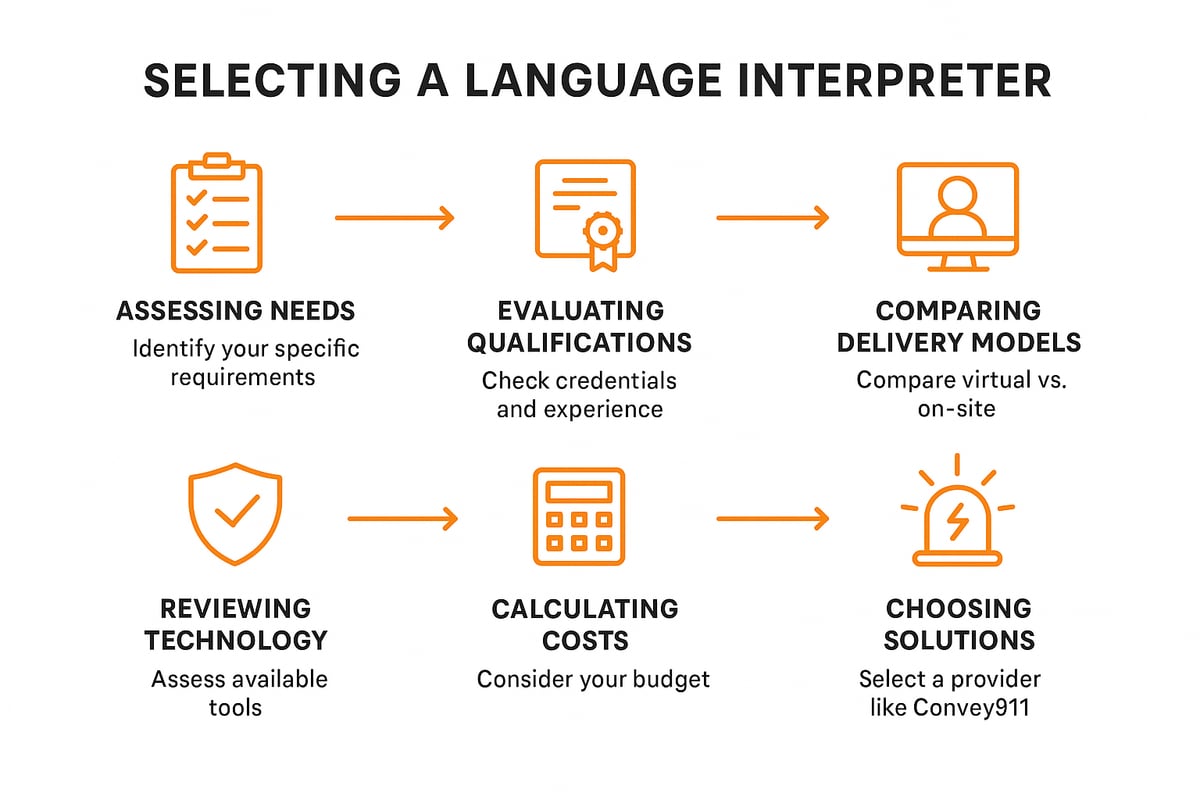
Selecting a language interpreter is a pivotal step toward achieving effective multilingual communication. The right choice ensures clarity, compliance, and cultural understanding in every interaction. Follow these essential steps to confidently choose a language interpreter or service that matches your needs.
Assessing Your Needs and Goals
Begin by clarifying why you need a language interpreter. Identify which languages are required and in what settings, such as business meetings, healthcare, or emergency response. Determine if the situation calls for general communication or specialized knowledge, like legal or medical terminology.
Map out the urgency of your needs. Is real-time interpreting essential, or can you schedule services in advance? Consider confidentiality requirements, especially for sensitive scenarios. Cultural awareness is also key—choose a language interpreter who understands the relevant customs and nuances.
Finally, involve stakeholders early. Consult with team members, legal advisors, or IT staff to define expectations and ensure the interpreter fits seamlessly into your workflow. This foundation will guide your search for a language interpreter who delivers results.
Evaluating Interpreter Qualifications
Not all interpreters have the same expertise. When reviewing candidates, verify certifications such as ATA or CCHI, and check for relevant experience in your field. Ask for references and review their track record handling similar scenarios.
Subject matter expertise is vital. A language interpreter for healthcare must know medical vocabulary, while legal settings demand precision and compliance. For legal professionals, consider reading about Enhancing Multilingual Communication for Law Firms to understand best practices in this sector.
Background checks are critical, especially in healthcare and legal contexts. Confirm that the interpreter respects confidentiality and follows ethical guidelines. These steps ensure you select a language interpreter whose skills and integrity meet your standards.
Comparing Interpretation Delivery Models
Choosing the right delivery model is essential for success. Consider in-person, remote, or hybrid interpreting based on your scenario. Each model offers unique strengths:
| Model | Best For | Pros | Cons |
|---|---|---|---|
| In-Person | High-stakes, sensitive | Nuanced, personal | Travel, higher cost |
| Remote | Quick, broad access | Fast, cost-effective | Tech issues, less personal |
| Hybrid | Flexible, large events | Combines benefits | Complex setup |
For rural clinics, remote interpreting brings experts to remote locations instantly. Hybrid models merge the immediacy of on-site presence with the reach of remote access. Select a language interpreter whose delivery model matches your operational requirements.
Technology and Platform Features
Modern interpretation relies on robust technology. Look for platforms with user-friendly interfaces, secure data handling, and compliance with standards like HIPAA or GDPR. Integration with your existing tools—video conferencing, chat, or scheduling software—streamlines workflows.
Key features include real-time language identification and AI translation capabilities. Some platforms offer mobile apps, instant connection to interpreters, and analytics dashboards. Ensure a language interpreter can operate efficiently within your chosen platform to maximize communication effectiveness.
Cost Considerations and ROI
Understanding costs is crucial when selecting a language interpreter. Compare hourly rates, subscription options, and package deals. Factor in the value of accurate communication, as misinterpretation can lead to costly errors in legal or medical settings.
Calculate the return on investment by considering improved outcomes, reduced risk, and increased client satisfaction. For example, a language interpreter who prevents a misunderstanding in a contract negotiation can save your organization significant resources.
Ask for transparent pricing and clarify what services are included. This approach helps you make informed decisions and control expenses without sacrificing quality.
Questions to Ask Providers
Before committing, ask service providers these important questions:
- What languages and specializations are covered?
- How quickly can I access a language interpreter?
- What certifications do interpreters hold?
- How do you ensure confidentiality and data security?
- What support is available for technical issues?
- Are there backup options if an interpreter is unavailable?
These questions help you gauge reliability, responsiveness, and the overall fit of the provider. A language interpreter who meets these criteria will contribute to seamless multilingual operations.
Convey911: Bridging Language Barriers in Emergencies
For public safety and emergency services, choosing a language interpreter with proven expertise is vital. Convey911 delivers real-time language identification and translation in over 185 languages, supporting 911 centers and first responders.
The platform blends AI and human interpreter access, handling more than 50,000 minutes of live interpretation monthly. Built on secure, compliant cloud infrastructure, Convey911 ensures rapid, accurate communication when every second counts.
Agencies serving diverse communities benefit from a language interpreter solution like Convey911, which guarantees everyone receives timely assistance, regardless of language. This level of service transforms emergency response for multilingual populations.
Implementing Language Interpreter Solutions: Step-by-Step Guide
Navigating multilingual communication in 2026 requires more than just hiring a language interpreter. Success depends on a structured, strategic approach that aligns with your organization’s needs, technology landscape, and compliance requirements. The following step-by-step guide will help you implement effective interpreter solutions for seamless, accurate, and secure communication across any scenario.
Step 1: Define Communication Needs and Stakeholders
The first step in implementing a language interpreter solution is to map out your organization’s communication requirements. Identify which languages are most commonly needed, and pinpoint critical scenarios such as medical emergencies, legal consultations, or business negotiations.
Engage key stakeholders early. These may include HR, IT, legal teams, and emergency management staff. Their input will ensure that the interpreter solution meets operational, technical, and compliance needs.
Consider the diversity of your audience. Do you need a language interpreter for rare dialects, or for more common languages? Clarify who will use the service, and under what circumstances. This groundwork paves the way for a well-aligned, scalable interpreter strategy.
Step 2: Select the Appropriate Interpreter Type and Platform
Once needs are defined, match the right type of interpreter and delivery model to each context. For medical or legal settings, a language interpreter with certified expertise is essential. Decide whether on-site, remote, or hybrid interpreting best fits each scenario.
Evaluate technology platforms for compatibility, security, and user-friendliness. Modern solutions often integrate AI and real-time translation tools, making remote and hybrid interpreting more accessible than ever. For a deeper understanding of current advancements, review emerging trends in translation and interpretation for 2025.
Involve your IT team to confirm that the chosen platform integrates smoothly with your existing infrastructure and meets necessary security standards.
Step 3: Vet and Onboard Interpreters or Service Providers
With the right platform in place, it’s time to select a language interpreter or service provider. Conduct thorough interviews, skills assessments, and background checks. Review certifications and references to verify expertise, especially in regulated industries such as healthcare or law.
Negotiate clear contracts and service level agreements (SLAs) outlining responsibilities, response times, and confidentiality protocols. This rigorous process helps ensure that every a language interpreter you work with is reliable, qualified, and professional.
Step 4: Integrate Interpreter Services into Workflows
Seamless integration is key to maximizing interpreter effectiveness. Embed interpreter access points into critical communication touchpoints such as emergency calls, patient intake, or international meetings.
Train staff on how to request and use a language interpreter through the chosen platform. Integration should be intuitive, minimizing disruption to existing workflows. In healthcare, for example, automatic speech recognition technology can enhance the quality and speed of remote interpreting, as shown in recent studies on integrating automatic speech recognition into remote healthcare interpreting.
Regularly review protocols and update training as needed to keep pace with evolving tools and best practices.
Step 5: Monitor Performance and Quality
Establish key performance indicators (KPIs) to assess the effectiveness of your interpreter solutions. Common KPIs include response time, interpretation accuracy, and user satisfaction.
Collect feedback from staff and service users after each interaction with a language interpreter. Use analytics provided by your platform to track usage trends and detect potential areas for improvement.
Continuous monitoring not only ensures high-quality communication but also helps justify your investment in language access solutions.
Step 6: Address Challenges and Optimize Continuously
Anticipate and troubleshoot technical or process issues as they arise. Common challenges include internet connectivity problems for remote interpreting, scheduling conflicts, or adapting to new technologies.
Update training materials and protocols regularly. Scale your services based on demand and feedback to maintain efficiency and service quality. A language interpreter solution should evolve with your organization, adapting to changing needs and technological advancements.
Optimization is an ongoing process. Stay informed on the latest industry trends and best practices to ensure your interpreter program remains effective and future-proof.
Step 7: Ensure Compliance and Data Security
Compliance is non-negotiable, especially in sectors like healthcare, law, or emergency services. Adhere to all relevant regulations, including HIPAA, GDPR, and CJIS.
Implement robust data security and privacy policies for every a language interpreter interaction. Work with providers who offer secure, government-compliant infrastructure and conduct regular audits to maintain compliance.
Review your processes annually to address new legal requirements and safeguard sensitive information at every step.
Real-World Examples and Best Practices
Consider a hospital integrating video remote interpreting into its triage process, enabling instant communication with patients who speak any language. Organizations with a language interpreter solution embedded into their emergency response workflows report up to 40 percent faster resolution in critical incidents.
To maintain ongoing success, follow this checklist:
| Success Checklist | Frequency |
|---|---|
| Review language needs and user groups | Quarterly |
| Update interpreter protocols and training | Biannually |
| Monitor KPIs and collect feedback | Monthly |
| Audit compliance and data security | Annually |
By following these steps, your organization will be well equipped to deploy a language interpreter solution that delivers reliable, secure, and culturally competent communication for every multilingual challenge.
The Future of Language Interpreting: Trends, Opportunities, and Challenges
The future of a language interpreter is rapidly evolving, shaped by technological advances, changing global needs, and a renewed focus on inclusion. As we look toward 2026, understanding these trends is essential for anyone relying on a language interpreter in business, healthcare, or emergency situations. Let us explore the transformative forces, challenges, and emerging opportunities that define the next era of interpreting.
AI and Automation in Interpretation
AI is revolutionizing the daily work of a language interpreter. Modern AI-driven platforms deliver real-time translation at speeds and scales previously unimaginable. For example, AI now powers instant captioning in international conferences and supports interpreters by handling routine phrases, freeing them to focus on nuanced communication.
The language services market is set for explosive growth, with projections estimating it will reach USD 113.38 billion by 2033, largely driven by AI-powered solutions. Yet, human interpreters remain vital, especially where cultural understanding and emotional intelligence are key. Research on redefining machine simultaneous interpretation strategies highlights progress, but also clarifies that AI still struggles with idioms, humor, and sensitive topics.
Expanding Access and Inclusion
The role of a language interpreter is expanding to reach more people than ever before. Technology now enables interpreting for rare languages and dialects, helping bridge communication gaps in global business and humanitarian efforts. Video remote interpreting and mobile apps allow access to qualified interpreters in seconds, even in rural or underserved communities.
Accessibility is also improving for the deaf and hard of hearing. A language interpreter specializing in sign language or captioning ensures that everyone can participate fully in education, healthcare, and public life. This focus on inclusion is expected to drive further innovation and demand.
Regulatory and Ethical Considerations
As a language interpreter becomes more embedded in high-stakes environments, regulatory and ethical considerations take center stage. Interpreters must protect client confidentiality, respect data privacy laws, and secure informed consent. This is especially crucial in healthcare, legal, and emergency settings, where mistakes or breaches can have serious consequences.
Ethics also extend to the fair treatment of vulnerable populations. A language interpreter often acts as a safeguard, ensuring that people who do not speak the dominant language still receive equitable treatment and critical services.
Emerging Career Opportunities
New technology is creating fresh career paths for a language interpreter. Roles such as remote interpreter managers and AI language model trainers are in demand. Professionals who can bridge the gap between human skill and AI efficiency will be highly sought after.
Hybrid teams, combining human expertise with AI support, are becoming common. Upskilling is essential, as interpreters must stay ahead of new platforms, software, and compliance requirements.
Ongoing Challenges
Despite progress, a language interpreter faces significant challenges. Interpreter shortages remain a concern, especially during crises or in rare languages. Ensuring consistent quality and accuracy across different platforms and settings is another ongoing issue.
Continuous professional development is vital. Interpreters must keep up with new tools and regulations, while maintaining the core skills of accuracy, neutrality, and cultural sensitivity.
Predictions for 2026 and Beyond
By 2026, a language interpreter will likely work seamlessly with AI in everyday devices, from smartphones to wearables. Human interpreters will focus on complex, sensitive, or high-value scenarios, while AI handles routine or high-volume tasks.
The balance between human and machine will keep shifting, but the strategic importance of language access will only grow. Organizations that prioritize a language interpreter as part of their global strategy will be better positioned for success in an interconnected world.
As you’ve seen throughout this guide, bridging language gaps is crucial for effective communication—especially when every second counts. Whether you’re working to support diverse communities, streamline emergency response, or simply want to ensure your organization is future ready, having the right language interpreter solutions in place makes all the difference. If you’re ready to experience how seamless multilingual support can transform your operations and empower your team, I encourage you to Book a Demo with Convey911. Let’s take the next step toward multilingual success together.