
In a world where emergencies strike without warning, language should never be a barrier to help....
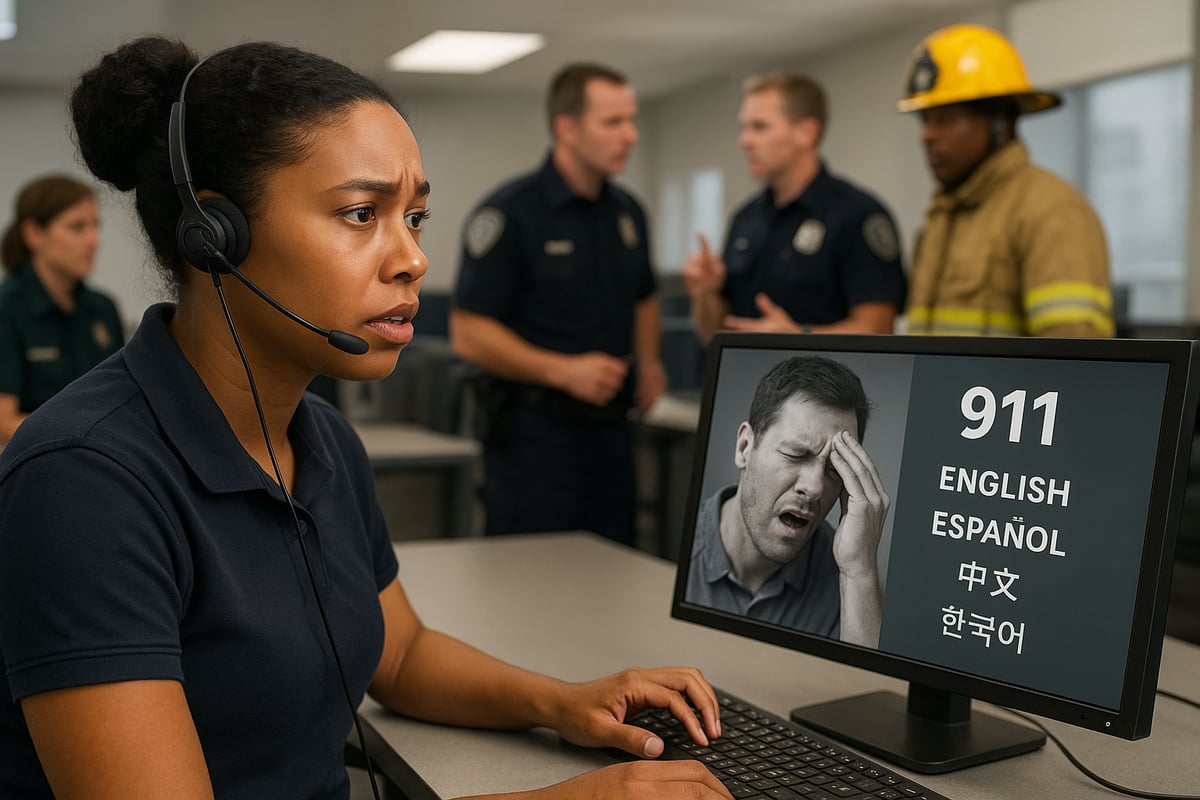
Imagine a 911 call where every second counts, but language barriers threaten to delay life-saving help. In today’s interconnected world, these challenges are all too real, especially when clear communication can mean the difference between safety and disaster.
Enter the bridge translator, a powerful tool that is reshaping how we connect across languages. As global workplaces, public services, and communities become more multilingual, the bridge translator is quickly becoming indispensable.
With this technology, organizations can streamline conversations, reduce costly misunderstandings, and achieve better results in critical moments.
This essential guide for 2026 will explain what a bridge translator is, how it works, where it’s used, how to choose the right solution, and what the future holds. Let’s explore how this innovation can break down language barriers when it matters most.
Understanding Bridge Translators: Definition and Core Concepts
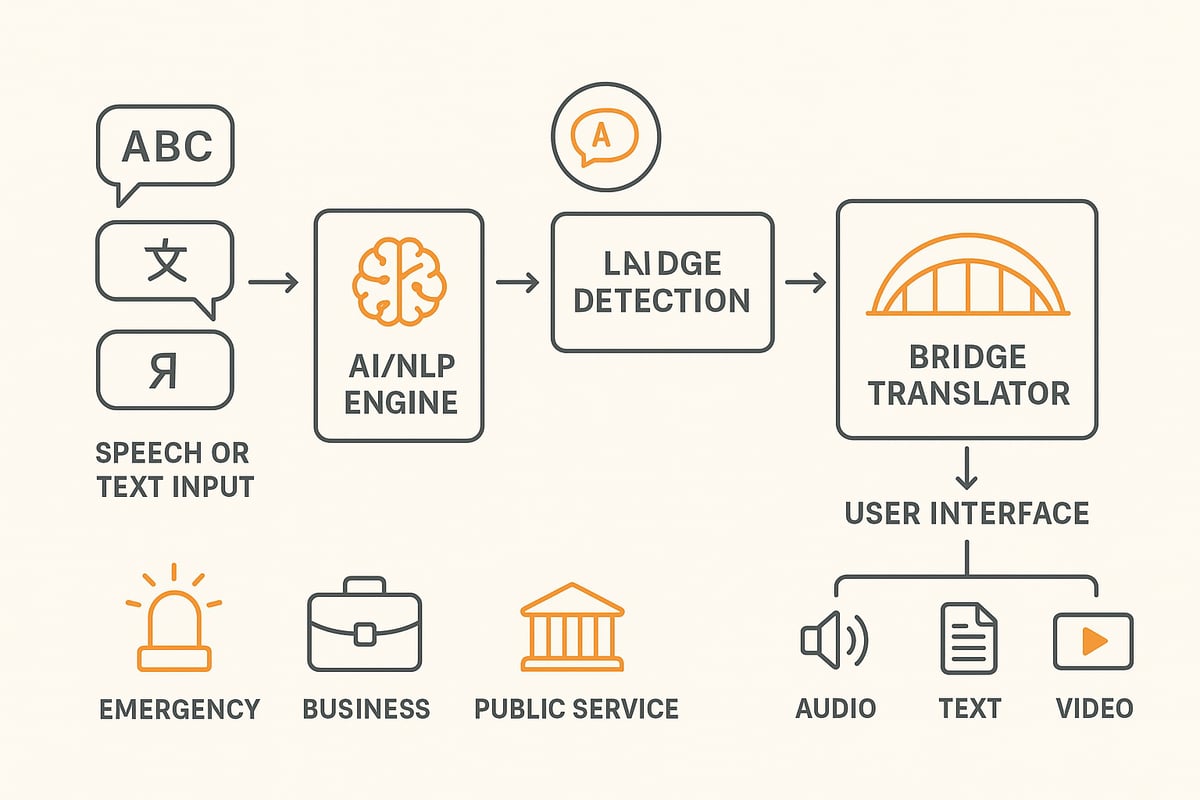
The term bridge translator has become a cornerstone in multilingual communication by 2026. A bridge translator is an advanced system or platform that enables seamless, real-time translation between speakers of different languages, often across multiple channels simultaneously. Unlike simple translation tools, a bridge translator is designed to connect people in high-pressure environments, ensuring that critical information moves smoothly, regardless of language barriers.
Bridge Translator vs. Traditional Interpreters and Automated Tools
To understand the value of a bridge translator, it is helpful to compare it with established solutions:
| Feature | Bridge Translator | Traditional Interpreter | Automated Translation Tool |
|---|---|---|---|
| Real-time, multi-language | Yes | No (usually one-to-one) | Limited, often delayed |
| AI-driven context analysis | Yes | No | Basic |
| Scalable across platforms | Yes | No | Varies |
| Human integration | Often (hybrid models) | Yes | No |
| Security and compliance | Advanced | Varies | Basic |
While interpreters rely on human expertise, and standard translation apps may lack sophistication, a bridge translator leverages the latest technology to bridge complex, multilingual gaps in settings such as emergency response, global business, and public services.
The Technology Powering Bridge Translators
Modern bridge translator solutions rely on:
- Artificial Intelligence (AI) for language recognition and translation
- Natural Language Processing (NLP) to decipher meaning and intent
- Machine learning for continuous improvement and adaptation
- Real-time processing to reduce latency and enhance user experience
These systems are built to handle not just direct translation, but also context, slang, and industry-specific terminology. As explored in AI in translation services, neural machine translation and speech recognition breakthroughs have brought bridge translator performance closer to human-level understanding.
Applications and Global Demand
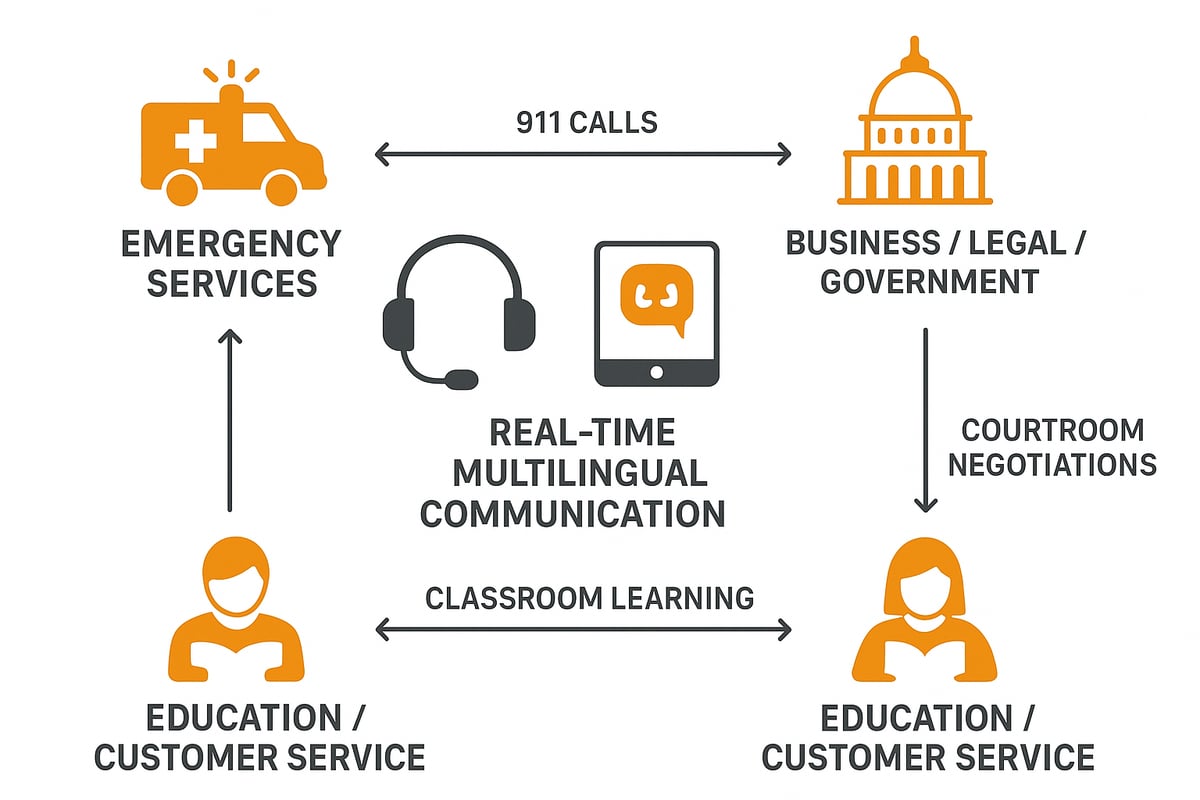
Bridge translator platforms are now widely used in emergency services, where 911 operators depend on instant multilingual support to save lives. In business, they enable contract negotiations and global collaboration. Public settings, such as hospitals and government offices, increasingly rely on bridge translator technology for accessibility.
Recent statistics highlight the urgency: Over 65% of multinational organizations report daily multilingual interactions, and language diversity in healthcare and legal sectors has doubled since 2022. The bridge translator is rapidly becoming a necessity rather than a luxury.
Challenges and Industry Needs
Despite dramatic progress, bridge translator adoption faces hurdles. Ensuring accuracy in nuanced conversations remains challenging. Latency, or the delay between input and output, must be minimized, especially in time-sensitive scenarios. Maintaining context and privacy is critical, particularly with sensitive data.
As bridge translator technology evolves, organizations must balance speed, security, and cultural understanding to meet rising global communication demands.
Key Applications of Bridge Translators in 2026
Bridge translator technology is rapidly transforming how people communicate across languages in critical sectors. In 2026, organizations worldwide rely on bridge translator solutions to break down language barriers, save lives, and improve operational efficiency. Below, we explore three primary application areas where the bridge translator has become indispensable.
Emergency Response and Public Safety
In high-stakes scenarios, the bridge translator is a lifeline for first responders, dispatchers, and emergency healthcare teams. Multilingual populations present significant challenges for 911 centers and disaster response units, where every second counts. The bridge translator enables instant, accurate communication between callers, medics, and law enforcement, regardless of their native language.
For example, during a major weather event, a bridge translator can connect non-English speaking residents with emergency operators, ensuring instructions are clearly understood. Studies show that language barriers can increase emergency response times by up to 25%. With a bridge translator, this gap narrows, leading to faster interventions and better outcomes. According to recent data, jurisdictions using advanced translation tools report higher survival rates and greater user satisfaction.
Regulatory requirements now mandate language access in public safety, making the bridge translator not just a tool but a necessity. Security and reliability are paramount, with robust encryption and strict compliance standards in place. For further insights on how these tools are reshaping emergency communication, see Bridging the Language Gap in 911.
Business, Legal, and Government Communication
The bridge translator is revolutionizing communication in multinational corporations, courtrooms, and government agencies. Global business deals, legal proceedings, and diplomatic meetings often involve participants from diverse linguistic backgrounds. A bridge translator streamlines negotiations, contract reviews, and regulatory discussions, reducing costly misunderstandings and delays.
Consider a cross-border merger where executives rely on a bridge translator to negotiate terms, ensuring legal nuances are preserved. In courtrooms, judges and attorneys use bridge translator systems during hearings to provide real-time access for limited-English-proficient individuals. Government agencies deploy bridge translator solutions for public consultations and international collaborations, complying with both domestic and international language access laws.
Data shows that organizations adopting automated translation tools achieve up to 40% cost savings on interpretation services and improve workflow efficiency. Confidentiality and data protection are embedded into bridge translator platforms, with encrypted transcripts and strict access controls to safeguard sensitive information.
Education, Customer Service, and Everyday Use
In 2026, the bridge translator is an essential companion in classrooms, online learning platforms, and student support centers. Educators leverage bridge translator technology to foster inclusive learning, helping non-native speakers and international students participate fully. Real-time translation makes lectures, assignments, and discussions accessible in multiple languages.
Global customer service operations, especially in e-commerce, depend on the bridge translator to offer seamless support across continents. Call centers integrate bridge translator tools to resolve issues promptly for a multilingual customer base. Personal bridge translator devices are popular among travelers and expatriates, enabling effortless communication in unfamiliar settings.
Recent surveys indicate that user adoption rates for bridge translator solutions in education and customer service have reached 65%. These tools also enhance accessibility for people with disabilities and non-verbal users, supporting text-to-speech and visual translation features. The bridge translator ensures equitable participation and satisfaction, meeting the diverse needs of users worldwide.
How Bridge Translators Work: Step-by-Step Process
Understanding how a bridge translator operates is essential for anyone looking to harness its full potential. The modern bridge translator combines advanced AI, natural language processing, and intuitive interfaces to deliver seamless multilingual communication. Let’s break down the process into clear, actionable steps.
Step 1: Language Detection and Input
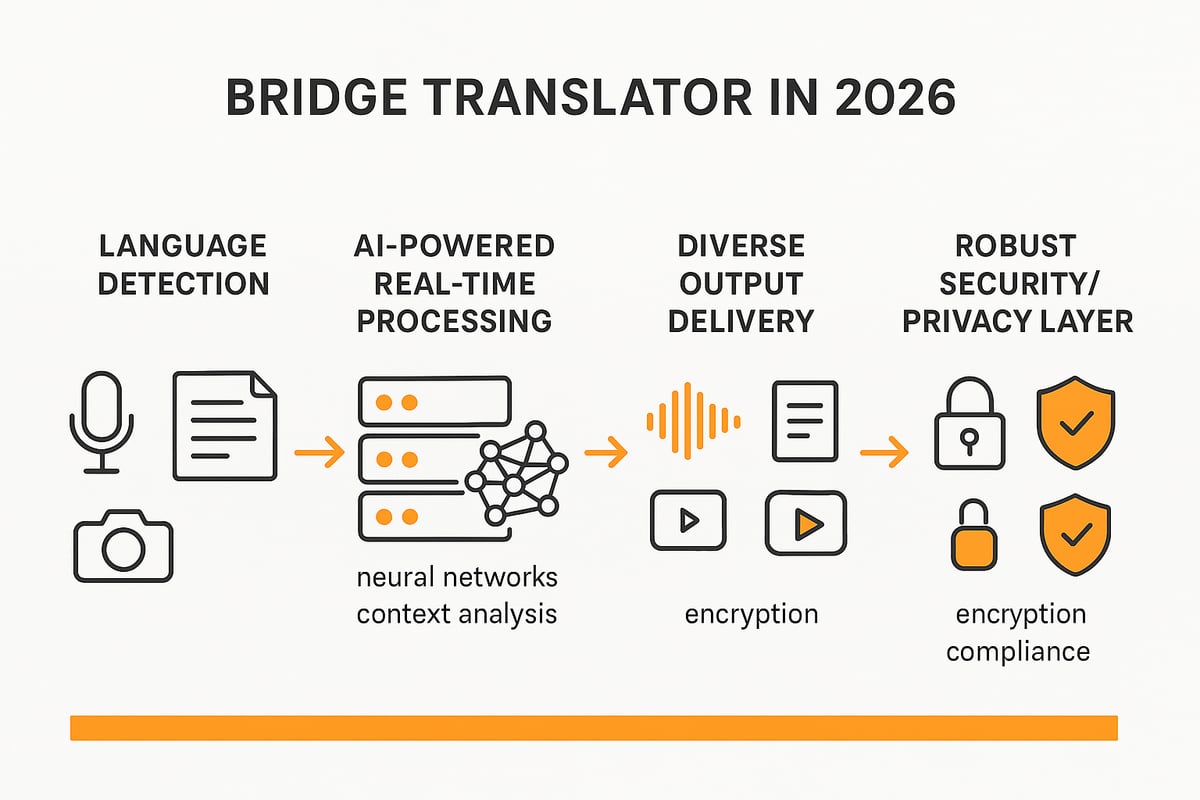
The first step in the bridge translator workflow is identifying the source language. Using advanced AI algorithms, the system detects whether the input is spoken, written, or even visual (such as text in images). This stage is crucial, as accurate language identification sets the foundation for seamless translation.
Bridge translator solutions rely on machine learning models trained on diverse linguistic data. These models can handle complex scenarios, such as conversations involving multiple languages or rapid code-switching. For example, a 911 call might shift between Spanish and English, requiring instant, precise recognition.
Accurate detection ensures that subsequent translation steps proceed smoothly, minimizing errors and confusion. The bridge translator’s ability to adapt to various input types makes it indispensable in dynamic, real-world settings.
Step 2: Real-Time Processing and Translation
Once the input language is detected, the bridge translator leverages AI-driven translation engines. These engines analyze the context, intent, and semantics behind each message, striving for both accuracy and speed. Improvements in neural machine translation and context modeling in 2026 have dramatically reduced latency, enabling near-instant communication.
The translation process varies depending on the medium:
- Text: Rapid neural translation with contextual adaptation
- Voice: Speech-to-text conversion, translation, then speech synthesis
- Video: Real-time transcription, translation overlays, and sign language support
Innovations now allow bridge translator platforms to manage complex, multi-party interactions across several languages at once. For disaster scenarios, advanced systems even integrate blockchain to enhance security and reliability, as seen in developments like the multilingual voice-based social network for disasters.
By processing messages in real time, a bridge translator minimizes delays, which is critical in time-sensitive environments.
Step 3: Output Delivery and User Interaction
After translation, the bridge translator delivers the output in the user’s preferred format. Options include:
- Audio for verbal communication
- Text for instant messaging, email, or on-screen display
- Video with subtitles or sign language interpretation
- Multimodal outputs combining audio, text, and visual cues
Modern bridge translator devices are integrated into wearables, mobile applications, and desktop platforms. User interfaces focus on accessibility, offering voice commands, touch navigation, and support for users with disabilities.
Seamless device integration means a bridge translator can be used in call centers, classrooms, or on-the-go, ensuring everyone can interact effectively regardless of language.
Step 4: Security, Privacy, and Quality Assurance
Security is paramount in every bridge translator deployment. Data is encrypted throughout transmission and storage. User authentication protocols prevent unauthorized access, while compliance with privacy regulations such as GDPR and HIPAA is standard.
Quality assurance measures include:
- Human-in-the-loop systems for critical translations
- Continuous feedback loops to refine AI performance
- Regular audits to maintain accuracy and reliability
Bridge translator providers adhere to industry standards and seek certifications to validate their security and translation quality. Organizations also benefit from rigorous monitoring, ensuring the bridge translator consistently meets performance expectations and regulatory requirements.
Ultimately, a bridge translator not only enables communication but also protects sensitive information and maintains trust in high-stakes environments.
Choosing the Right Bridge Translator Solution
Selecting the right bridge translator can feel overwhelming, especially with the rapid evolution of language technology in 2026. The right choice will empower your team, streamline workflows, and ensure you meet compliance and communication goals.
Let us break down the key factors you need to consider before making an investment.
Key Features to Evaluate
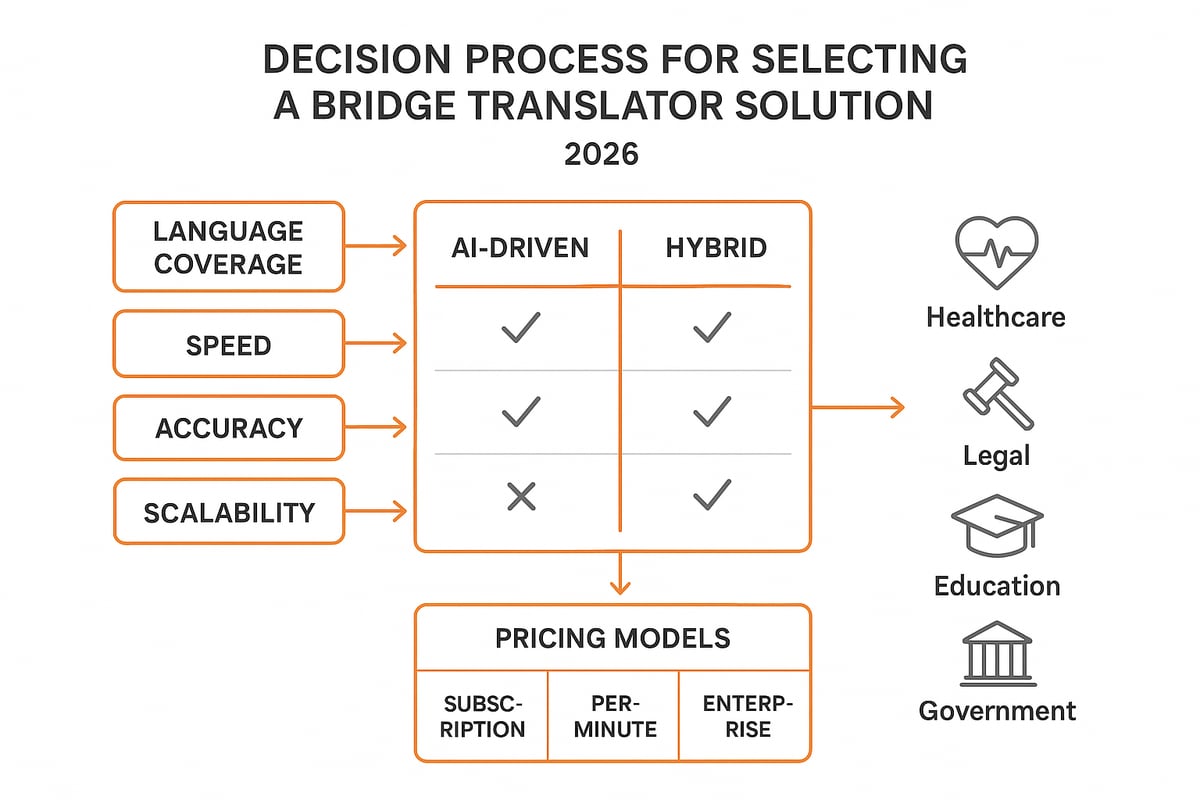
When evaluating a bridge translator, prioritize solutions that offer broad language coverage, high translation accuracy, and rapid processing speeds. Scalability is essential, as your needs may grow or change over time. Integration capabilities with your existing platforms—like call centers, CRM, or telephony—can drastically reduce setup time.
Consider these core features:
- Language coverage: Support for a wide range of spoken and written languages.
- Speed: Real-time or near-instantaneous translation for urgent scenarios.
- Accuracy: Advanced AI and human-in-the-loop systems for correct, contextual results.
- Scalability: Ability to handle fluctuating volumes and multiple simultaneous users.
- Integration: APIs, plugins, and workflow customization for seamless adoption.
User management and customizable workflows are also vital. Look for solutions with robust admin controls and the flexibility to adapt to your organization’s unique requirements.
Comparing AI-Driven vs. Human-Assisted Solutions
The bridge translator market offers both fully automated and hybrid (AI plus human) solutions. Each has distinct strengths and limitations.
| Solution Type | Strengths | Weaknesses | Best Use Cases |
|---|---|---|---|
| AI-Driven | Fast, scalable, cost-effective | May miss nuance, context, or emotion | Customer service, e-commerce |
| AI + Human (Hybrid) | Higher accuracy, cultural and contextual insight | Higher cost, potentially slower response | Legal, healthcare, crisis calls |
While AI-driven options excel in speed and scale, human-assisted systems excel in nuance and accuracy. For critical situations, such as 911 calls, a combination of AI and human interpreters is often preferred. Learn more about this approach in AI-Human Interpreters in 911 Communication.
Assess your typical scenarios. Is speed the top priority, or do you require the depth of understanding only a human can provide? The best bridge translator for your organization may blend both technologies.
Industry-Specific Considerations
Different sectors have unique demands for bridge translator solutions. Healthcare organizations must comply with strict privacy regulations and ensure medical terminology is accurately translated. Legal professionals need certified translations and airtight confidentiality. In education, accessibility and support for young learners or non-verbal individuals are crucial. Government agencies require solutions that meet public sector compliance and can serve diverse communities.
Industry requirements to keep in mind:
- Healthcare: HIPAA compliance, medical vocabulary, emergency support.
- Legal: Certified translations, data protection, multilingual case management.
- Education: Accessibility options, support for students with disabilities, integration with e-learning.
- Government: Multilingual public services, secure data handling, regulatory alignment.
Evaluate bridge translator vendors based on their experience and certifications relevant to your field.
Cost, Support, and Vendor Reputation
Pricing models for bridge translator solutions vary. Common options include:
- Subscription: Flat monthly or annual fee, suitable for consistent usage.
- Per-minute: Pay-as-you-go, ideal for fluctuating demand.
- Enterprise licensing: Custom contracts for large organizations.
Beyond price, assess the level of support provided. Look for 24/7 customer service, comprehensive service-level agreements (SLAs), and proven vendor reliability. Review case studies and ROI data to understand long-term savings and operational impacts.
A reputable bridge translator vendor will have a track record of successful deployments, robust security measures, and positive client feedback. Investing in the right solution will pay dividends in efficiency and risk reduction.
Best Practices for Implementing Bridge Translator Technology
Implementing a bridge translator solution can transform organizational communication, but success depends on thoughtful planning and execution. By following proven best practices, you can maximize the value, reliability, and impact of your bridge translator investment.
Planning and Needs Assessment
Begin with a comprehensive needs assessment before deploying a bridge translator. Identify the languages spoken by your stakeholders, frequency of multilingual interactions, and the communication channels where translation is most critical.
Involve key stakeholders from IT, operations, compliance, and frontline teams. Gather input through interviews, surveys, and workflow mapping. Set clear objectives, such as reducing miscommunication, improving response times, or meeting regulatory requirements.
List your priorities:
- Languages and dialects needed
- Real-time vs. asynchronous translation needs
- Security and privacy expectations
- Integration with existing platforms
A clear plan helps align technology with business goals and ensures your bridge translator addresses real-world challenges. Early planning also sets the stage for smooth implementation and measurable ROI.
Integration with Existing Systems
Seamless integration is vital for a bridge translator to deliver maximum value. Assess your current systems, such as telephony, customer relationship management (CRM), and emergency response platforms, to identify integration points.
Look for solutions offering robust APIs, SDKs, and customizable workflows. This allows your bridge translator to fit naturally into daily operations without disrupting critical services.
Key integration tips:
- Confirm compatibility with legacy and cloud-based systems
- Prioritize solutions with real-time data synchronization
- Test integrations in controlled environments before full rollout
Well-integrated bridge translator technology ensures users can access translation features where and when they need them most, supporting efficient and reliable communication.
Training, Adoption, and Change Management
Effective training and change management are essential for bridge translator adoption. Develop role-specific training modules that address both technical skills and practical scenarios, such as emergency calls or customer service chats.
Encourage hands-on practice using simulated multilingual interactions. Offer ongoing support through help desks, knowledge bases, and peer mentoring. Address resistance by highlighting how a bridge translator reduces workload, improves outcomes, and enhances user confidence.
Best practices for adoption:
- Offer multilingual training resources
- Provide accessible user guides and quick-reference materials
- Solicit feedback to customize training content
A well-executed training program accelerates adoption and empowers teams to leverage the bridge translator’s full capabilities.
Monitoring, Evaluation, and Continuous Improvement
Monitor your bridge translator’s performance using clear KPIs, such as translation accuracy, response times, and user satisfaction. Regularly audit workflows to identify bottlenecks and areas for improvement.
Collect feedback from end-users and stakeholders to refine features and training. Leverage analytics dashboards for real-time insights and trend analysis. Stay informed about industry standards by consulting resources like The Language Access Awakening in Emergency Services, which offers valuable perspectives on best practices and evolving expectations.
Continuous evaluation ensures your bridge translator adapts to changing needs, maintains compliance, and delivers long-term value.
The Future of Bridge Translators: Trends and Innovations for 2026 and Beyond
What will the bridge translator of tomorrow look like? As we enter 2026, rapid advances in artificial intelligence and neural machine translation are redefining the boundaries of real-time multilingual communication. These systems are now capable of deeper contextual understanding, capturing nuance and intent that were previously lost in automated translation. With each iteration, the bridge translator becomes more precise, responsive, and capable of handling complex, high-stakes conversations.
The integration of AR and VR technologies is set to take the bridge translator experience to new heights. Imagine live subtitles projected into a user's field of vision or immersive environments where participants from different countries interact naturally in their own languages. Wearable devices, from smart earbuds to translation-enabled glasses, are making communication seamless in any setting, whether it's a factory floor, remote classroom, or international summit.
In times of global crisis, the bridge translator is emerging as a crucial tool for humanitarian response and cross-border cooperation. During mass migration events or disaster relief operations, real-time translation empowers agencies to coordinate swiftly, allocate resources, and ensure that no one is left behind due to language barriers. The demand for bridge translator solutions in healthcare, government, and business is forecasted to rise sharply, reflecting the increasing linguistic diversity of our world.
Ethical considerations are taking center stage as bridge translator technology becomes embedded in daily life. Developers are focused on reducing algorithmic bias, ensuring inclusive access for minority languages, and designing interfaces that accommodate users with disabilities. Equitable access remains a top priority, with industry leaders advocating for open standards and transparent evaluation processes. According to the FIT position paper on machine translation, the evolution of AI-driven translation is prompting new guidelines around quality, accountability, and the role of human expertise.
Looking ahead, regulatory bodies are establishing certifications and compliance frameworks for bridge translator platforms. Standards for data privacy, security, and linguistic accuracy are becoming prerequisites for deployment in sensitive sectors. Technology analysts predict that by 2028, over 70 percent of global organizations will rely on bridge translator systems for real-time communication, driven by the need for agility and inclusivity. As these innovations unfold, the bridge translator will continue to break down walls and build new bridges across every language and culture.
As we’ve explored, having the right bridge translator can be the difference between confusion and clarity, especially in high-stakes situations where every second counts. If you’re ready to see firsthand how advanced multilingual solutions like Convey911 seamlessly integrate AI and human expertise, improve response times, and make your emergency communications more accessible to everyone, now’s the perfect moment to take the next step. Let’s make sure your organization is prepared for the future—see how these tools work in action by Book a Demo.