
The demand for seamless multilingual communication is skyrocketing as we move into 2025. Every...
As globalization and AI reshape the way we connect, the demand for expert language consulting is reaching new heights in 2026. Navigating multilingual communication is now a complex challenge for any organization aiming to thrive in the digital era.
This essential guide provides a comprehensive, up-to-date roadmap for language consulting, empowering businesses, organizations, and professionals to unlock growth, ensure compliance, and create meaningful cultural connections. Discover the latest trends, services, technology, and strategies to choose the right partner and maximize your multilingual potential. Embrace the actionable best practices in this guide to stay ahead in a rapidly changing world.
Understanding Language Consulting in 2026
In 2026, organizations face a rapidly shifting global landscape where multilingual communication is no longer optional but essential. The field of language consulting has expanded dramatically, responding to new demands created by technology, regulation, and the need for cultural fluency. Understanding the modern scope of language consulting is crucial for any business looking to thrive in this dynamic environment.
Defining Language Consulting and Its Evolution
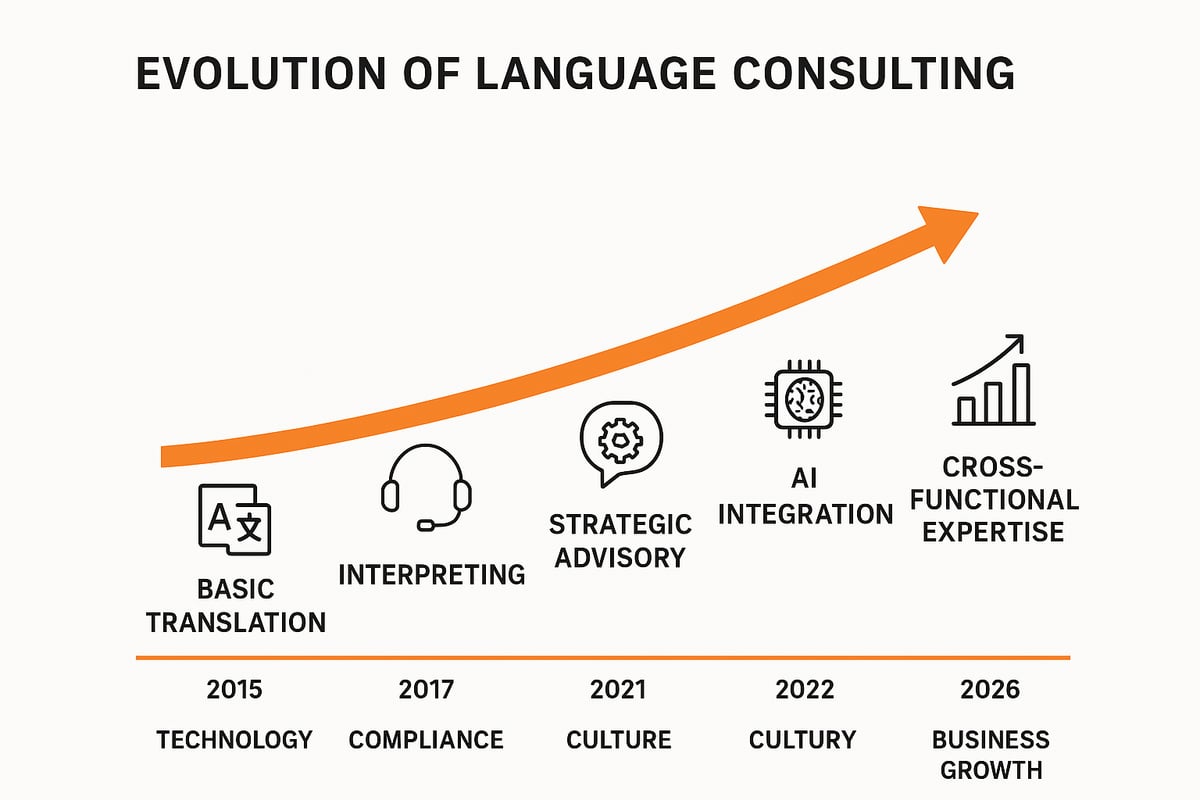
Language consulting in 2026 encompasses much more than traditional translation or interpreting. It now includes process optimization, technology guidance, and cultural adaptation. This evolution has transformed language consulting from a transactional service to a strategic business function.
The role of a language consultant has shifted. Instead of simply translating content, consultants now advise on multilingual workflows, select and implement technology solutions, and ensure messaging resonates across cultures. This change is driven by the complexity of global markets and the rapid advancement of AI.
To illustrate the difference, consider this comparison:
| Traditional Services | Modern Language Consulting Offerings |
|---|---|
| Translation | Multilingual process design |
| Interpreting | Technology integration |
| Basic proofreading | Cultural adaptation and localization |
| Document conversion | Stakeholder collaboration and workflow design |
Today’s language consulting requires cross-functional expertise. Consultants blend skills in linguistics, IT, and business strategy. According to ELIS 2025 Survey Results, over 60% of global enterprises now engage language consulting professionals to drive digital transformation.
For example, multinational retailers use language consulting to streamline content for e-commerce platforms. Consultants help them optimize workflows, implement AI-driven translation tools, and ensure product information is clear and consistent in every market.
Language consulting is no longer a support service. It is a critical business function that directly impacts growth, compliance, and customer experience.
Key Drivers Shaping the Industry in 2026
Several forces are redefining language consulting in 2026. Understanding these drivers is key to leveraging language consulting for a competitive edge:
- Globalization and Cross-Border Commerce: As businesses expand internationally, the need for expert multilingual strategies grows.
- Regulatory Pressures: Data privacy rules like GDPR and evolving accessibility laws require specialized knowledge to ensure compliance.
- AI and Automation: The integration of AI has transformed translation and localization workflows, demanding consultants who can bridge technology and human expertise.
- Hyper-localization and Cultural Nuance: Marketing teams now demand content tailored for diverse audiences, making cultural adaptation more important than ever.
- Workforce and Customer Diversity: Organizations are serving increasingly diverse populations, making inclusive language essential.
A real-world example is seen in the life sciences sector. Companies turn to language consulting to meet the requirements for multilingual regulatory submissions, reducing errors and accelerating approvals.
The insight is clear: businesses that proactively invest in language consulting gain a measurable competitive advantage. By anticipating changes in technology and regulation, organizations position themselves for sustained success.
Core Language Consulting Services and Solutions
In 2026, language consulting has become a cornerstone for organizations striving to compete globally. Businesses now rely on a broad spectrum of specialized services to ensure effective, compliant, and culturally resonant communication. Below, we explore the core offerings that define language consulting today.
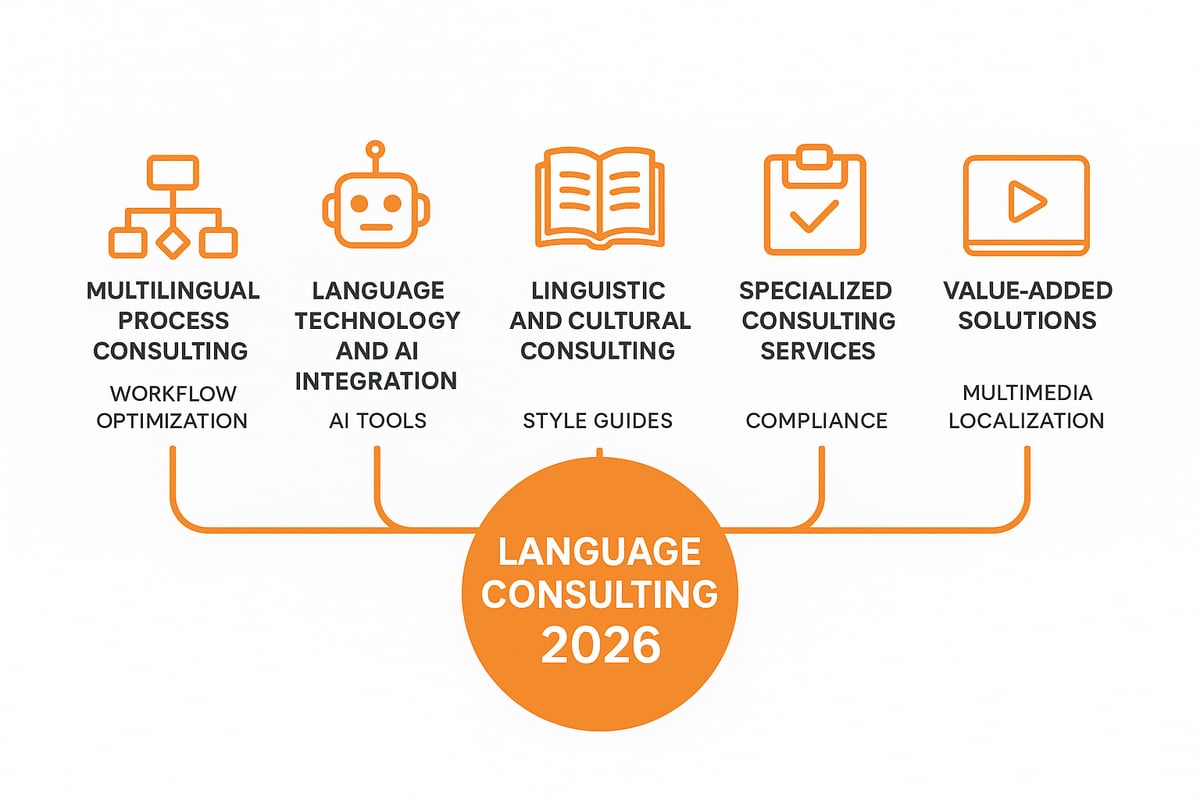
Multilingual Process Consulting
Multilingual process consulting focuses on refining how organizations handle content in multiple languages from start to finish. Experts assess existing workflows, identify bottlenecks, and design efficient processes for content creation, translation, and localization.
Key steps include:
- Mapping end-to-end content workflows
- Streamlining collaboration among teams
- Implementing scalable solutions for growth
For example, when a multinational retailer introduces a new Product Information Management (PIM) system, language consulting ensures that all product data is translated and localized accurately, speeding up launches in new markets.
According to industry case studies, companies adopting optimized processes through language consulting report up to 25% faster time-to-market. This efficiency reduces costs, improves quality, and positions businesses to react swiftly to market demands.
Language Technology and AI Integration
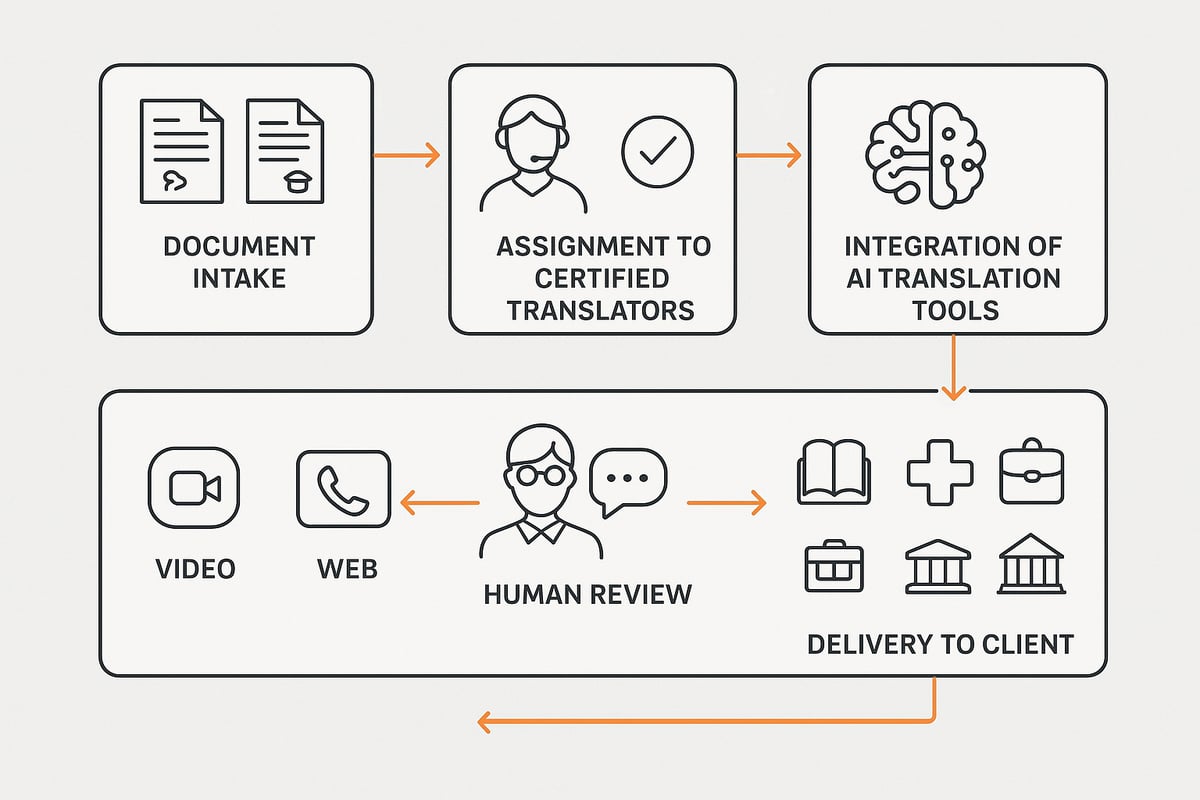
The integration of advanced technology is central to language consulting in 2026. Consultants play a key role in evaluating and deploying Translation Management Systems (TMS), Computer-Assisted Translation (CAT) tools, and AI-powered engines that automate routine tasks.
Services typically include:
- Technology needs assessment
- Customizing and integrating tech with existing infrastructure
- Training teams to leverage AI for translation, terminology, and quality assurance
A recent industry average shows that organizations implementing AI-powered TMS solutions under expert guidance achieve up to 30% cost savings. However, technology alone is not enough. Language consulting ensures that tools are tailored to business goals, and human oversight remains crucial for quality and cultural fit.
Linguistic and Cultural Consulting
Linguistic and cultural consulting helps organizations shape their corporate language and adapt content for diverse markets. This service goes beyond translation to ensure messaging is locally relevant and resonates with target audiences.
Typical offerings include:
- Developing corporate style guides and terminology databases
- Advising on content adaptation for various regions
- Training staff in multicultural communication and inclusive language
For instance, global brands often engage language consulting specialists to create multilingual style guides. This consistency in corporate language builds brand trust and strengthens customer engagement across all markets.
Specialized Consulting Services
Specialized consulting services address industry-specific challenges where accuracy, compliance, and confidentiality are paramount. These services are especially vital in sectors like legal, intellectual property, and regulated industries.
Key areas include:
- Intellectual property and patent translation advisory
- Legal and certified translation process guidance
- Accessibility and compliance consulting (e.g., WCAG, ADA)
A practical example is law firms engaging language consulting experts for multilingual eDiscovery and compliance matters. In fact, 40% of legal sector clients report improved compliance outcomes after leveraging these specialized services. Such targeted consulting mitigates regulatory and reputational risks for high-stakes industries.
Value-Added Services and Emerging Solutions
Language consulting continues to expand with value-added and emerging solutions that address the evolving needs of global organizations. These services often blend technology, creativity, and data expertise.
Offerings now include:
- Linguistic testing, desktop publishing, and multimedia localization
- Data annotation, collection, and validation for AI/ML initiatives
- Transcreation and global SEO consulting for marketing teams
For example, eLearning providers rely on language consulting to localize interactive training content for diverse audiences. Recent research highlights how AI Integration in Multimedia Localization can cut costs by over 80 percent, demonstrating the impact of expert consulting combined with technology.
Comprehensive language consulting ensures organizations can tackle the full spectrum of multilingual challenges, from regulatory compliance to global brand expansion.
Technology Trends Transforming Language Consulting
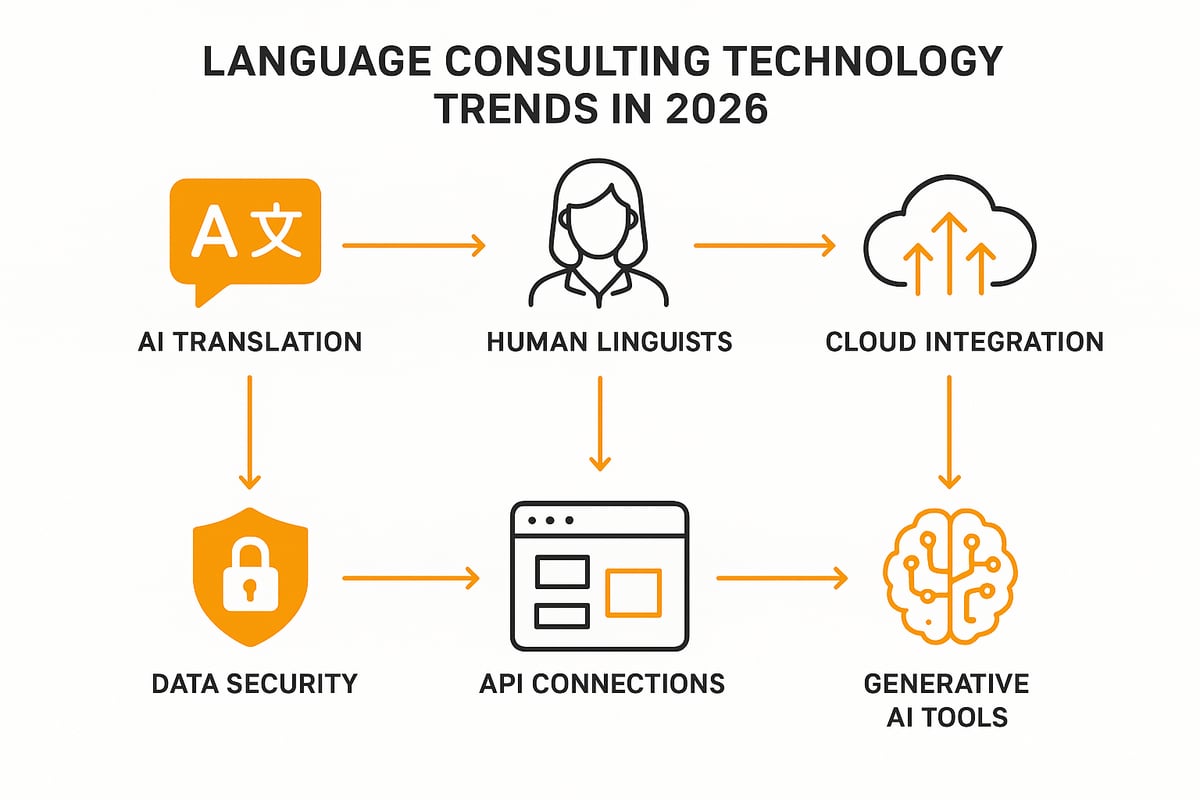
Technology is redefining language consulting at a rapid pace in 2026. Businesses now rely on advanced tools and expert strategies to remain competitive. This section explores how automation, integration, security, and future innovations are shaping the industry.
AI, Automation, and the Human Touch
AI-driven translation and linguistic analysis have become central to language consulting. Companies now deploy machine translation engines, automated quality checks, and AI-powered terminology tools to accelerate multilingual content delivery. However, human expertise remains essential for managing cultural nuance and sensitive information.
Hybrid workflows, where AI handles routine content and linguists oversee high-impact materials, are now standard. For instance, legal and healthcare clients benefit from combining AI speed with expert oversight, ensuring accuracy and compliance. According to industry surveys, 75 percent of language consulting projects now incorporate AI-assisted workflows. This move toward strategic language intelligence is further explored in AI's Role in Business Consulting, underscoring the balance between technology and expert judgment.
Integration and Interoperability
Seamless technology integration is a hallmark of modern language consulting. Organizations expect translation management systems, content management platforms, and marketing automation tools to work together efficiently. API-driven solutions enable real-time updates and minimize manual intervention.
For example, integrating translation memory databases with global CMS platforms allows businesses to localize websites instantly. This interoperability not only streamlines workflows but also ensures consistency across languages. A well-integrated language consulting framework saves time, reduces errors, and delivers consistent messaging worldwide.
Data Security and Compliance
Protecting sensitive multilingual data is critical in language consulting. As companies process more customer information and confidential documents, robust security protocols are non-negotiable. Compliance with regulations like GDPR and HIPAA is now a standard requirement for every project.
Language consulting experts design secure translation workflows, implement encrypted data exchanges, and advise on privacy best practices. In regulated industries such as healthcare and law, consultants play a pivotal role in safeguarding client data and maintaining trust. Security breaches can be costly, making this aspect of language consulting a top priority for organizations in 2026.
Future-Ready Consulting: What’s Next?
Looking ahead, language consulting is poised to harness even more advanced technologies. Large language models and generative AI are driving real-time voice, video, and multimodal translation solutions. Consultants must continuously adapt, learning how to leverage these tools for maximum value.
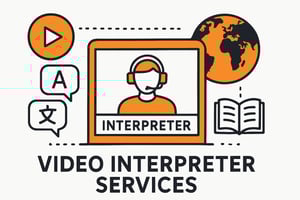
Virtual interpreting for global events and remote workforces is becoming mainstream, offering unprecedented reach and flexibility. As technology evolves, language consulting professionals will need multidisciplinary skills, combining linguistic expertise with digital fluency. Staying ahead of these trends ensures that language consulting remains a vital, future-ready business function.
Industry-Specific Language Consulting Strategies
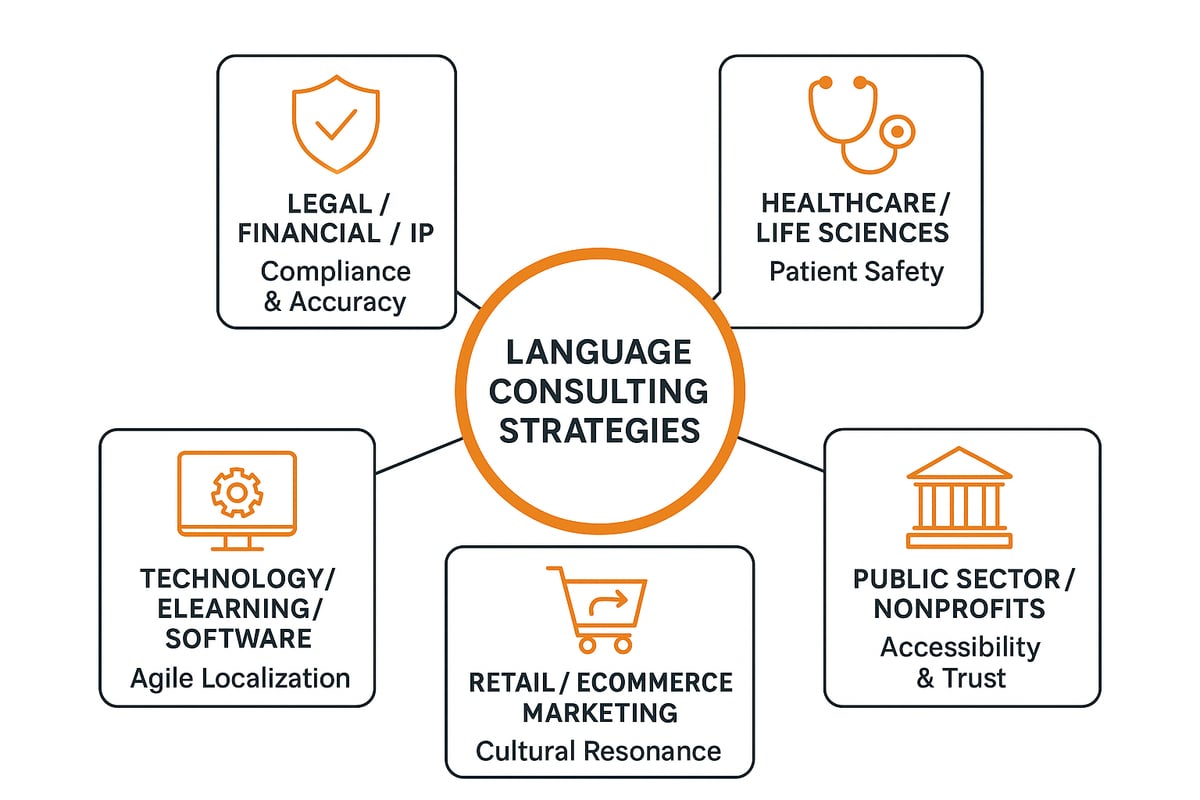
Navigating today's global marketplace requires industry-specific language consulting strategies. Every sector faces unique multilingual challenges, from regulatory compliance to customer engagement. By tailoring language consulting approaches, organizations can achieve measurable improvements in quality, efficiency, and compliance.
Legal, Financial, and Intellectual Property Sectors
Legal, financial, and intellectual property organizations face strict regulatory requirements and high stakes for accuracy. Language consulting in these fields focuses on ensuring precise translations, maintaining confidentiality, and navigating complex global regulations.
Consultants provide guidance on multilingual documentation, certified translations, and workflow optimization. For example, expert advisors help law firms streamline patent translation processes for international filings, reducing the risk of costly errors.
Industry data shows a 35 percent reduction in errors for intellectual property filings when organizations partner with skilled consultants. For a deeper look at how law firms benefit from tailored strategies, see Enhancing Multilingual Communication for Law Firms.
With language consulting, legal and financial teams achieve compliance, minimize risk, and boost operational efficiency.
Healthcare, Life Sciences, and Pharmaceuticals
In healthcare and life sciences, language consulting plays a critical role in patient safety and regulatory approval. Consultants help adapt medical content for global audiences, ensuring clarity in patient communications and accuracy in regulatory submissions.
Support extends to multilingual clinical trial documentation, labeling, and eLearning modules for global teams. A strong consulting partnership can accelerate approval times by up to 50 percent for multilingual submissions.
By leveraging language consulting, healthcare organizations meet stringent regulations and deliver accessible, trustworthy information to diverse populations.
Technology, eLearning, and Software
Technology, eLearning, and software companies operate in fast-paced, innovation-driven environments. Language consulting is essential for localizing software interfaces, user documentation, and help content across multiple languages.
Consultants advise on agile localization strategies to keep pace with continuous development cycles. For example, SaaS providers use consulting to launch products simultaneously in multiple markets, ensuring consistent user experience.
Language consulting enables tech firms to scale globally while maintaining accuracy and speed in product releases.
Retail, eCommerce, and Marketing
Retailers and marketers must connect with customers across cultures and languages. Language consulting strategies here focus on crafting culturally resonant messaging, optimizing multilingual product content, and boosting international SEO.
Consultants support transcreation, global campaign adaptation, and content localization. Retailers report that 60 percent of consumers prefer shopping in their native language, highlighting the business impact.
With language consulting, brands increase customer loyalty, drive sales, and enhance global market presence.
Public Sector and Nonprofits
Public sector organizations and nonprofits face mandates for language access and inclusivity. Language consulting ensures compliance with accessibility laws and supports effective multilingual public communications, from emergency alerts to community outreach.
Consultants help agencies develop clear, accessible messaging for diverse audiences. For example, government teams improve community engagement and trust by adopting expert language consulting solutions.
Investing in language consulting allows public entities to meet legal requirements and build stronger, more inclusive communities.
How to Choose the Right Language Consulting Partner
Selecting the right language consulting partner is a strategic decision. The right choice can accelerate global growth, ensure compliance, and boost customer satisfaction. With so many providers in the market, a structured approach is essential.
Key Criteria for Evaluation
When evaluating language consulting providers, focus on proven expertise and measurable results. Look for partners with experience in your sector and a history of successful projects. For example, in healthcare, specialized consulting can make a significant difference in compliance and patient outcomes. Explore how sector expertise matters in Breaking Language Barriers in Healthcare.
Key criteria include:
- Industry knowledge: Does the partner understand your regulatory landscape and multilingual needs?
- Technology integration: Can they support the latest tools and workflows?
- Scalability: Are their solutions adaptable to your growth plans?
- Transparent pricing: Is ROI clearly defined and measurable?
A strong language consulting partner should align with your business culture and offer tailored support.
Questions to Ask Potential Consultants
Before making a commitment, ask targeted questions to gauge a consultant’s fit and depth of expertise. Use these questions to uncover strengths and possible gaps:
- What experience do you have in our industry and target languages?
- How do you approach technology integration and workflow optimization?
- What measures are in place for data security and regulatory compliance?
- Can you share relevant case studies or client testimonials?
By asking these questions, you set clear expectations and ensure the language consulting partner can deliver tangible value.
Red Flags and Pitfalls to Avoid
Not all language consulting providers are created equal. Watch for warning signs that may signal trouble ahead:
- Overreliance on technology without human oversight
- Lack of relevant certifications or compliance knowledge
- Hidden fees or vague pricing models
- Poor communication or unclear project management
For instance, some firms promise cutting-edge solutions but lack the expertise to tailor them effectively. Staying informed about trends, such as those discussed in Translation Industry Trends 2025, can help you avoid common pitfalls and select a reliable partner.
Maximizing Value from Your Consulting Engagement
To get the most from language consulting, define clear goals and maintain active collaboration. Set measurable objectives and align internal teams with your consultant’s strategy.
Best practices include:
- Involving stakeholders from the start
- Investing in ongoing training and process reviews
- Regularly measuring outcomes and adjusting strategies
Treat language consulting as a long-term investment. Continuous improvement and open communication ensure sustained success and measurable impact.
The Future of Language Consulting: Opportunities and Challenges
The future of language consulting promises both expansive growth and complex hurdles. As global communication evolves, organizations must adapt their strategies to remain competitive and compliant. Understanding the opportunities and challenges ahead will help you leverage language consulting for sustainable success.
Emerging Opportunities in 2026 and Beyond
In 2026, language consulting is expanding into new sectors, including AI ethics, accessibility, and virtual events. The rise of remote workforces creates demand for virtual consulting services, opening doors for global collaboration. As more industries prioritize multilingual communication, language consulting now plays a pivotal role in shaping digital transformation.
Public sector and safety organizations, for example, are investing in language consulting to better serve diverse communities and ensure compliance. For a closer look at how these strategies improve public safety, read about Multilingual Solutions for Campus Safety. According to industry forecasts, 80% of enterprises intend to increase their language consulting budgets by 2027, reflecting the field's continued momentum.
With new markets embracing technology-driven communication, consultants are called to address complex needs. Whether supporting global remote teams or localizing content for emerging audiences, language consulting is positioned as an engine for innovation and inclusivity.
Challenges Facing Language Consultants and Clients
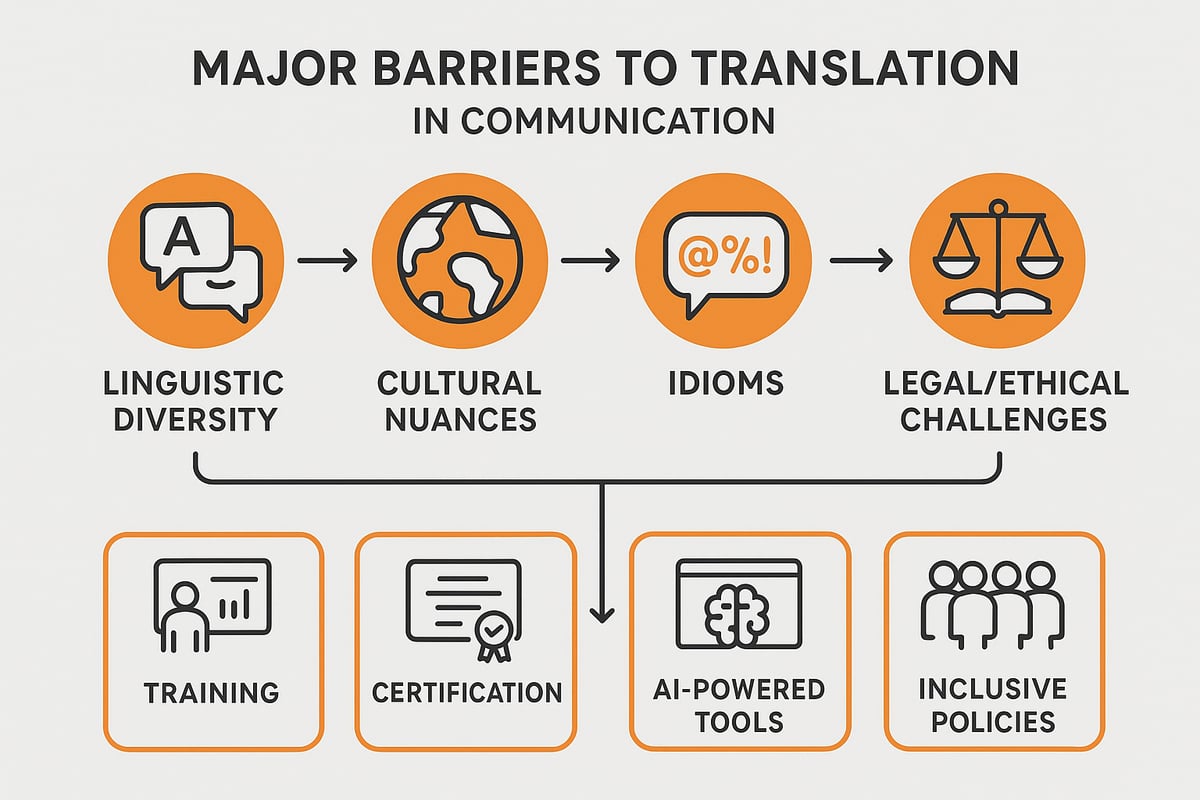
Despite these opportunities, language consulting faces significant challenges. Rapid changes in technology require consultants and clients to stay agile, continuously updating their skills and workflows. Regulatory demands such as GDPR and sector-specific compliance add layers of complexity, making it vital to ensure accuracy and data security across all projects.
Balancing automation and human expertise remains a key concern. While AI streamlines translation, human consultants provide essential cultural insight and quality control. Managing costs while delivering scalable, high-quality solutions is a further challenge, especially as organizations expand their multilingual reach.
The public safety and emergency services sectors highlight these complexities. Learn more about the rising need for compliance and access in these areas in The Language Access Awakening in Emergency Services. Proactive adaptation and informed investment help organizations navigate these hurdles effectively.
Skills and Expertise for the Next Generation of Consultants
Success in language consulting now depends on multidisciplinary expertise. Modern consultants blend linguistics, IT, project management, and compliance knowledge. As AI and digital tools reshape the industry, continuous learning is essential for staying ahead.
Cultural intelligence and a global mindset are increasingly valued. Consultants with advanced certifications in AI-driven localization, for example, can deliver solutions that balance technological efficiency with human empathy. This combination ensures that language consulting remains both effective and relevant.
Organizations seeking language consulting support benefit most from partners who invest in ongoing training. The ability to adapt quickly to new technologies and regulatory demands sets leading consultants apart in a competitive market.
Building a Roadmap for Language Consulting Success
A strategic approach is key to maximizing the value of language consulting. Start by defining clear objectives and aligning them with your business goals. Invest in strong partnerships, robust technology, and skilled talent to support long-term growth.
Develop a roadmap that includes regular evaluation of processes, cross-functional collaboration, and continuous upskilling. Use measurable success metrics to track progress and adjust strategies as needed. Companies that integrate language consulting into their core business planning achieve greater compliance, customer satisfaction, and global reach.
By viewing language consulting as an ongoing investment, organizations position themselves for measurable impact in a rapidly evolving landscape. The right roadmap ensures that your multilingual strategies remain future-ready and resilient.
As you’ve seen throughout this guide, language consulting in 2026 is all about leveraging the right mix of technology and human expertise to overcome even the most urgent communication barriers. If you’re ready to see how real-time translation and AI-driven solutions can transform your emergency communications and help you serve every community member—no matter what language they speak—I encourage you to take the next step. Discover firsthand how Convey911’s innovative platform can support your organization’s mission with speed, accuracy, and compliance. Let’s explore the possibilities together—Book a Demo.