
Did you know that over 7,000 languages are spoken around the world, yet miscommunication costs...
In 2025, organizations worldwide are racing to meet the growing need for multilingual content as digital audiences expand across borders.
Mastering multiple translation is now crucial for seamless communication, stronger engagement, and unlocking international potential. This guide will equip you to navigate the complexities of multiple translation, harness cutting-edge tools, and adopt proven best practices.
You'll discover the essentials of multiple translation, learn to overcome key challenges, explore modern workflows, stay ahead with technology trends, and implement actionable steps to future-proof your multilingual strategy.
Prepare to elevate your global content and achieve lasting success in a rapidly evolving landscape.
Understanding Multiple Translation: Concepts and Importance
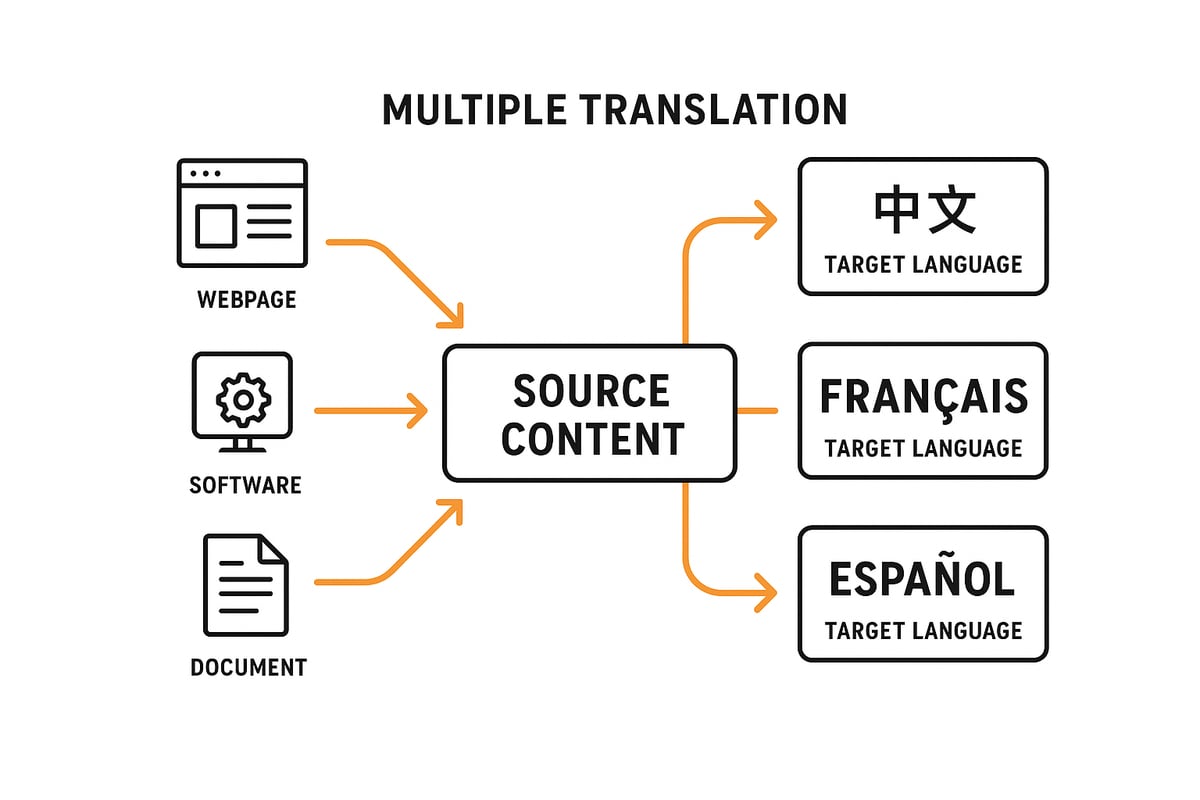
Multiple translation is the process of rendering content into more than two target languages or dialects, enabling organizations to communicate effectively with diverse audiences. Unlike single translation, which converts a source language into just one target language, or dual translation, which handles two, multiple translation scales across a broad range of languages simultaneously. This approach is vital for software interfaces, global websites, and international documentation, where consistency and clarity are critical across all language versions. Key terms include source language (the original content), target language (the language being translated into), localization (adapting content to a specific locale), and adaptation (modifying content for cultural relevance). For a deeper dive into the foundation of this field, see the field of translation explained.
Defining Multiple Translation and Multilingual Content
Multiple translation enables organizations to go beyond basic language conversion, ensuring that content is accessible to global audiences. The difference between single, dual, and multiple translation lies in the number of target languages addressed. Multilingual content refers to any digital communication that exists in more than one language, such as websites, mobile apps, or international manuals. Examples include multinational software with language selectors, e-commerce sites offering localized product descriptions, and official documents translated for different regions. Understanding these distinctions is foundational for building an effective multilingual strategy.
Why Multiple Translation Matters in 2025
In 2025, the significance of multiple translation is amplified by the ongoing globalization of digital communication. Over 75 percent of internet users are non-English speakers, making multilingual accessibility a business imperative. Legal frameworks, such as EU language laws and US ADA compliance, require organizations to provide content in multiple languages for inclusivity and accessibility. Companies leveraging multiple translation often experience up to 1.5 times higher engagement due to their ability to connect with broader audiences. Real-world applications span e-commerce platforms, government services, and healthcare providers, all of which rely on precise, culturally relevant translations to serve diverse populations.
Core Challenges of Multiple Translation
While multiple translation unlocks global reach, it introduces several complex challenges. Ensuring consistency and accuracy across many languages is demanding, especially when managing cultural nuances and regional variations. Technical constraints, such as differing character sets, text expansion in certain languages, and support for right-to-left scripts, add another layer of complexity. Budgeting and resource allocation become critical as translation scales up. The risks of poor multiple translation include brand reputation damage, legal repercussions, and lost revenue opportunities. Addressing these challenges requires careful planning and the right mix of human and technological resources.
| Challenge | Description | Impact |
|---|---|---|
| Consistency | Uniform messaging across languages | User trust, brand credibility |
| Cultural Nuance | Adapting for local customs | Engagement, relevance |
| Technical Constraints | Script, layout, character issues | Usability, accessibility |
| Cost & Resources | Managing budgets and translation teams | Scalability, sustainability |
| Quality Risk | Errors or misinterpretation | Legal, financial, reputational |
The Evolving Landscape: Trends Shaping Multilingual Content
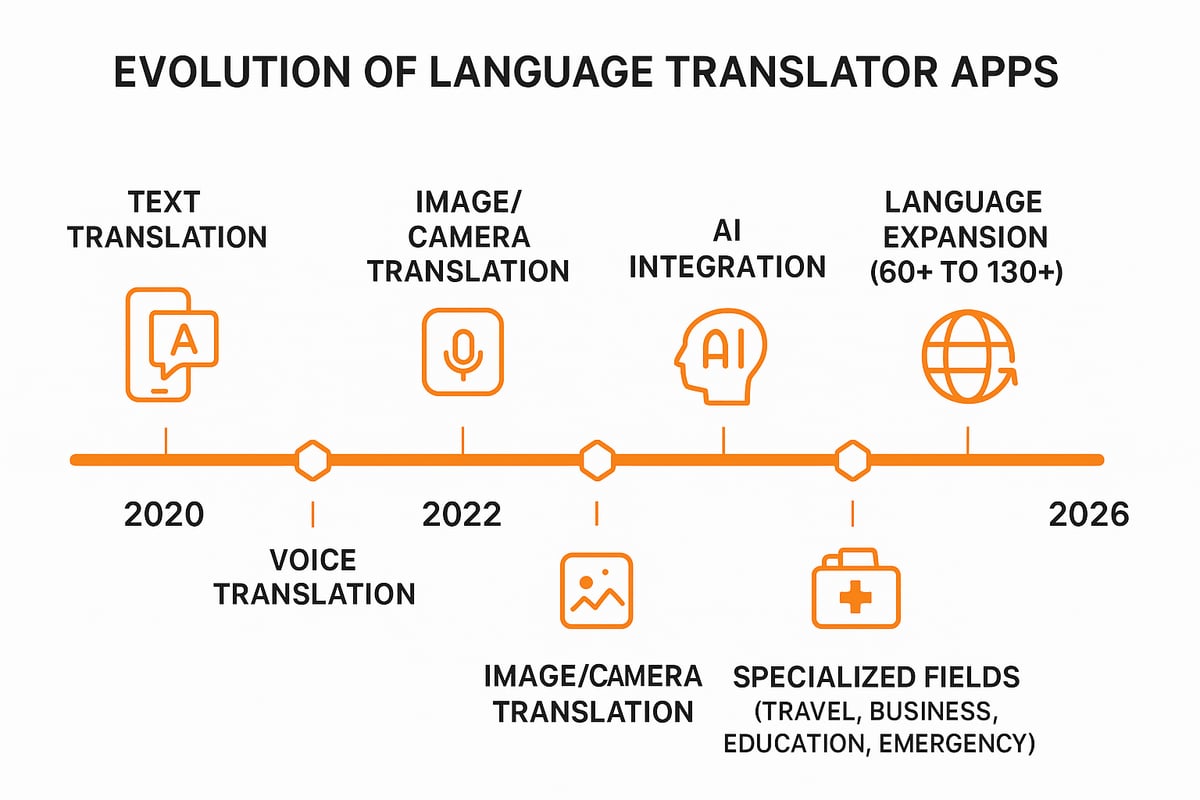
The landscape of multiple translation is rapidly evolving, driven by breakthroughs in AI and neural machine translation. Hybrid workflows combining human expertise with AI-powered tools are becoming standard, offering both speed and quality. There is growing demand for real-time and on-demand translation, especially in customer support and digital services. Integration of translation capabilities within content management systems streamlines multilingual publishing and reduces manual effort. Localization and transcreation, which adapt content for cultural resonance, are also gaining prominence, ensuring that messaging goes beyond literal translation to foster authentic connections with users worldwide.
Building a Robust Multilingual Content Strategy
Developing a robust strategy for multiple translation is essential for organizations aiming to connect with diverse audiences in 2025. A well-structured approach ensures your content is accessible, relevant, and impactful across markets.
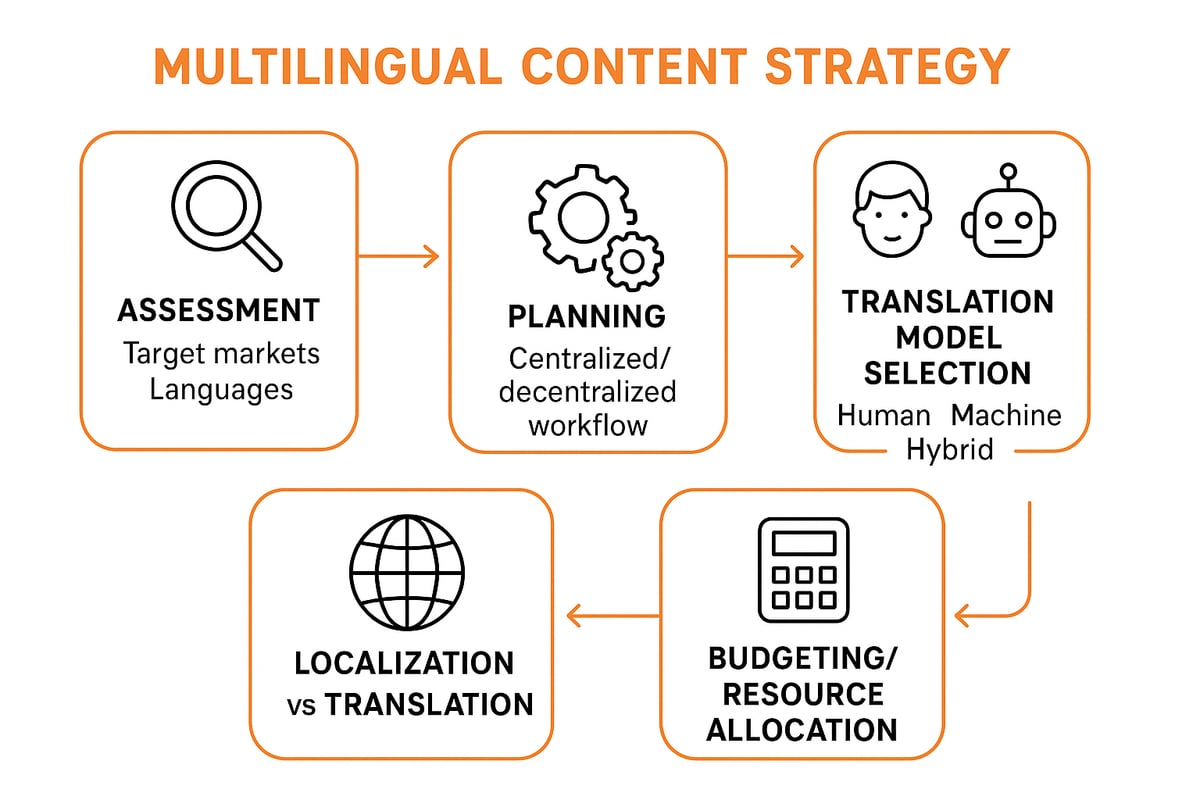
Assessing Your Multilingual Needs
Start by identifying the target markets and languages that align with your business goals. Analyze your existing content to uncover translation gaps and determine which materials require updating or expansion.
Conduct audience research to understand demographics, language preferences, and cultural expectations. Prioritize content types for multiple translation, such as websites, documentation, or marketing assets. Set clear objectives and KPIs to measure success, ensuring your multilingual content delivers measurable value.
Planning and Workflow Design for Multiple Translation
Effective planning is crucial for managing multiple translation projects at scale. Decide between centralized management, where a core team oversees all languages, or a decentralized approach that empowers regional teams.
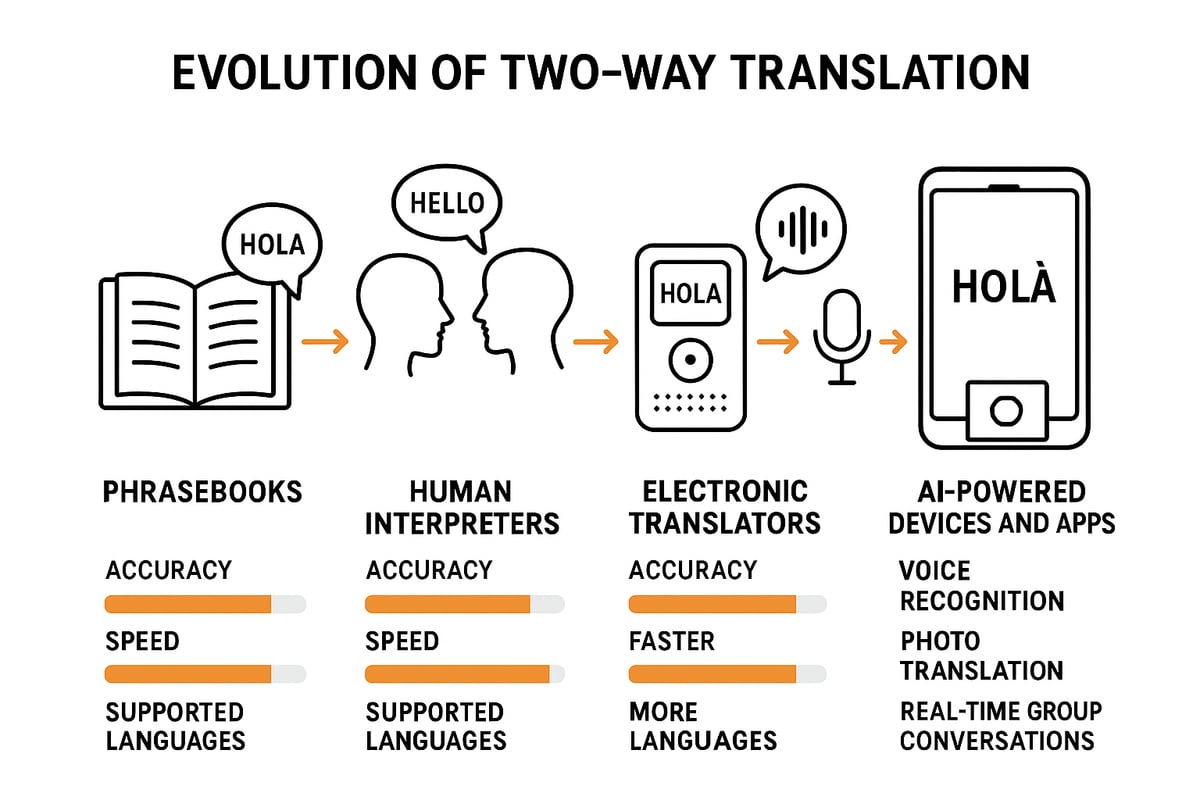
Develop a translation style guide and glossary to maintain consistency. Map out workflows covering content creation, translation, review, and publication. Consider how to manage updates and version control across languages. Foster collaboration between translators, editors, and stakeholders to streamline communication. For deeper insights into workflow optimization, explore two-way and multiple translation workflows.
Choosing the Right Translation Model: Human, Machine, or Hybrid
Selecting a translation model depends on your quality, speed, and budget requirements. Human translation offers accuracy and nuance, making it ideal for complex or sensitive content. Machine translation provides speed and scalability, suitable for large volumes or real-time needs.
Hybrid models combine AI efficiency with human expertise, delivering both quality and cost-effectiveness. Assess the type of content, expected quality, and resource constraints when choosing a model. Case studies show that multiple translation strategies often benefit from blending these approaches for optimal results.
Localization vs. Translation: Going Beyond Words
While translation focuses on converting text, localization adapts content for cultural and regional relevance. This process includes adjusting idioms, visuals, date formats, currencies, and legal terminology to resonate with local audiences.
Localization is vital for boosting user engagement and building trust. For example, a marketing campaign may require new imagery or localized messaging to appeal to different regions. Use dedicated localization tools and workflows to ensure your multiple translation efforts extend beyond language to deliver a seamless user experience.
Budgeting and Resource Allocation
Estimate costs by considering translation rates per word, per language, or per project. Decide whether to build an in-house team or outsource to specialized agencies, factoring in your long-term needs and the scale of your multiple translation initiatives.
Leverage technology to reduce expenses without sacrificing quality. Plan for ongoing maintenance and regular content updates to keep translations current. Track ROI by monitoring engagement, conversion rates, and overall performance, ensuring your investment in multilingual content drives sustained business growth.
Step-by-Step Guide to Managing Multiple Translation Projects
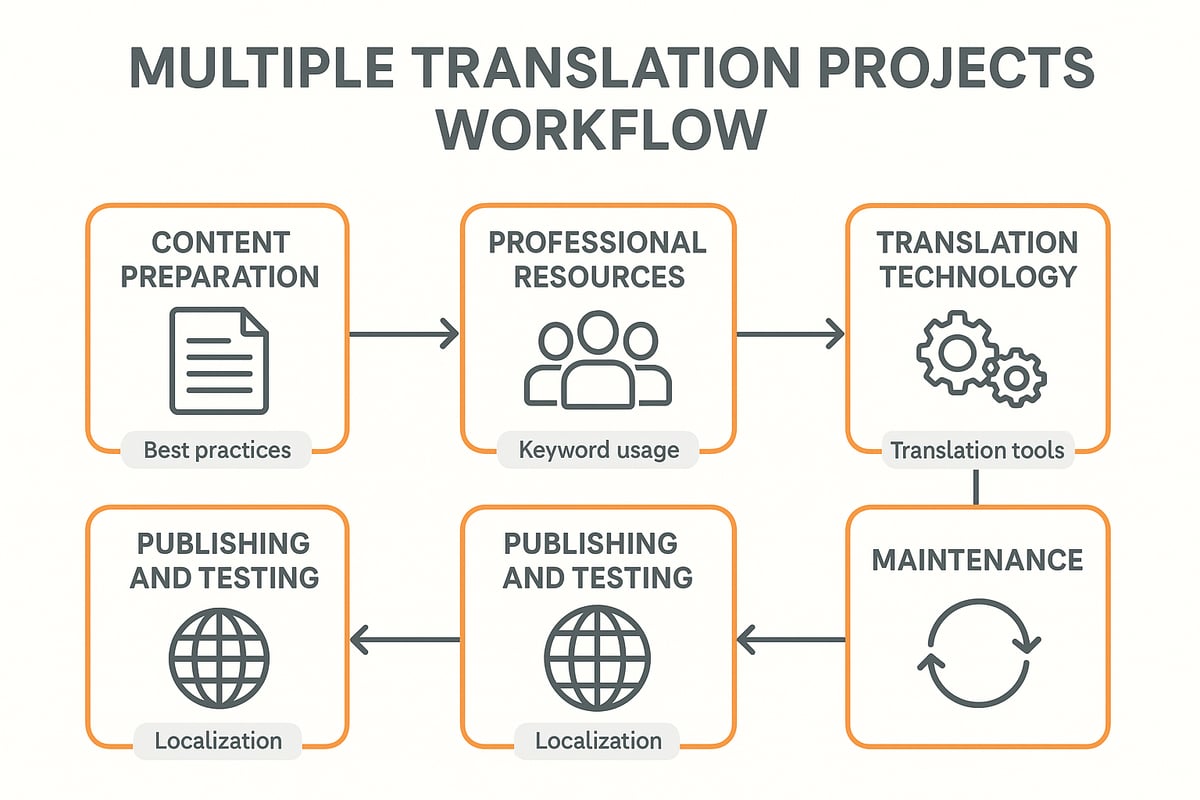
Successfully managing multiple translation projects in 2025 requires a structured, repeatable process. Each stage, from content preparation to ongoing updates, plays a critical role in ensuring high-quality, consistent, and culturally relevant multilingual content.
Step 1: Content Preparation and Internationalization
Begin your multiple translation journey by preparing content for a global audience. Write clearly, avoid idioms, and use neutral language to minimize ambiguity. Well-structured source files, such as XML, XLIFF, or HTML, simplify extraction and reintegration of text.
Internationalization is essential. Design both code and content to support various character sets, date formats, and right-to-left languages. Address multimedia elements by providing transcripts or subtitles for videos and using descriptive alt text for images.
Best practices include:
- Using Unicode for all text elements
- Structuring content in modular blocks
- Separating content from layout and code
By prioritizing these steps, you lay a strong foundation for multiple translation, reducing errors and rework later in the process.
Step 2: Selecting Professional Translation Resources
Choosing the right talent is pivotal for multiple translation success. Evaluate translators and agencies based on language skills, subject expertise, and relevant certifications. Consider building a network of vetted professionals to cover all required languages.
Compare freelance translators and agencies using criteria such as:
| Criteria | Freelancers | Agencies |
|---|---|---|
| Flexibility | High | Moderate |
| Cost | Lower | Higher |
| Project Management | Self-managed | Agency-managed |
| Scalability | Limited | High |
Onboarding and training are crucial. Provide style guides, glossaries, and access to reference materials. Establish clear communication channels for feedback and questions.
With the right team, multiple translation projects become more efficient, accurate, and scalable.
Step 3: Leveraging Translation Technology and Tools
Modern translation technology enhances every multiple translation project. Translation management systems (TMS) streamline workflows, automate file handling, and foster collaboration among distributed teams. CAT tools support translation memory, ensuring consistency and accelerating future projects.
Integrate translation tools seamlessly with your CMS, e-commerce, or support platforms. Many organizations use machine translation APIs for initial drafts, followed by human review.
For a deeper look at how technology is transforming multilingual strategies, explore this resource on translation in digital communication.
Combining the right tools and platforms makes multiple translation faster, more reliable, and easier to manage across large content volumes.
Step 4: Quality Assurance and Review Processes
Quality assurance is at the heart of every multiple translation project. Implement a multi-stage review, including linguistic checks, technical validation, and in-context testing. Use back-translation or peer review to catch subtle errors.
Track errors and establish feedback loops with translators to drive continuous improvement. Automated QA tools can spot issues like inconsistent terminology, but human oversight remains vital for nuance and context.
Key QA metrics include:
- Accuracy and faithfulness to source
- Consistency in terminology and style
- Fluency and readability
By prioritizing QA, you protect your brand and ensure each multiple translation meets your standards.
Step 5: Publishing, Testing, and Continuous Improvement
Once translations are complete, publish content on staging environments for thorough testing. Check both linguistic accuracy and functional performance in every target language. Solicit user feedback and monitor analytics to identify areas for refinement.
Iterate on content and workflows based on real-world usage and feedback. Regularly update translated assets to reflect changes in the source material or evolving user needs.
A successful multiple translation rollout is never static; it evolves through cycles of testing, feedback, and improvement.
Step 6: Maintaining and Updating Multilingual Content
Maintenance is critical for long-term multiple translation effectiveness. Use version control to synchronize updates across all languages and automate recurring tasks where possible.
Monitor for outdated or deprecated content, removing or updating it as needed. Plan for scalability by establishing governance policies and clear responsibilities for ongoing updates.
Automation and careful planning ensure your multiple translation initiatives remain current, relevant, and aligned with your organizational goals.
Technology and Tools for Multilingual Content in 2025
Navigating the landscape of technology for multiple translation in 2025 requires a strategic approach. Rapid advances in artificial intelligence, automation, and integration tools are reshaping how organizations deliver content to global audiences. Selecting the right combination of solutions ensures efficiency, accuracy, and scalability for any multilingual initiative.
The Role of AI and Neural Machine Translation
AI-driven neural machine translation (NMT) has revolutionized multiple translation by delivering more natural and context-aware results. NMT platforms, such as Google Neural MT, DeepL, and Microsoft Translator, leverage deep learning to understand idiomatic expressions and complex sentence structures. Quality has improved significantly, especially for common language pairs, though domain-specific and rare languages still present challenges.
The integration of NMT into content workflows enables faster turnaround and cost savings. However, human oversight remains essential for nuanced or sensitive content. For a comprehensive look at how AI is shaping the future of multiple translation, explore Machine Translation and AI in 2025.
Translation Management Systems (TMS) and Automation
Translation Management Systems are at the heart of modern multiple translation projects. These platforms streamline project tracking, workflow automation, and team collaboration. Popular TMS options like Smartling, Lokalise, and Memsource support automated file handling and deep integration with content management platforms.
A robust TMS allows organizations to manage multiple translation efforts at scale, ensuring consistency across all languages. Built-in analytics and reporting tools help track project progress and quality metrics. Automation reduces manual errors and accelerates delivery, making TMS an indispensable asset for any multilingual content strategy.
Computer-Assisted Translation (CAT) Tools
CAT tools play a pivotal role in multiple translation by increasing translator productivity and maintaining consistency. Core features include translation memory, which stores previously translated segments for reuse, and terminology management, which enforces approved vocabulary. In-context editing and live previews help translators see how their work will appear in real time.
Collaboration features enable distributed teams to work together efficiently, regardless of location. Leading CAT tools such as SDL Trados, memoQ, and Wordfast offer integration with TMS and support for various file formats. These capabilities help ensure that multiple translation projects meet quality standards and deadlines.
Integrating Multilingual Solutions with Existing Workflows
Seamlessly integrating multiple translation solutions with existing workflows is critical for operational efficiency. Connecting translation tools with CMS, CRM, and helpdesk systems enables content to flow automatically between creation and localization stages. API-driven automation supports real-time translation updates, reducing manual intervention.
Synchronizing updates across languages ensures that all content remains current. For example, web, mobile, and software products benefit from streamlined localization processes. Case studies show that effective integration can dramatically reduce time-to-market and enhance the user experience for global audiences engaging with multiple translation outputs.
Future Trends: Real-Time, Voice, and Multimedia Translation
The future of multiple translation is being shaped by real-time capabilities, voice technology, and multimedia solutions. Growth in chat, voice, and video translation enables instant communication across languages. Advanced speech-to-text and text-to-speech tools are making audio content accessible to a broader audience.
Multimedia translation, including subtitles and graphics adaptation, is increasingly important for global engagement. Personalized experiences powered by AI will become standard, allowing organizations to tailor content for each user. Staying ahead of these trends will ensure your multiple translation strategy remains competitive and future-ready.
Quality, Consistency, and Cultural Relevance in Multilingual Content
Delivering high-quality multilingual content is essential for organizations that rely on multiple translation to reach diverse audiences. Accuracy, cultural sensitivity, and consistent messaging build trust and engagement across every market. Without a robust approach, translation errors can undermine your brand and lead to costly mistakes.
Ensuring High-Quality Translations Across Languages
Quality is the foundation of effective multiple translation. Establish clear benchmarks for accuracy, tone, and terminology. Use regular audits and maintain a centralized glossary to keep terminology consistent across projects.
A multi-stage review process is critical. This should include linguistic checks, technical reviews, and in-context validation. Encourage translators to provide feedback and flag ambiguities in the source text. Real-world failures, such as medical miscommunications, highlight the importance of quality. For instance, breaking language barriers in healthcare shows how poor translation can impact patient safety and outcomes.
Consistent quality assurance ensures your multiple translation efforts support business goals and protect your reputation.
Addressing Cultural Nuances and Regional Variations
Cultural nuances can make or break multilingual content. Successful multiple translation adapts messages to fit local customs, values, and sensitivities. Avoid cultural taboos by researching each target region and consulting local experts.
Tailor visuals, symbols, and color schemes to resonate with specific audiences. For example, Spanish content may differ for Spain and Latin America, reflecting regional vocabulary and idioms. Adapting legal terms and holiday references boosts relevance and comprehension.
By embracing cultural diversity, organizations using multiple translation can foster deeper connections and earn user trust in every market.
Maintaining Brand Voice and Messaging Globally
Protecting your brand identity across languages requires careful planning in multiple translation. Train translators on your brand guidelines, including preferred tone, style, and messaging priorities.
Use transcreation for creative content, like slogans or marketing copy, to preserve intent and emotional impact. Monitor local interpretations to ensure your message remains appropriate and effective.
Build a feedback loop with local teams and regularly audit translated materials. Consistent brand voice, maintained through multiple translation, strengthens recognition and loyalty worldwide.
Measuring Success: Analytics and Feedback Loops
To maximize the value of multiple translation, track performance with clear metrics. Monitor engagement, conversion rates, and user satisfaction in every language.
Collect feedback through surveys, direct user input, and A/B testing. Use analytics to identify content gaps, error patterns, or regional preferences. This data supports continuous improvement, helping refine your multilingual strategy over time.
A structured measurement process ensures multiple translation delivers measurable business impact and supports long-term growth.
Case Studies and Real-World Examples {400}
Real-world success with multiple translation is shaping the future of global communication. Organizations across industries are leveraging innovative strategies to engage multilingual audiences, overcoming unique challenges along the way.
Success Stories in Multilingual Content Management
Leading companies have made multiple translation a core part of their global strategy. Brands like Airbnb and Microsoft have successfully rolled out content in dozens of languages, boosting user engagement and market reach.
A great example comes from the broadcast industry. New Mexico PBS Implements Real-Time Multilingual Translation, integrating AI-driven translation into their broadcasts. This step allowed diverse audiences to access content in their native language, enhancing accessibility and inclusivity.
| Brand | Languages Supported | Key Result |
|---|---|---|
| Airbnb | 62+ | 40% increase in bookings |
| Microsoft | 100+ | Expanded global software adoption |
| New Mexico PBS | 5 (real-time) | Improved local audience reach |
These cases highlight how multiple translation drives measurable business and social outcomes.
Common Pitfalls and How to Avoid Them
Despite its benefits, multiple translation projects often stumble over common hurdles.
- Translation errors can cause PR crises, especially when slogans or technical content are mistranslated.
- Over-reliance on automated tools without human review can lead to loss of nuance and even legal risks.
- Failing to keep multilingual content updated results in inconsistent messaging and reduced trust.
- Ignoring cultural adaptation can alienate target audiences.
To mitigate these risks, organizations should combine machine and human translation, invest in quality assurance, and consider solutions that address English-centric bias, as discussed in Beyond English: Inclusive Multilingual Machine Translation.
Industry-Specific Approaches: E-commerce, SaaS, Public Sector
Each sector faces unique demands when implementing multiple translation.
- E-commerce: Product listings, checkout flows, and customer support must be localized to drive conversions. Companies often prioritize high-traffic markets and automate frequent updates.
- SaaS: User interfaces, onboarding, and documentation require precise translation to maintain usability. Consistency and technical accuracy are key.
- Public Sector: Compliance with language regulations and accessibility laws is critical. Agencies focus on citizen engagement and legal clarity.
A tailored approach ensures multiple translation delivers value, meets regulatory standards, and supports sector-specific goals.
Emergency Multilingual Communication: The Convey911 Solution
In emergency services, multiple translation is vital for saving lives. Convey911’s platform provides real-time communication in over 185 languages, using a hybrid of AI and human translation. This solution enables 911 centers to identify languages instantly, send mass notifications, and ensure secure, compliant interactions.
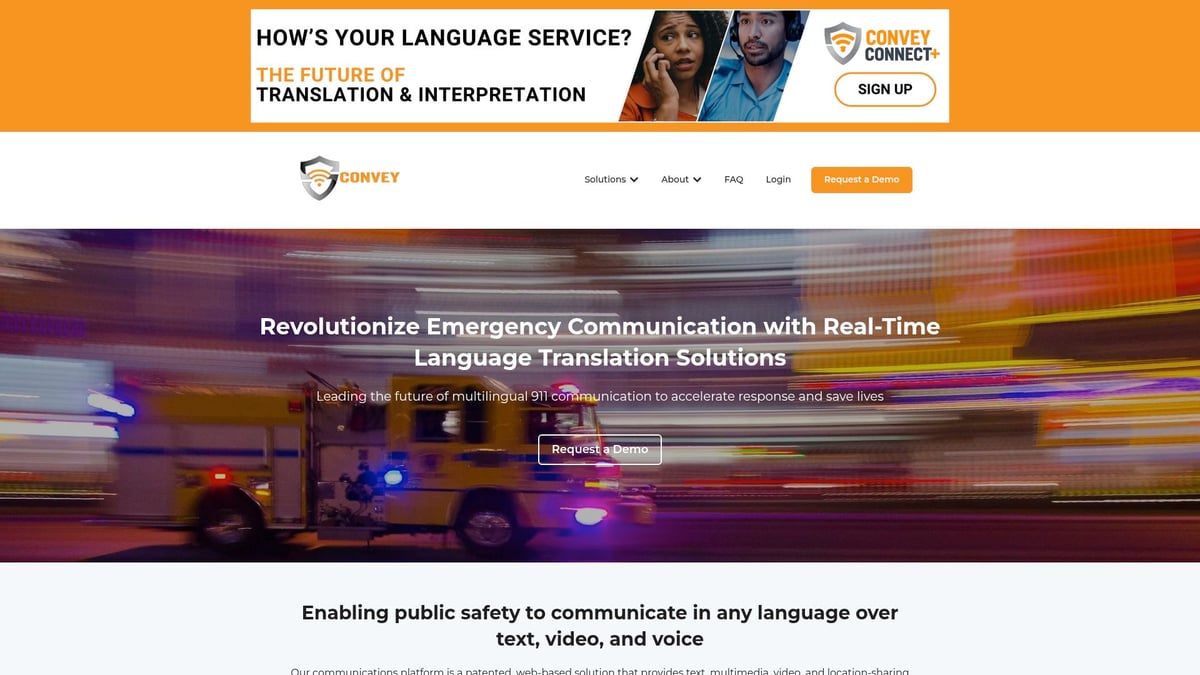
By reducing response times and bridging language gaps, multiple translation through Convey911 transforms emergency response. Public safety agencies across North America have improved outcomes and accessibility, demonstrating the critical impact of accurate translation in high-stakes scenarios.
Future-Proofing Your Multilingual Content Strategy
As global communication rapidly evolves, future-proofing your multiple translation strategy is crucial for sustained success. Proactive planning, flexible infrastructure, and a focus on inclusivity will position your organization to adapt to emerging trends and challenges.
Anticipating Evolving User Needs and Language Trends
Staying ahead in multiple translation requires monitoring shifts in user demographics and language preferences. New languages and dialects continue to emerge, especially as migration and technology bring diverse voices online.
Organizations should track data on rising languages and adapt content for platforms like AR, VR, and IoT, which demand multilingual support. Anticipating global events or regulatory changes is vital for timely updates. Leveraging research and exploring advances in neural machine translation, such as THOR-MoE: Hierarchical Task-Guided Routing for NMT, helps future-proof your approach and ensures your multiple translation strategy remains responsive.
Investing in Scalable Translation Infrastructure
A robust multiple translation infrastructure must support rapid scaling and flexibility. Cloud-based translation management systems and APIs enable organizations to adapt quickly to market changes and content surges.
Train internal teams to use modular and reusable content assets for efficiency. Prioritize workflows that allow for business continuity, disaster recovery, and seamless integration with new technologies. Building this foundation ensures your multiple translation processes remain resilient and adaptable as your business grows.
Collaboration and Community-Driven Translation
Harnessing the power of community can enhance multiple translation quality and reach. Crowdsourcing translation tasks engages users and provides authentic language input, while open-source localization initiatives foster innovation and inclusivity.
Building a user community for feedback accelerates improvements. Examples like Wikipedia and Mozilla highlight the value of collaborative translation models. Balance quality control with community input to maintain consistency and reliability in your multiple translation projects.
Sustainability and Ethical Considerations
Ethical multiple translation practices are essential for long-term impact. Prioritize inclusivity by supporting minority and endangered languages, ensuring your content is accessible to all.
Maintain high standards for data privacy and security. Consider the environmental impact of large-scale translation operations, and use energy-efficient tools where possible. Ethical use of AI and human translators upholds trust and integrity in every multiple translation initiative.
Actionable Checklist for Mastering Multilingual Content in 2025
A streamlined checklist can guide your multiple translation efforts:
| Step | Key Actions |
|---|---|
| Assessment | Identify needs, gaps, and priorities |
| Planning | Design workflow, set objectives, KPIs |
| Execution | Choose tools, manage translation process |
| QA & Maintenance | Implement reviews, updates, governance |
| Measurement | Track success, gather feedback, improve |
Avoid common mistakes such as neglecting updates or skipping QA. Leverage leading tools and analytics to monitor performance. Embrace multiple translation excellence to ensure your organization achieves global impact and long-term relevance.
As we’ve seen, mastering multilingual content in 2025 isn’t just about translation—it’s about building trust, staying agile, and making sure every voice is heard when it matters most. If you’re ready to bridge language gaps for your team and your community, why not see these solutions in action? You can experience firsthand how real-time translation, seamless workflows, and rapid response can transform your emergency communications. Take the next step toward a future-proof, multilingual strategy—Book a Demo and discover how Convey911 can help you serve every caller, every time.