
In a world where communication can be the difference between confusion and clarity, having access...
Imagine stepping into 2025, where global conversations flow freely, yet the world of service interpretation faces new challenges and opportunities. Organizations everywhere are seeking more reliable, accurate, and seamless interpretation as industries like healthcare, law, emergency response, and business become increasingly interconnected.
Rapid advances in technology, hybrid models, and shifting expectations are transforming how service interpretation is delivered and valued. To stay competitive, it is essential to grasp the key changes shaping this landscape.
This article explores 7 essential facts that will define the future of service interpretation, empowering you to make informed decisions and navigate the evolving world of multilingual communication.
The Evolution of Service Interpretation: 2025 Landscape
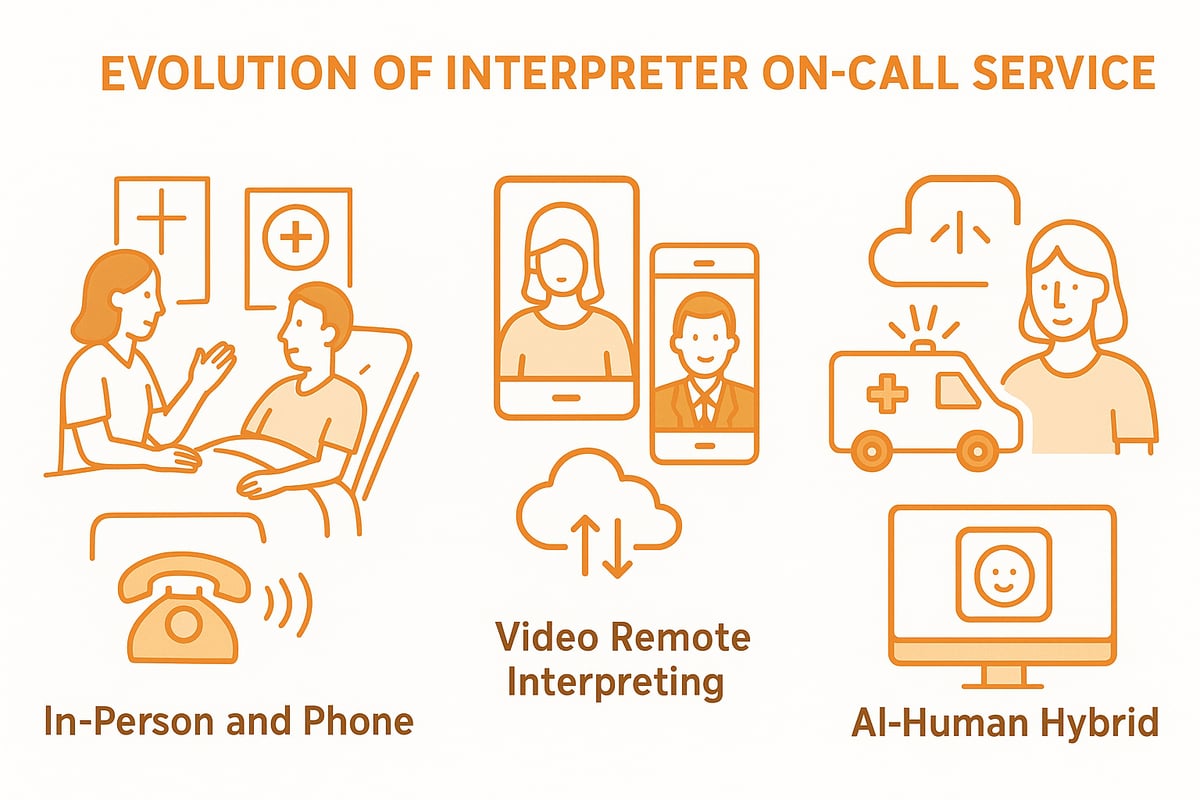
The landscape of service interpretation in 2025 has transformed dramatically, shaped by technology, client needs, and global realities. Organizations now rely on a blend of advanced solutions and human expertise to ensure effective communication across languages and cultures.
The Rise of Multimodal Interpretation
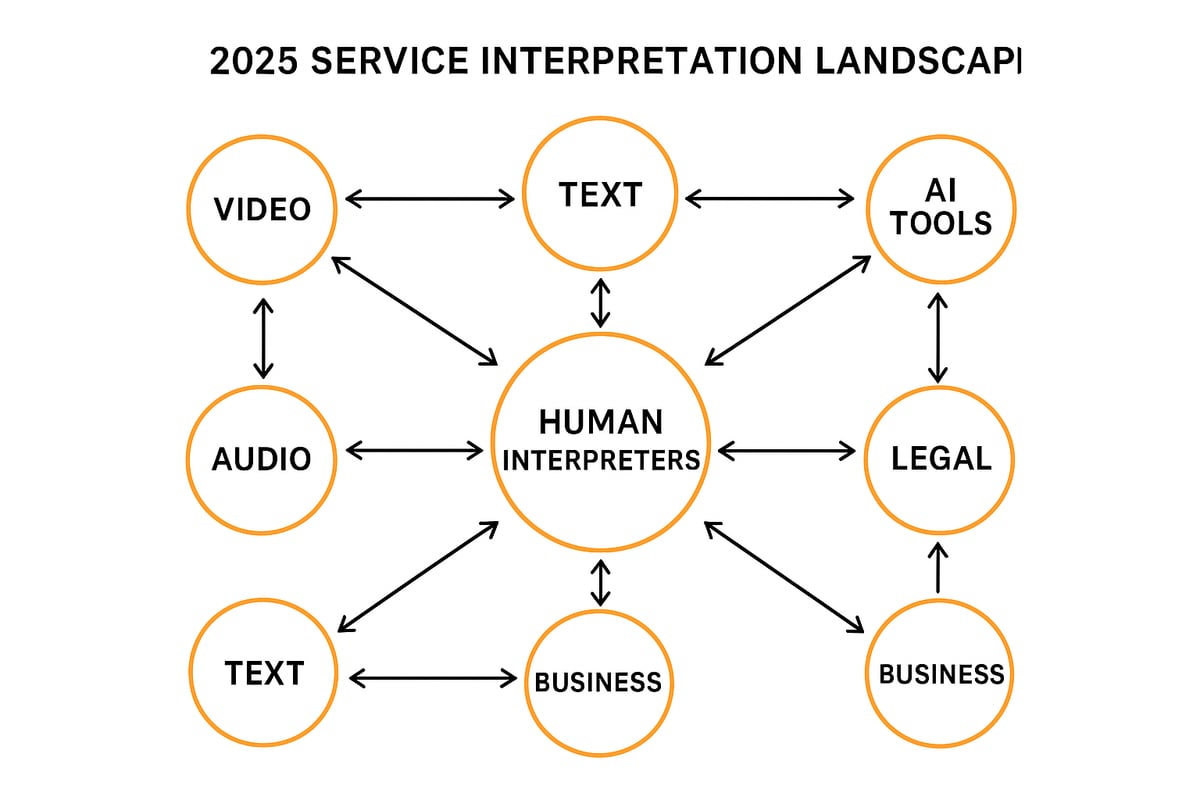
Multimodal service interpretation is now the industry standard. Providers combine video, audio, and text channels to facilitate real-time communication, regardless of location. This approach enables seamless interactions for clients and interpreters, whether they're in a hospital, courtroom, or virtual meeting.
Remote and hybrid models have surged since the pandemic, allowing flexible and on-demand solutions. For example, a medical consultation might use both video and chat-based interpretation, ensuring clarity and accessibility for all participants.
Clients benefit from having multiple channels available, which increases efficiency and reduces the risk of miscommunication. Service interpretation providers have adapted quickly to meet these evolving demands.
AI and Human Collaboration
Artificial intelligence has become a vital partner in service interpretation, but it doesn't replace human expertise. AI tools now support interpreters with speech recognition, glossary management, and predictive transcription, streamlining routine tasks.
However, human interpreters remain essential for handling nuance, context, and cultural sensitivity. Hybrid models, where AI assists but humans oversee, deliver both speed and accuracy. Over 60 percent of providers now offer AI-assisted solutions, reflecting the shift toward collaborative interpretation.
This partnership between technology and people enhances service interpretation quality, making it more reliable and adaptable than ever before.
Expanding Use Cases and Sectors
Service interpretation is no longer limited to traditional settings. Its adoption has expanded rapidly into emergency services, education, legal proceedings, and customer support. For instance, telehealth visits and 911 emergency centers now use instant language identification to connect callers with interpreters immediately.
Multicultural communities and international businesses also drive demand for accessible language solutions. By offering industry-specific features and rapid response, service interpretation providers empower professionals to serve diverse populations effectively.
These expanding use cases highlight the essential role of interpretation in supporting critical services and global collaboration.
Regulatory and Compliance Pressures
As service interpretation becomes integral to sensitive sectors, regulatory scrutiny has intensified. Providers must comply with data privacy laws such as HIPAA, GDPR, and local language access requirements.
Stricter enforcement means healthcare and legal organizations now face penalties for failing to provide qualified interpreters. Service interpretation platforms have responded by implementing robust security, audit trails, and compliance features.
Meeting these regulations is not just about avoiding fines, but also about building trust with clients and protecting sensitive information.
Market Growth and Competition
The market for service interpretation is booming, projected to surpass 20 billion dollars by 2025. Tech giants and specialized startups are entering the space, increasing competition and driving innovation.
Clients now expect price transparency, rapid deployment, and advanced technology. According to Language Services Industry Trends and Statistics, the surge in demand is matched by new solutions and business models.
This dynamic environment encourages continuous improvement, ensuring that service interpretation remains a vital asset for organizations worldwide.
7 Essential Facts About Service Interpretation in 2025
Unlocking the future of service interpretation means understanding the seven transformational facts reshaping the industry in 2025. Below, each fact is explored in depth to guide organizations, professionals, and decision-makers through the evolving landscape.
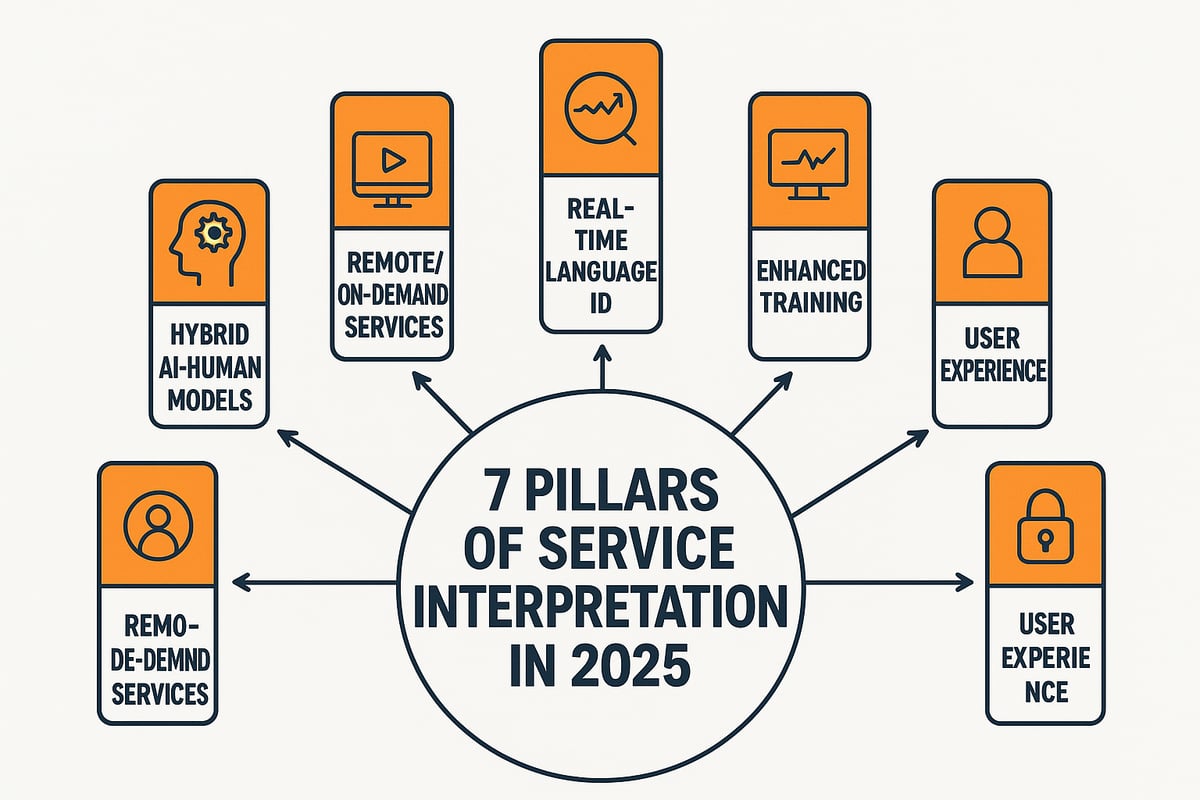
1. Hybrid AI-Human Interpretation Is Now the Norm
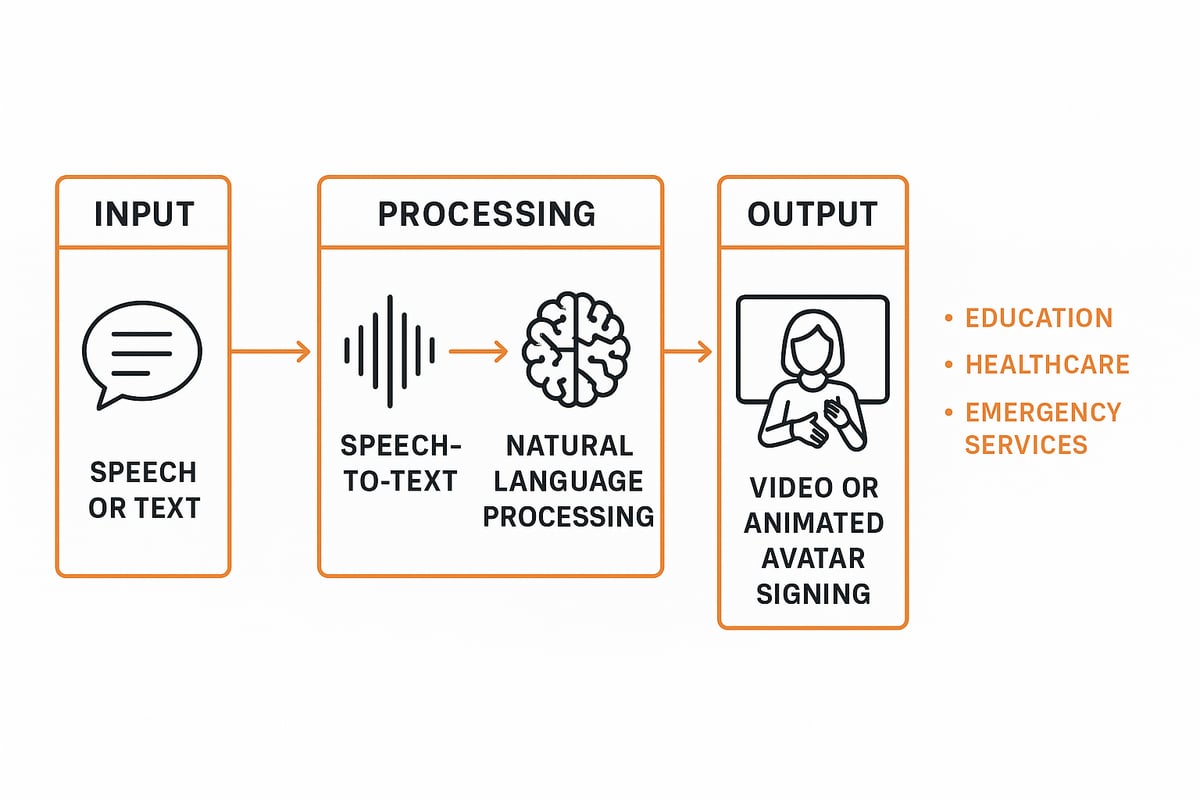
The landscape of service interpretation has shifted decisively toward hybrid AI-human models. Most providers now blend advanced AI tools, such as speech-to-text engines and automated translation, with certified human interpreters. This approach allows service interpretation to scale quickly, handle high volumes, and enhance response times.
For routine or low-stakes exchanges, AI can manage the workload, ensuring clients receive immediate support. In contrast, human interpreters step in for complex, sensitive, or nuanced scenarios, where cultural context and emotional intelligence are crucial. For instance, courtroom proceedings and sensitive medical discussions still require human oversight, while customer service inquiries often use AI for frequently asked questions.
Benefits of Hybrid Models:
- Faster response times
- Greater accessibility and scalability
- Reduced operational costs
However, this evolution brings challenges. Ensuring consistent quality, managing potential AI bias, and maintaining strict confidentiality are ongoing concerns. Providers must also invest in continuous improvement and oversight to address these issues.
A recent industry survey shows that 70 percent of interpretation requests in 2025 are fulfilled using hybrid models. This trend is especially visible in emergency services, where Hybrid AI-human interpreters in 911 are becoming standard, offering both speed and reliability.
The result is a new standard for service interpretation, where human expertise and AI efficiency work together to deliver better outcomes in every sector.
2. On-Demand and Remote Interpretation Dominate Service Delivery
In 2025, on-demand and remote service interpretation have become the preferred delivery models across industries. Over-the-phone (OPI), video remote (VRI), and instant messaging services now provide 24/7 access to interpreters in more than 380 languages, making service interpretation more flexible and scalable than ever before.
Global organizations benefit from being able to deploy service interpretation rapidly, especially in high-volume or emergency settings. For example, platforms like Lionbridge offer instant interpreter access for medical consultations, legal meetings, and business conferences.
Advantages:
- Scalability for organizations of any size
- Flexibility for users and providers
- Rapid deployment in emergencies
There are some drawbacks, such as occasional connectivity issues and the potential loss of nonverbal cues during remote sessions. Still, the efficiency and reach of remote service interpretation far outweigh these challenges.
Data from 2025 shows that remote interpretation services account for over 65 percent of all interpretation minutes delivered. This shift reflects the growing demand for service interpretation that can adapt to any situation, location, or time zone.
The dominance of on-demand and remote models ensures that service interpretation is more accessible, reliable, and responsive than ever before.
3. Specialized Interpretation for Critical Sectors (Healthcare, Legal, Emergency)
Specialization is now a defining feature of service interpretation in 2025. Interpreters are increasingly required to have sector-specific training and certifications, particularly in healthcare, legal, and emergency services. This ensures that service interpretation meets the unique demands of each sector, from medical terminology to legal confidentiality.
For instance, medical interpreters are vital for telehealth consultations, while legal interpreters are needed in depositions and trials. Emergency services, such as 911 centers, depend on interpreters who can quickly identify languages and facilitate secure communication.
Sector-Specific Solutions:
- Compliance with HIPAA and legal confidentiality standards
- Tailored training for interpreters
- Industry-focused platforms and workflows
A case study in emergency response shows that new platforms have reduced language assistance wait times by 80 percent. Additionally, 80 percent of healthcare providers report improved patient outcomes when using specialized interpretation.
This trend is further explored in Enhancing healthcare communication with interpretation, highlighting the growing impact of service interpretation in breaking down language barriers in critical settings.
The demand for specialized service interpretation will only continue to rise as organizations recognize its role in delivering safe, effective, and compliant services across every sector.
4. Real-Time Language Identification and Multilingual Access
Technological advancements have made real-time language identification a core feature of service interpretation. AI and machine learning can now detect the language of a caller or speaker instantly, connecting users to the right interpreter in seconds.
This innovation is integrated into public services, customer support systems, and emergency platforms, making service interpretation more seamless and user-friendly. For example, some platforms can identify and connect users to interpreters in under two seconds, dramatically reducing delays.
Key Benefits:
- Immediate access to multilingual support
- Improved user experience and satisfaction
- Enhanced compliance with language access regulations
The main challenge is maintaining robust data privacy and security, given the sensitive nature of many service interpretation interactions. Still, the average language identification speed has dropped from five minutes in 2020 to under ten seconds in 2025, setting a new standard for efficiency.
Real-time identification ensures that service interpretation is not only fast, but also accurate and accessible for every user, regardless of language or context.
5. Enhanced Interpreter Training and Quality Assurance
Continuous improvement is critical for the future of service interpretation. Providers are investing heavily in ongoing interpreter training, covering AI tools, sector-specific terminology, and cultural competence. Rigorous vetting, certification, and performance monitoring are now standard practices.
AI is also used for real-time quality checks, feedback, and error detection during live sessions. Interpreters frequently utilize digital glossaries and reference tools to ensure accuracy and consistency in service interpretation.
Impact of Enhanced Training:
- Higher client satisfaction
- Reduced miscommunication incidents
- Consistent service interpretation quality
According to an industry audit, 90 percent of top-rated providers use AI-powered quality assurance systems. This integration of technology and human expertise helps maintain high standards and builds trust with clients.
The focus on training and quality assurance ensures that service interpretation continues to evolve, meeting the highest expectations for reliability and performance.
6. Data Security, Compliance, and Confidentiality Take Center Stage
As service interpretation becomes more deeply embedded in sensitive sectors, data security and regulatory compliance are paramount. Providers must adhere to strict global and local data protection laws, such as HIPAA and GDPR.
Secure platforms featuring end-to-end encryption, audit trails, access controls, and incident reporting are now standard. In sectors like healthcare and legal, service interpretation providers must demonstrate compliance with SOC 2, HIPAA, and GDPR requirements.
Key Security Features:
- End-to-end encryption for all sessions
- Comprehensive audit trails
- Strict access controls for sensitive information
Penalties for breaches or non-compliance are rising, prompting a 40 percent increase in compliance-related investments among providers from 2024 to 2025.
By prioritizing data security, service interpretation providers ensure that clients can trust their services with confidential and sensitive information.
7. User Experience and Accessibility Drive Service Innovation
The final essential fact about service interpretation in 2025 is the focus on user experience and accessibility. Providers are developing intuitive platforms that offer seamless integration with existing systems, making service interpretation accessible to all users.
Multimodal access options, including voice, video, chat, and text-to-speech, cater to diverse needs. Mobile apps now provide instant interpreter access and visual aids for the hearing-impaired, while customizable workflows and pre-built message templates streamline communication.
Trends in User Experience:
- Growth in services for neurodiverse and disabled users
- 75 percent of users cite ease of access as their top reason for switching providers
- Platforms designed for maximum inclusivity
By prioritizing accessibility and user-friendly design, service interpretation is evolving to serve a broader audience, ensuring no one is left behind in a multilingual world.
The Future of Emergency Interpretation: Meeting Critical Needs
In emergency situations, time is everything. When every second counts, the ability to communicate across languages can mean the difference between life and death. As we move into 2025, service interpretation is playing a pivotal role in ensuring that help reaches everyone, regardless of the language they speak.
Meeting Critical Challenges
Emergency settings present unique demands for service interpretation. Speed is crucial, as delays can escalate risks for those in need. Accuracy and cultural sensitivity are equally vital to avoid misunderstandings during high-stress scenarios.
Inclusivity is another core requirement. Diverse populations mean responders must be ready for any language. Service interpretation must adapt to these unpredictable, high-pressure environments.
Technological Breakthroughs in Real Time
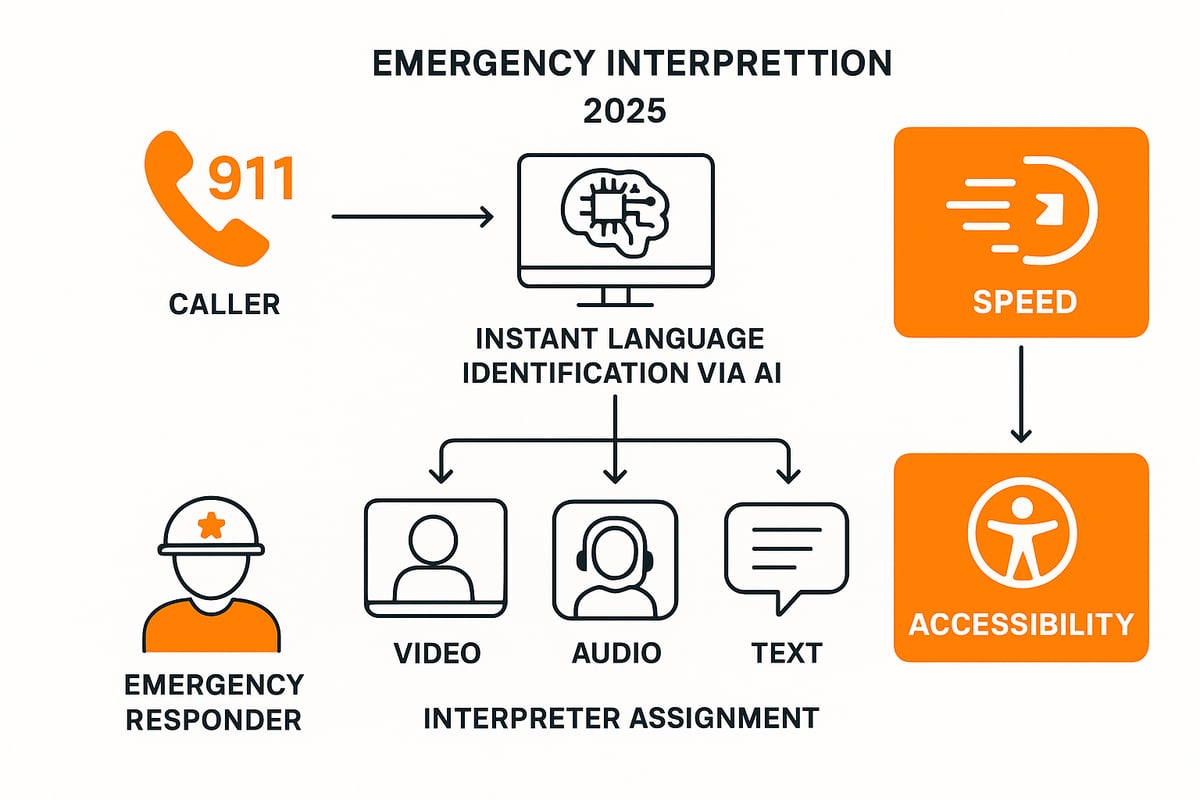
Thanks to advancements in AI and cloud-based solutions, emergency teams now leverage real-time translation and instant interpreter access. For example, 911 centers use platforms that identify the caller’s language within seconds, then connect to a qualified interpreter through video or audio. To discover how video solutions are transforming these interactions, see Video interpreter services explained.
Key innovations include:
- AI-driven language detection and routing
- Secure, encrypted video and voice channels
- On-demand interpreter pools available 24/7
These tools ensure service interpretation is available instantly, supporting first responders and callers alike.
Tangible Impact and Future Outlook
The impact is clear. Emergency interpretation platforms now process over 50,000 minutes of live interpretation each month. Non-English speakers experience dramatically reduced wait times, leading to better outcomes in critical moments.
Looking ahead, service interpretation will continue to evolve with AI-human hybrid models and multilingual mass notifications, ensuring that emergency communication is always accessible, accurate, and inclusive.
As you’ve seen, the landscape of service interpretation in 2025 is rapidly evolving with hybrid AI human models, real time language identification, and a critical focus on speed and accuracy in emergencies. If you want to see firsthand how these advancements can help your organization eliminate language barriers and respond more effectively, I encourage you to Book a Demo. Experience how seamless, secure interpretation can transform your communication workflows and ensure every call or message gets the urgent, clear response it deserves.