

In 2025, online English translation tools have reached new heights, offering instant access to...
Wondering what the translation services cost will look like in 2026? With the world more connected than ever, accurate multilingual communication is crucial for business success and compliance.
As organizations expand globally and teams become more diverse, understanding translation services cost is essential for effective planning and budgeting. The landscape is changing, with new technology, rising demand, and evolving standards shaping how services are priced.
This guide breaks down translation services cost in 2026, covering pricing models, the main factors that influence rates, comparisons of service types, and practical tips for smarter budgeting.
Use this guide to make informed decisions, optimize your translation spend, and ensure your organization is ready for the challenges and opportunities of the coming year.
Understanding Translation Services in 2026
The modern business environment is more global and connected than ever. As companies expand internationally and teams become more diverse, the demand for accurate and reliable translation services cost planning is on the rise. Organizations now see translation as a core strategy, crucial for compliance, safety, and effective communication.
The Evolving Landscape of Translation Services
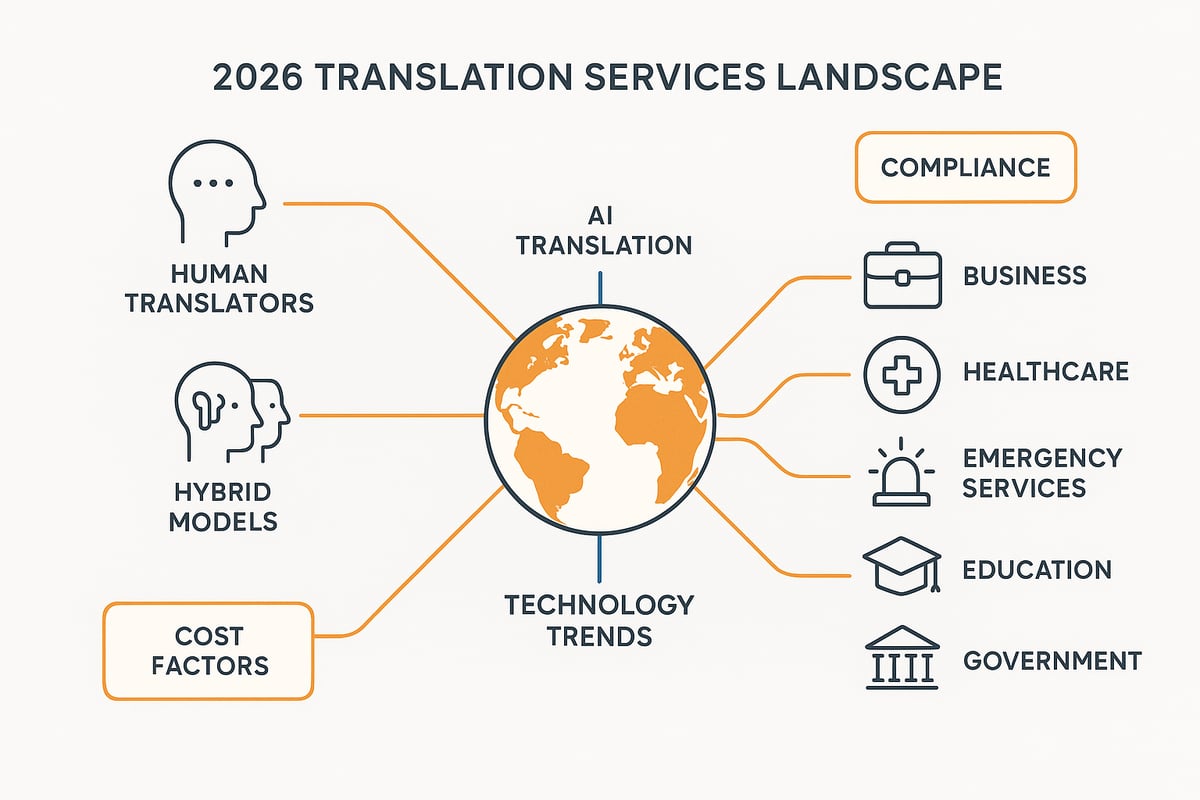
Translation services cost is shaped by a rapidly changing landscape in 2026. Globalization has brought together multicultural teams in technology, healthcare, and emergency response. Remote work trends and cross-border collaboration fuel the need for seamless communication.
Both human and AI-driven translation are now essential, especially as new compliance and accessibility standards emerge. For example, real-time translation is used in emergency dispatch centers, while diverse tech firms collaborate across continents. Research shows that companies with diverse teams outperform their peers financially by 35 percent.
Translation services cost is no longer a secondary concern. It has become a strategic necessity for organizations aiming to compete globally, comply with regulations, and support inclusive workplaces.
Types of Translation Services Available
Understanding the range of options helps organizations make informed decisions about translation services cost. There are several main types of translation services:
| Service Type | Description | Best For |
|---|---|---|
| Human Translation | Professional linguists ensure nuance | Legal, medical, marketing |
| AI/Machine Translation | Automated, fast, cost-effective | Routine, high-volume content |
| Hybrid Models | AI speed plus human review | Customer support, standard documents |
| Specialized Services | Industry-specific expertise | Legal, medical, technical, emergency |
Hybrid approaches are gaining popularity, delivering efficiency and quality. Specialized services, such as legal or emergency translation, require certified professionals. For a deeper dive into these options, see this detailed guide on the types of translation services.
Selecting the right type directly impacts translation services cost and project success.
Typical Use Cases and Industries
Translation services cost varies based on industry needs and document types. Here are some of the most common applications:
- Business: Contracts, marketing materials, HR documentation.
- Healthcare: Patient instructions, consent forms.
- Emergency Services: Real-time translation for crisis response.
- Education: Multilingual teaching resources.
- Government: Public notices, legal and compliance documents.
Each industry has unique challenges. For instance, healthcare translations must prioritize accuracy and privacy, while emergency services rely on speed and clarity. Understanding the context helps organizations align translation services cost with their operational goals.
Why Professional Translation Matters
Professional translation is vital to ensure accuracy, compliance, and cultural sensitivity. A well-managed translation services cost investment reduces the risk of miscommunication and legal complications.
High-quality translation protects both employees and customers. For example, a poorly translated safety protocol can cause workplace accidents, while accurate communication fosters trust and satisfaction.
Investing in professional translation services cost is a proactive measure. It enhances brand reputation, safeguards operations, and supports long-term growth. Organizations that prioritize quality translation are better equipped to navigate the challenges of a globalized world.
Translation Pricing Models Explained
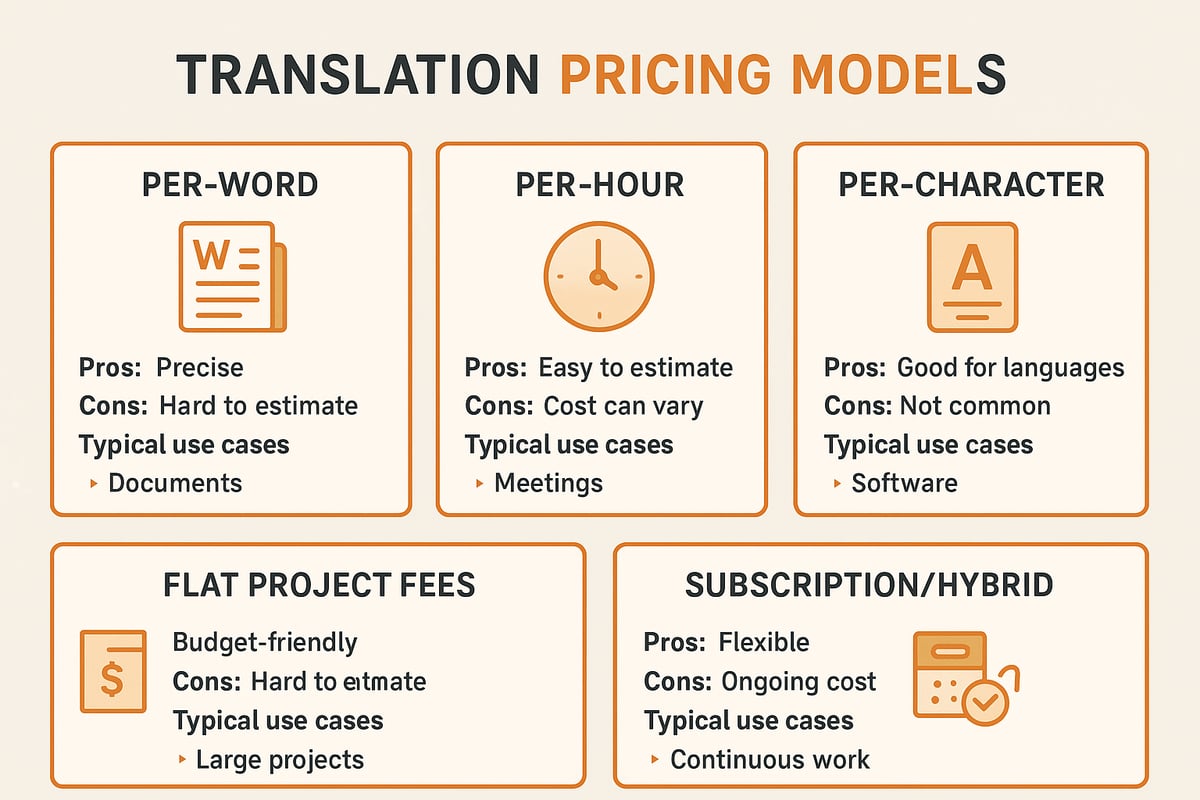
Understanding translation services cost structures is key to making informed, budget-friendly decisions. In 2026, pricing models have evolved to suit different project needs, languages, and business goals. Let’s break down the primary approaches to help you find the right fit for your organization.
Per-Word Pricing
Per-word pricing remains the most widely used model for translation services cost calculations in 2026. This method is straightforward: the provider charges a set fee for each word in the source or target document. Average rates for common language pairs range from $0.10 to $0.22 per word.
This model works best for projects with clear, countable text, such as manuals, websites, or reports. For example, translating a 10,000-word employee handbook at $0.15 per word would total $1,500.
Pros:
- Predictable costs for budgeting
- Scalable for large projects
Cons:
- Less ideal for highly formatted or complex layouts
- May not suit creative or technical content with heavy graphics
A table can help illustrate how per-word rates impact overall translation services cost:
| Word Count | Rate per Word | Total Cost |
|---|---|---|
| 5,000 | $0.12 | $600 |
| 10,000 | $0.15 | $1,500 |
| 20,000 | $0.18 | $3,600 |
Per-Hour Pricing
Per-hour pricing is commonly used when translation projects require in-depth research, consulting, or ongoing collaboration. This model is ideal for editing, localization, or projects where the workload is unpredictable.
Average hourly rates for translation services cost in 2026 range from $25 to $60, depending on the translator’s expertise and region. For instance, legal compliance documents that require specialized knowledge might be billed hourly to ensure accuracy and thoroughness.
Pros:
- Flexible for complex, evolving content
- Encourages high-quality, detailed work
Cons:
- Less predictable for budgeting
- Costs may rise if project scope expands
This approach is often chosen for continuous projects or when determining word count is challenging, such as software localization or marketing adaptation.
Per-Character/Per-Million Characters Pricing
For Asian languages like Chinese, Japanese, and Korean, per-character or per-million characters pricing offers a more precise method. These languages have unique structures, making per-word calculations less accurate.
Typical rates for this translation services cost model range from $0.03 to $0.08 per character. For example, translating a safety manual for a Japanese manufacturing plant might be quoted based on the number of characters, ensuring a fair and accurate estimate.
Pros:
- Reflects true effort for character-based languages
- Useful for languages with dense scripts
Cons:
- Can be confusing for clients unfamiliar with character counts
- May require conversion from word-based quotes
This model is especially relevant for global companies operating across Asia, where accurate cost projection is crucial.
Flat Project Fees & Minimum Charges
Flat project fees provide a single, fixed price for an entire translation project, regardless of length or time invested. This model is ideal for well-defined projects with clear deliverables, such as onboarding packages or standardized HR materials.
Minimum charges, typically between $50 and $200, ensure translators are compensated for small jobs. This approach offers budget certainty, which is attractive when translation services cost predictability is important.
Pros:
- Easy to budget and plan
- No surprises with extra charges
Cons:
- Less flexible if the project scope changes
- May not reflect true workload on highly complex content
For example, translating an onboarding packet for a new office opening could be quoted at a flat fee, making it easier to allocate resources upfront.
Subscription & Hybrid Models
Subscription and hybrid models are gaining traction in 2026, especially for organizations with ongoing translation needs. These approaches bundle services into monthly or annual packages, often with word or hour allowances, and may combine AI-driven translation with human review.
This model helps convert variable translation services cost into predictable expenses. It is ideal for businesses managing regular compliance updates, internal newsletters, or high-frequency content.
Pros:
- Predictable, recurring costs
- Scalability for growing needs
- Access to both human expertise and AI efficiency
Cons:
- May include unused credits if volume estimates are off
- Not always suitable for one-off projects
Many providers offer rollover credits or flexible plans. According to translation pricing trends and forecasts, these models are expected to become more popular as companies seek cost stability and efficiency. By choosing the right subscription, businesses can better manage their translation services cost and support global growth.
Key Factors Influencing Translation Costs
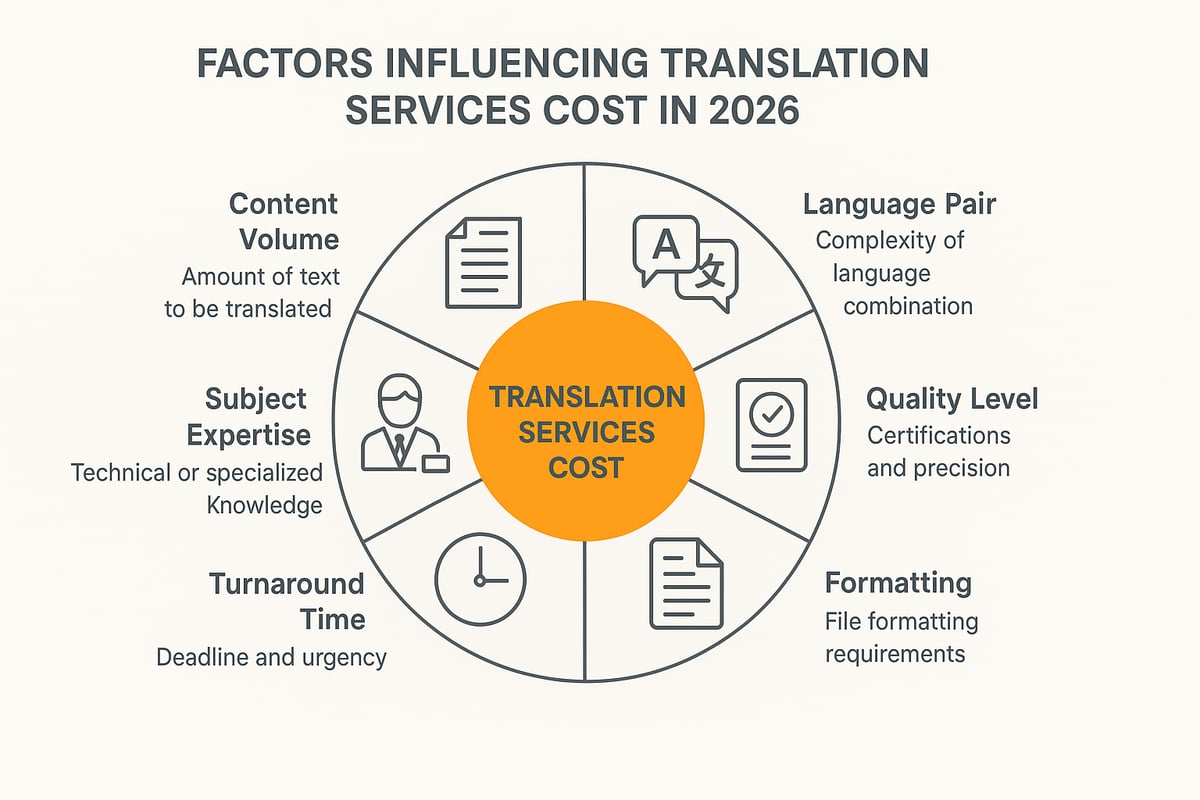
Understanding what shapes translation services cost in 2026 is crucial for effective budgeting. Multiple factors come into play, each influencing the final price in distinct ways. By exploring these key drivers, businesses can make informed decisions and avoid unexpected expenses.
Content Volume and Document Type
The amount of content you need translated is often the biggest factor in translation services cost. Most providers charge by word or character count, making larger projects more expensive but often eligible for volume discounts. For example, translating a handbook, safety manual, and training materials in one batch can reduce your per-word rate by 15 to 25 percent.
Different document types also impact cost. Legal contracts or technical manuals may be priced higher than general HR memos due to complexity. To dig deeper into these dynamics, you can explore Factors impacting translation pricing for an in-depth look at what drives costs in various scenarios.
Language Pair and Rarity
Another essential aspect affecting translation services cost is the language pair you require. Common combinations like English to Spanish or French are typically more affordable, with rates ranging from $0.10 to $0.20 per word.
However, translating into less common or rare languages, such as Burmese or indigenous dialects, can push rates above $0.25 per word. The availability of qualified translators for these pairs directly impacts pricing. For specialized government or outreach programs, the rarity of the language will play a large role in your overall spend.
Quality Level and Certification
The desired quality level significantly shapes translation services cost. Machine translation with human post-editing can be 40 to 60 percent cheaper than full human translation while still providing reasonable accuracy for non-critical documents.
Certified translations, especially for legal or medical content, come at a premium. Regulatory filings, immigration paperwork, or documents requiring notarization demand certified professionals, increasing the price. Always match the quality level to the content's importance to avoid overspending or risking compliance.
Formatting, Complexity, and File Types
Complex formatting and file types are often overlooked but can quickly increase translation services cost. Documents with tables, images, or intricate layouts may need additional desktop publishing work, which adds to the overall quote.
Editable files, such as Word or Excel, are easier and cheaper to process compared to scanned PDFs or image files. For instance, translating and reformatting a multilingual benefits guide with graphics will cost more than plain text documents. Providing clear, editable files helps control costs.
Turnaround Time and Urgency
How quickly you need the translation also directly affects translation services cost. Rush jobs, especially those needed within 24 to 48 hours, can be 25 to 100 percent more expensive than standard timelines.
Advance planning allows you to avoid these surcharges and ensures higher quality. For example, an emergency safety update that must be translated overnight will come with a premium price. Whenever possible, schedule projects with ample lead time to manage costs efficiently.
Subject Matter Expertise and Regional Factors
Specialized knowledge is often required for technical, legal, or medical translations, which raises translation services cost compared to general content. Experts in these fields command higher rates due to their background and understanding of industry-specific terminology.
Regional differences also matter. Translators based in North America or Western Europe may charge more than those in Asia or Eastern Europe, reflecting local cost of living and market demand. For projects like industry-specific manuals, investing in expertise ensures accuracy and reduces the risk of costly errors.
Comparing Types of Translation Services
Choosing the right translation services cost model is crucial as businesses navigate a rapidly evolving multilingual landscape in 2026. Understanding the strengths and limitations of each service type will help you make informed, cost-effective decisions.
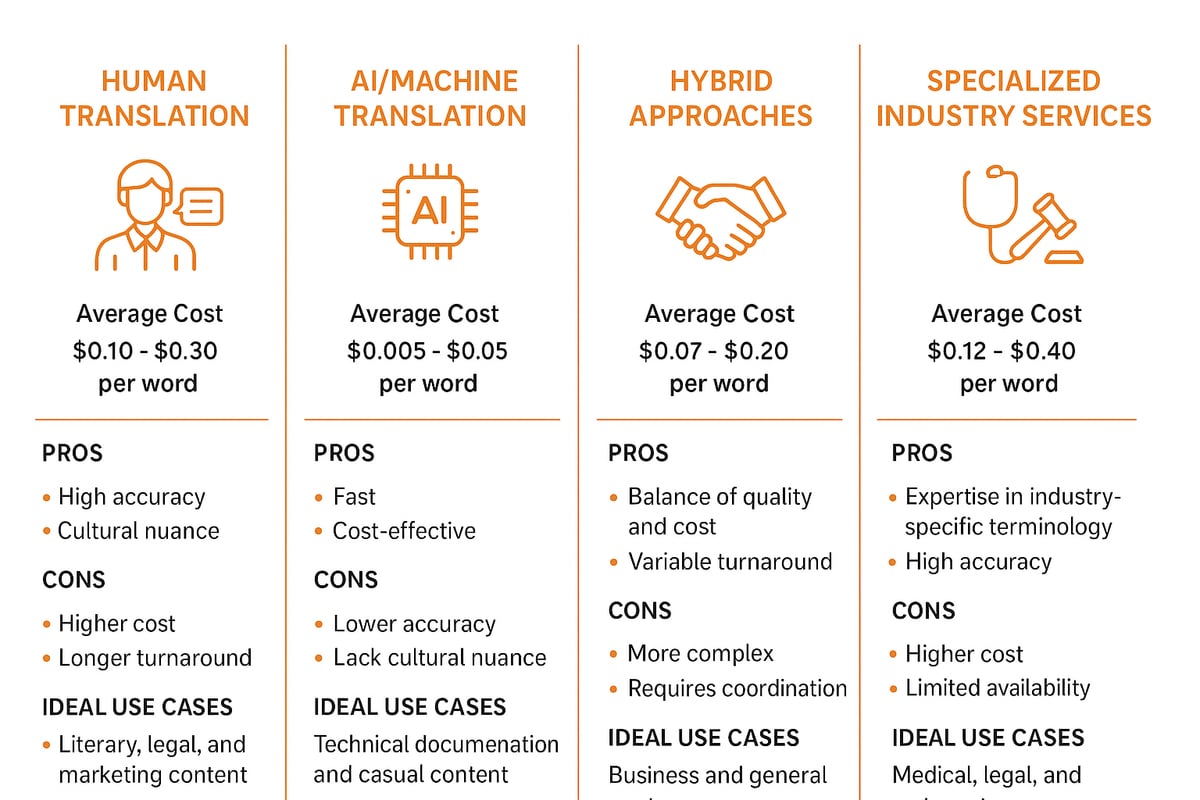
Human Translation: Pros, Cons, and Costs
Human translation remains the industry gold standard for accuracy and cultural nuance. When your content demands legal, medical, or high-stakes precision, professional linguists are essential. In 2026, the translation services cost for human translation typically ranges from $0.12 to $0.30 per word, depending on language pair and subject complexity.
This approach ensures compliance and contextual understanding, especially for HR policies, contracts, and sensitive documentation. However, it comes at a premium and may require longer turnaround times for large projects. To optimize your translation services cost, it’s vital to evaluate provider credentials and workflow transparency. For more guidance on effective selection, see Choosing the right translation provider.
Table: Human Translation at a Glance
| Feature | Value |
|---|---|
| Cost | $0.12–$0.30/word |
| Pros | Nuance, compliance, accuracy |
| Cons | Higher cost, slower delivery |
| Best For | Legal, medical, HR, high-stakes docs |
AI/Machine Translation: When to Use and Cost Benefits
AI-driven translation has advanced rapidly, offering businesses fast, scalable solutions for routine content. The translation services cost for machine translation is significantly lower, often free or up to $0.02 per word, with the option for paid human post-editing.
This makes it ideal for internal communications, bulk updates, or operational notices where perfect nuance is less critical. However, AI may struggle with idioms, tone, or industry-specific terminology, limiting its use for client-facing or regulatory content. For businesses balancing speed and budget, machine translation reduces the translation services cost substantially while covering high-volume needs.
Hybrid Approaches: Balancing Speed and Quality
Hybrid models blend AI efficiency with human expertise. In this workflow, AI generates a draft which is then reviewed and polished by professional translators. The translation services cost for hybrid approaches is typically 20 to 40 percent less than full human translation, while maintaining a high level of accuracy.
These models are best suited for customer support, FAQs, or standard operating procedures, where a balance of speed and reliability is essential. By leveraging technology and human insight, organizations achieve dependable results and predictable costs.
Specialized and Industry-Specific Services
Highly regulated industries such as legal, medical, and emergency services require translators with sector-specific expertise. The translation services cost in these cases is higher, reflecting the need for certified professionals and specialized knowledge.
Examples include translating emergency protocols for first responders or regulatory filings for pharmaceutical companies. Investing in specialized services reduces the risk of errors, legal exposure, and operational disruptions, making it a critical consideration for organizations with complex compliance needs.
Step-by-Step Guide: How to Budget for Translation Services in 2026
Budgeting for translation services cost in 2026 is a strategic process. By following a clear, step-by-step approach, you can ensure accuracy, compliance, and value for your investment. Let’s break down the key steps to help you plan effectively.
Step 1: Assess Your Translation Needs
Start by outlining your organization’s translation needs for the year. Identify the types of content you expect to translate, such as legal documents, HR policies, marketing materials, or emergency communications. Estimate the total volume, including word or page counts, and list all target languages and dialects. For example, a global company may need multilingual onboarding documents for new hires across several regions. Accurately assessing your requirements will help you determine a realistic translation services cost and prevent budget surprises as projects arise.
Step 2: Define Quality and Compliance Requirements
Next, clarify the level of quality and compliance your content demands. Decide if machine translation, human translation, or a hybrid solution is appropriate for each content type. Some materials, such as healthcare compliance documents, may require certified translation and strict regulatory adherence. Consider the risks and legal obligations tied to your industry. By aligning quality expectations with business needs, you avoid overspending on routine content while ensuring critical materials receive the attention they warrant in your translation services cost planning.
Step 3: Choose the Right Pricing Model
Compare available pricing models to select the one that fits your frequency and predictability of need. Options include per-word, per-hour, flat fee, or subscription models. For recurring projects, a subscription may offer cost stability, while one-off jobs may be better suited for flat fees. For a deeper understanding of pricing structures, Translation services sourcing and cost intelligence provides valuable insights. Matching the right model to your workflow can help you optimize your translation services cost and avoid unexpected charges.
Step 4: Vet and Compare Translation Providers
Research translation providers based on their industry expertise, language coverage, and technology integration. Request transparent quotes and review service level agreements to understand exactly what is included in the translation services cost. Check for compatibility with your existing content management systems or workflow tools. For example, if you need ongoing multilingual internal communications, select a provider with proven experience in your sector and the ability to scale as your needs evolve.
Step 5: Optimize for Cost and Efficiency
Maximize your translation services cost efficiency by consolidating projects to qualify for volume discounts. Always submit editable files and provide clear project instructions to minimize formatting fees. Plan translation projects in advance to avoid rush charges, which can quickly inflate your budget. Regularly review your translation usage data and update your strategy as your business grows. By proactively managing these factors, you gain control over both quality and cost.
Costly Translation Mistakes and How to Avoid Them
Avoiding common pitfalls in translation services cost planning can save your business time, money, and reputation. Many organizations underestimate how quickly costs can escalate when critical mistakes are made. Let us explore the most frequent errors and how to navigate them.
Chasing the Lowest Price
Focusing exclusively on the lowest translation services cost often results in poor quality work. Cheap translations may contain errors, lack cultural nuance, or require extensive revisions later. This false economy can inflate your total spend as you pay to fix mistakes.
Ignoring Context and Communication Goals
Skipping necessary context or background information leads to misinterpretation, especially in safety or compliance materials. For effective business outcomes, translation must reflect the intended message and audience. The importance of context is highlighted in Translation in business communication, emphasizing how professional translation supports clarity and intent.
Over-Translating Non-Essential Materials
Not every document justifies full professional translation. Over-translating adds unnecessary translation services cost, especially for routine or internal content. Prioritize mission-critical materials where accuracy and compliance matter most.
Underestimating Formatting and Technical Costs
Complex layouts, tables, or graphics can double your translation services cost if not anticipated. Editable files are easier and cheaper to process, while scanned images or PDFs require extra formatting work. Always account for these technical aspects in your budget.
Failing to Plan for Urgency
Last-minute translation requests often incur rush fees, increasing your overall translation services cost by 25 to 100 percent. Advance planning allows for better scheduling, access to top translators, and lower rates.
Not Matching Provider Expertise to Industry Needs
Using generalist translators for highly technical, legal, or medical content leads to errors and compliance risks. Specialist providers may cost more but reduce long-term risks and rework. For example, poorly translated emergency protocols can result in delayed responses or legal exposure.
A recent statistic shows that 60 percent of businesses spend more correcting inadequate translations than they would have by investing in quality from the start. Avoiding these common mistakes ensures your translation services cost stays controlled and your organization’s communication remains effective.
What to Expect: Translation Services Cost Trends for 2026
Global communication needs are accelerating, and the translation services cost landscape is evolving rapidly. As organizations plan for 2026, understanding the forces shaping pricing and service delivery will be essential for effective budgeting and risk management.
Market Rate Predictions and Influencing Factors
The translation services cost is expected to rise moderately in 2026 due to the growing demand for multilingual content. Companies are expanding globally, driving a need for more frequent and diverse language support.
Average per-word rates for common language pairs will likely sit between $0.12 and $0.22. Specialized projects or rare languages may command higher fees, especially where expert human input is required.
Subscription models and hybrid solutions are becoming popular, offering more predictable spending for ongoing needs. The table below summarizes projected rates:
| Service Type | Expected Rate (per word) |
|---|---|
| Common Languages | $0.12–$0.22 |
| Rare Languages | $0.25+ |
| AI/Hybrid Models | $0.02–$0.10 |
Planning for these changes will help companies optimize their translation services cost in 2026.
Technological Innovations and Their Impact
Technology is a key driver of translation services cost trends. AI and machine translation tools are delivering faster, more accurate drafts, which reduces costs for high-volume, low-risk content. Real-time translation is being integrated with business communication platforms, streamlining workflows.
According to Translation industry trends for 2026, advancements in AI are expected to further reduce costs for routine projects. However, human expertise remains crucial for nuanced, regulated, or sensitive materials.
Organizations leveraging technology wisely can lower their overall translation services cost while maintaining quality for critical content.
Regulatory and Compliance Considerations
Increasing regulatory requirements are shaping translation services cost across many sectors. Healthcare providers, public agencies, and financial institutions face stricter obligations for language access and certified translations.
New accessibility laws are prompting organizations to translate public notices, legal documents, and consumer materials into multiple languages. Certified translation services, often needed for compliance, typically command premium rates.
It is essential to assess which documents require certified translation to manage translation services cost without sacrificing compliance or legal standing.
Strategic Budgeting and Future-Proofing
Smart organizations are now embedding translation services cost into annual budgets, shifting from ad hoc spending to subscription or hybrid models. This provides better predictability and cost control.
Investing in technology partnerships and scalable solutions prepares companies for changing needs. Regularly reviewing translation usage data helps to optimize spending and adjust strategies as business evolves.
By taking a proactive approach, businesses can ensure their translation services cost aligns with operational goals and regulatory demands in 2026.
As we’ve explored, understanding translation service costs in 2026 is about more than just numbers—it’s about making informed choices that protect your team, your community, and your bottom line. If you want to see firsthand how seamless, real-time translation and communication can transform your emergency response or public safety operations, I encourage you to Book a Demo. You’ll discover practical solutions that empower your organization to bridge language gaps quickly and confidently—no matter what the future holds.