
Imagine being able to translate complex information in seconds, ensuring nothing is lost in...
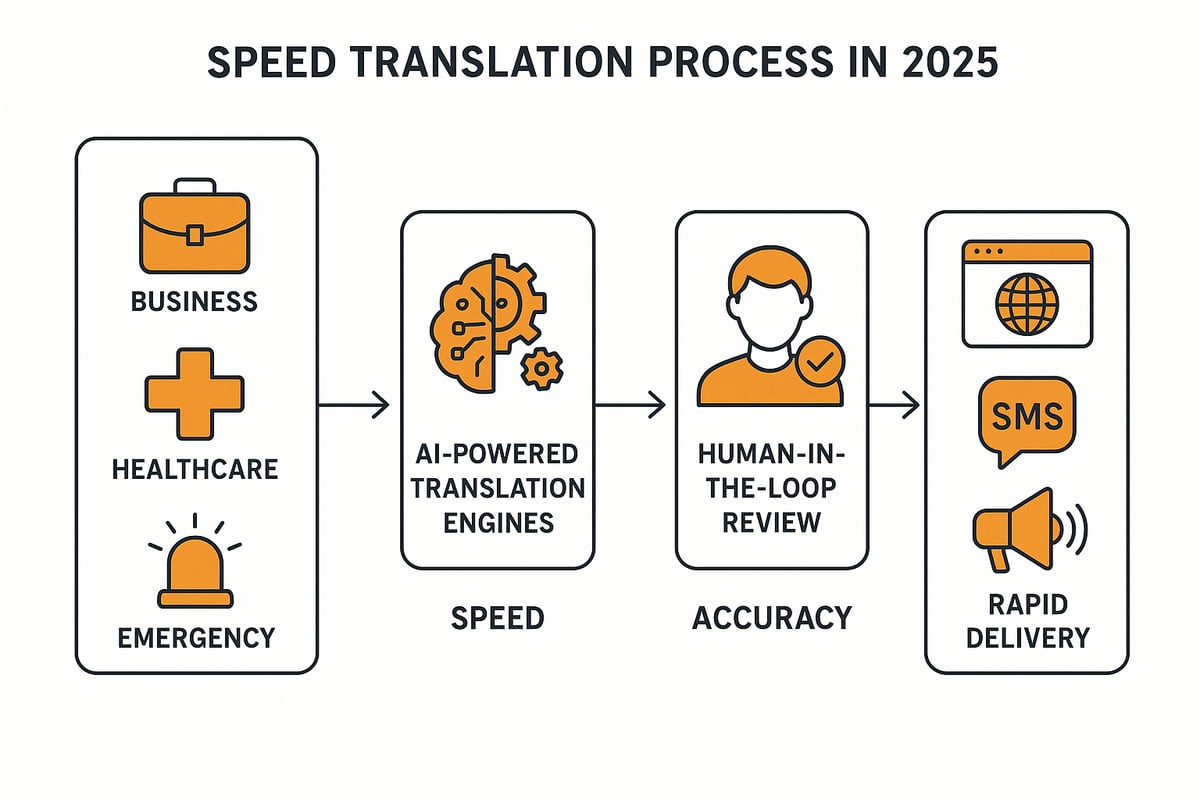
In the age of instant global communication, translation speed is no longer a luxury, it is essential for organizations and individuals striving to connect across languages. The world is increasingly reliant on swift, accurate translation to drive business, enable technology, and respond to urgent situations.
This essential guide explores the critical factors, technologies, and strategies that will define translation speed in 2026. You will discover why speed matters, learn about the latest advancements in both machine and human translation, and find practical ways to optimize your multilingual workflows.
Fast, reliable translation speed offers a competitive edge and ensures inclusivity in a rapidly evolving world. Ready to stay ahead? Dive in and master the essentials for translation success in 2026.
The Importance of Translation Speed in 2026
In 2026, translation speed stands as a critical factor shaping the way organizations and individuals communicate across languages. With digital platforms connecting billions every second, the demand for fast, accurate translation has surged to unprecedented levels. Whether for businesses expanding globally or individuals accessing information in real time, the need for rapid language solutions has never been more urgent.

The acceleration of global communication means businesses must keep pace with rapidly shifting markets. Translation speed is now directly tied to competitiveness, as companies race to launch products, respond to customer inquiries, and adapt marketing campaigns in multiple languages. In crisis scenarios, such as natural disasters or health emergencies, instant translation can be the difference between timely, effective response and missed opportunities. For users, fast translation ensures seamless access to content, fostering trust and loyalty.
However, achieving high translation speed is not without challenges. There is a delicate balance between speed and fidelity, a tradeoff recognized in both biological and technical systems. Striving for quicker results often risks errors or loss of nuance, yet slowing down can mean outdated or irrelevant information. For example, real-time social media monitoring requires rapid translation without sacrificing meaning, while live customer support depends on both accuracy and immediacy. International emergency broadcasts, too, rely on swift, precise translation to ensure public safety.
Consider the following typical benchmarks for translation speed:
| Method | Average Speed |
|---|---|
| Machine | 5–20 words per second |
| Human | 250–350 words per hour |
These figures highlight the efficiency of modern machine solutions compared to traditional human processes. Yet, human expertise remains vital for contexts demanding cultural sensitivity or technical precision.
Slow translation speed can have serious consequences:
- Lost business opportunities due to delayed product launches.
- Spread of misinformation if updates lag behind events.
- Decreased customer satisfaction from slow support responses.
Across industries, the trend is clear: real-time translation is becoming the norm. Sectors like e-commerce, healthcare, and government are investing heavily in technology to accelerate multilingual workflows. As detailed in Speed in Translation Workflows, organizations are rethinking their processes to meet new demands for speed and efficiency.
Finally, translation speed plays a pivotal role in accessibility and inclusion. Fast, reliable translation opens doors for diverse populations, enabling equitable participation in digital conversations, public services, and economic opportunities. As we look to the future, mastering translation speed will be essential for organizations committed to global reach and social responsibility.
Key Factors Influencing Translation Speed
Understanding what drives translation speed in 2026 is essential for anyone seeking to optimize multilingual communication. Both human expertise and technology play critical roles, while workflow design determines how quickly and accurately content moves from source to final output.

Human Translation Factors
Human translators remain central to translation speed, especially for nuanced or specialized content. Their expertise and subject-matter familiarity significantly impact how quickly they can deliver accurate translations.
Skilled professionals can process complex material more efficiently. Cognitive load, multitasking, and fatigue can slow translation speed, making focus and well-structured tasks vital. Typing speed and the use of productivity tools, such as computer-assisted translation software, also influence output.
Language pairs matter too. Translating between closely related languages is often faster than working with distant or scriptually complex pairs. For example, translating a technical manual may take longer than adapting marketing content due to terminology and formatting demands.
On average, a professional translator produces 250 to 350 words per hour. Collaboration can also boost translation speed, as teams share research and review tasks, reducing bottlenecks and improving consistency.
Machine Translation Factors
Machine translation has evolved rapidly, dramatically influencing translation speed in recent years. The latest neural networks and transformer models can now process context and semantics with increasing accuracy.
Hardware acceleration using GPUs and TPUs, along with scalable cloud infrastructure, enables near-instantaneous translations for high volumes of text. The breadth and diversity of training data directly affect the reliability and speed of machine translation systems.
Latency can be a concern, especially for API-based services where fast response is critical. Comparing leading platforms in 2026, such as Google Translate, DeepL, and custom enterprise engines, reveals varying performance in both speed and accuracy.
Typical machine translation speeds range from 5 to 20 words per second, far outpacing human translators. However, error rates and the need for post-editing remain important considerations, as quality must not be sacrificed for speed.
Workflow and Process Factors
Translation speed is not determined by human or machine capabilities alone. Workflows and processes play a decisive role in how quickly content is translated, reviewed, and delivered.
Integration of translation management systems (TMS) centralizes project tracking, resource allocation, and file handling. The use of translation memories and glossaries ensures consistency and reduces repetitive work. Automated review cycles can further accelerate delivery, while manual steps may introduce delays.
File formats and content extraction pose challenges, especially with non-standard or multimedia files. Efficient project management and clear communication help prevent bottlenecks that slow translation speed.
For global product launches, automated translation pipelines save significant time. According to Text Translation Software Tools, leveraging advanced software solutions can streamline the entire process, allowing organizations to meet tight deadlines without compromising quality.
Measuring and Benchmarking Translation Speed
Accurately measuring and benchmarking translation speed is crucial for any organization aiming to deliver timely, high-quality multilingual content. Clear metrics, reliable tools, and industry benchmarks help teams evaluate their performance and identify areas for improvement.
Translation Speed Metrics and Standards
Translation speed is typically measured using several key metrics, each providing unique insights into productivity and efficiency. The most common are words per minute (WPM) or words per hour (WPH), segments per hour, and overall throughput. These metrics allow teams to compare output across projects and languages, ensuring consistent performance.
Industry standards for translation speed vary by content type and complexity. For example, professional human translators usually achieve 250 to 350 words per hour, while advanced machine translation systems process 5 to 20 words per second. Service-level agreements (SLAs) often define turnaround times, such as same-day delivery for urgent business documents or 24-hour deadlines for standard projects.
Balancing translation speed with quality is essential. Acceptable error rates and review cycles are established to maintain fidelity. Many organizations adopt benchmarks from leading language service providers (LSPs) and technology companies to set realistic expectations. These standards help streamline workflows and reduce the risk of delays.
| Metric | Human Translation | Machine Translation |
|---|---|---|
| Words per Hour | 250-350 | 18,000-72,000 |
| Segments per Hour | 40-60 | 1,000+ |
| Turnaround (per 1,000w) | 1-2 days | Minutes |
Regular benchmarking against these figures allows organizations to maintain a competitive edge in translation speed, adapt to industry trends, and ensure consistent quality across projects.
Tools and Technologies for Tracking Speed
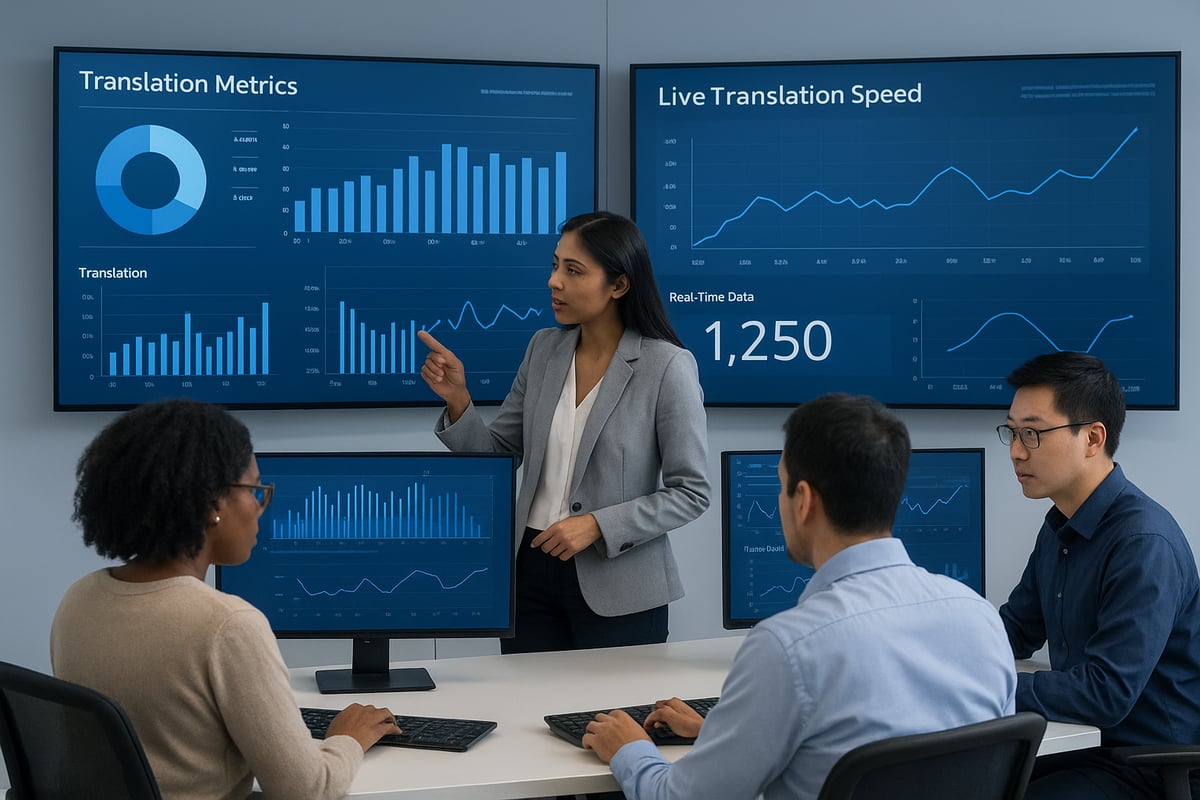
Modern translation management systems (TMS) offer advanced dashboard and analytics features that make tracking translation speed straightforward. Real-time progress tracking enables project managers to monitor throughput, spot bottlenecks, and allocate resources more efficiently.
AI-driven estimation and forecasting tools are now standard in many TMS platforms. These solutions use historical data and predictive analytics to estimate delivery times and optimize team assignments. For example, integrating audio and text translation technologies, as seen in recent AI Audio Translator Advancements, can significantly improve both speed and accuracy in live scenarios.
Some systems provide alerts when translation speed drops below predefined thresholds, prompting immediate intervention. Teams can also generate detailed reports for each project, helping identify recurring slowdowns and areas for process improvement.
Automated tracking tools not only facilitate better project management but also support continuous improvement. By analyzing trends in translation speed, organizations can refine workflows and invest in targeted training or technology upgrades.
Case Studies and Benchmarks
Translation speed benchmarks differ widely across industries, influenced by content type, regulatory requirements, and urgency. In the legal sector, for instance, high-stakes contracts might require rapid turnaround without compromising accuracy. Meanwhile, e-commerce companies often demand near real-time translation for product updates to maximize global sales opportunities.
During global events such as the pandemic or international sporting competitions, organizations faced unprecedented volumes and tight deadlines. Those leveraging automated workflows and robust TMS platforms consistently reported faster delivery times compared to manual processes. For example, pandemic information rollouts achieved translation of millions of words in days, not weeks.
Workflow optimizations, such as integrating translation memories and automating content extraction, have led to measurable reductions in turnaround times. Regular benchmarking and process reviews ensure that translation speed remains aligned with business needs, enabling organizations to respond swiftly in dynamic environments.
Advances in Translation Technology: 2026 and Beyond
The landscape of translation speed is changing rapidly as we approach 2026. New technologies, smarter workflows, and adaptive tools are reshaping how organizations deliver multilingual content at pace. Understanding these advances is crucial for anyone aiming to enhance translation speed without sacrificing quality.
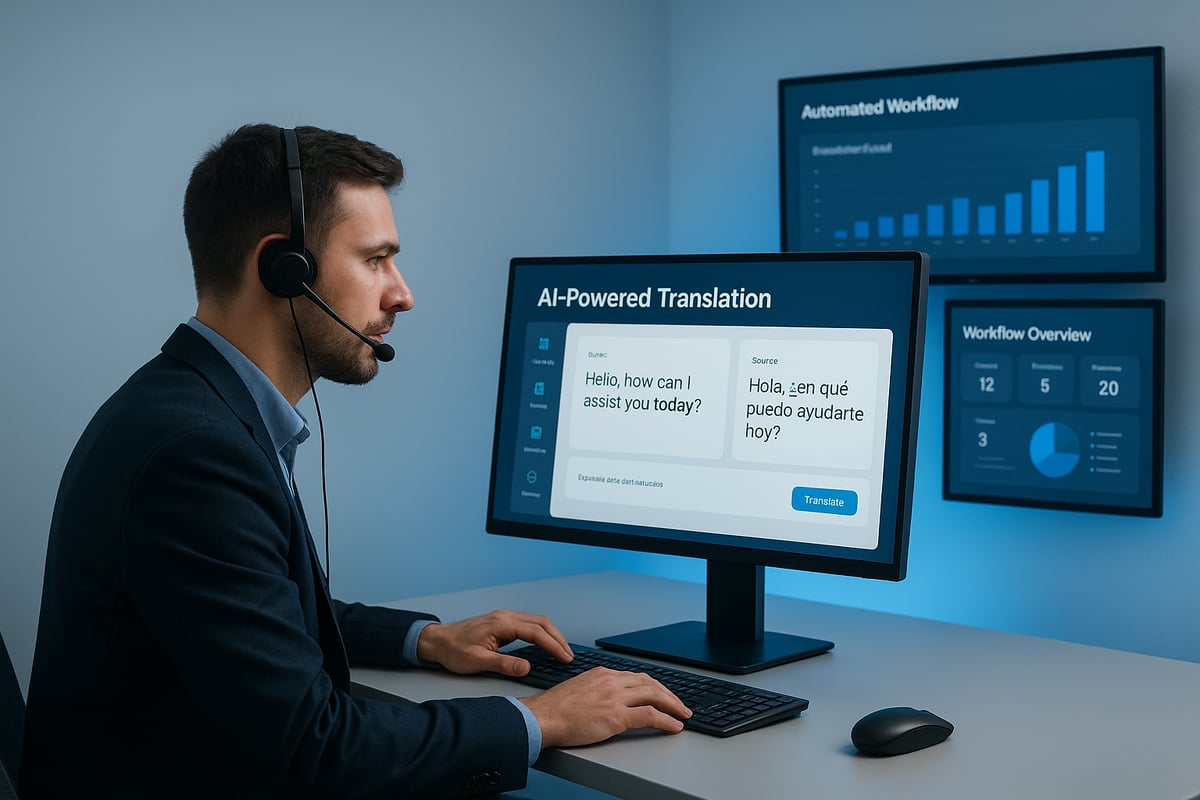
Machine Translation Evolution
Recent years have seen a dramatic leap in machine translation technologies. Advanced neural architectures, such as transformer and context-aware models, now power most leading platforms. These systems analyze not just words, but context, tone, and even visual cues, enabling faster and more nuanced translations.
Real-time speech and video translation are also becoming mainstream. In 2026, live international conferences and webinars can be subtitled or dubbed instantly, shrinking language barriers for global audiences. Speed improvements are impressive: while earlier engines managed 5–10 words per second, today’s systems often exceed 20 words per second, with error rates dropping significantly.
Another major trend is continual learning. Translation engines now update themselves with new data, improving translation speed and accuracy over time. For a deeper dive into these trends and how dynamic AI routing is boosting both speed and quality, see AI Translation Trends in 2026: Systems, Quality & Governance.
Organizations must evaluate which engine best fits their needs. Comparing Google Translate, DeepL, and custom enterprise solutions reveals that translation speed is no longer just about automation, but about real-time adaptation and seamless integration.
Human-in-the-Loop and Hybrid Approaches
Despite machine advancements, human expertise remains vital. The best results often come from hybrid workflows, where professional linguists post-edit machine output. This approach balances translation speed with accuracy, especially for nuanced or high-stakes content.
Crowdsourcing and collaborative platforms are also on the rise. By tapping into global networks of translators, organizations can accelerate large projects without bottlenecks. Adaptive workflows determine when to use machine translation, human review, or both, depending on content type and urgency.
For example, news agencies now combine instant machine translation with rapid human review to publish breaking stories in multiple languages. This hybrid method can double translation speed compared to manual workflows, while retaining essential quality.
The impact is clear: integrating humans in the loop not only improves translation speed but ensures cultural and contextual accuracy. Teams equipped with advanced productivity tools and clear communication protocols achieve faster throughput and fewer errors.
Specialized Tools and Automation
Automation is revolutionizing translation workflows from start to finish. Modern tools extract content automatically from diverse file types, eliminating manual copy-paste steps. Integration with content management systems and publishing platforms enables immediate deployment of translated materials.
AI-driven quality assurance now checks terminology, consistency, and formatting in real time. This reduces the burden on human reviewers and accelerates approval cycles. Automated translation pipelines are especially powerful for app localization, where updates must reach global users instantly.
The table below summarizes key automation benefits:
| Tool/Feature | Impact on Translation Speed |
|---|---|
| Automated content extraction | Removes manual steps |
| CMS integration | Enables instant publishing |
| AI QA checks | Speeds up review and reduces errors |
| End-to-end pipelines | Slashes turnaround for large volumes |
By adopting these specialized tools, organizations report up to 60% reductions in manual effort and significantly faster project delivery. As automation continues to evolve, translation speed will become an even greater competitive differentiator.
Challenges and Solutions in Achieving Optimal Translation Speed
Meeting the demands of fast, accurate translation is more complex than ever. Organizations face unique obstacles as they strive to improve translation speed across diverse content, languages, and platforms. Understanding these challenges, and how to solve them, is essential for maintaining global competitiveness.
Common Bottlenecks and Their Impact
Several persistent bottlenecks can slow translation speed, even with advanced technology. These include:
- Complex file types that require manual content extraction.
- Unstructured or ambiguous source material that increases review cycles.
- Limited resources for low-resource languages, causing delays.
- Human factors such as translator fatigue and staffing shortages.
For instance, during urgent events, such as public safety alerts or legal emergencies, delays in translation speed can have serious consequences. Inadequate workflows can postpone critical messages, leading to misinformation or missed opportunities. A real-world example is highlighted in Real-Time Emergency Communication, where slow translation speed in law firms or emergency services can hinder rapid response.
Data from recent industry reports show that average delays in these scenarios can range from minutes to hours, significantly impacting outcomes. These bottlenecks not only affect operational efficiency but also erode trust and satisfaction among end users.
Strategies for Overcoming Speed Barriers
Addressing translation speed barriers requires a multifaceted approach. Key strategies include:
- Pre-optimizing source content by simplifying language and standardizing terminology.
- Investing in up-to-date translation technology, such as AI-powered platforms and integrated translation management systems.
- Training translators to efficiently use hybrid workflows, blending machine output with human expertise.
- Streamlining review and approval processes to eliminate redundant steps.
For example, multinational corporations have successfully redesigned workflows to cut average translation speed times by up to 30 percent. By automating repetitive tasks and centralizing communication, teams can focus on high-value activities.
A comparative table can help summarize these solutions:
| Challenge | Solution |
|---|---|
| Complex files | Automated content extraction tools |
| Ambiguous source material | Standardization and pre-translation review |
| Low-resource languages | Specialized AI and tailored resources |
| Human limitations | Balanced workloads and collaborative teams |
Each of these strategies is proven to deliver measurable gains in translation speed and efficiency.
Future-Proofing Your Translation Operations
To stay ahead, organizations must build workflows that are both scalable and flexible. This involves:
- Continuously evaluating and integrating emerging tools.
- Encouraging innovation and adaptability within teams.
- Learning from organizations that adapted quickly during crises.
Regularly reviewing translation speed metrics and adapting to new challenges ensures long-term success. Case studies show that companies investing in future-ready processes experience fewer disruptions and consistently deliver timely, accurate translations.
Translation Speed in Industry-Specific Contexts
Translation speed determines how effectively organizations meet the unique demands of different sectors. Each industry faces its own challenges, expectations, and best practices for delivering multilingual content quickly and accurately.
E-Commerce and Global Marketing
E-commerce and global marketing demand lightning-fast translation speed to keep up with high-volume updates and international campaigns. Product listings, flash sales, and real-time customer interactions rely on immediate, accurate translations. For example, during major sales events, global retailers must update thousands of product descriptions across languages within minutes.
Fast translation speed directly impacts conversion rates and customer satisfaction. Companies that excel in this area reduce cart abandonment and boost international sales. According to recent Machine Translation Market Share Analysis, Industry Trends & Statistics, Growth Forecasts (2026-2031), the adoption of advanced machine translation tools is driving unprecedented efficiency, making near-instant updates possible for global platforms.
Typical translation speed benchmarks in e-commerce can range from real-time for machine-generated content to under an hour for human post-editing of high-priority items. This efficiency is crucial for remaining competitive in a crowded digital marketplace.
Healthcare and Life Sciences
In healthcare and life sciences, translation speed can be a matter of life and death. Patient instructions, clinical trial updates, and public health advisories must be translated rapidly and with absolute accuracy. Regulatory requirements add another layer of complexity, as documentation must meet strict standards across languages.
During health emergencies, rapid translation speed ensures that critical information reaches diverse populations without delay. For instance, translating outbreak notifications or vaccine guidelines in multiple languages helps prevent misinformation and saves lives.
Benchmarks for medical translation turnaround times are stringent: urgent patient communications may require delivery within hours, while regulatory documents often have 24- to 48-hour deadlines. Consistently fast translation speed underpins both compliance and patient safety in this sector.
Legal and Financial Services
Legal and financial services handle sensitive, complex documents where translation speed is vital for meeting strict deadlines and regulatory obligations. International contract negotiations, compliance filings, and financial disclosures depend on timely and precise translation.
A missed deadline or error can result in legal penalties or lost business opportunities. Typical turnaround times for legal translations range from same-day delivery for urgent contracts to a few days for more extensive documentation. Error tolerance is extremely low, so translation speed must always balance with meticulous accuracy.
Media, Entertainment, and Live Events
The media and entertainment industry faces unique pressures for translation speed, especially for subtitling, dubbing, and live interpretation. Streaming platforms launching content globally need synchronized translations for simultaneous release.
Live events, such as international sports broadcasts, require real-time subtitling and voiceover to engage multilingual audiences. Speed benchmarks for subtitling can reach several hundred words per minute for machine-assisted workflows, with rapid human review ensuring cultural accuracy.
Meeting tight deadlines is essential for maximizing audience reach and engagement, making translation speed a top priority in this creative sector.
Government and Emergency Communication
For government agencies and emergency responders, translation speed is critical during crises. Multilingual alerts, evacuation orders, and public safety instructions must be disseminated instantly to protect lives.
Case studies from recent global emergencies show that delays in translation can lead to confusion and increased risk. Agencies now invest heavily in multilingual communication strategies, with rapid translation speed at the core.
Turnaround times for emergency communications are measured in minutes, not hours. The ability to deliver timely, accurate information in multiple languages is essential for effective disaster response and public trust.
The Future of Translation Speed: Trends and Predictions for 2026
The landscape of translation speed is set for dramatic transformation by 2026. Technology, user demands, and ethical considerations are converging to reshape how we translate content across languages. Organizations must understand these shifts to remain competitive, inclusive, and compliant in a global market.
AI and Automation: What’s Next?
Artificial intelligence remains at the forefront of advancements in translation speed. By 2026, neural and quantum computing breakthroughs are poised to accelerate machine translation beyond today’s capabilities. Next-generation engines will process vast volumes of multilingual data in real time, thanks to contextually aware and multimodal models.
Universal translator devices, powered by continual learning and context-rich AI, are already in development. These innovations enable seamless communication, even in dynamic environments like international conferences or emergency response scenarios. Projected metrics suggest translation speed may reach new records, with machines handling over 50 words per second for common language pairs.
A notable methodology combines human expertise with large language models, as detailed in Efficient Machine Translation Corpus Generation: Integrating Human-in-the-Loop Post-Editing with Large Language Models. This approach not only boosts translation speed but also maintains high quality, ensuring outputs meet enterprise standards.
- Anticipated translation speed improvements:
- Up to 3x faster than 2023 benchmarks
- Real-time translation for speech and video feeds
- Quantum computing’s role in reducing latency and enhancing accuracy
As AI continues to evolve, the balance between speed and fidelity will remain a central focus for translation speed innovation.
The Growing Role of Real-Time Translation
Real-time translation is becoming a baseline expectation across industries. Businesses, travelers, and online communities demand instant, accurate communication. In 2026, translation speed is deeply integrated into AR/VR platforms, IoT devices, and customer service chatbots.
Consider global customer support: Chatbots equipped with advanced translation engines now handle multilingual queries in under a second, dramatically improving user satisfaction. Adoption rates for such solutions have climbed rapidly, reflecting the competitive edge of fast, reliable translation speed.
- Key drivers of real-time translation:
- E-commerce platforms managing flash sales and international launches
- Healthcare providers delivering urgent information in multiple languages
- Social media platforms monitoring and responding to global trends instantly
User satisfaction statistics reveal that 85% of customers are more likely to return to brands offering seamless multilingual support. As more organizations embrace real-time translation, the demand for high translation speed will only intensify.
Ethical, Quality, and Accessibility Considerations
With the push for faster translation speed, ethical and quality concerns are gaining prominence. Organizations must ensure that rapid results do not come at the expense of fairness, inclusivity, or cultural sensitivity. Automated systems can introduce bias or errors, especially in high-stakes contexts like legal or healthcare translation.
Regulatory trends emphasize the need for robust quality control and transparency. Safeguards, such as human review in critical sectors, help maintain trust and accuracy. Compliance requirements are also evolving, with new standards for error rates and turnaround times.
Accessibility remains a top priority, particularly for low-resource languages. Recent research, like Improving Low-Resource Machine Translation via Round-Trip Reinforcement Learning, highlights innovative approaches to boosting translation speed and accuracy where resources are limited. These advancements ensure that diverse populations benefit from rapid translation, closing communication gaps worldwide.
- Strategies for ethical translation speed:
- Employing bias detection and cultural review tools
- Maintaining clear audit trails for automated translations
- Adhering to emerging industry regulations
By focusing on ethical practices, quality assurance, and inclusivity, organizations can future-proof their translation speed initiatives in 2026 and beyond.
As we’ve explored, fast and reliable translation is more than just a technological advantage—it’s a vital part of effective communication in high-stakes environments like public safety and emergency response. If you’re ready to see how real time translation can enhance your organization’s multilingual capabilities and help you stay ahead in 2026, I encourage you to experience Convey911’s innovative platform firsthand. You can connect text, video, and location sharing in over 185 languages, all in real time. Take the next step to future proof your emergency communications—Schedule a Demo and see what’s possible.