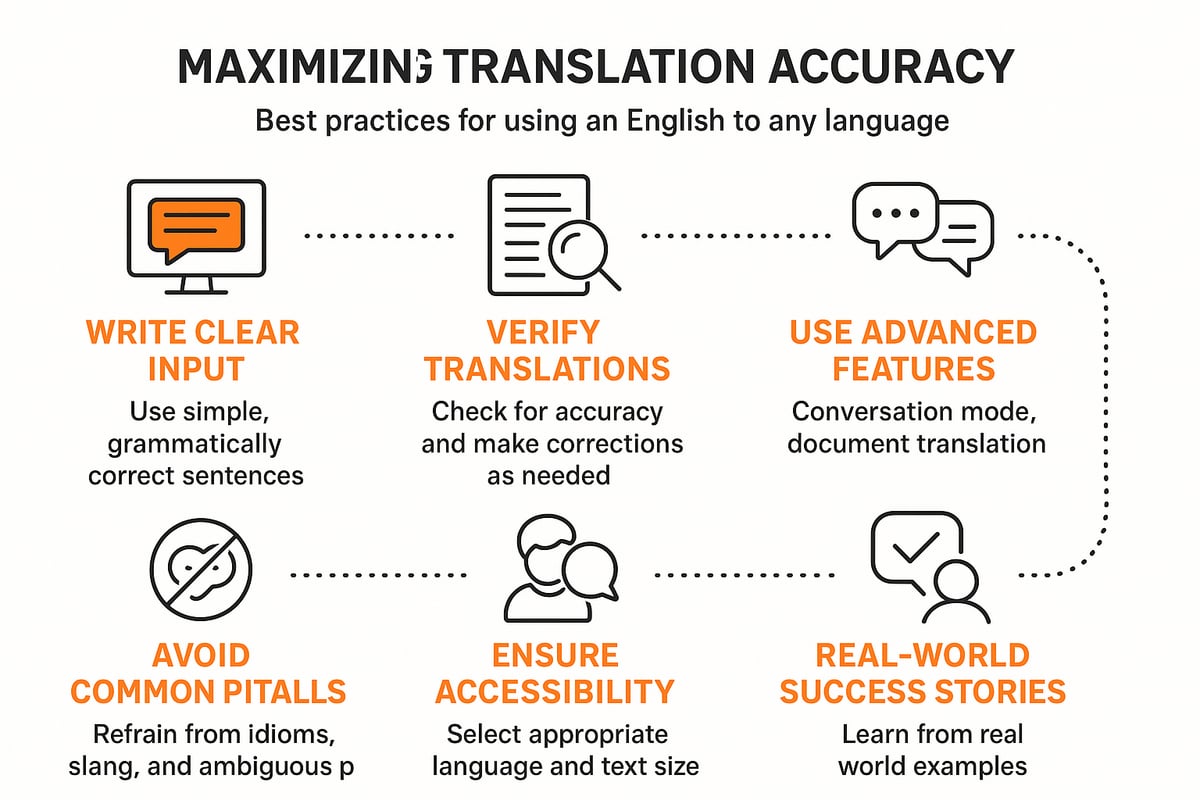

In 2025, the global marketplace is more connected than ever, pushing organizations to seek...
In our interconnected world, translations into English are more crucial than ever for building bridges between cultures, industries, and communities. As businesses, governments, and individuals strive to reach wider audiences, the demand for clear and accurate communication in English continues to rise.
This guide delivers a complete roadmap for achieving accurate, effective, and culturally sensitive translations into English in 2026. You will discover the importance of English translations, the latest technologies, proven best practices, and the challenges professionals face.
Ready to avoid common pitfalls and improve your results? Expert insights and actionable strategies await, helping you succeed in the ever-evolving landscape of global communication.
The Importance of Translations Into English in 2026
In 2026, translations into english will be more critical than ever for organizations and individuals aiming to connect with the world. As economies, technologies, and societies become increasingly interconnected, the demand for clear, accurate english communication continues to rise.

English remains the leading lingua franca for international business, science, and technology. According to Global English speakers statistics, over 1.5 billion people worldwide speak English to some degree. This dominance means that translations into english are essential for breaking down language barriers and ensuring access to global markets, knowledge, and innovation.
For companies seeking to expand internationally, translations into english are a strategic tool for increasing market reach and inclusivity. International brands have repeatedly demonstrated that localizing product information, marketing materials, and websites into english can drive significant sales growth. For example, a leading electronics brand saw a 30% increase in global sales after adapting its online content and user guides for english-speaking audiences. By investing in high-quality translations into english, businesses can engage more customers and foster trust in diverse markets.
Legal and regulatory requirements also drive the need for precise translations into english. In many countries, english versions of contracts, compliance documents, and product labelling are mandatory for global trade. Governments and regulatory bodies often require official translations into english to ensure clarity and legal validity. In public sectors such as healthcare and emergency communication, accurate english translations enable vital information to reach international visitors, expatriates, and global partners swiftly and effectively.
The importance of translations into english extends beyond commerce and regulation. In multicultural societies, english translations play a key role in education, healthcare, and public safety. Tourists and immigrants rely on english-language resources to navigate new environments. Government websites, user manuals, and safety instructions are frequently translated into english to maximize accessibility.
Examples of Essential English Translations:
- Government portals with multilingual english content
- User manuals for consumer electronics and appliances
- Safety information for international travelers in airports and hotels
By prioritizing translations into english, organizations can bridge cultural gaps, support global mobility, and ensure critical information is available to all.
Key Principles of High-Quality English Translation
Achieving high-quality translations into english requires more than just converting words between languages. It demands a deep understanding of both the original and target cultures, meticulous attention to detail, and a commitment to ethical standards.
Translators must balance accuracy, readability, and cultural nuance to ensure content truly resonates with its intended audience. By following proven principles, professionals can consistently deliver work that meets the demands of global communication.

Understanding Source and Target Contexts
One of the most critical principles for translations into english is understanding both the source and target contexts. This means translators must look beyond words to grasp the intended meaning, tone, and cultural background of the content.
Literal translations often fail to capture idioms, jokes, or culturally specific references. For example, the phrase “kick the bucket” translated word for word into another language might confuse readers. Instead, the translator should find an English equivalent that conveys the same meaning.
Audience analysis is also vital. Before starting, consider who will read the translation, their expectations, and their cultural sensitivities. Adjusting tone, formality, and style ensures the final text feels natural and appropriate for its audience.
For a deeper look at foundational translation rules, see the Principles of effective translation article. Applying these principles consistently results in translations into english that are both accurate and culturally respectful.
Accuracy and Consistency
Accuracy is the backbone of translations into english, especially in technical fields like legal, medical, or scientific content. Translators must use precise terminology and adhere closely to the source material to avoid costly errors.
Consistency is equally important, particularly in large projects or when multiple translators are involved. Glossaries, style guides, and terminology management tools help maintain a uniform voice and prevent discrepancies across documents.
For example, pharmaceutical documentation must use exact terms and standardized language throughout. Any variation could lead to confusion or even regulatory issues. By following strict guidelines and routinely checking their work, translators ensure that translations into english maintain high standards of accuracy and consistency.
Readability and Naturalness
A high-quality translation should read as if it were originally written in English. Translations into english can sometimes sound awkward or unnatural if translators rely too heavily on the structure of the source language.
To enhance readability, professionals use plain language principles and monitor readability scores. This is especially important for user manuals, public health information, and consumer-facing content, where clarity is paramount.
Avoiding “translationese”—phrases or syntax that betray a text’s origins—helps readers engage more easily. By focusing on flow, sentence structure, and vocabulary, translators create translations into english that are smooth, clear, and effective for diverse audiences.
Ethical and Confidentiality Considerations
Ethical standards are essential in translations into english, particularly when handling sensitive or confidential information. Translators must adhere to professional codes of conduct and respect client privacy at all times.
Data privacy regulations like GDPR and HIPAA set strict requirements for handling personal or medical data. Legal and medical documents, for example, often contain information that could have serious consequences if mishandled.
Translators should use secure file transfer systems, anonymize data where possible, and refrain from sharing details outside the translation team. By prioritizing ethics and confidentiality, professionals build trust and ensure that translations into english remain secure and compliant with all regulations.
The Translation Process: Step-by-Step Guide
Achieving high-quality translations into english requires a structured, methodical approach. Each phase of the translation process, from initial planning to final delivery, plays a critical role in ensuring linguistic accuracy and cultural relevance.
Let’s break down each step for optimal results.

Step 1: Project Preparation and Source Text Analysis
Every successful project for translations into english begins with careful preparation. Start by defining the project’s scope and objectives. Who is your target audience? What is the purpose of the content?
Assess the source text for complexity, technical terminology, and any cultural nuances. Early identification of challenges, such as ambiguous phrasing or region-specific references, will help prevent costly misunderstandings later.
Create a checklist to ensure all requirements are captured:
- Identify content type and field (legal, medical, marketing)
- Note any required English variety (e.g., US, UK, AU)
- List reference materials and style guides
- Highlight tight deadlines or formatting needs
By clarifying these points, you set a clear path for precise translations into english that meet expectations.
Step 2: Selecting the Right Translation Method
Choosing the optimal method is vital for translations into english. Options include human translation, machine translation, or a hybrid approach.
Let’s compare the main methods:
| Method | Speed | Cost | Accuracy | Nuance |
|---|---|---|---|---|
| Human Translation | Moderate | Higher | Excellent | High |
| Machine Translation | Fast | Lower | Variable | Limited |
| Hybrid (PEMT) | Fast | Moderate | Good | Improved |
Human translation is best for nuanced or sensitive texts. Machine translation offers speed for bulk content but may lack contextual accuracy. Hybrid approaches, such as post-edited machine translation (PEMT), balance efficiency and quality.
For digital projects, consider using Online English translation solutions to streamline workflow and leverage the latest technology. This step ensures your translations into english are both timely and effective.
Step 3: Choosing Qualified Translators or Agencies
Selecting the right professionals directly impacts the quality of translations into english. Prioritize translators who are native English speakers and have proven expertise in the subject matter.
Verify credentials, certifications, and client testimonials. For fields like law or medicine, ensure the translator holds relevant certifications. Agencies should assign specialized teams for large projects, maintaining consistency and quality.
Ask these questions during selection:
- Does the translator have experience in your industry?
- Can they provide references or samples?
- Are they familiar with your preferred English variety?
Making informed choices at this stage is essential for trustworthy translations into english.
Step 4: Translation and Quality Assurance
The core of the process is translating the content and ensuring its quality. Begin with an initial draft, adhering to any style guides or glossaries established earlier.
Implement a peer review and editing cycle. Use computer-assisted tools to identify errors, maintain consistent terminology, and check formatting.
A typical QA checklist for translations into english includes:
- Double-check for omitted or mistranslated segments
- Validate terminology with approved glossaries
- Review for grammar, punctuation, and clarity
- Confirm adherence to tone and register
This rigorous approach results in polished, accurate translations into english, ready for localization.
Step 5: Localization and Cultural Adaptation
Translating content is only the beginning. For translations into english to truly resonate, localization is essential. Adapt vocabulary, spelling, and phrasing to the target English variety—such as US, UK, or Australian English.
Adjust images, units of measurement, and cultural references to suit the local market. For example, a website targeting the UK might use “colour” instead of “color” and reference local holidays.
Best practices for effective localization:
- Update visuals to reflect cultural context
- Convert currencies and measurements
- Tailor examples and idioms
- Consult local experts when needed
These efforts ensure translations into english are culturally relevant and engaging.
Step 6: Final Review and Delivery
The last phase of translations into english involves a thorough review and professional delivery. Proofread for any remaining errors, check formatting, and confirm all client requirements are met.
Gather client feedback and implement revisions promptly. Deliver the final product in the requested formats, such as PDF, Word, or web-ready files.
A simple delivery checklist:
- Proofread for typos and inconsistencies
- Ensure correct formatting and layout
- Confirm file compatibility
- Obtain client sign-off before release
This attention to detail guarantees that translations into english are accurate, polished, and ready for real-world use.
Tools and Technologies Shaping English Translation in 2026
The landscape of translations into english is evolving rapidly as technology transforms the way language professionals work. In 2026, a blend of advanced software, artificial intelligence, and cloud-based solutions is redefining both quality and efficiency. Let’s explore the essential tools and innovations shaping this field.

CAT Tools and Workflow Integration
Computer-Assisted Translation (CAT) tools remain fundamental for translations into english, providing translators with powerful features for consistency and productivity. Leading platforms like SDL Trados, MemoQ, and Wordfast offer translation memories, terminology management, and real-time QA checks.
| Tool | Strengths | Best For |
|---|---|---|
| SDL Trados | Robust features, integrations | Large enterprises |
| MemoQ | Collaboration, customization | Agencies & teams |
| Wordfast | Simplicity, affordability | Freelancers & SMEs |
For a deeper look at essential translation tools, see the Best translation tools for English guide. These solutions help teams deliver accurate, scalable translations into english on complex projects.
The Rise of Neural Machine Translation (NMT)
Artificial intelligence and neural machine translation (NMT) have revolutionized translations into english, delivering more natural and context-aware output than ever before. Platforms built on NMT, such as DeepL and Google Translate, leverage deep learning to interpret nuance and idiomatic language.
According to CSA Research (2025), NMT adoption has led to productivity gains of up to 40 percent for enterprise workflows. However, while NMT excels at speed, human oversight remains vital for specialized or sensitive translations into english. The combination of AI and expert review ensures both accuracy and cultural relevance.
Translation Management Systems (TMS) and Collaboration
Modern translation management systems (TMS) streamline the entire workflow for translations into english. Solutions like Smartling, XTM, and Memsource centralize project tracking, automate repetitive tasks, and enable seamless handoffs between translators, editors, and clients.
Cloud-based TMS platforms support distributed teams, offering version control and live collaboration. This is especially important for enterprises handling large-scale translations into english across multiple markets. By integrating CAT and TMS tools, organizations can boost both efficiency and quality.
Real-Time and On-the-Go Translation Solutions
In 2026, real-time translation apps are indispensable for business, travel, and emergency communications. Tools like Google Translate now support instant voice and image translation, making quick translations into english more accessible than ever.
However, despite significant advances, these apps still face challenges with technical language and complex documents. For mission-critical translations into english, professional review and editing remain a must. Instant solutions are best suited for informal or time-sensitive needs.
Security, Compliance, and the Future of Translation Technology
With rising data privacy concerns, security features are central to translations into english. Modern platforms include encryption, role-based access, and compliance with regulations like GDPR and HIPAA.
Looking ahead, the future of translations into english will be shaped by AI advancements, tighter integration between tools, and greater focus on accessibility. Human expertise will remain essential to navigate cultural context and specialized content, even as technology continues to evolve.
Common Challenges and How to Overcome Them
Navigating the landscape of translations into english presents a set of recurring challenges for organizations and individuals alike. As global communication accelerates, the demand for accurate, reliable, and culturally sensitive English translations has never been higher. Yet, even with advanced technology, certain pitfalls persist, requiring a strategic approach to overcome them.
One frequent obstacle in translations into english is dealing with ambiguous or poorly structured source material. When original texts lack clarity or contain idiomatic expressions, translators must rely on context and expertise to avoid misinterpretation. Industry-specific jargon further complicates the process, as terms in legal, medical, or technical documents require precise equivalents to maintain accuracy. For example, pharmaceutical translations demand strict adherence to terminology, as errors can lead to regulatory issues or safety risks.
Consistency is another significant challenge, especially in large projects involving multiple translators or ongoing content updates. Maintaining a unified voice and terminology across all translations into english is vital for brand integrity and user comprehension. Tools like glossaries, translation memory, and style guides play a crucial role in supporting consistency. Without these resources, discrepancies can arise, confusing end users and undermining trust in the content.
Time and budget constraints often pressure teams to accelerate delivery, sometimes at the expense of quality. Crowdsourced translation projects, while cost-effective, can introduce variations in style and accuracy, especially if contributors have varying levels of expertise. According to recent data, machine translation error rates remain higher compared to human translators, particularly in nuanced or industry-specific content (TAUS, 2024). This highlights the importance of expert review and robust quality assurance processes in translations into english.
Cultural sensitivity and the handling of sensitive topics present additional hurdles. Translators must be aware of taboos, local customs, and audience expectations to avoid miscommunication or offense. Establishing clear communication with clients, employing expert review panels, and utilizing up-to-date style guides can mitigate these risks. As the English proficiency index report indicates, global English proficiency is not uniform, further emphasizing the need for careful, audience-aware translations into english.
Future Trends in English Translation
The landscape of translations into english is evolving rapidly as we move toward 2026. Innovation, globalization, and shifting user needs are driving new expectations for speed, quality, and inclusivity.
Artificial intelligence and machine learning are at the forefront of these changes. AI-powered tools are now capable of producing more nuanced translations into english, with neural networks learning context and tone from massive datasets. This leap in accuracy is helping bridge language gaps in everything from business contracts to scientific research.
Voice and video translation are also gaining traction, especially for multimedia content. Real-time AI interpreting is transforming live events, customer service, and even emergency response. For example, on-demand voice translation apps allow travelers and first responders to communicate instantly, saving time and potentially lives.
Inclusivity is another key trend. As more content moves online, ensuring translations into english are accessible for people with disabilities is increasingly important. This includes audio descriptions, screen reader compatibility, and simplified language for users with varying literacy levels. According to most common languages online, English remains the dominant language on the internet, making accessible English translations essential for global engagement.
Regulatory changes are also shaping best practices. New standards for privacy, data security, and quality assurance demand that translations into english meet strict compliance requirements. Translators and agencies must stay up to date with evolving laws in different regions.
Despite these advances, human translators will remain vital. While AI handles routine content, professionals ensure cultural nuance, ethical considerations, and creativity are preserved. As demand grows, the role of the human translator will focus more on quality control, adaptation, and specialized fields.
In summary, the future of translations into english will be defined by smarter technology, greater accessibility, and the evolving partnership between humans and machines. Staying ahead means embracing these trends to deliver accurate, inclusive, and impactful communication.
As we’ve explored, delivering precise and culturally sensitive English translations is vital for clear communication—especially when every second counts. If you’re looking to see how cutting-edge technology and expert human interpreters can eliminate language barriers in real time, I encourage you to experience Convey911’s solutions firsthand. Whether you manage emergency communications or want to ensure your team is prepared for any multilingual challenge, you’ll find real value in seeing these tools in action. Ready to take the next step toward faster, more effective emergency translations? Book a Demo and discover how you can transform your communication strategy.