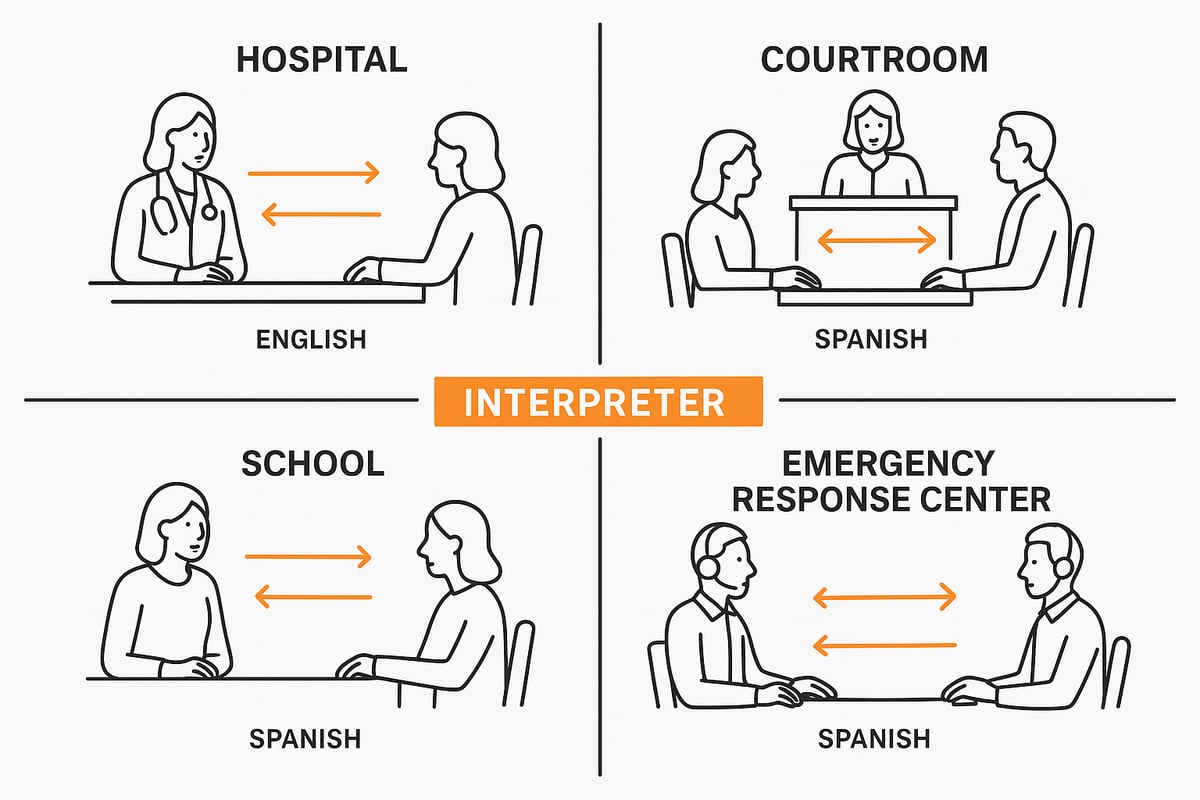

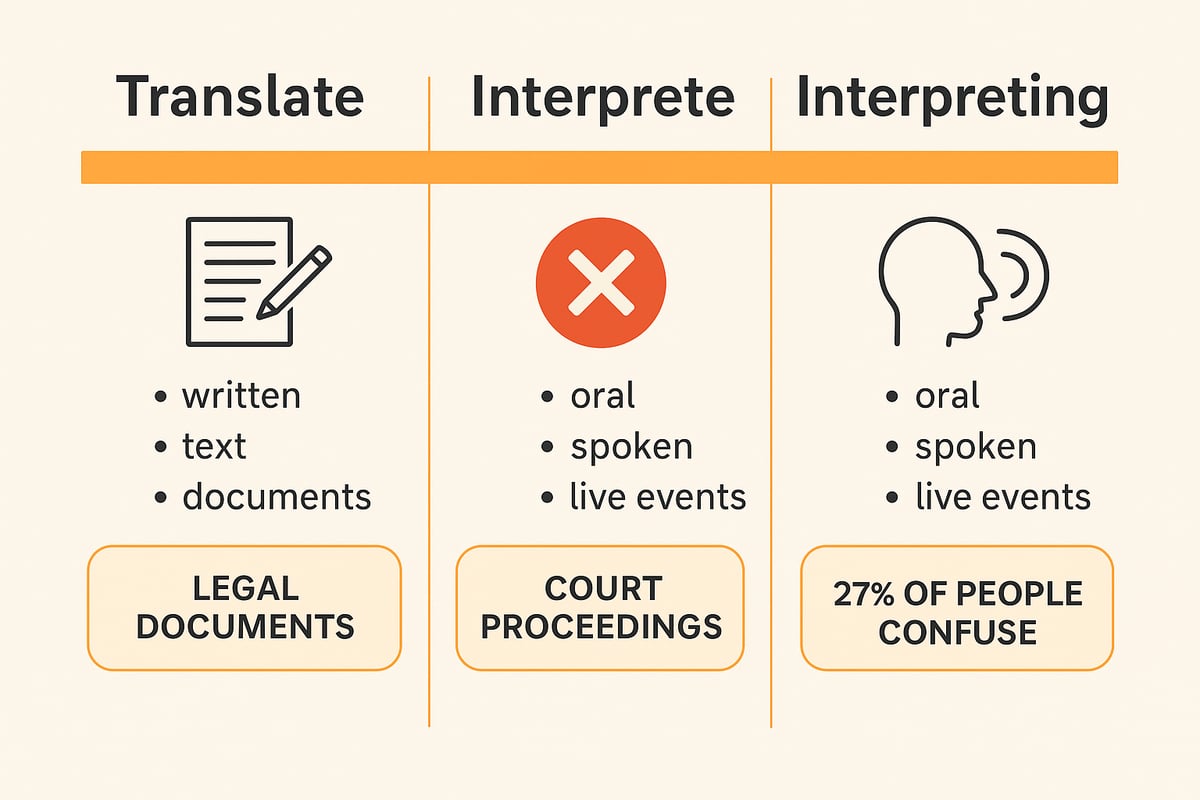
In today's interconnected world, the ability to communicate clearly across languages is more...
Imagine a world where language barriers simply vanish, allowing people to communicate instantly across continents. This is the reality that ai interpreting promises to deliver in 2026.
In this handbook, you will find clear answers and practical advice to help you understand, adopt, and maximize ai interpreting solutions. Whether you are a business leader, an educator, or a service provider, this guide is designed to empower you with essential knowledge and actionable steps.
Discover what ai interpreting is, how it works, its key features and benefits, and the steps to implement it effectively. Explore industry-specific applications and learn how to choose the best solution for your needs. Get ready to unlock new possibilities for global communication.
Understanding AI Interpreting: Technology, Evolution, and Core Concepts
AI interpreting is transforming how we connect across languages. It blends advanced speech technologies to deliver instant, accurate translations in real time. This section unpacks what sets ai interpreting apart, its evolution, the workflow behind the scenes, and the main solution types available today.

What is AI Interpreting?
AI interpreting is the process of translating spoken language in real time using artificial intelligence. It combines several technologies:
- Speech-to-text recognition
- Neural machine translation
- Text-to-speech voice synthesis
Unlike traditional human interpreting, ai interpreting relies on algorithms to convert audio input into another language almost instantly. For example, LanguageWire’s solution supports over 80 languages and more than 6,000 combinations. This makes it ideal for multilingual meetings, virtual events, and customer service calls, where speed and accuracy are critical.
For a deeper look at the technology powering these advancements, visit AI Audio Translation Technology.
Evolution of AI Interpreting (2016–2026)
The last decade has seen rapid progress in ai interpreting. Early solutions required dedicated hardware and were limited in language support. By 2026, software-based and cloud-powered platforms have taken over, offering greater flexibility and accuracy.
Key milestones include:
- Expansion of supported languages and dialects
- Improved translation quality with neural networks
- Real-time processing at scale
Hybrid models, such as LanguageLine’s AI-human escalation, emerged to handle complex situations. The evolution of ai interpreting has made global communication more accessible and scalable than ever.
Core Components and Workflow
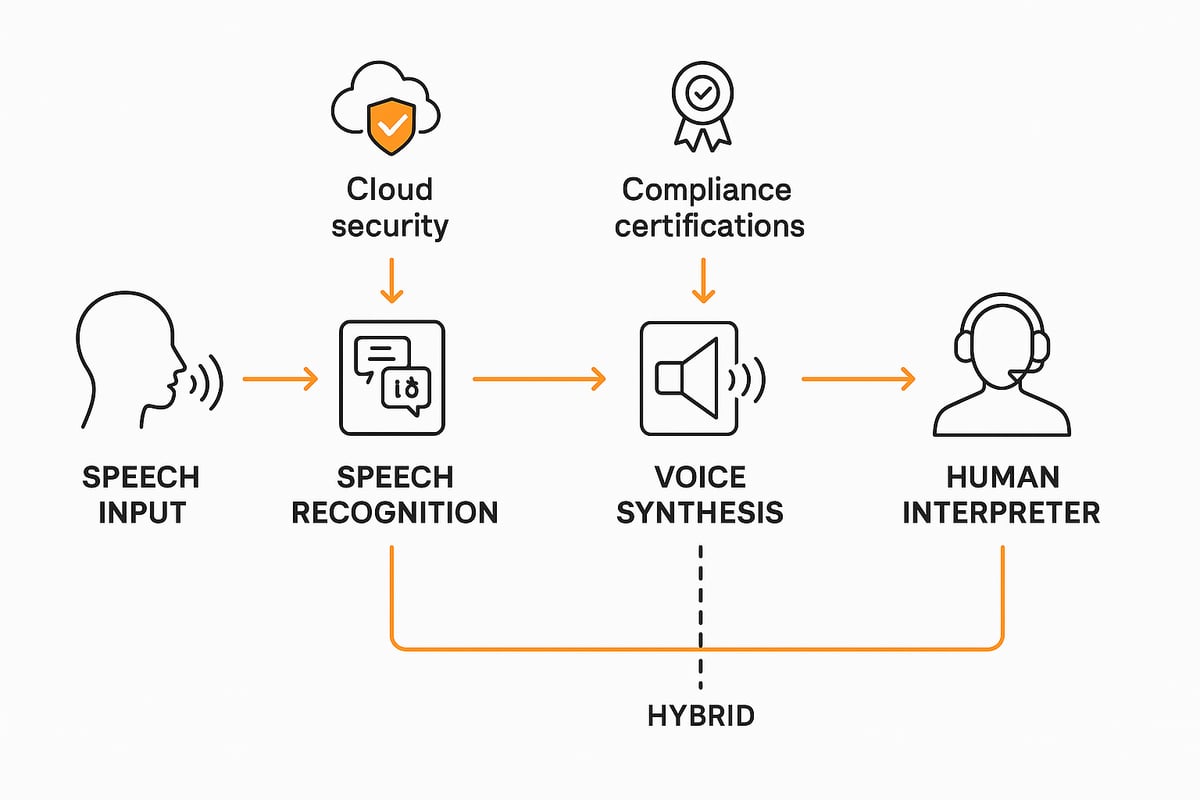
Every ai interpreting solution follows a similar workflow:
- Audio input is captured from a call or meeting.
- Speech recognition technology transcribes spoken words.
- Neural machine translation converts the text into the target language.
- Text-to-speech synthesis delivers the translated message.
Modern platforms are cloud-based and integrate with IVR and conferencing tools. They feature automatic language detection and can trigger escalation to a human interpreter when needed. Pre-call messaging and automated monitoring help manage user expectations. For nuanced conversations, certified interpreters remain available as a backup.
Types of AI Interpreting Solutions
There are three main types of ai interpreting solutions:
- Machine-only: Fully automated, ideal for routine or high-volume calls.
- Hybrid AI + human: AI handles most interactions, escalating to a human interpreter for complex or sensitive cases.
- Human-only: Used for high-stakes legal, medical, or confidential conversations.
Machine-only solutions offer speed and cost savings, but may lack nuance. Hybrid models balance efficiency with human expertise. Human-only options ensure accuracy for critical scenarios. Each approach has distinct pros and cons, so organizations must match the solution to their specific needs.
Key Features, Benefits, and Limitations of AI Interpreting
AI interpreting solutions in 2026 offer a wealth of capabilities, empowering organizations to bridge language gaps instantly and efficiently. To make informed decisions, it's crucial to understand the core features, tangible benefits, potential limitations, and the importance of robust security and hybrid approaches. Below, we break down what sets leading ai interpreting platforms apart.
Essential Features to Look For
Modern ai interpreting platforms are defined by their versatility and technological sophistication. Key features include:
- Real-time and consecutive interpreting modes for flexible communication.
- Support for over 80 languages and thousands of dialect combinations.
- Seamless integration with conferencing tools such as Teams, Zoom, and Webex.
- Advanced natural language processing and high-fidelity voice synthesis for natural output.
- Automated escalation to human interpreters using patented monitoring systems.
These features ensure that ai interpreting solutions can handle diverse scenarios, from international meetings to customer support. Integration capabilities reduce the need for specialized equipment, making deployment straightforward.
Benefits: Why Organizations Are Adopting AI Interpreting
The adoption of ai interpreting delivers measurable advantages across industries. With instant access and zero wait times, organizations can handle routine conversations without delays.
Cost savings are significant, as traditional setups often require physical booths, headsets, and on-site interpreters. Ai interpreting scales effortlessly for global events or high-volume support, providing 24/7 availability and on-demand language services.
Accessibility and inclusivity are also enhanced, as both audio and captions are supported. This not only improves the experience for non-native speakers but also meets compliance with accessibility standards.
Limitations and Challenges
Despite rapid advancements, ai interpreting has its limitations. Accurately conveying idioms, emotion, and cultural nuance remains challenging for fully automated systems.
In high-stakes or emotionally charged conversations, accuracy may drop, which is why human backup is crucial. Data privacy and security must be carefully managed, as sensitive information is often handled.
There is also the risk of translation errors or "hallucinations," where the AI misinterprets meaning. For a deeper look at these challenges and the necessity of human oversight, see AI in Interpreting Services: Innovation, Ethics, and the Human Touch.
Security, Privacy, and Compliance
Security and privacy are top priorities for ai interpreting in enterprise settings. Leading solutions implement enterprise-grade security protocols, including ISO certifications, TISAX compliance, and continuous monitoring.
Data is encrypted both in transit and at rest within secure cloud infrastructures. Regulatory compliance is essential, especially in sectors like healthcare and finance, where confidentiality is non-negotiable.
Verified, fault-tolerant systems are now industry standard, providing peace of mind for organizations managing sensitive communications.
Hybrid Models: Combining AI Speed with Human Expertise
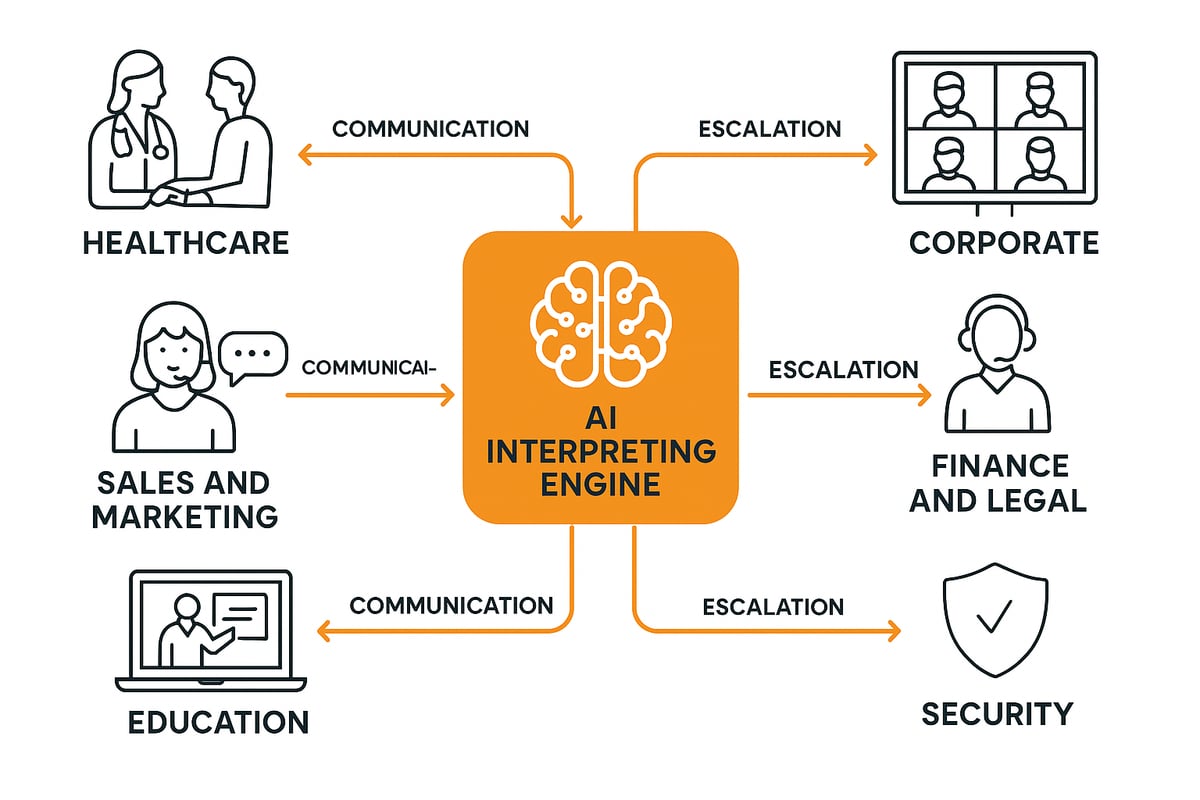
The most effective ai interpreting deployments use hybrid models, blending automation with human expertise. Escalation workflows are seamless, using trigger phrases or real-time monitoring to route complex calls to certified interpreters.
Human interpreters ensure compliance, empathy, and cultural nuance are not lost. For example, a receptionist can escalate from AI to a live interpreter during a medical emergency, ensuring patient safety.
Balancing automation with quality control is critical. Industry best practices emphasize continuous training, feedback loops, and clear protocols for when human intervention is required.
Step-by-Step Guide: Implementing AI Interpreting in 2026
Implementing ai interpreting in your organization can unlock new levels of communication, efficiency, and accessibility. Follow these six practical steps to ensure a smooth rollout and long-term success.
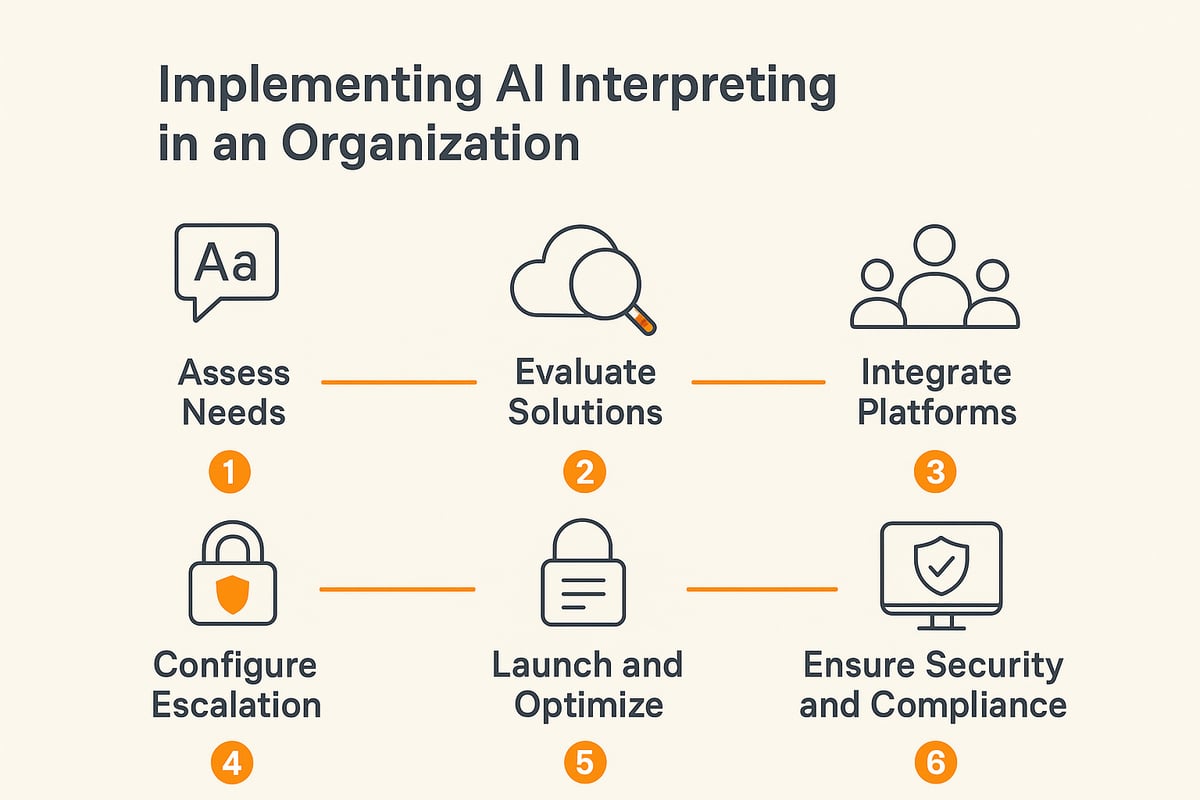
Step 1: Assess Needs and Define Use Cases
Begin by mapping out your organization's language requirements and communication channels. Identify the languages spoken by staff, clients, and partners. Consider the volume of interactions, such as routine calls, critical conversations, or high-stakes meetings.
- Analyze existing interpreting workflows and pinpoint bottlenecks.
- Determine which scenarios are best suited for ai interpreting, such as appointment reminders or scheduling.
- Involve stakeholders from different departments to gather input.
By understanding your needs, you can set clear goals for adopting ai interpreting and prioritize the most impactful use cases.
Step 2: Evaluate and Select the Right AI Interpreting Solution
Next, research and compare available ai interpreting solutions. Assess language coverage, integration capabilities, and security features. Decide whether a machine-only, hybrid, or human-only model is best for your risk profile.
- Compare vendor experience, patented technologies, and scalability.
- Request demos or pilot programs to validate performance.
- Examine how solutions like LanguageLine or LanguageWire handle escalation.
Selecting the right ai interpreting partner ensures that your organization benefits from both cutting-edge technology and reliable support.
Step 3: Integrate with Existing Communication Platforms
Seamless integration is critical for user adoption and efficiency. Ensure your chosen ai interpreting system works with tools like Teams, Zoom, Webex, or IVR.
- Decide between cloud-based or on-premises deployment.
- Plan for user training and onboarding to build confidence.
- Check if the platform requires new equipment or if it can be used with current systems.
Effective integration allows ai interpreting to become a natural part of daily workflows, minimizing disruption and maximizing value.
Step 4: Configure Escalation and Human Interpreter Backups
Design escalation workflows so users can quickly transition from ai interpreting to a live interpreter when needed. Define trigger phrases or actions, such as “Press 0” or “I need a live interpreter.”
- Set up monitoring for call complexity or distress signals.
- Build a network of certified human interpreters for backup.
- Establish protocols to ensure compliance and quality control.
This hybrid approach ensures that sensitive or complex conversations receive the human touch, while routine tasks benefit from ai interpreting speed.
Step 5: Launch, Monitor, and Optimize
Roll out your ai interpreting solution to teams or across the organization. Monitor usage and gather feedback on call quality and user experience.
- Analyze data to identify trends and areas for improvement.
- Use features like hallucination suppression and noise filtering to enhance results.
- Expand language support and refine use cases over time.
Continuous optimization keeps your ai interpreting deployment effective and aligned with evolving business needs.
Step 6: Ensure Security, Privacy, and Compliance
Adopt robust security measures to protect sensitive information handled by ai interpreting systems. Implement encryption, secure data storage, and regular audits.
- Train staff on privacy best practices and compliance requirements.
- Schedule ongoing reviews to address new threats or regulations.
- For additional guidance, consult resources like the SAFE-AI Guidance on AI and Interpreting Services to ensure ethical and transparent deployment.
By prioritizing security and compliance, you safeguard your organization and build trust in ai interpreting technology.
Industry Applications and Real-World Examples
AI interpreting is reshaping how organizations communicate across industries. Let us explore how this technology is driving real-world impact, from healthcare to education, delivering measurable outcomes and increased accessibility.
Healthcare and Emergency Services
AI interpreting enables instant communication between patients and providers, streamlining appointment scheduling, triage, and patient instructions. In critical situations, such as chest pain calls, the system escalates to a human interpreter for accuracy and empathy.
For example, LanguageLine’s hybrid model blends automation with certified interpreters, ensuring compliance with HIPAA and patient safety standards. Convey911 supports over 50,000 minutes of live interpretation monthly for emergency services, highlighting the scale of adoption.
To learn more about how ai interpreting is revolutionizing multilingual healthcare communication, see Revolutionizing Healthcare with Multilingual AI.
Corporate, HR, and Internal Communications
Global companies leverage ai interpreting for multilingual onboarding, leadership communications, and real-time team meetings. By integrating with platforms like Teams and Zoom, organizations break down language barriers for employees in different regions.
Features like audio interpretation and real-time captions support accessibility, reducing cognitive load for all participants. This fosters greater inclusion and engagement across distributed teams, making ai interpreting a strategic asset for HR and internal communications.
Sales, Marketing, and Customer Service
In sales and marketing, ai interpreting supports real-time translation for product launches, campaign briefings, and customer support calls. Businesses can localize messaging quickly, reaching diverse markets without logistical hurdles.
Customer service departments benefit from scalable solutions that handle high-volume, routine inquiries efficiently. For instance, companies using ai interpreting for appointment reminders have seen e-learning completion rates rise by 20 to 80 percent, reflecting improved customer engagement and satisfaction.
Finance, Legal, and Investor Relations
Sensitive sectors like finance and legal require precise, compliant communication. Ai interpreting provides multilingual support for board meetings, earnings calls, and legal consultations, where clarity and security are paramount.
Hybrid models combine automated speed with human expertise for confidential or high-stakes conversations. Annual meetings often rely on ai interpreting with a certified interpreter backup, ensuring both efficiency and regulatory compliance for investor communications.
Education, Training, and E-Learning
Ai interpreting is transforming education by enabling accessible training and real-time interpreting for remote learning sessions and webinars. Organizations can deliver content to global audiences, ensuring comprehension regardless of language.
A notable case study is MAC Cosmetics, which improved e-learning experiences and saw a significant increase in course completion rates. By complying with accessibility regulations like EAA 2025, institutions use ai interpreting to foster inclusive and effective learning environments.
How to Choose the Best AI Interpreting Solution for Your Organization
Selecting the right ai interpreting solution for your organization requires a strategic approach. With a growing array of platforms and vendors, knowing what to look for can make the difference between seamless communication and unexpected challenges.
Criteria for Selecting a Vendor
When evaluating ai interpreting vendors, prioritize language and dialect coverage that matches your audience. Integration with your existing workflows, such as video conferencing or call center platforms, is essential for frictionless adoption.
Look for security certifications and data protection measures that meet industry and regulatory standards. Assess the vendor’s network of human interpreters and escalation paths, especially for sensitive scenarios. Strong customer support and robust training resources will ease onboarding and ensure long-term success.
For a comprehensive overview of what to consider, consult AI for Translation and Interpreting: A Roadmap for Users and Policy Makers, which offers detailed guidance for organizations implementing ai interpreting.
Comparing Leading Providers: Key Differentiators
Leading ai interpreting providers stand out through patented escalation technology, seamless software-based deployment, and extensive support for real-time, multi-channel communication. For example, LanguageLine offers advanced hybrid models with instant escalation, while LanguageWire’s hardware-free approach simplifies integration.
Consider the provider’s industry experience and customer success stories. The availability of certified interpreters for backup is crucial for compliance and quality. Review their track record in supporting large-scale, global deployments.
A quick comparison table can help clarify differences:
| Provider | Escalation Tech | Deployment | Interpreter Network | Integration |
|---|---|---|---|---|
| LanguageLine | Patented | Software/Cloud | 25,000+ | Multi-platform |
| LanguageWire | Software-based | Hardware-free | Certified network | Teams, Zoom |
Cost Considerations and ROI
Cost-effectiveness is a major driver for adopting ai interpreting. Organizations can save by reducing hardware expenses and minimizing the need for on-site human interpreters. Flexible pricing models, such as pay-as-you-go or subscription, cater to different usage levels.
Eliminating costs for booths, headsets, and interpreter scheduling can significantly improve ROI. For example, companies like NAVEX and TOMRA have streamlined workflows and increased accessibility, leading to measurable time and cost savings.
When calculating ROI, consider both direct savings and broader benefits, such as improved customer experience, faster response times, and expanded global reach.
Common Pitfalls and How to Avoid Them
One frequent pitfall is overreliance on ai interpreting for high-risk or sensitive conversations. Always plan for human backup and clear escalation processes, particularly in regulated industries or emergency settings. For insights into effective hybrid models, see AI and Human Interpreters in 911.
Inadequate staff training or rushed onboarding can also hinder adoption. Prioritize user education and provide clear guidance on when to escalate. Do not neglect data privacy and compliance obligations. A successful rollout balances automation with human expertise and ongoing quality assurance.
The Future of AI Interpreting: Trends and Innovations for 2026 and Beyond
The landscape of ai interpreting is rapidly evolving, ushering in new possibilities for global communication. As we look ahead to 2026 and beyond, several key trends and innovations are shaping the future of this technology. From broader language coverage to ethical standards and cutting-edge integrations, organizations must stay informed to leverage these advances effectively.
Expanding Language Coverage and Accuracy
One of the most significant trends in ai interpreting is the ongoing expansion of language and dialect support. By 2026, leading platforms are expected to offer coverage for over 185 languages and dialects, with solutions like Convey911 setting new benchmarks. Advances in neural machine translation are enhancing contextual understanding, enabling systems to adapt to regional slang, idioms, and subtle linguistic differences.
For example, LanguageWire's support for more than 6,000 language combinations illustrates the growing flexibility of ai interpreting. These developments are not only improving communication efficiency but also breaking down barriers for global business and accessibility. Expect further leaps as systems continue to learn from real-world usage.
Integration with Emerging Communication Platforms
Integration is at the heart of the next generation of ai interpreting. As virtual, augmented, and mixed reality environments become more mainstream, interpreting solutions are embedding themselves directly into these platforms. This enables real-time language support during immersive meetings, remote telehealth sessions, and location-based emergency responses.
For instance, multimedia and location sharing in emergency services now leverage ai interpreting to connect diverse communities instantly. A prime example is Enhancing Emergency Communication with AI, which demonstrates how real-time multilingual support is transforming public safety. In 2026, expect even more seamless integration with smart devices and IoT.
AI Ethics, Bias, and Cultural Sensitivity
As ai interpreting becomes more powerful, addressing ethics and bias is critical. Algorithmic bias can impact translation fairness, especially in sensitive settings like healthcare or law enforcement. Ensuring cultural context and nuance requires ongoing human oversight and continuous learning within AI systems.
Emerging regulatory trends are pushing for higher standards of transparency and accountability. The effectiveness and ethical implications of AI tools in interpreter training are explored in Artificial Intelligence in the Training of Public Service Interpreters, highlighting the need for responsible deployment. By 2026, organizations will need robust frameworks to ensure ai interpreting upholds fairness and inclusivity.
Accessibility, Inclusion, and Global Impact
The future of ai interpreting is deeply intertwined with accessibility and inclusion. By removing language barriers, these solutions unlock opportunities for non-English speakers and individuals with disabilities. Compliance with global regulations like the EAA and ADA is driving adoption in sectors ranging from education to public service.
Case studies from MAC Cosmetics, SSAB, and NAVEX show how ai interpreting boosts inclusion and participation. The broader social and economic benefits are clear: universal language access empowers everyone to be heard, regardless of geography or native tongue. The vision for 2026 is a world where communication is truly borderless.
Innovations on the Horizon
Innovations in ai interpreting are accelerating at a remarkable pace. Expect to see AI-generated voiceovers and dubbing for video content, real-time captioning for live events, and multimodal translation that combines text, voice, and even images. Predictive analytics will help organizations anticipate interpreting needs and optimize resources.
In crisis response and emergency management, ai interpreting will play an increasingly vital role, providing instant support across channels. These advances are not just technical milestones—they represent a shift toward more responsive, adaptive, and human-centered communication for a connected world.
As you’ve seen throughout this handbook, the future of emergency communication relies on fast, accurate, and accessible AI interpreting—especially when every second counts. Whether you’re looking to streamline multilingual response, safeguard compliance, or simply ensure that no voice goes unheard, the right solution makes all the difference. If you’re ready to experience how Convey911’s platform can help you eliminate language barriers and deliver critical support in real time, I invite you to Book a Demo. See firsthand how you can empower your teams and serve your community—no matter what language they speak.