
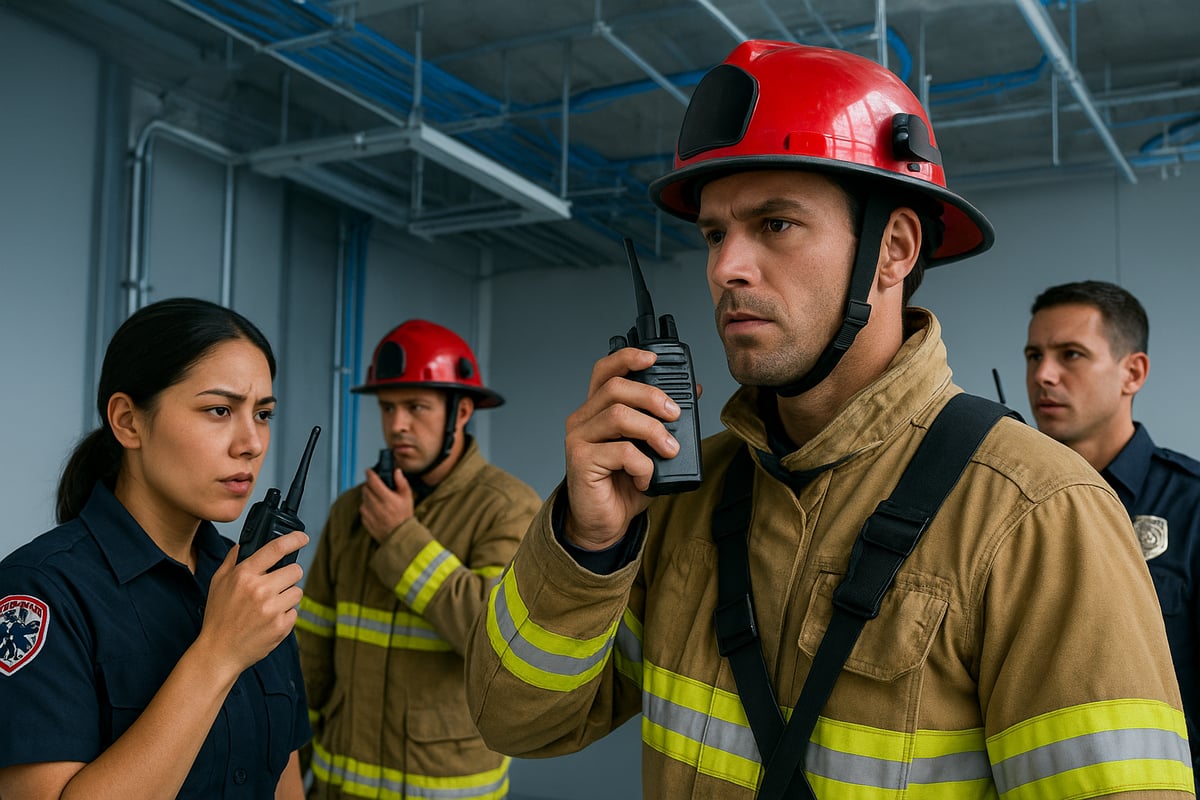
In critical moments, clear communication inside buildings can be lifesaving. As emergency response...
In critical moments, a clear message can turn panic into order. When emergencies strike, every second counts, and the right words can save lives.
This guide delves into the evolving landscape of emergency voice communication system technology, spotlighting the essential role it plays in safety and compliance for 2026.
Here, you will discover what defines an emergency voice communication system, how these systems function under pressure, and the latest regulatory changes impacting your responsibilities.
We will also explore cutting-edge innovations, design and installation strategies, maintenance tips, and predictions for the future.
Let this expert resource be your roadmap to mastering emergency communication and safeguarding your building with confidence.
Understanding Emergency Voice Communication Systems (EVCS)
Clear communication is vital in emergencies, and that's where an emergency voice communication system comes into play. These systems are designed to ensure that building occupants, emergency responders, and control room staff can communicate reliably when every second matters.
What is an Emergency Voice Communication System?
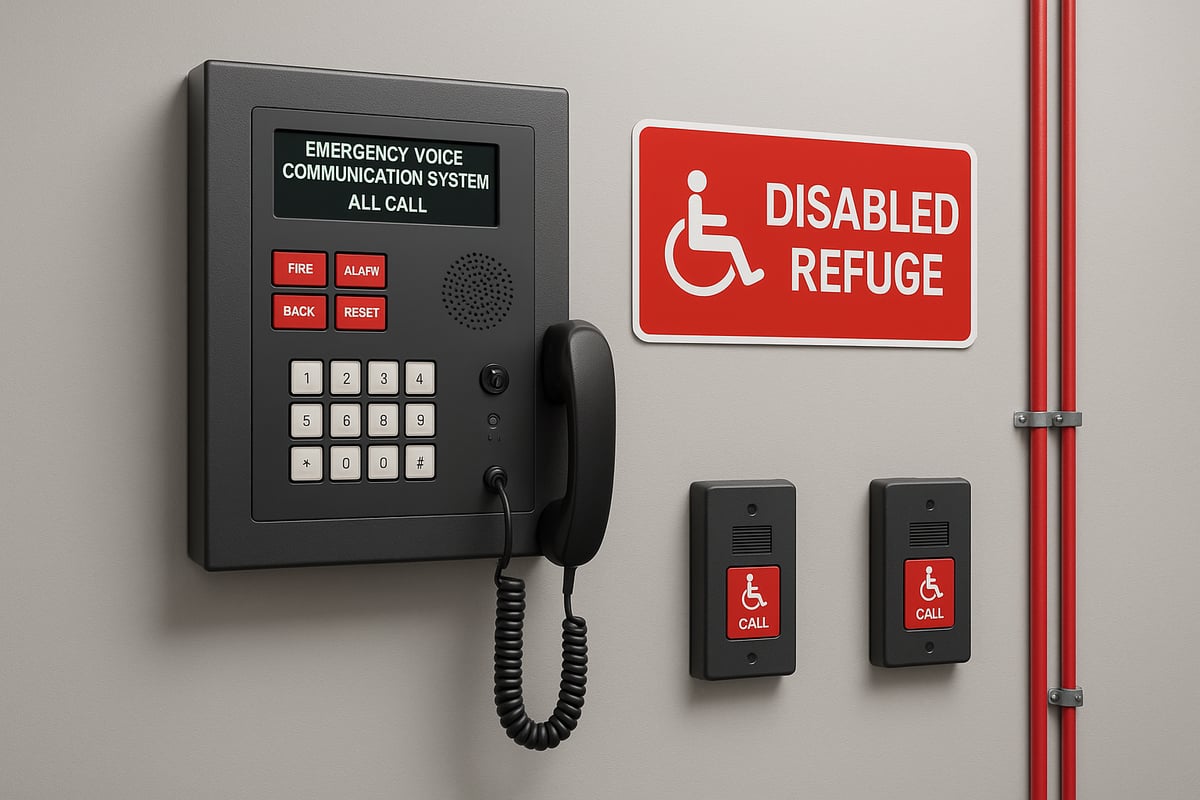
An emergency voice communication system is a dedicated network that allows controlled, two-way voice communication during emergencies. Its core purpose is to provide a reliable link between people in need—such as those in refuge areas—and the building’s control room or emergency services.
Key components include:
- Master stations (central control panels)
- Outstations (refuge points, fire telephones)
- Fire-rated wiring and robust power supplies
This system differs from general public address systems by offering secure, private, and hands-free communication, even if the main power fails. Use cases include fire emergencies, evacuation coordination, disabled refuge support, and firefighter communications. For example, in high-rise buildings, an emergency voice communication system is essential for guiding occupants and coordinating first responders during a crisis. For more on fire-specific scenarios, see Fire communication in emergencies.
Types of EVCS: Disabled Refuge, Firefighter Telephones, and More
There are several types of emergency voice communication system configurations. Disabled Refuge Systems are legally required in many regions to support safe evacuation for people with mobility challenges. Firefighter telephones use dedicated lines, allowing emergency personnel to communicate securely throughout a building.
Some facilities opt for combined systems that serve multiple purposes, such as integrating disabled refuge points with fire telephones. Modern systems can connect with building alarms and management platforms for streamlined responses. In large hospitals or transport hubs, multi-zone emergency voice communication system setups ensure that every area is covered, supporting both daily operations and crisis management.
How EVCS Operate During Emergencies
During an emergency, the emergency voice communication system is activated automatically or manually from the control room. Outstations at refuge points or firefighter locations become active, allowing hands-free communication with operators.
The process typically follows these steps:
- Emergency triggers system activation.
- Occupants or responders use outstations to speak directly to control staff.
- Operators coordinate evacuation or provide instructions.
- Backup batteries keep the system running if power fails.
Fail-safe features, such as battery backup and robust wiring, ensure communication is never lost. For instance, during a fire drill, the emergency voice communication system enables clear, uninterrupted dialogue between evacuation points and the command center.
Key Benefits of Implementing EVCS
An emergency voice communication system offers several essential advantages:
- Improved safety for all occupants
- Compliance with local and international regulations
- Fast, coordinated emergency response
- Accessibility for disabled persons and vulnerable groups
- Legal and insurance benefits, such as meeting stringent requirements in the UK (BS 5839-9) and the US (NFPA 72)
By installing an emergency voice communication system, building owners not only protect lives but also meet critical legal obligations and reduce risk.
Regulatory Standards and Compliance in 2026
Navigating the regulatory landscape is crucial for any emergency voice communication system. As standards evolve to address new challenges and technologies, staying informed can make the difference between compliance and costly setbacks. This section outlines the current frameworks, compliance mandates, inspection protocols, and consequences of non-compliance for 2026.
Global and Regional Regulatory Frameworks
The regulatory environment for emergency voice communication system installations is shaped by regional and international standards. In the UK, BS 5839-9 dictates EVCS requirements, while NFPA 72 serves as the benchmark in the US, and EN 54-16 is widely adopted in the EU. These standards are periodically updated to reflect technological advancements and lessons learned from real-world incidents.
For example, amendments in 2026 have introduced stricter guidelines for system robustness and accessibility. Regional variations exist, with some sectors requiring more rigorous protocols. The impact of the Building Safety Act 2022 and Fire Safety (England) Regulations 2022 continues to influence compliance. For the latest on UK regulatory updates, see the Proposed British Standard for Emergency Audio Communication Systems.
Compliance Requirements for New and Existing Buildings
Compliance for an emergency voice communication system depends on building type, occupancy, and local laws. For high-rise, public, and multi-occupancy buildings, EVCS installation is often mandatory. New constructions must integrate compliant systems from the outset, while older buildings may face retrofitting obligations to meet updated standards.
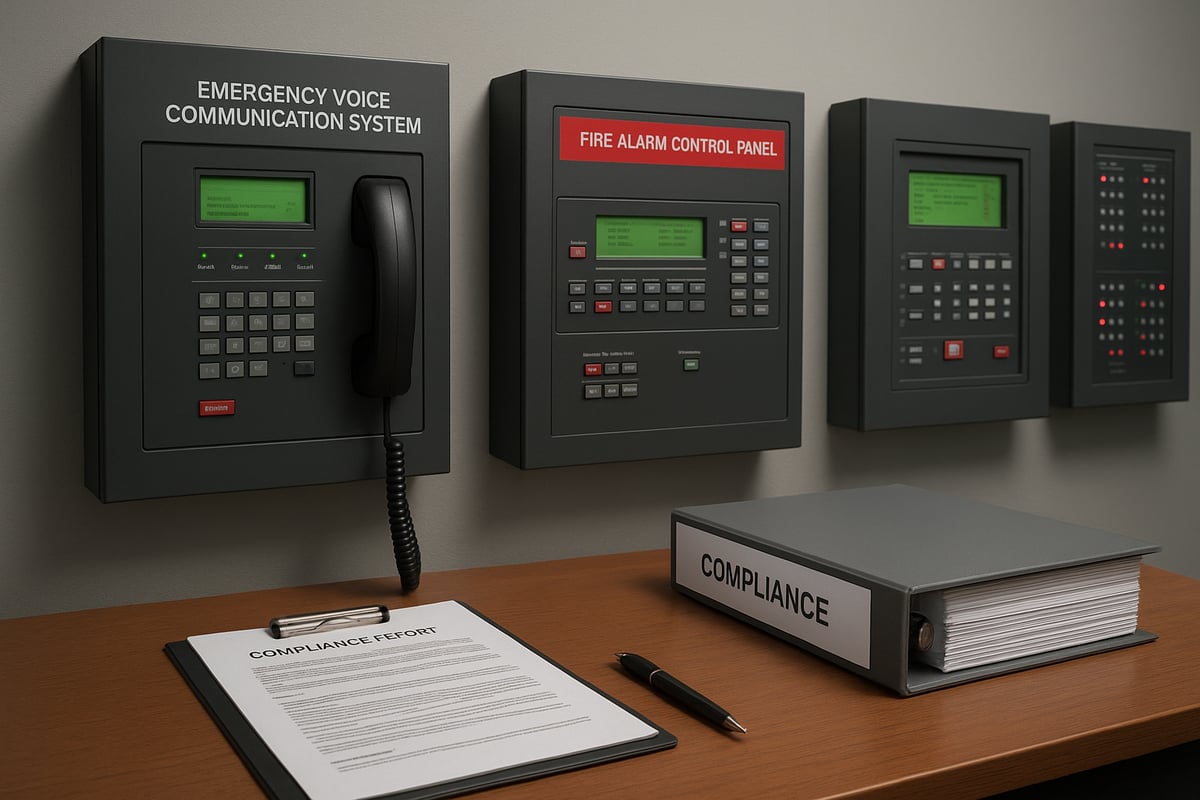
Documentation is essential. Building owners must maintain detailed records of system design, installation, and any modifications. An audit trail supports both regulatory review and future upgrades, ensuring that the emergency voice communication system remains up to code and fully functional.
Inspection, Testing, and Certification
A robust emergency voice communication system must undergo regular inspection and testing. Annual checks are standard, but some jurisdictions require more frequent reviews. Certified professionals conduct tests on battery backup, cabling, audio clarity, and system integrity.
Certification bodies issue compliance certificates following successful audits. Common pitfalls include incomplete documentation or neglected routine maintenance. To avoid these, building managers should implement scheduled testing procedures and ensure all staff are aware of their responsibilities regarding the emergency voice communication system.
Legal and Financial Implications of Non-Compliance
Failure to comply with emergency voice communication system regulations can result in significant legal and financial penalties. Fines may range from thousands to millions, depending on severity and jurisdiction. Insurance claims may be denied if non-compliance is found, increasing liability for building owners.
Case studies have shown that inadequate systems led to increased risk and, in some cases, prosecution following incidents. Recent enforcement actions in the UK and US highlight the importance of proactive risk management. Staying ahead of compliance requirements not only protects occupants but also safeguards your organization from costly repercussions.
Core Components and System Architecture
A well-designed emergency voice communication system is the backbone of effective crisis management in any modern building. Understanding its components and structure ensures reliable performance when every second counts.
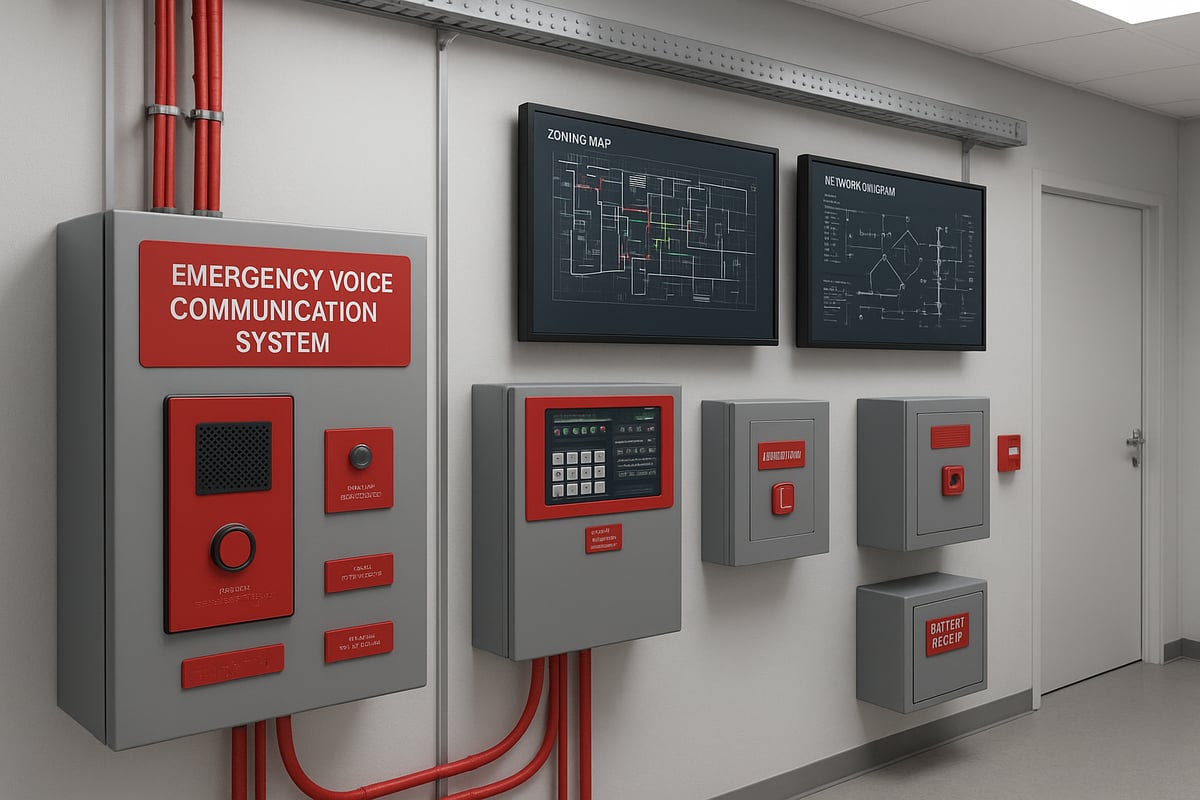
Main Elements of an EVCS
An emergency voice communication system consists of several key elements that work together seamlessly. The central control unit, often called the master station, is the command hub. Outstations, such as disabled refuge points and firefighter telephones, are strategically placed throughout the building for access during emergencies.
Fire-rated cabling ensures that communications remain intact even in high temperatures. Reliable power supplies and battery backups are essential, maintaining system operation during outages. System enclosures protect sensitive equipment from dust, moisture, and tampering. Environmental considerations, like ventilation and temperature control, further enhance system resilience.
Every component is chosen for durability, compliance, and compatibility, making the emergency voice communication system both robust and dependable.
System Design: Zoning, Scalability, and Redundancy
Thoughtful design is crucial for an emergency voice communication system to function across complex environments. Zoning divides large buildings or campuses into manageable sectors, allowing targeted communication and faster response. Scalability ensures the system can expand as the facility grows or adapts.
Redundant pathways, such as dual cabling routes and backup control units, minimize the risk of single-point failures. Failover strategies keep communication flowing even if part of the system is compromised. For a deeper look at scaling strategies, see the path to scale in emergency communication.
For example, a multi-building hospital campus might use zoning to coordinate evacuations floor by floor, with redundant connections linking all critical points.
Integration with Other Life Safety Systems
Modern emergency voice communication systems do not work in isolation. They integrate with fire alarms, public address systems, and building management platforms for unified response. When a fire alarm is triggered, the emergency voice communication system can automatically activate, broadcasting instructions and opening communication lines to refuge points.
Data from industry insights shows that over 70% of new installations are now integrated with fire detection systems. This integration ensures a rapid, coordinated response, reducing confusion and delays. In a transport hub, for example, automated activation can streamline mass evacuation efforts and prioritize high-risk zones.
User Interfaces and Accessibility Features
Accessibility is a cornerstone of an effective emergency voice communication system. Interfaces are designed for hands-free operation, with clear visual indicators and tactile buttons for all users. Features such as braille labeling and induction loop support make the system usable for visually or hearing-impaired individuals.
High-quality microphones and speakers ensure voice clarity, even in noisy environments. Noise cancellation technology further enhances communication. Signage is standardized and illuminated for visibility in low light or smoke. These features guarantee that everyone, regardless of ability, can use the emergency voice communication system in a crisis.
Power and Network Resilience
Reliability is non-negotiable for an emergency voice communication system. Battery backup units provide power for a minimum of 24 hours in standby mode, followed by full operation during an emergency. Dual power feeds and uninterruptible power supplies (UPS) add extra layers of protection.
System health is continuously monitored, with automated alerts for faults or performance drops. In simulated power outages, properly designed systems maintain full functionality, allowing uninterrupted communication. Environmental sensors within enclosures monitor for overheating or moisture, ensuring optimal conditions for all emergency voice communication system components.
Technological Innovations and 2026 Trends
The emergency voice communication system landscape is rapidly transforming as technology advances. In 2026, new solutions are shaping safer, smarter, and more responsive buildings. Facility managers and safety professionals must stay ahead of these trends to ensure their emergency voice communication system remains effective, compliant, and future-ready.
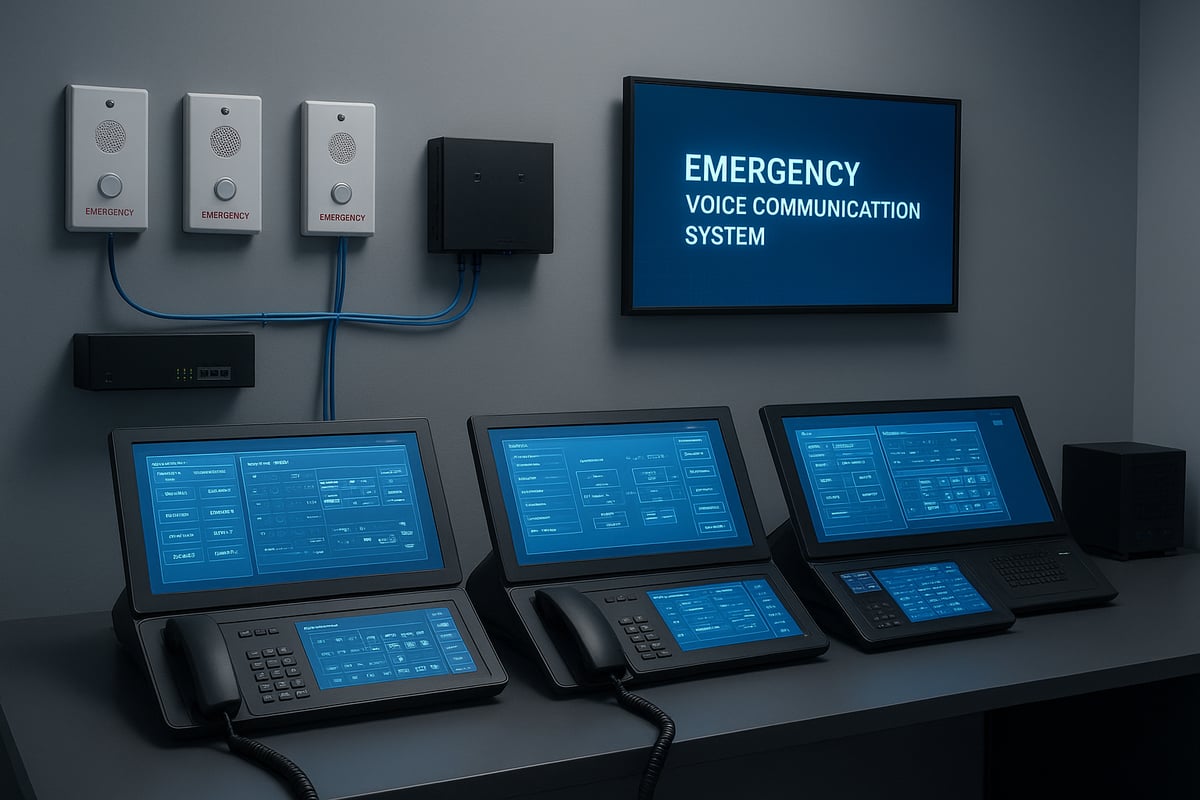
Digital and IP-Based EVCS
A major shift in emergency voice communication system technology is the migration from analog to digital and IP-based platforms. Digital systems allow for flexible network architecture, centralized management, and easy scalability across multiple sites. With IP connectivity, these systems can be monitored and controlled remotely, supporting seamless communication even in complex environments.
For example, in a smart building, an IP-based emergency voice communication system enables integration with other critical systems, such as fire detection and building management. This integration streamlines response times and enhances occupant safety. The evolution mirrors broader trends in public safety, such as the Next Generation 911 Overview, which highlights the shift to digital emergency communication infrastructure.
Enhanced Audio Quality and Noise Management
The effectiveness of an emergency voice communication system relies on clear, intelligible audio, even in noisy settings. Recent advances in microphone and speaker technology have raised the bar for sound quality. Features like active noise cancellation help filter out background noise, ensuring vital instructions are heard during emergencies.
In busy transport terminals, for instance, enhanced audio clarity allows staff and occupants to communicate without misunderstanding. Decibel clarity improvements, documented in industry reports, have led to more reliable communication in high-traffic areas. This ensures that every emergency voice communication system delivers its message, regardless of environmental challenges.
Integration with Mobile Devices and Apps
A 2026-ready emergency voice communication system is not limited to fixed stations. Mobile integration is now a key trend, empowering emergency responders and building managers with real-time access and control. Dedicated apps provide instant notifications, system diagnostics, and two-way communication directly from smartphones or tablets.
This mobility means fire wardens can receive alerts or communicate with the control room while moving through the building. Building managers can monitor system health, initiate drills, and troubleshoot issues remotely. As a result, the emergency voice communication system becomes a dynamic tool, supporting rapid and informed decision-making during critical events.
AI, Automation, and Smart System Features
Artificial intelligence is revolutionizing the emergency voice communication system. AI-driven diagnostics enable predictive maintenance, identifying potential faults before they disrupt operations. Automated system checks and real-time alerts reduce manual oversight, freeing up staff for other critical tasks.
Smart features like voice recognition allow only authorized personnel to access certain functions, enhancing security. In multilingual environments, AI-powered language translation ensures clear communication with all occupants. For example, an emergency voice communication system in an international airport can automatically switch languages based on the user's preference, improving inclusivity and response effectiveness.
Cybersecurity and Data Protection in EVCS
As emergency voice communication system platforms become more connected, cybersecurity is a top priority. Risks such as unauthorized access, data breaches, and system tampering must be addressed with robust security protocols. Encryption, secure access controls, and compliance with data privacy regulations are now standard features in modern systems.
Cloud-managed solutions offer enhanced monitoring but require strict safeguards to protect sensitive information. For example, a cloud-based emergency voice communication system might employ multi-factor authentication and continuous vulnerability scanning. These measures ensure that the system remains resilient, reliable, and trustworthy, even in the face of evolving cyber threats.
Best Practices for Design, Installation, and Commissioning
Designing and deploying an emergency voice communication system requires precision, foresight, and adherence to industry standards. Every phase, from initial assessment to final documentation, plays a vital role in ensuring the system functions reliably during a crisis. Adopting the best practices outlined below will help ensure that your emergency voice communication system is compliant, effective, and future-proof.
Site Assessment and Risk Analysis
The first step in any emergency voice communication system project is a comprehensive site assessment. Evaluate the building's layout, occupancy types, and specific risks such as fire hazards or high-density areas.
Identify locations for critical communication points, including stairwells, disabled refuges, and control rooms. Collaborate with fire safety and accessibility consultants to ensure all legal and operational requirements are met.
For example, in a mixed-use development, a thorough risk analysis may reveal the need for additional outstations on upper floors or in high-traffic zones. This targeted approach enhances both safety and compliance.
System Design and Customization
Once risks are identified, tailor the emergency voice communication system to the building's unique needs. Select suitable outstation types for each area, and determine optimal placement for master stations and refuge points.
Scalability and redundancy should be built into the design to accommodate future expansion or changes in building use. Integration with fire alarms and building management systems is crucial for seamless operation and unified response.
For further guidance on system integration, see Interoperability in Emergency Communications, which underscores the importance of coordinated design for effective emergency voice communication system performance.
Installation Protocols and Common Challenges
Proper installation is essential for the long-term reliability of any emergency voice communication system. Adhere to strict cabling standards, using fire-resistant routes and materials.
Consider environmental factors such as temperature and humidity, especially in basements or rooftop enclosures. Coordinate closely with other trades to avoid conflicts with electrical, HVAC, or structural components.
In heritage buildings, unique challenges may arise, such as preserving architectural features while meeting modern safety standards. Overcoming these obstacles requires flexibility, expertise, and clear communication among all stakeholders.
Testing, Commissioning, and Handover
Before the emergency voice communication system is put into service, conduct a rigorous testing and commissioning process. Perform pre-commissioning checks, verify all components, and document results.
Invite stakeholders, including building managers and emergency personnel, to witness functional tests. Training sessions ensure that staff understand system operation and emergency procedures.
A detailed commissioning checklist helps guarantee that every requirement is met. For new office towers, this stage often includes simulated emergency scenarios to validate performance and readiness.
Documentation and Ongoing Compliance
Maintaining thorough records is essential for the ongoing success of any emergency voice communication system. Keep system manuals, user guides, and emergency procedures up to date and easily accessible.
Schedule regular audits and updates to ensure ongoing compliance with evolving regulations. Digital documentation management systems can streamline this process, making it easy to track inspections and modifications.
For example, a university campus may use a centralized digital platform to manage all EVCS records, supporting both efficiency and regulatory transparency.
Maintenance, Monitoring, and Lifecycle Management
Regular maintenance is essential for any emergency voice communication system. Keeping these systems in optimal condition ensures they are ready when needed most, protecting lives and supporting regulatory compliance. Let's explore the key practices and considerations for maintaining, monitoring, and managing the lifecycle of your emergency voice communication system.
Routine Maintenance and Inspection Schedules
A structured maintenance plan is the backbone of a reliable emergency voice communication system. Industry standards recommend scheduled checks, typically every six to twelve months, to ensure all components function as intended. Key tasks include:
- Testing batteries to verify backup power
- Checking line integrity and audio clarity at each outstation
- Inspecting signage for visibility and compliance
- Verifying enclosure seals and system alarms
Consistent documentation of these activities is vital for audit trails and legal compliance. Poor maintenance can lead to system failures, putting occupants at risk. For a deeper understanding of effective maintenance protocols, review emergency communication workflow best practices.
Remote Monitoring and Diagnostics
Modern emergency voice communication system solutions increasingly offer remote monitoring features. This technology enables facility managers to track system health, receive automated fault alerts, and conduct diagnostics from a centralized dashboard. Benefits include:
- Immediate notification of issues or tampering
- Reduced downtime through quicker response
- Integration with smart building management systems
In a smart city infrastructure, real-time monitoring ensures that the emergency voice communication system remains operational across multiple locations. These tools enhance both safety and efficiency for large or distributed properties.
Upgrades, Retrofitting, and System Expansion
As regulations and building needs evolve, upgrading or expanding your emergency voice communication system becomes crucial. Criteria for upgrades include compliance with new standards, increased occupancy, and changes in building layout. Retrofitting legacy systems can involve:
- Installing additional outstations in new areas
- Upgrading to digital or IP-based technology
- Enhancing accessibility features for all occupants
Planning for expansion requires collaboration with engineers and safety consultants to ensure seamless integration with existing infrastructure. For example, a healthcare facility may expand its system as new wings are added, maintaining full coverage and compliance.
Cost Management and Total Cost of Ownership
Managing the costs of an emergency voice communication system involves more than just the initial investment. Ongoing expenses include maintenance, periodic upgrades, and compliance checks. Consider the following table for a clear breakdown:
| Expense Type | Initial Cost | Ongoing Cost (Annual) |
|---|---|---|
| Equipment | High | Low |
| Maintenance | Moderate | Moderate |
| Upgrades | Low | Variable |
| Compliance | Low | Moderate |
A well-maintained emergency voice communication system offers long-term savings by minimizing the risk of failures, avoiding fines, and reducing insurance premiums. Conducting a return-on-investment analysis helps building owners plan budgets and justify upgrades.
The Future of Emergency Voice Communication: Predictions for 2026 and Beyond
The landscape of the emergency voice communication system is set to transform dramatically in the coming years. As 2026 approaches, new regulations, cutting-edge technologies, and evolving safety needs are shaping how organizations protect people in critical situations. Understanding these changes is essential for building owners, facility managers, and safety professionals who want to remain compliant and future-ready.
Evolving Regulatory Landscape
In 2026, regulatory standards for the emergency voice communication system continue to evolve. Authorities expect to introduce new requirements, particularly for smart and sustainable buildings. International codes are increasingly emphasizing integration with mass notification systems and accessibility features for all occupants.
For example, upcoming EU directives will require enhanced communication systems in public buildings, ensuring rapid alerts during emergencies. Building owners and facility managers must stay informed about these changes to avoid compliance gaps. The right emergency voice communication system ensures not only safety but also adherence to the latest legal obligations.
Next-Generation Technologies
The emergency voice communication system is benefitting from rapid advances in technology. AI-driven multilingual communication, real-time translation, and IoT integration are already being piloted in several large facilities. Predictive analytics are helping optimize emergency response by analyzing real-time building data and occupant movement.
A prime example is the use of AI-powered situational awareness in new smart campuses, which enables faster, more accurate instructions during crises. As these innovations mature, the emergency voice communication system will become even more adaptive, responsive, and vital to building safety strategies.
The Role of EVCS in Inclusive and Accessible Safety
Inclusivity is a top priority for every emergency voice communication system moving into 2026. Systems are increasingly designed to support non-English speakers and disabled persons through features like multilingual alerts, visual cues, and accessible controls. Integration with mass notification platforms ensures everyone receives timely, understandable information.
Demographic shifts in urban populations highlight the need for these enhancements. For a deeper look at how these technologies are revolutionizing safety, see Multilingual solutions for campus safety. Inclusive emergency voice communication system design is no longer optional; it is a regulatory and ethical necessity.
Building Resilience and Future-Proofing
Future-proofing the emergency voice communication system means designing for adaptability, modularity, and sustainability. Systems must be able to address emerging threats, from climate change to evolving security risks. Modular architectures allow for easy upgrades and expansion as building needs change.
Recent events have shown the importance of operational continuity and resilience. By investing in robust, sustainable infrastructure, organizations ensure their emergency voice communication system remains reliable, efficient, and compliant in any scenario. This proactive approach is the cornerstone of resilient building safety for years to come.
As we’ve explored, having a reliable emergency voice communication system is essential for keeping people safe and ensuring fast, clear responses—especially in today’s multilingual and dynamic environments. If you’re interested in seeing how real-time language translation and advanced communication features can transform your emergency preparedness, I encourage you to take the next step. You can experience first-hand how Convey911’s platform supports seamless voice, text, and multimedia communication in over 185 languages. Let’s make your facility safer and more inclusive together—Schedule a Demo to see these innovations in action.