

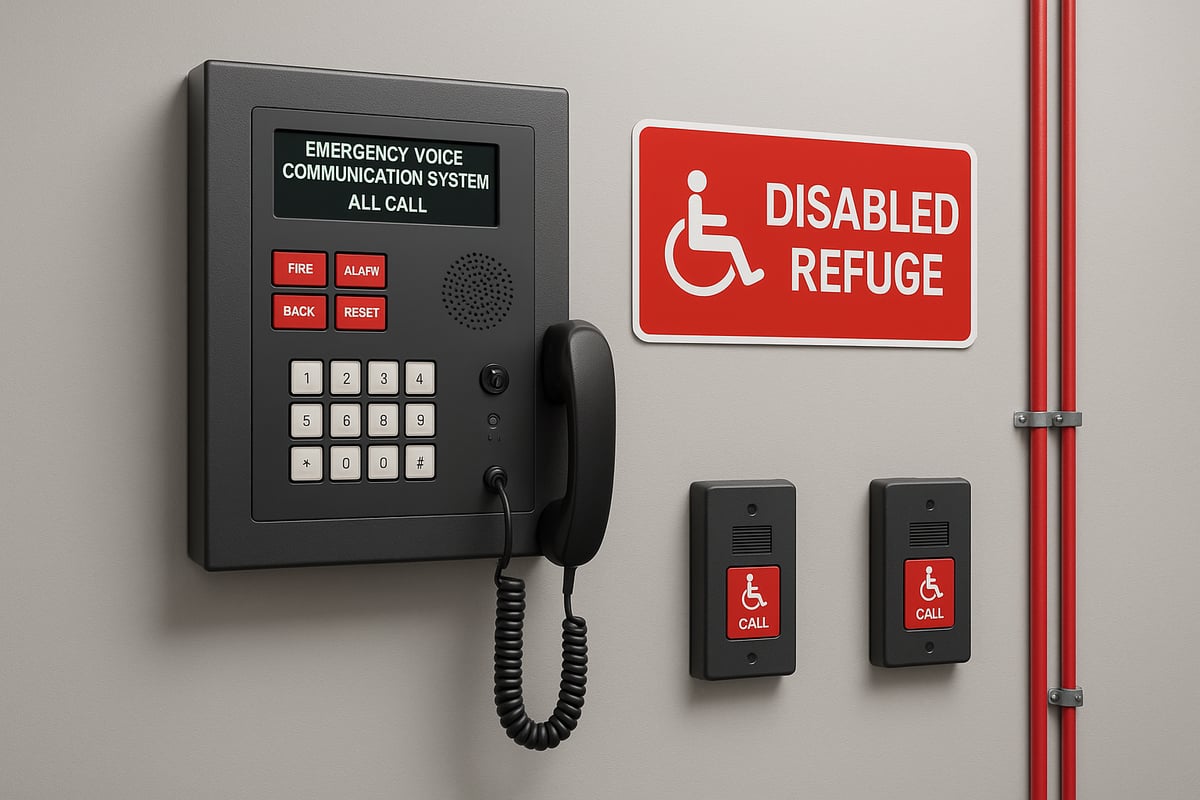
In critical moments, a clear message can turn panic into order. When emergencies strike, every...
In critical moments, clear communication inside buildings can be lifesaving. As emergency response standards evolve, reliable coverage is now a necessity for every facility.
This errcs system guide gives you a step-by-step path to ensure uninterrupted emergency communications by 2026. You will gain clarity on what ERRCS is, understand compliance requirements, and learn how to plan, install, and maintain a dependable system.
Explore the essentials, from legal mandates and technical planning to ongoing maintenance and future innovations in emergency communications. Take the next step to make your building safer and ready for tomorrow’s challenges.
Understanding ERRCS: What It Is and Why It Matters
In any emergency, clear communication can be the deciding factor between a swift response and a catastrophe. The errcs system is specifically engineered to bridge the communication gap that often exists inside complex buildings. Understanding what this system is, how it functions, and why it is required will help you make informed decisions about compliance and safety.
The Basics of ERRCS
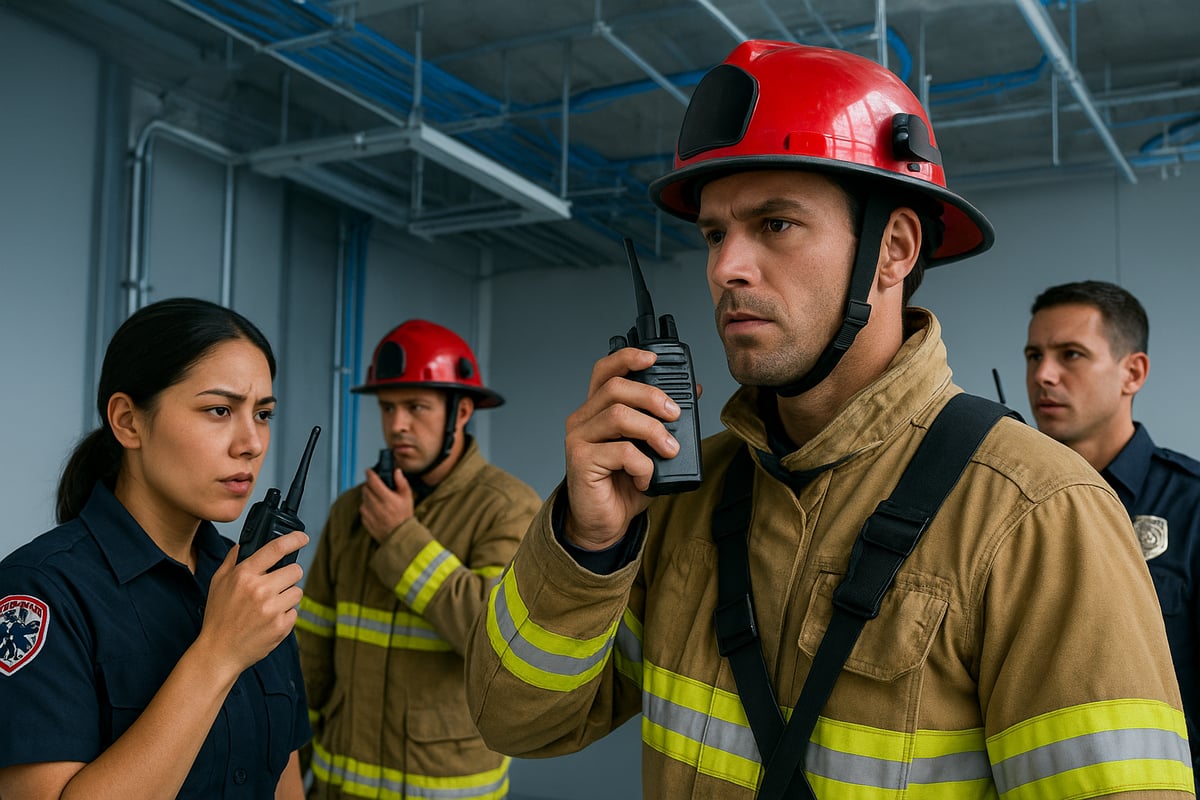
An errcs system, or Emergency Responder Radio Communication System, is a dedicated network designed to ensure first responders have reliable radio coverage within buildings. Unlike standard wireless systems, the errcs system operates on public safety radio frequencies, guaranteeing uninterrupted communication during emergencies.
Key components of an errcs system include:
- Distributed Antenna Systems (DAS): These amplify and distribute radio signals throughout the building.
- Bi-Directional Amplifiers (BDAs): These boost weak radio signals in both directions.
- Cabling: Specialized cables connect antennas and amplifiers.
- Donor Antennas: These connect the in-building system to the public safety radio network.
While Wi-Fi and cellular boosters enhance everyday connectivity, they do not support emergency responder frequencies or meet code requirements. Only an errcs system is purpose-built to deliver robust, code-compliant radio coverage for fire, police, and medical teams who rely on mission-critical communication.
The Critical Importance of ERRCS
The errcs system is essential for life safety. During emergencies, first responders must communicate seamlessly inside structures that otherwise block or weaken radio signals. Tragic events, such as the 9/11 attacks and the Grenfell Tower fire, revealed the dire consequences when radio coverage failed inside buildings.
According to the National Fire Protection Association (NFPA), over 60 percent of first responders report communication issues in large buildings. The errcs system directly addresses these gaps, enabling teams to coordinate rescues, relay vital information, and maintain situational awareness.
Certain facilities are especially dependent on an errcs system:
- High-rise office and residential towers
- Hospitals and healthcare campuses
- Schools and universities
- Tunnels and underground structures
- Shopping centers and arenas
NFPA and International Fire Code (IFC) standards now require adequate in-building radio coverage for emergency responders. Without a compliant errcs system, building occupants and first responders face heightened risks.
Compliance and Legal Mandates
Compliance with errcs system requirements is now a legal obligation in many jurisdictions, with numerous regions mandating upgrades by 2026. Building owners who fail to comply risk significant penalties, such as hefty fines, delays in certificate of occupancy, and even insurance complications.
Local Authorities Having Jurisdiction (AHJs) play a central role in enforcing these mandates, reviewing system designs, and conducting acceptance testing. However, code enforcement and requirements may vary, so coordination with your local AHJ is essential.
For example, New York City is actively pushing for all high-rises to achieve errcs system compliance by the 2026 deadline. Many building owners are already working through phased compliance plans to avoid last-minute violations. For a deeper dive into legal requirements and testing protocols, see this overview of ERRCS Compliance Testing and Code Requirements.
By understanding the errcs system's role, its critical safety benefits, and the path to legal compliance, you can take proactive steps to protect lives and keep your facility ahead of regulatory deadlines.
The 2026 Compliance Roadmap: Key Milestones and Deadlines
The 2026 deadline for ERRCS system compliance is rapidly approaching, and proactive planning is vital for every building owner and facility manager. A missed step or delayed action can result in costly fines or even prevent occupancy. To ensure your property remains safe, legal, and ready for emergencies, it is crucial to understand the timeline and requirements for a compliant ERRCS system.

Mapping Out Your Timeline
Planning for a compliant ERRCS system begins with a structured project timeline. Most projects follow a series of phases that ensure every regulatory and technical requirement is met. Here’s a typical breakdown:
- Assessment: Conduct a comprehensive RF survey to identify coverage gaps and establish baseline signal strength.
- Design: Collaborate with qualified ERRCS system engineers to develop a tailored solution based on your building’s unique needs.
- Permitting: Prepare and submit detailed plans for approval by the Authority Having Jurisdiction (AHJ) and other local code officials.
- Installation: Engage certified professionals to install all ERRCS system hardware, including distributed antenna systems, bi-directional amplifiers, and donor antennas.
- Testing: Perform acceptance testing, such as grid and talk-back tests, to verify the ERRCS system meets required thresholds.
- Certification: Obtain official documentation confirming compliance.
- Maintenance: Schedule ongoing inspections and recertification to ensure continued reliability.
Building owners must pay close attention to regional differences in compliance deadlines. For example, New York City mandates ERRCS system upgrades in all high-rises by 2026, while other jurisdictions may have staggered timelines. Always coordinate with fire marshals and AHJs early, as local enforcement can vary.
Below is a summary of essential ERRCS system documentation:
| Phase | Key Documentation |
|---|---|
| Assessment | RF Signal Strength Survey |
| Design | System Schematics, As-Built Drawings |
| Permitting | AHJ Submission Forms |
| Testing | System Test Reports |
| Certification | Compliance Certificate |
| Maintenance | Annual Inspection Logs |
Remember, missing or incomplete documentation can delay approvals and occupancy.
Step-by-Step Compliance Checklist
A structured, stepwise approach is the best way to ensure ERRCS system compliance before the 2026 deadline. Follow this checklist to stay on track:
- Assess Your Building: Schedule a professional RF survey to evaluate current in-building radio coverage.
- Consult with Experts: Engage experienced ERRCS system vendors and engineers to interpret survey results and recommend solutions.
- Develop an Action Plan: Create a detailed compliance roadmap and budget, factoring in design, installation, and ongoing maintenance.
- Submit for Approval: Present your plans to the AHJ for review. Address any local code nuances or additional requirements.
- Install the System: Work with certified installers to ensure the ERRCS system is deployed according to code and best practices. For a deeper dive into these steps and key considerations, review the ERRCS Installation Guidelines.
- Final Testing and Recertification: Complete all required acceptance tests and secure annual recertification to maintain compliance.
Chicago, for instance, uses a phased approach for public buildings, prioritizing high-occupancy facilities and providing clear milestones for each phase. Early planning and execution not only reduce the risk of costly last-minute violations but also spread out costs and minimize operational disruptions.
In summary, starting early with your ERRCS system compliance journey is the best strategy to avoid penalties and ensure uninterrupted emergency communications for years to come.
Planning and Installing an ERRCS: From Site Survey to Certification
Ensuring your building is equipped with a compliant errcs system involves a series of technical steps, each critical for seamless emergency responder communication. From the initial site survey to final certification, careful planning and execution will guarantee reliable coverage and regulatory approval. Let’s break down each stage for a successful errcs system deployment.

Site Assessment and RF Survey
The first step in implementing an errcs system is a comprehensive site assessment and RF survey. This process determines whether your building’s current radio environment supports effective emergency responder communication.
Specialized technicians measure radio signal strength throughout the property, using tools like spectrum analyzers and grid testing. They focus on identifying dead zones, particularly in basements, stairwells, and areas shielded by concrete or metal.
For example, hospital basements often struggle with weak signals due to dense walls and equipment. Technicians log readings in decibels (dBm), seeking levels above -95 dBm for compliance. The following code block illustrates a sample RF survey data point:
Location: Basement Stairwell
Signal Strength: -102 dBm
Compliance: FAIL (Threshold: -95 dBm)
A thorough survey ensures your errcs system design addresses all coverage gaps.
System Design and Engineering
Once coverage gaps are mapped, engineers design an errcs system tailored to your building’s layout and construction materials. This involves selecting the right Distributed Antenna System (DAS), Bi-Directional Amplifiers (BDAs), and antennas for optimal signal distribution.
Materials like reinforced concrete, metal, and Low-E glass can block radio signals, so system components must be strategically placed. Scalability is essential, allowing future upgrades as communication standards evolve. Coordination with architects and MEP engineers ensures the system integrates seamlessly with existing infrastructure.
For expert assessment and compliance-focused solutions, many building owners consult professional ERRCS Design and Testing Services, which provide guidance on meeting local fire code requirements and designing an effective errcs system.
Permitting and Code Approvals
Before installation, your errcs system design must be submitted to the Authority Having Jurisdiction (AHJ) for review. Each locality may enforce unique fire codes, so early engagement with code officials is vital.
Navigating local variances can be challenging. For instance, California mandates seismic anchoring for all system components to withstand earthquakes, adding extra steps to the approval process.
Prepare clear documentation, including RF survey results and detailed system drawings, to streamline approvals. Early, accurate submissions can prevent costly delays and ensure your errcs system meets all legal requirements.
Installation Best Practices
With approvals secured, certified professionals install the errcs system following industry best practices. Credentials such as the FCC General Radiotelephone Operator License (GROL) are often required for installers.
Minimizing disruption is key. Many teams phase installation work or schedule it during off-hours to avoid interfering with daily building operations. Attention to detail is critical:
- Route cables away from high-interference areas.
- Ensure power supply redundancy for reliability.
- Avoid common pitfalls like improper antenna placement or insufficient grounding.
A table summarizing installer requirements can help clarify expectations:
| Requirement | Details |
|---|---|
| Certification | FCC GROL or equivalent |
| Experience | ERRCS/DAS installation |
| Safety Training | OSHA compliance, local standards |
Proper installation ensures your errcs system is reliable from day one.
Final Testing and Certification
After installation, the errcs system undergoes rigorous acceptance testing. Grid testing verifies radio coverage in every part of the building, while talk-back tests confirm two-way communication with first responders.
Battery backup systems are checked to ensure operation during power outages. All test data and as-built documentation are submitted to the AHJ for final certification.
Annual recertification is required to maintain compliance. Ongoing testing and timely documentation keep your errcs system in optimal condition and ready for emergencies.
Staying proactive with testing and certification not only ensures legal compliance but also protects occupants and first responders.
Maintaining and Monitoring Your ERRCS for Long-Term Reliability
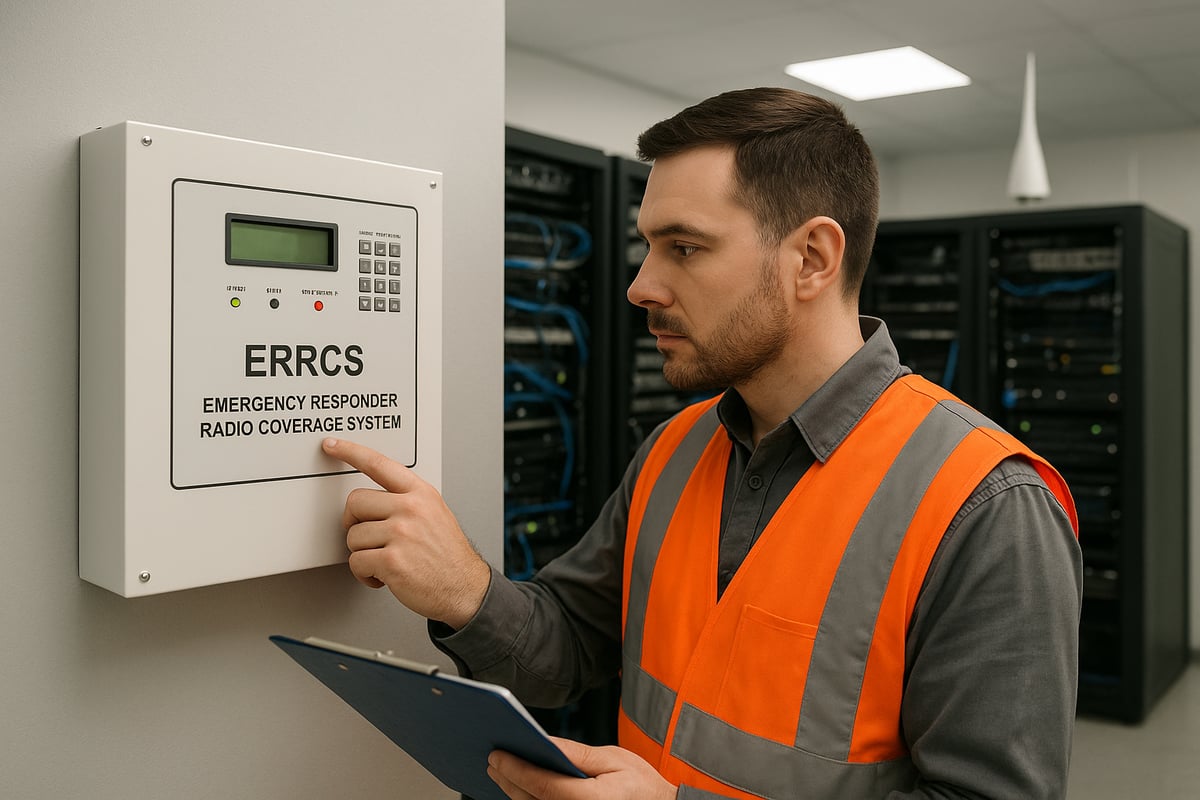
Maintaining your ERRCS system is not a one-time task. Long-term reliability depends on proactive care, rigorous monitoring, and strategic upgrades. Neglecting even routine maintenance can turn a compliant system into a hidden liability. Let's explore the essential strategies to keep your ERRCS system fully operational and code-compliant for years to come.
Routine Maintenance Requirements
Regular maintenance is the cornerstone of a dependable ERRCS system. Each year, schedule a comprehensive inspection to ensure every component functions as intended. This includes:
- Checking battery backup units for capacity and readiness
- Cleaning donor and distributed antennas to prevent signal loss
- Verifying all cabling and physical connections for wear or corrosion
- Testing power supplies and ensuring redundancy
Neglecting these tasks can lead to critical failures. For example, a large school district experienced multiple ERRCS system outages due to overlooked battery replacements and loose antenna mounts. To avoid similar setbacks, follow the best practices for maintaining emergency responder radio systems, which emphasize environmental checks and routine documentation.
Make maintenance a scheduled, documented process. This not only supports compliance but also extends the lifespan of your ERRCS system.
System Monitoring and Remote Diagnostics
Modern ERRCS system reliability hinges on advanced monitoring and diagnostics. Real-time monitoring tools can detect faults, power loss, or signal degradation instantly, reducing response times during emergencies.
Remote diagnostics are especially valuable for organizations with multiple buildings. These systems can:
- Alert facility managers to faults or alarms via mobile or web dashboards
- Integrate with building management systems (BMS) for holistic oversight
- Provide historical data for trend analysis and preventive action
According to recent NFPA data, around 30 percent of ERRCS system failures were first identified through remote monitoring. For facilities aiming to optimize their emergency communication workflow, seamless ERRCS system integration is essential. This ensures that every alarm or fault is addressed before it impacts safety.
Troubleshooting and Emergency Repairs
Despite best efforts, ERRCS system failures can occur. Quick troubleshooting protocols make the difference between a minor disruption and a major safety risk. Common failure points include:
- Amplifier or BDA malfunctions
- Damaged cables from renovations or accidental impacts
- Loss of primary or backup power supply
Prepare a rapid response plan that includes:
- Immediate notification procedures for maintenance staff and first responders
- Access to critical spare parts, such as amplifiers and batteries
- Clear documentation of system layout and recent maintenance activities
By maintaining a proactive troubleshooting strategy, you minimize downtime and ensure your ERRCS system is always ready for emergencies.
Upgrades and Future-Proofing
ERRCS system technology is evolving rapidly. Planning for upgrades is vital to maintain compliance and performance as new standards and technologies emerge.
Considerations for future-proofing include:
- Compatibility with 5G, FirstNet, and digital radio systems
- Budgeting for lifecycle replacement of key components
- Scheduling system reviews to align with updates to NFPA and IFC codes
Proactive upgrades reduce the risk of last-minute retrofits and help your ERRCS system remain compliant and effective. By investing in forward-thinking solutions, you ensure uninterrupted emergency communications for years to come.
Future Trends in ERRCS and Emergency Communication Technology
As emergency communication needs evolve, the errcs system is undergoing rapid transformation. New codes, digital technologies, and advanced responder tools are shaping how buildings will ensure safety and compliance well beyond 2026.
Evolving Code Standards and Technology
Regulatory standards for the errcs system are not static. Anticipated updates to the NFPA and International Fire Code will likely require more robust coverage, especially in challenging spaces such as underground garages and large complexes.
Smart city initiatives are integrating ERRCS infrastructure with IoT sensors, enabling real-time building status updates for first responders. This evolution means property managers must keep pace with both mandated coverage areas and new interoperability standards.
By staying informed about code changes, facility teams can ensure their errcs system remains compliant and ready for inspection. Regularly consulting with local authorities will help anticipate regional requirements and future-proof investments.
The Rise of Digital and Hybrid ERRCS Solutions
Digital radio technology is quickly becoming a cornerstone of the modern errcs system. Many new installations are adopting hybrid solutions, bridging legacy analog systems with digital radios for seamless transition and backward compatibility.
FirstNet and public safety broadband networks are influencing ERRCS system design, offering faster, more reliable communication for emergency teams. In 2024, industry surveys revealed that 45 percent of new errcs system deployments included digital radio support, reflecting a shift toward future-ready infrastructure.
Choosing scalable, flexible hardware ensures your system can adapt to these ongoing advances without costly overhauls.
Enhancing Multilingual and Multimedia Communication
The next generation of the errcs system must support not just voice, but also text and video communication. Diverse responder teams and public safety agencies increasingly require multi-channel solutions to reach everyone in an emergency.
For instance, a large airport recently implemented an errcs system capable of multimedia alerts, supporting both spoken and written instructions. Technologies like Enhancing public safety with text-to-911 are enabling direct communication with individuals who may be unable to speak or who require language assistance.
As these capabilities become standard, facility leaders should evaluate their current systems for compatibility and upgrade options.
Preparing for the Next Generation of Emergency Response
Artificial intelligence is poised to further revolutionize the errcs system. Predictive maintenance tools will detect potential failures before they occur, reducing downtime and repair costs.
Integration with mass notification and alerting platforms will allow for rapid, building-wide emergency messaging. By embracing these innovations, organizations can strengthen their compliance posture and enhance overall safety.
Proactive planning and investment in next-gen errcs system features ensure your building remains resilient, adaptable, and prepared for whatever the future brings.
As you look ahead to 2026, ensuring your building meets ERRCS requirements is about more than just compliance—it's about creating a safer environment for everyone who steps inside. Reliable emergency communication saves lives, and integrating advanced solutions like real-time translation can make all the difference during critical moments. If you're ready to see how a truly connected emergency response system works, or want to experience the benefits of seamless multilingual communication firsthand, I invite you to Schedule a Demo. Let's take the next step toward reliable coverage together.