

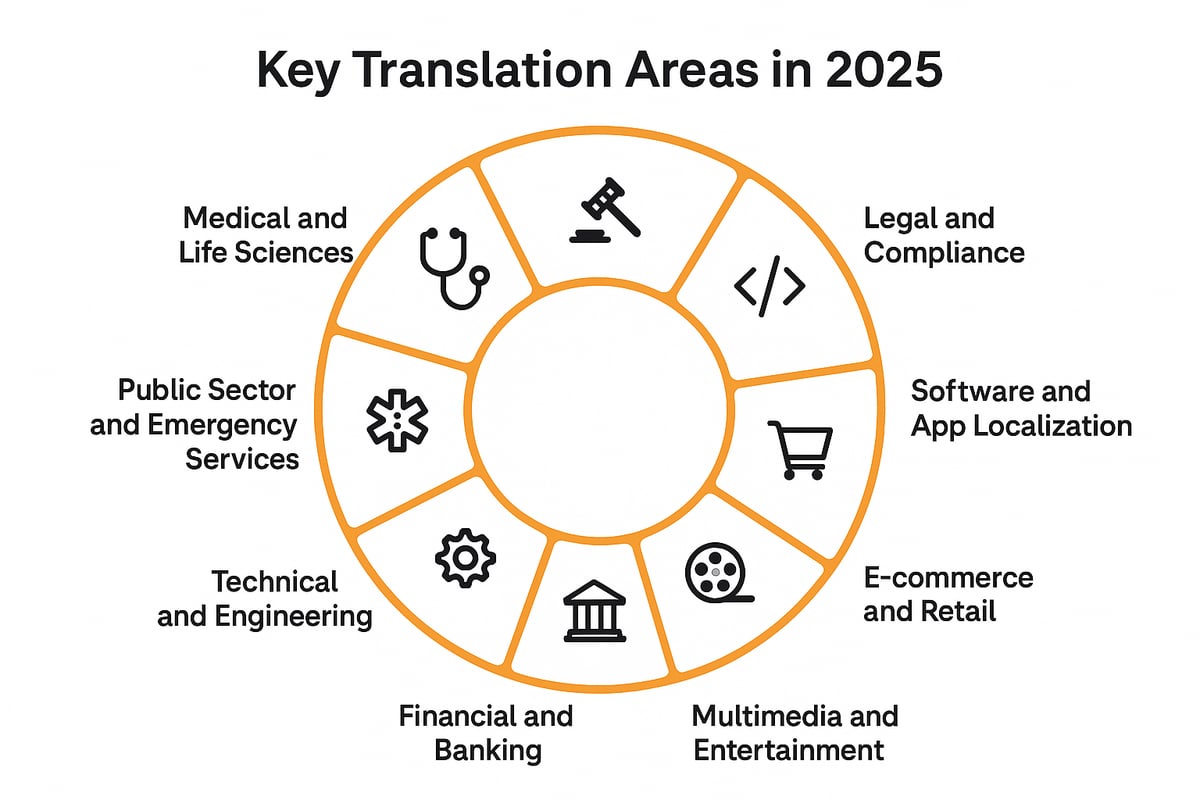
The translation industry is entering a pivotal era as new technology and global trends reshape the...
In today’s global marketplace, businesses face unprecedented opportunities and challenges as digital interactions cross language and cultural boundaries. Seamless communication is no longer optional—it is essential for growth and operational excellence.
This guide focuses on the evolution of language translation models, revealing how the latest breakthroughs can empower organizations to thrive in 2026. We will examine the journey from early systems to advanced AI-powered solutions, along with practical strategies for integration, quality assurance, and ethical considerations.
Whether you aim to expand internationally or improve multilingual communication, understanding these innovations will be vital for long-term success. Let’s explore how to select, implement, and future-proof your approach for the years ahead.
The Evolution of Language Translation Models
Language translation models have undergone a remarkable transformation, reshaping the way organizations communicate across borders. Understanding this evolution is essential to grasp both the current landscape and what lies ahead for businesses aiming for global success.
From Rule-Based to Neural Machine Translation
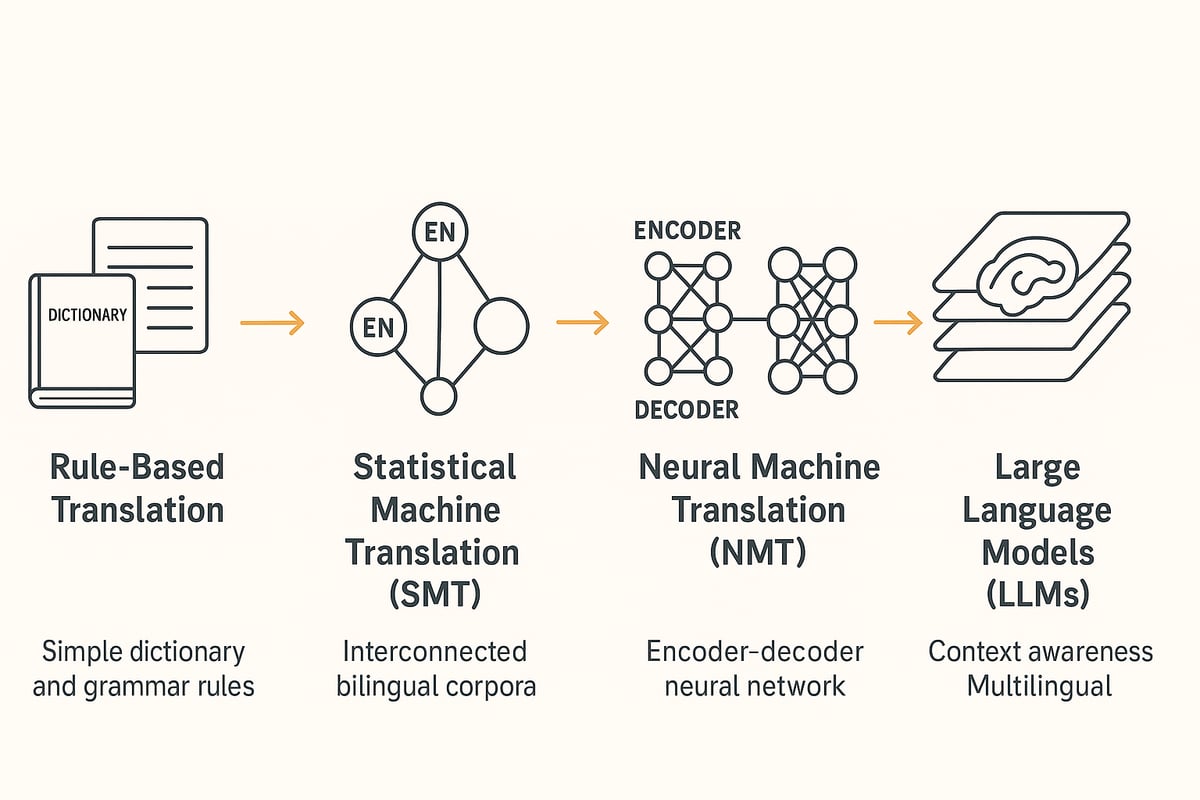
The earliest language translation models relied on rule-based systems. These used vast libraries of bilingual dictionaries and carefully constructed grammar rules to generate direct word-for-word translations. While groundbreaking at the time, they struggled with fluency and context, often producing stilted or unnatural output.
The next leap came with statistical machine translation (SMT). SMT used large bilingual corpora to estimate the probability of phrases and sentences, greatly improving the flexibility of language translation models. However, phrase-based SMT still had trouble with long-range dependencies and idiomatic language.
A true breakthrough arrived with neural machine translation (NMT). By harnessing deep learning and an encoder-decoder architecture, NMT modeled entire sentences as sequences, enabling more fluent and context-aware translations. The introduction of attention mechanisms further enhanced the ability of language translation models to track context across long sentences.
Some of the most significant milestones include the launch of Google Translate and Microsoft Translator, both of which adopted NMT to improve accuracy. Open-source NMT frameworks, such as Marian and OpenNMT, made advanced language translation models accessible to a wider audience. For example, when Google transitioned from phrase-based SMT to NMT, professional translators reported a 60% reduction in post-editing effort.
Despite these advances, challenges remain. Language translation models still face difficulties with low-resource languages, domain-specific terminology, and idiomatic expressions. For a deeper look at the historical progression, see the Evolution of Translation Technology.
The Rise of Large Language Models (LLMs)
The introduction of large language models like GPT-3 marked a new era for language translation models. Unlike traditional NMT, LLMs are trained on vast, diverse datasets and excel at understanding context, nuance, and multiple languages.
There are key differences between NMT and LLMs. While both use neural networks, LLMs are much larger and designed for a wide range of tasks beyond translation. They can generate, summarize, and localize content, offering a more holistic approach to multilingual communication.
Performance varies by language. LLMs deliver near human-level translations for high-resource pairs such as English and Spanish. However, their effectiveness drops with rare languages due to limited training data. The computational cost and slower speed of LLMs also present practical challenges, especially for real-time translation.
Recent studies show LLMs are approaching parity with human translators in select language pairs. Still, issues like model "hallucinations," where outputs contain inaccurate or fabricated information, require ongoing attention. As language translation models continue to evolve, the focus will remain on expanding language coverage, improving reliability, and reducing operational hurdles.
Core Technologies Powering 2026 Translation Models
Understanding the core technologies behind language translation models is essential for organizations aiming to compete globally in 2026. These innovations are transforming how businesses, governments, and individuals communicate across linguistic boundaries. In this section, we explore the state of neural machine translation, the expanding role of large language models, the value of hybrid approaches, and the importance of ethical AI in translation.
Neural Machine Translation: State of the Art
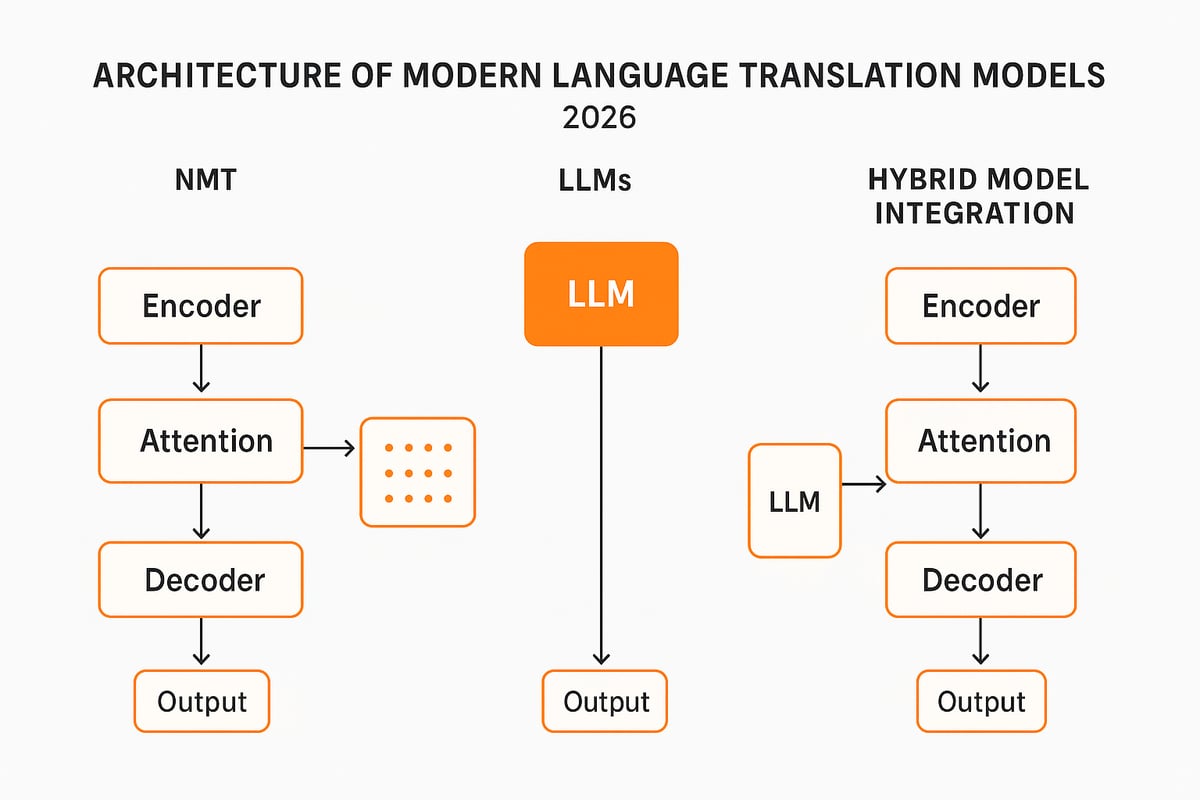
Neural machine translation (NMT) remains foundational to language translation models in 2026. NMT systems use an encoder-decoder architecture, often enhanced by attention mechanisms, to process entire sentences as sequences rather than isolated words or phrases.
This approach enables better fluency and context retention, which are critical for accurate translations. For instance, Microsoft's NMT backbone, widely deployed in productivity suites, delivers scalable solutions across domains. NMT's strengths include:
- Natural-sounding output for common language pairs
- Scalability across various industries and content types
- Improved ability to handle context within sentences
However, NMT faces limitations with rare languages, domain-specific terminology, and adaptation costs. Recent innovations like THOR-MoE: Context-Responsive NMT are addressing these challenges by introducing more adaptive routing and context awareness. As a result, modern language translation models can now deliver up to 60 percent reductions in post-editing effort for professional translators.
Large Language Models: Beyond Translation
Large language models (LLMs) have expanded the capabilities of language translation models far beyond direct sentence conversion. Unlike traditional NMT, LLMs such as GPT-4 leverage vast training data and advanced architectures to perform translation, paraphrasing, summarization, and localization within a single framework.
LLMs bring several advantages:
- Superior handling of nuance, idioms, and context
- Ability to generate human-like responses in multilingual chatbots
- Multi-task learning supports a range of NLP applications beyond translation
Despite their strengths, LLMs come with higher computational costs and slower inference times, which can impact real-time translation workflows. A notable achievement is their near-human performance in high-resource language pairs, although they may still struggle with less common languages. The evolution of large language models is pushing the boundaries of what is possible with language translation models in 2026.
Hybrid Approaches and Customization
To achieve optimal results, many organizations are adopting hybrid strategies that combine the strengths of NMT and LLMs. These hybrid language translation models leverage the fluency and scalability of NMT while taking advantage of LLMs' contextual and generative abilities.
Customization is key. By fine-tuning models with industry-specific data, businesses can address domain adaptation and improve terminology accuracy. Transfer learning methods help extend support to low-resource languages, bridging gaps left by standard NMT or LLM systems.
For example, custom NMT models for medical or legal fields can deliver up to 20 percent higher accuracy for specialized documents. This flexibility ensures language translation models remain relevant for diverse use cases, from technical manuals to real-time customer support.
Responsible AI and Ethical Considerations
The rapid advancement of language translation models brings new ethical responsibilities. Bias in training data can skew translation outputs, potentially causing misunderstandings or offending users. Ensuring transparency, fairness, and human oversight is critical.
Responsible AI practices include:
- Regular validation and spot-checking of translations
- Human-in-the-loop workflows for sensitive content
- Compliance with regulations such as GDPR and the EU AI Act
Organizations must also be vigilant about model updates, as changes can introduce unforeseen errors. By prioritizing responsible AI, businesses can maintain trust and meet growing regulatory expectations for language translation models in 2026.
Integrating Translation Models into Business Workflows
Adopting language translation models is vital for organizations aiming to thrive in a multilingual, digital landscape. To unlock their full value, businesses must integrate these solutions purposefully, aligning them with both immediate and long-term goals.
Assessing Business Needs and Use Cases
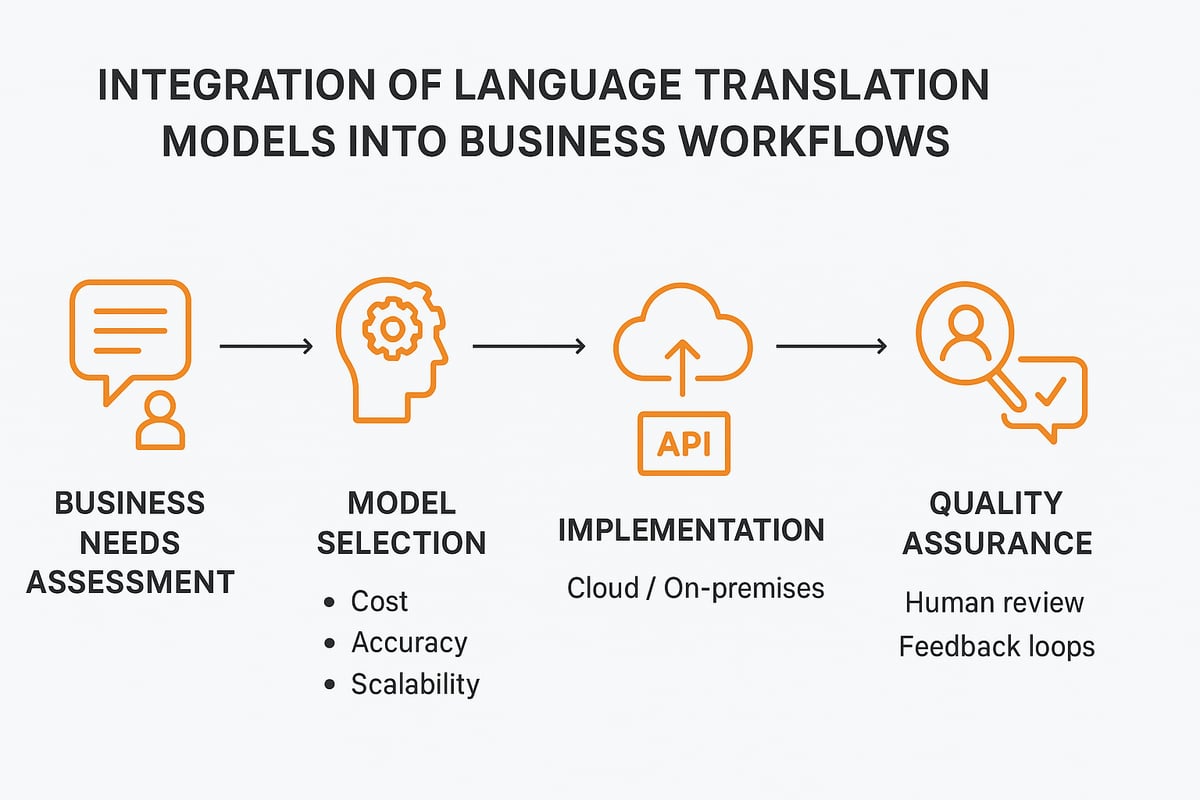
The first step in integrating language translation models is a thorough assessment of your organization’s unique communication challenges. Identify where multilingual interactions create friction—this could be in customer support, product localization, technical documentation, or marketing content.
Map out every touchpoint where language is a barrier. For example, e-commerce businesses expanding internationally often need language translation models to support new customer bases, streamline product listings, and localize user interfaces. Healthcare organizations may require accurate translation for patient records and emergency communication.
Engage with internal stakeholders to prioritize use cases. By aligning language translation models with core business objectives, you ensure ROI and avoid redundant technology investments. This strategic approach empowers teams to focus resources on areas with the highest impact.
Choosing the Right Model: Criteria and Evaluation
Selecting the best language translation models for your business requires a careful evaluation of both technical and operational needs. Consider performance metrics such as BLEU scores and human evaluation results, especially for industry-specific content. Cost analysis is essential—factor in licensing, maintenance, and the expense of ongoing human oversight.
Compare vendors and solutions: open-source frameworks offer flexibility, while commercial offerings may provide stronger support and security. The Translation Language Services Overview can guide you through the landscape of available translation models and services, offering insights into their strengths and limitations.
A comparison table can help clarify your options:
| Model Type | Pros | Cons |
|---|---|---|
| Open-source NMT | Customizable, free | Requires expertise |
| Commercial APIs | Scalable, supported | Higher recurring costs |
| Hybrid Solutions | High accuracy, flexible | Complex integration |
Prioritize models that align with your workflow, data privacy requirements, and future growth plans.
Implementation Strategies for 2026
A structured rollout process ensures the effective adoption of language translation models. Start with a pilot program to test integration points and gather feedback. Use API connections for seamless communication between translation engines and your existing platforms, whether cloud-based or on-premises.
Change management is critical. Train staff on new workflows and set clear protocols for handling exceptions. Multinational organizations have reduced translation turnaround times by automating routine translations, allowing human experts to focus on high-value tasks.
Monitor performance throughout deployment. Adjust configurations to address domain-specific terminology and evolving business needs. This adaptive approach supports resilience as language translation models and organizational priorities evolve.
Quality Assurance and Continuous Improvement
Maintaining translation quality is an ongoing process. Implement a human-in-the-loop review system to validate model output, especially for sensitive or high-stakes content. Schedule periodic evaluations using both automated metrics and human feedback.
Spot-check translations regularly to detect degradation or emerging errors. Handle software updates and retraining with regression testing to prevent unexpected drops in quality. Ongoing quality reviews are essential to ensure your language translation models continue to deliver accurate, reliable results.
Continuous improvement processes, including user feedback loops and analytics, help refine translation workflows and keep your business competitive in a rapidly changing global market.
Overcoming Challenges: Accuracy, Speed, and Cost
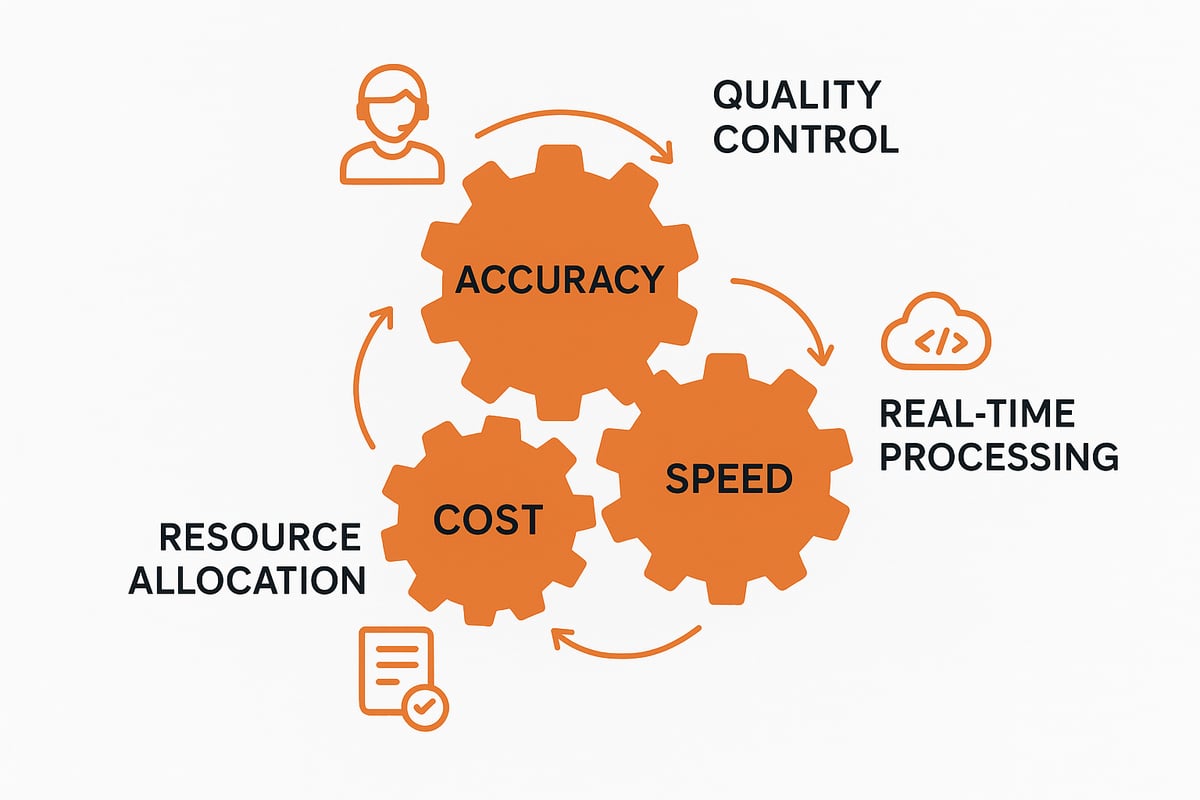
Achieving excellence with language translation models in 2026 involves navigating complex challenges. Businesses must balance accuracy, speed, and cost, while ensuring compliance and responsible AI practices. Below, we break down these hurdles and offer practical strategies to overcome each one.
Ensuring High-Quality Output Across Languages
Quality is the backbone of effective language translation models. Maintaining accuracy, fluency, and contextual understanding across diverse languages is a persistent challenge. Neural and large language translation models have made impressive strides, but issues like "hallucinations"—where models invent content—still occur, especially in specialized or low-resource languages.
Strategies to ensure high-quality translations include:
- Spot-checking critical content: Especially for legal, medical, or technical documents.
- Data augmentation and synthetic data: Expanding training data for rare languages.
- Transfer learning: Leveraging knowledge from high-resource pairs to improve low-resource outputs.
For example, legal teams routinely review translations to ensure that meaning is preserved and critical errors are avoided. Leading-edge AI audio translation advances now support real-time accuracy checks, reducing the risk of costly misunderstandings.
Managing Operational Costs and Performance
Controlling costs while maintaining top-tier performance is essential for scaling language translation models. The primary cost drivers include compute resources, licensing fees, and skilled personnel for oversight. High-quality models often require significant processing power, which can slow down inference times and increase operational expenses.
Key considerations for managing costs and optimizing performance:
- Balancing speed and quality: Real-time applications may require streamlined models or cloud-based scaling.
- Deployment choices: Cloud solutions offer scalability, while edge deployments reduce latency for time-sensitive needs.
- Cost comparison: Evaluate total cost of ownership between cloud and on-premises solutions.
| Deployment Option | Latency | Cost | Scalability |
|---|---|---|---|
| Cloud | Medium | Variable | High |
| On-premises | Low | High | Limited |
| Edge | Very Low | Moderate | Medium |
Optimizing language translation models for your business ensures you do not overspend while delivering the speed and accuracy your users expect.
Risk Management and Responsible AI
Risk management is critical when deploying language translation models, especially where sensitive content or regulatory compliance is involved. Responsible AI practices help organizations minimize reputational and legal risks. This includes implementing transparency, explainability, and robust audit trails.
Best practices for responsible AI:
- Human evaluation: Always include human-in-the-loop for high-stakes translations.
- Regular audits: Maintain documentation and conduct periodic reviews for compliance.
- Transparency: Clearly communicate how models make decisions and handle data.
Adopting responsible AI not only protects your organization but also builds trust with users. Industry estimates show that responsible AI adoption can reduce translation-related complaints by 30 percent. Staying ahead of evolving regulations is vital as the landscape for language translation models continues to develop.
Future Trends and Success Strategies for 2026
The landscape of language translation models is rapidly evolving as we approach 2026. Businesses must stay ahead of the curve to ensure their multilingual communication strategies are both effective and future-proof. Let us explore the most critical trends, technologies, and success strategies that will shape the next era of translation.
Emerging Technologies in Language Translation
The future of language translation models will be defined by multimodal capabilities. Modern systems now process not just text, but also voice and video, offering richer and more context-aware translations. These advancements enable seamless communication across diverse platforms and user experiences.
Real-time translation is becoming more accessible, with on-device processing reducing latency and improving privacy. AI-driven localization tools automatically adapt content for cultural and regional relevance, ensuring messages resonate with target audiences. According to a comprehensive survey on multimodal neural machine translation, integrating multiple data types significantly enhances translation quality and user engagement.
As these technologies mature, language translation models will play a pivotal role in global customer support, e-learning, and international business operations. Staying informed about these breakthroughs ensures organizations can leverage the right solutions for their growth.
The Role of Human Expertise in the AI Era
Despite remarkable progress in automation, human expertise remains essential for high-quality translation. Language translation models have improved, but subtle cultural nuances and context-specific meanings often require human judgment.
Human-in-the-loop workflows allow experts to review, edit, and validate translations, especially for sensitive or high-stakes content. Crowdsourcing and community-driven improvements are increasingly popular, with open-source projects harnessing the collective intelligence of global volunteers.
Efforts such as Microsoft's multilingual large language model initiative demonstrate the value of combining AI with human oversight to support underrepresented languages. This blend of automation and human skills helps organizations achieve both efficiency and authenticity in their multilingual communications.
Scaling for Global Success: Best Practices
To scale language translation models effectively, companies are building automated translation pipelines that integrate seamlessly with their workflows. These pipelines enable continuous content localization, rapid updates, and support for multiple languages simultaneously.
Continuous training and fine-tuning are essential strategies. By updating models with new data and monitoring performance, organizations can adapt quickly to evolving language trends. Analytics tools provide insights into translation quality and operational efficiency, allowing teams to make data-driven decisions.
A best practice includes leveraging cloud-based solutions for flexibility while maintaining the option for on-premises deployment when security or latency is a concern. Collaborating with technology partners and embracing open-source frameworks can further enhance scalability and innovation.
Preparing for Regulatory and Ethical Shifts
Regulatory and ethical considerations are becoming central to the deployment of language translation models. With evolving global AI and data privacy regulations, organizations must anticipate and prepare for compliance requirements.
Ensuring diversity and inclusion in language support is critical. Models should be transparent and explainable, especially when used in sectors like healthcare or public services. Developing clear audit trails and documentation for translation workflows reduces risk and builds trust with stakeholders.
Industry forecasts suggest that by 2026, over 80 percent of global enterprises will require explainable AI for language translation models. Proactive planning and regular audits will help companies stay ahead of regulatory changes and uphold responsible AI practices.
Success Metrics and KPIs for 2026
Measuring the effectiveness of language translation models involves both technical and business metrics. Common quality indicators include BLEU and TER scores, alongside human evaluation for fluency and adequacy.
Operational efficiency is tracked through metrics such as translation turnaround time and cost per word. User satisfaction surveys provide qualitative feedback, while business outcomes like market expansion and customer retention reflect the broader impact.
| Metric | Description | Target for 2026 |
|---|---|---|
| BLEU / TER | Translation quality | Near human-level scores |
| Turnaround Time | Time to deliver translation | 30% faster than 2023 |
| Cost per Word | Operational efficiency | Reduced by 20% |
| User Satisfaction | End-user feedback | 90%+ positive responses |
| Market Expansion | New markets entered | 50+ countries supported |
By tracking these KPIs and continually refining strategies, organizations can maximize the value of language translation models and maintain a competitive edge in the global marketplace.
As we’ve explored, staying ahead with the latest language translation models is crucial for ensuring clear, timely communication—especially when every second counts. If you’re ready to see how real time AI and human powered solutions can transform your emergency response or business operations, I encourage you to experience these advancements firsthand. You don’t have to imagine the possibilities—you can see them in action. Let’s set up a personalized walkthrough so you can discover how Convey911’s platform supports seamless, multilingual communication and keeps your teams prepared for 2026 and beyond.
Book a Demo