
The translation industry is entering a pivotal era as new technology and global trends reshape the...
In 2025, global audiences expect seamless online experiences, no matter their language. The surge in multilingual web traffic makes it essential for businesses and creators to prioritize accessibility. By using an online website translate solution, you can effortlessly reach new markets, boost user engagement, and ensure your site stays relevant for years to come.
This guide will walk you through the fundamentals of translation, choosing the right tools, implementing best practices, step-by-step instructions, SEO considerations, common challenges, and emerging trends. Get ready to future-proof your website for a truly global audience.
Why Multilingual Websites Matter in 2025
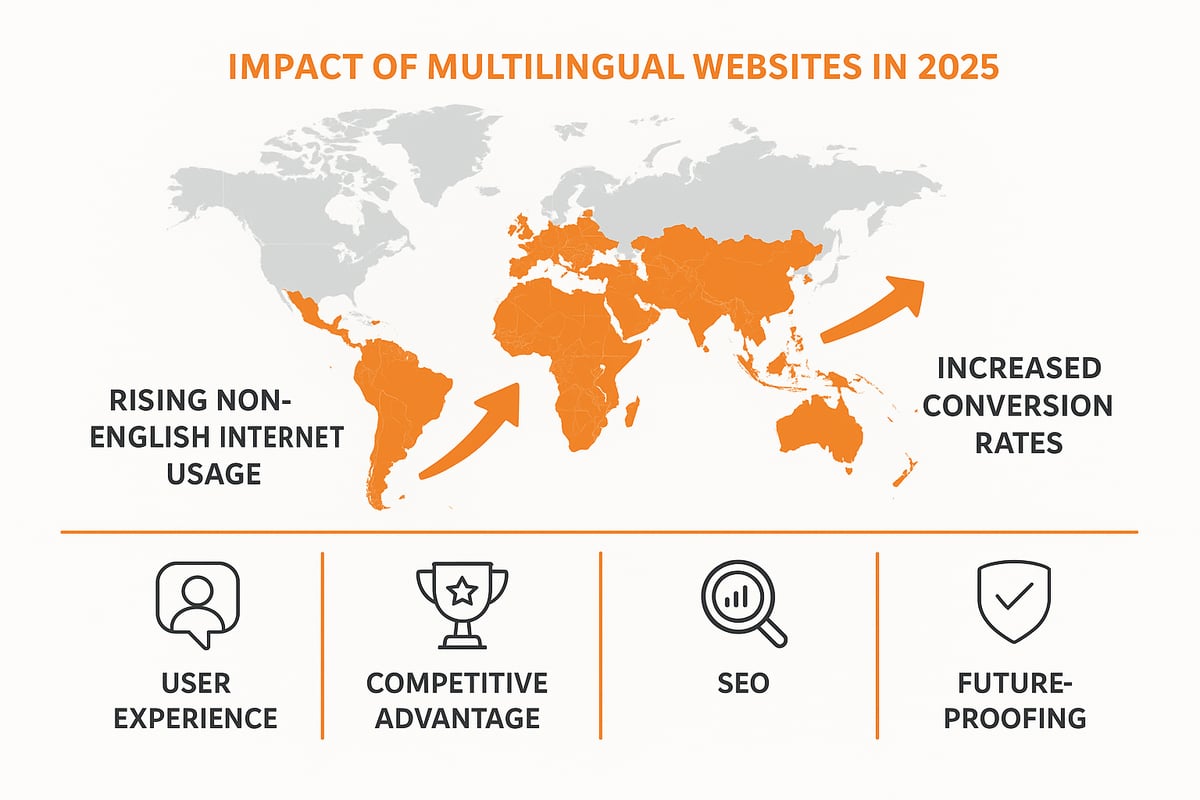
In 2025, the digital landscape is more interconnected than ever before. Businesses are not just competing locally but reaching global audiences daily. To thrive, brands must embrace the power of online website translate solutions, ensuring their content resonates with users in every language and region.
The Global Digital Marketplace
The shift toward a truly global web is accelerating. Non-English internet users now make up the majority online, with over 75 percent preferring content in their native language. This trend is driving brands to rethink their strategies and leverage online website translate tools for maximum reach.
E-commerce and service platforms have reported conversion rates rising by as much as 70 percent after localizing their sites. Leading companies, from tech giants to retail brands, are seeing revenue growth by adapting their content for new markets. According to recent multilingual website stats and localization trends, this approach is now standard for companies aiming for international success.
User Experience and Accessibility
Delivering a seamless, accessible experience is crucial. Multilingual websites make it possible for users with limited English proficiency to engage fully, breaking down barriers to entry. By using online website translate solutions, businesses enhance trust and satisfaction, as people are more likely to interact with content presented in their language.
Regulatory frameworks, such as the ADA in the United States and EU accessibility directives, are also pushing organizations to prioritize language inclusion. Meeting these requirements is not just a legal necessity but a way to foster a welcoming digital environment for all users.
Competitive Advantage
Standing out in a crowded market requires more than great products. Offering a localized experience gives companies a distinct edge. With online website translate strategies, brands can outperform competitors who rely solely on English content.
Building brand loyalty is easier when customers feel understood. In fact, 56 percent of consumers say getting information in their language is more important than price. Companies investing in translation see stronger reputations and deeper connections in international markets.
SEO and Search Visibility
Effective multilingual content is a game changer for search rankings. By integrating online website translate practices, websites can appear prominently in search results across target countries. Structured data and hreflang tags help search engines understand language variations, driving more organic traffic.
Case studies show exponential growth for businesses that prioritize multilingual SEO. Tools and localization trends reveal that translated sites are far more likely to be discovered by international audiences, making SEO optimization a must-have for global brands.
Business Continuity and Crisis Communication
Clear communication is vital during global events or emergencies. Online website translate capabilities enable organizations to share timely, accurate updates in multiple languages, reaching all stakeholders effectively.
Examples such as COVID-19 and natural disasters have shown the impact of multilingual messaging. Companies with robust translation strategies can provide crucial information, maintain trust, and adapt quickly in times of crisis, ensuring business continuity.
Future-Proofing Your Website
Anticipating the needs of emerging markets is essential for long-term growth. Online website translate technology, especially with advancements in AI and automation, allows businesses to scale content efficiently and respond to shifting demographics.
Automated solutions help manage growing content volumes, while keeping quality high. This proactive approach positions brands to capture new opportunities and remain resilient as digital trends evolve.
Key Takeaways
Investing in online website translate is no longer optional for brands seeking growth and resilience in 2025. Multilingual websites unlock new markets, improve user experience, boost SEO, and ensure your business can communicate effectively, no matter what the future holds.
Core Methods for Online Website Translation
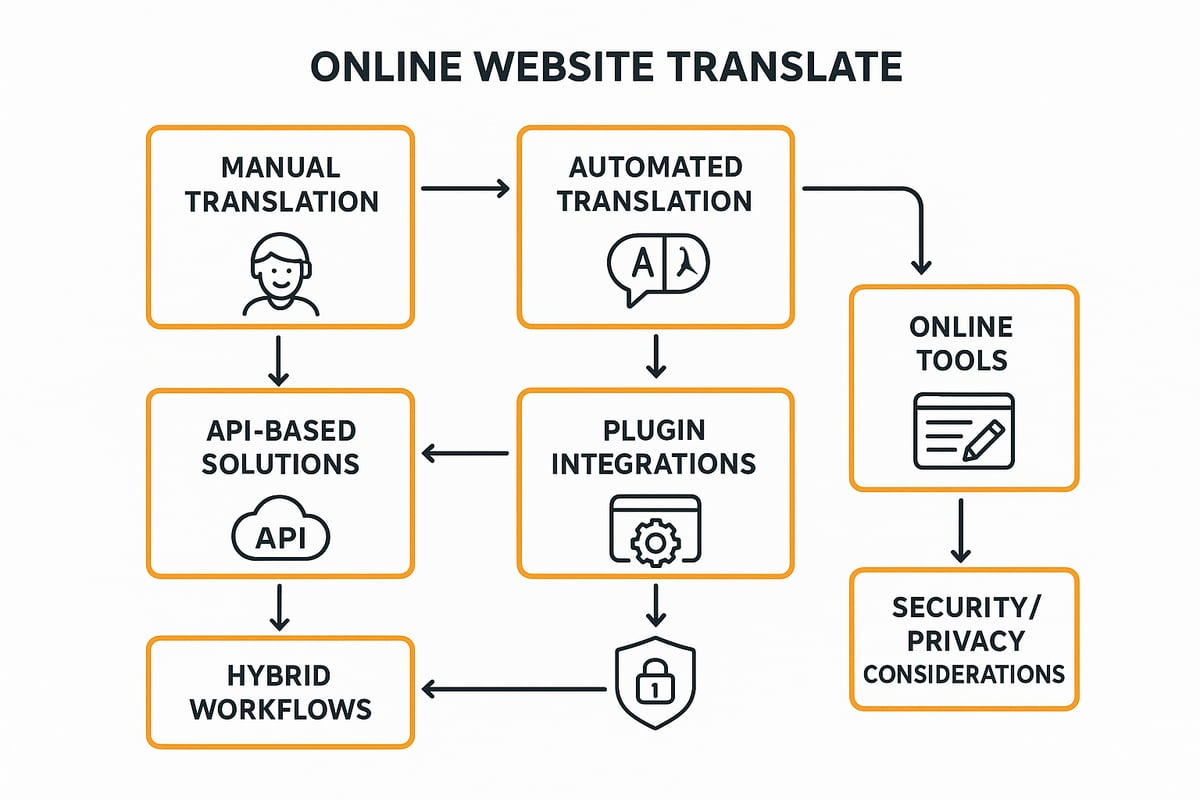
Unlocking the potential of your global audience starts with choosing the right online website translate strategy. A range of methods exists, each with unique strengths and trade-offs. Let’s break down the core approaches for 2025.
Manual vs. Automated Translation
Manual translation relies on human linguists for accuracy and context. Automated translation uses AI-driven engines to process content rapidly. Manual methods offer high quality but can be slow and costly, while automated solutions deliver speed and scalability at the expense of nuance.
When evaluating online website translate methods, consider when to use each. For example, manual translation is ideal for legal pages, while automated tools work well for blogs or product catalogs. For a deeper dive, see this Manual vs. automated translation methods resource.
| Method | Pros | Cons | Best For |
|---|---|---|---|
| Manual | High accuracy, nuance | Slow, expensive | Sensitive or branded content |
| Automated | Fast, scalable, low-cost | Can lack context, errors | Large, dynamic websites |
Translation Plugins and Integrations
Translation plugins make online website translate tasks accessible for non-developers. Platforms like WordPress, Shopify, and Wix offer plugins such as WPML, Weglot, and Polylang. These tools integrate directly into your CMS, simplifying setup and language management.
Pros include ease of use and seamless updates. However, some plugins may limit customization or conflict with complex themes. Evaluate compatibility with your existing tech stack before committing.
- WPML: Robust for WordPress, supports custom post types.
- Weglot: Cloud-based, easy to set up, supports many platforms.
- Polylang: Flexible, open-source, ideal for smaller sites.
Plugins provide a balance between speed, control, and cost for most online website translate needs.
Online Translation Tools and Services
Online tools like Google Translate, DeepL, and Microsoft Translator allow you to translate web content quickly. These platforms offer both URL-based and code-based solutions, making them versatile for different site structures.
Free versions are suitable for basic online website translate needs, while paid plans unlock API access, higher character limits, and advanced features. Consider the following:
- Google Translate: Widely used, decent for general content.
- DeepL: Known for natural phrasing and context.
- Microsoft Translator: Strong integration with Microsoft services.
Feature comparison is key before selecting an online website translate tool for your project.
API-Based Translation Solutions
APIs enable real-time, scalable online website translate workflows. By integrating translation APIs into your custom site or SaaS platform, you automate localization and reduce manual effort.
For instance, an e-commerce business can use APIs to automatically translate new product listings as they’re published. This approach is ideal for sites with frequent updates or large volumes of content.
API-based solutions are flexible, supporting custom workflows and integrations with analytics, CRM, or marketing platforms. When scalability is critical, online website translate APIs are the preferred choice.
Hybrid Approaches
Blending automated engines with human review delivers both speed and quality. In this workflow, automated tools handle the bulk of translation, while linguists review and refine key pages.
Hybrid methods are especially effective for large online website translate projects or sensitive content. A typical process might involve:
- Automated translation for volume content.
- Human review for landing pages and legal documents.
- Continuous feedback and updates.
This approach ensures your message remains clear and culturally relevant.
Security and Privacy Considerations
Protecting user data during online website translate processes is essential. Always verify that your translation tools comply with regulations like GDPR and do not store or misuse sensitive information.
Choose platforms offering encrypted data transfer and transparent privacy policies. For sites handling personal or financial data, prioritize solutions with robust security certifications.
Regularly audit your translation workflows to identify potential vulnerabilities and ensure ongoing compliance.
Choosing the Right Approach for Your Website
Selecting the best online website translate method depends on your site’s complexity, budget, content type, and target audience. Use the decision matrix below to clarify your options:
| Site Type | Budget | Content Sensitivity | Recommended Method |
|---|---|---|---|
| Simple Blog | Low | Low | Automated/Plugin |
| E-Commerce | Medium | Medium | Plugin/API/Hybrid |
| Legal/Healthcare | High | High | Manual/Hybrid |
| SaaS Platform | Medium | Medium-High | API/Hybrid |
Evaluate your priorities, test different tools, and combine methods for optimal results. The right online website translate strategy will set your site up for global success.
Step-by-Step Guide: Translating Your Website Online
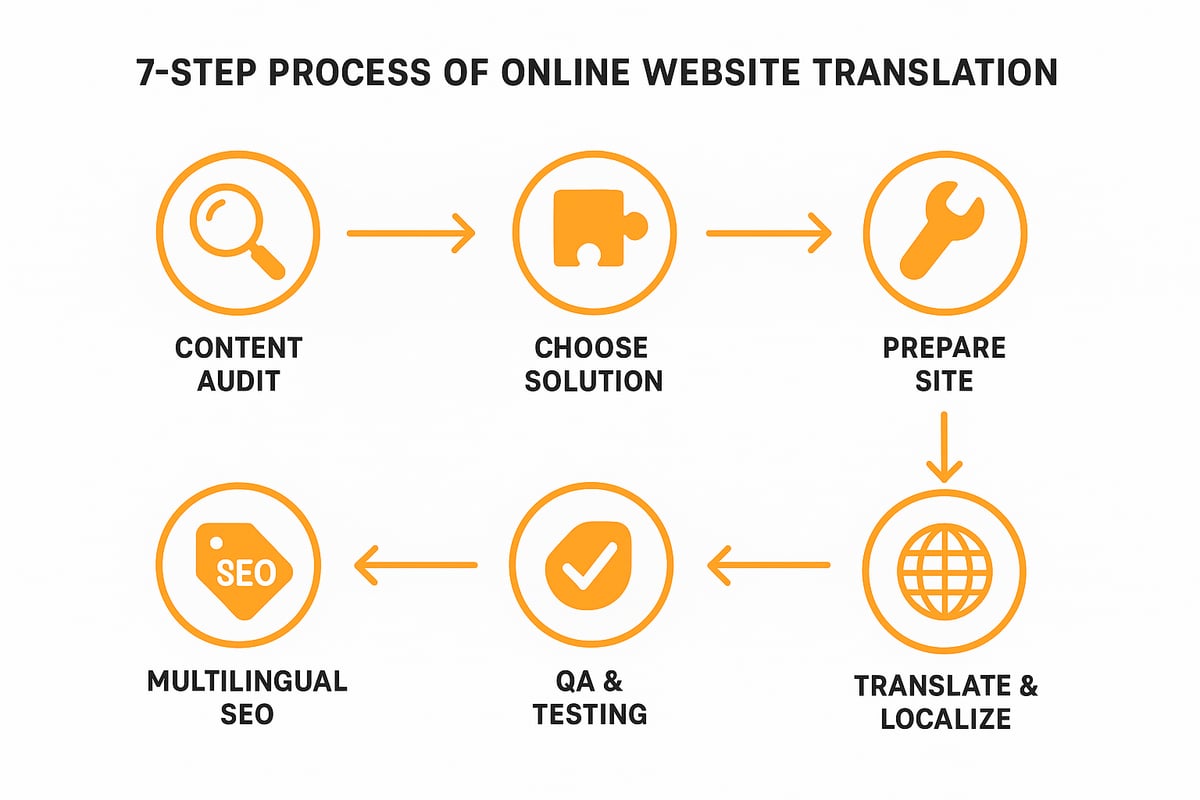
Translating your website for a global audience is more approachable than ever. By following a clear, step-by-step process, you can ensure your online website translate project is efficient, accurate, and delivers results. Let’s break down each stage for a seamless multilingual rollout.
Step 1: Audit Your Website Content
Begin your online website translate journey with a thorough content audit. Identify all elements that require translation, not just visible text. Review pages, blog posts, images with embedded text, forms, buttons, and dynamic content like pop-ups.
Make a checklist:
- Navigation menus and footers
- Product descriptions and metadata
- Error messages and notifications
- PDFs, infographics, and downloadable resources
Prioritize high-traffic pages and those critical to your business goals. A detailed audit ensures nothing is overlooked and sets the foundation for a smooth translation process.
Step 2: Choose the Best Translation Solution
Selecting the right approach is crucial for an effective online website translate strategy. Consider your website’s platform, content volume, and budget. Options range from manual translation to automated tools and plugins.
Evaluate plugins if you use WordPress, Shopify, or Wix, or look into SaaS tools for broader compatibility. For a detailed breakdown of tool selection and best practices, explore these English to any language translator tips.
Compare solutions in a simple table:
| Solution Type | Pros | Cons |
|---|---|---|
| Manual (human) | High accuracy | Time-consuming, costly |
| Automated (plugin) | Fast, scalable | May need human review |
| Hybrid | Balanced quality/speed | Coordination required |
Choose what aligns with your project scope and resources.
Step 3: Prepare Your Website for Localization
Before you begin translating, prep your site for localization. Confirm it supports Unicode and UTF-8 encoding to avoid character display issues during online website translate tasks.
Structure your content so it’s easy to extract and reinsert translations. Use content management systems that separate text from code. Implement language switchers in visible areas and set up hreflang tags for proper language targeting.
Check that forms, menus, and dynamic sections are translation-ready. Good preparation prevents technical headaches later.
Step 4: Translate and Localize Content
Now, it’s time to execute the main online website translate process. Use your selected tool or service to translate all identified content. Go beyond basic translation by localizing currencies, date formats, and cultural references.
For example, translating a landing page with an automated tool is fast, but professional services add nuance and context. Don’t forget images with embedded text or downloadable files—ensure every element matches the local audience’s expectations.
A hybrid approach, with automated translation followed by human review, often delivers the best balance of speed and accuracy.
Step 5: Quality Assurance and Testing
Quality assurance is essential in every online website translate workflow. Review translations for accuracy, natural flow, and context. Involve native speakers if possible.
Test all site features:
- Switch between languages using selectors
- Check navigation, forms, and dynamic content
- Verify that metadata and alt text are accurate
Use automated QA tools to scan for technical issues, but always supplement with manual checks. This dual approach minimizes errors and ensures a professional user experience.
Step 6: Optimize for Multilingual SEO
SEO should not be an afterthought in your online website translate project. Implement hreflang tags to signal language and region to search engines. Translate sitemaps, metadata, and page URLs for each language.
Optimize for local search engines by adapting keywords and content to regional preferences. Well-structured data and accurate translations can significantly boost organic traffic from new markets.
Monitor your site with SEO tools to identify and resolve any issues that arise post-launch. Consistent optimization pays off in long-term visibility.
Step 7: Launch and Monitor Performance
The final step in your online website translate process is launching your multilingual site. Roll out translations in phases, starting with top-priority sections. Monitor analytics for engagement, bounce rates, and conversions in each language.
Gather user feedback through surveys or support channels. Look for patterns in user behavior and address issues promptly. Regularly review performance metrics and refine your approach to maximize results.
A successful launch is just the beginning—ongoing monitoring and updates keep your multilingual site effective and relevant.
Best Practices for Effortless Multilingual Sites
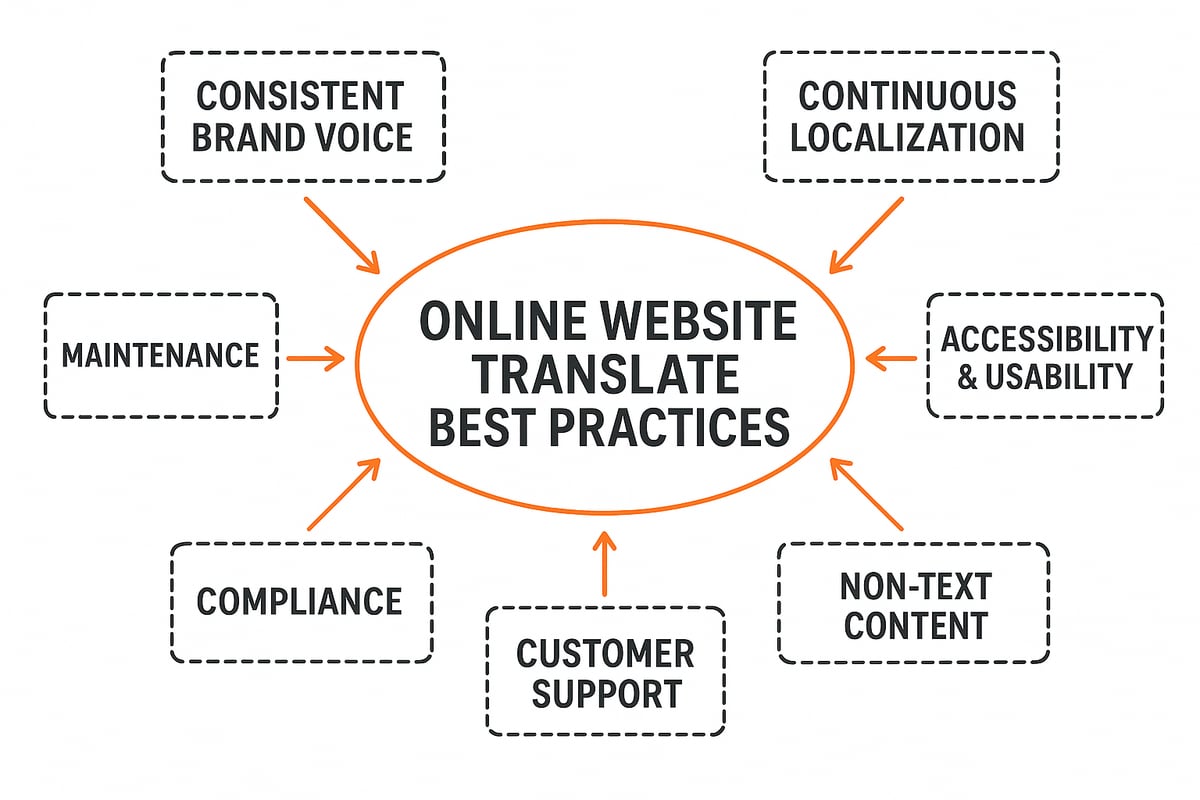
Delivering a seamless multilingual website experience requires more than just translation. Implementing best practices ensures your online website translate project delivers consistent quality, accessibility, and ongoing value as your site evolves.
Consistent Brand Voice Across Languages
Maintaining a consistent brand voice is critical for trust and recognition. When you use an online website translate approach, create detailed style guides and glossaries for translators. This ensures terminology, tone, and messaging remain uniform, regardless of language.
- Develop a style guide outlining tone, formality, and preferred phrases.
- Build a glossary of brand-specific terms.
- Share guides with all translation teams.
A unified voice builds credibility in every market and helps prevent misinterpretation of your brand values.
Dynamic and Continuous Localization
Websites are never static. With online website translate solutions, set up workflows for ongoing updates. Use tools that detect content changes and trigger translations automatically.
- Integrate translation plugins or APIs with your CMS.
- Schedule regular content scans for new or updated material.
- Automate notifications to translation teams.
For a deeper look at suitable tools, review this Guide to translation plugins and apps, which covers options for continuous localization and integration.
Accessibility and Usability
Accessibility is vital for reaching all users. Ensure your online website translate strategy meets WCAG, ADA, and EU standards. This includes providing text alternatives for images, clear navigation, and language selectors.
- Use accessible fonts and color contrasts.
- Test language switchers for screen reader compatibility.
- Offer translated alt text for images.
Prioritizing usability ensures everyone, regardless of ability, can engage with your multilingual content.
Handling Non-Text Content
Text is not the only element that needs localization. Include multimedia in your online website translate workflow.
- Translate images with embedded text.
- Localize videos with subtitles or dubbing.
- Adapt downloadable resources like PDFs.
For example, localizing infographics and multimedia ensures your message is clear in every language.
Managing Multilingual Customer Support
Support does not stop at translation. Integrate multilingual chatbots, FAQs, and help centers with your online website translate system.
- Use multilingual support software.
- Provide real-time translation for live chat.
- Update support content as new languages launch.
This approach boosts user satisfaction and ensures consistent help across regions.
Legal and Regulatory Compliance
Meeting regional laws is non-negotiable. Your online website translate process must address language, privacy, and accessibility regulations.
| Region | Key Regulation | Requirement |
|---|---|---|
| EU | GDPR | Data privacy |
| US | ADA | Accessibility |
| Global | WCAG | Web content access |
Stay updated on legal requirements to safeguard your business and users.
Regular Maintenance and Updates
A multilingual site needs regular attention. Schedule periodic reviews of translated content as part of your online website translate routine.
- Check for outdated translations.
- Update content with site changes.
- Re-audit SEO elements in all languages.
Routine maintenance ensures accuracy and relevance as your business grows.
Overcoming Common Challenges in Website Translation
Translating a website for global audiences brings both opportunities and challenges. To succeed with any online website translate project, you must address quality, technical, and cultural hurdles while keeping SEO and user feedback in focus.
Maintaining Translation Quality
Quality is vital in any online website translate workflow. Automated tools can produce errors, miss context, or use awkward phrasing. To prevent this, combine machine translation with human review. Create a glossary and style guide for consistency, and involve native speakers where possible.
- Review all translations for accuracy
- Use feedback loops to catch errors
- Update content regularly for relevancy
Building a translation team helps maintain brand tone and clarity.
Technical Limitations and Compatibility
Technical barriers often arise in online website translate implementations. Dynamic content, JavaScript, and third-party plugins can cause translation gaps or display issues. Accessibility is also a concern, as some users may struggle with poorly translated or missing elements. Research like Not All Visitors are Bilingual: A Measurement Study of the Multilingual Web from an Accessibility Perspective highlights these accessibility challenges for multilingual sites.
- Test translations across devices and browsers
- Ensure language switchers work everywhere
- Monitor for compatibility with new plugins
Ongoing technical checks are essential.
Managing Large-Scale or Frequent Updates
Sites with frequent updates need efficient online website translate processes. Manual translation for every change is not scalable. Use automated workflows, batch processing, and translation memory tools to streamline the process. Set up alerts for content changes and automate translation triggers.
- Automate detection of new content
- Use batch translation for updates
- Maintain a translation memory for consistency
This approach saves time and reduces errors.
Cost Management
Balancing quality and budget is a core challenge in any online website translate effort. High-quality human translation is costly, while machine translation is more affordable but may lack nuance. Many businesses adopt a hybrid model, using automation for bulk content and human review for key pages. Industry data from Multilingual Support Market Share & Usage Stats shows rising adoption of scalable, cost-effective solutions.
- Prioritize high-impact pages for human review
- Compare free and premium translation tools
- Track ROI on translation investments
A smart cost strategy maximizes reach without overspending.
Cultural Sensitivity and Localization
Effective online website translate projects go beyond words. Cultural context, humor, and images must resonate locally. Avoid literal translations that may offend or confuse. Research regional norms and test content with local users.
- Adapt images, colors, and symbols
- Check for cultural references and idioms
- Involve local experts in review
Cultural awareness builds trust and avoids costly missteps.
SEO Pitfalls
Multilingual sites risk SEO issues like duplicate content, missing hreflang tags, or untranslated metadata. These mistakes can hurt rankings and limit visibility. Follow best practices to ensure search engines index all language versions of your site.
- Implement hreflang tags for each language
- Translate all metadata and URLs
- Submit multilingual sitemaps to search engines
A robust SEO setup boosts organic traffic from every market.
User Feedback and Iterative Improvement
User input is crucial for refining your online website translate approach. Encourage feedback in every language you support, and use analytics to spot weak points or errors. Regularly update translations based on user suggestions and changing business needs.
- Add feedback forms for each language
- Analyze engagement and bounce rates
- Iterate with every site update
Continuous improvement leads to a better user experience and stronger results.
The Future of Online Website Translation: Trends for 2025 and Beyond
The world of online website translate solutions is evolving rapidly. As we look to 2025 and beyond, several trends are set to redefine how businesses approach multilingual web experiences. Staying ahead of these changes is key for any organization aiming to reach a global audience.
AI and Neural Machine Translation Advances
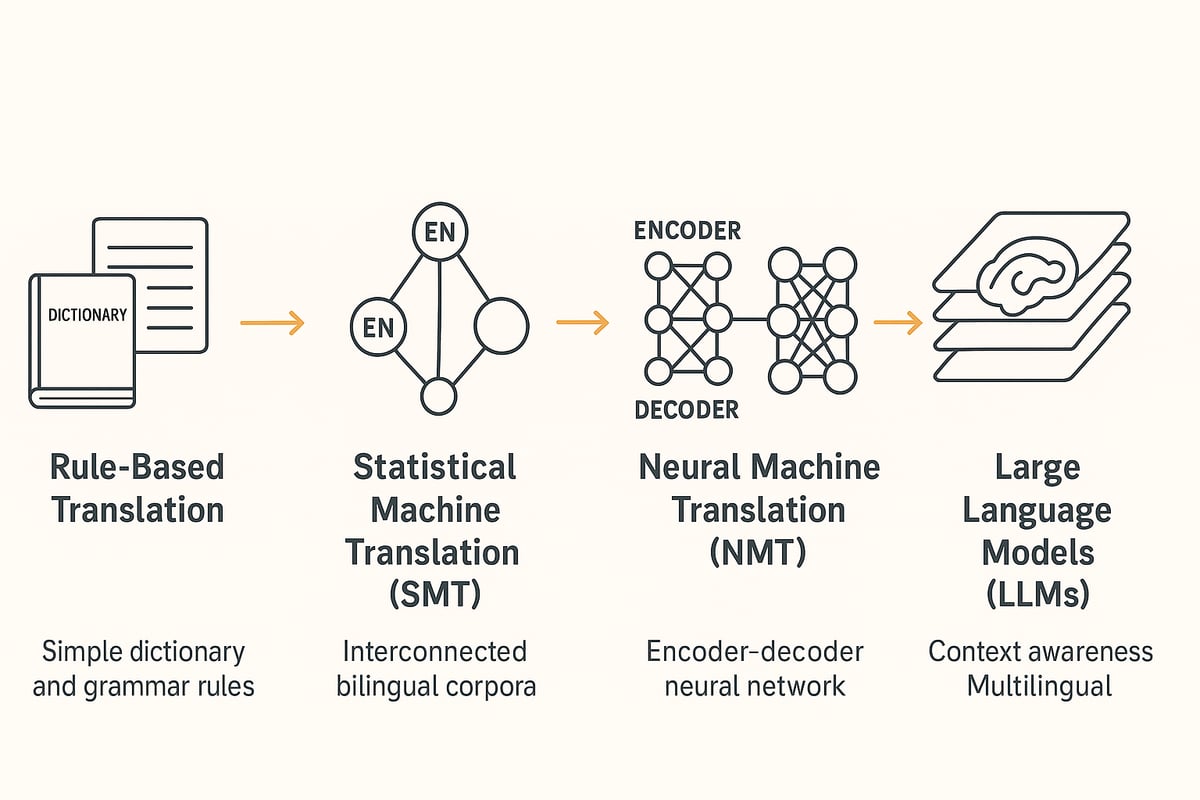
Artificial intelligence is transforming online website translate capabilities. Neural machine translation (NMT) models now offer more accurate and context-aware results than ever. In 2025, these systems will better understand nuances, idioms, and industry-specific terminology.
For businesses, this means faster, more reliable localization. AI-driven engines can learn from previous translations, reducing errors and maintaining consistency. As a result, the online website translate process becomes more efficient and scalable for organizations of all sizes.
Real-Time and On-Demand Localization
The demand for instant online website translate features continues to grow. Users expect immediate access to content in their preferred language, whether browsing static pages or engaging with live chat.
Modern platforms now deliver real-time translation for user-generated content, reviews, and support interactions. This capability enhances user engagement and ensures that global audiences feel included, no matter when or how they interact with your site.
Voice and Multimodal Translation
With the rise of voice assistants and smart devices, online website translate technology is branching into new formats. Websites are starting to support voice search, audio translation, and even video subtitles for diverse audiences.
Future advancements will include seamless integration of AR, VR, and multimedia localization. This empowers brands to deliver immersive, accessible experiences that go beyond traditional text-based translation.
Personalization and Adaptive Localization
Online website translate tools are incorporating AI-driven personalization. Content can now adapt dynamically based on user location, device, or behavioral data. Imagine a site that presents not just the right language, but also region-specific images, offers, and layouts.
According to Why Multilingual SEO Is No Longer Optional in 2025, this level of personalization will be crucial for search visibility and user satisfaction. Adaptive localization ensures every visitor feels like your site was built just for them.
Integration with Global Platforms and Services
Seamless integration is a major trend in online website translate solutions. APIs now connect websites with translation engines, e-commerce, CRM, and marketing tools. This approach automates content updates and centralizes localization management.
| Platform | Integration Example | Benefit |
|---|---|---|
| E-commerce | Product info translation | Faster market entry |
| CRM | Multilingual support chat | Improved customer experience |
| Marketing | Localized campaigns | Higher engagement rates |
By connecting systems, businesses streamline workflows and reduce manual effort, making global expansion more accessible.
Security, Privacy, and Ethical Considerations
As online website translate technologies use more data and automation, security and privacy become top priorities. Organizations must safeguard user information and comply with regulations like GDPR.
Ethical AI practices are equally important. Transparency, bias mitigation, and responsible data handling ensure that machine translation remains fair and trustworthy. Prioritizing these factors builds user trust and protects your brand.
Preparing Your Site for the Next Wave
Future-proofing your online website translate strategy means continuous adaptation. Stay informed about emerging technologies, regularly evaluate your tools, and invest in staff training.
Embrace automation, but always prioritize quality control and user feedback. By keeping your approach agile, your business can confidently meet the demands of tomorrow’s global digital landscape.
As you explore the key steps to creating an effortless multilingual website in 2025, it’s clear that the right technology can make all the difference for your users—and your team. If you want to see how real-time translation, robust integrations, and seamless communication work in practice, why not take a closer look at Convey911’s powerful solutions? You can experience firsthand how we break down language barriers and future-proof your online presence. Ready to see it in action? Book a Demo and discover how easy it can be to connect with every audience, everywhere.