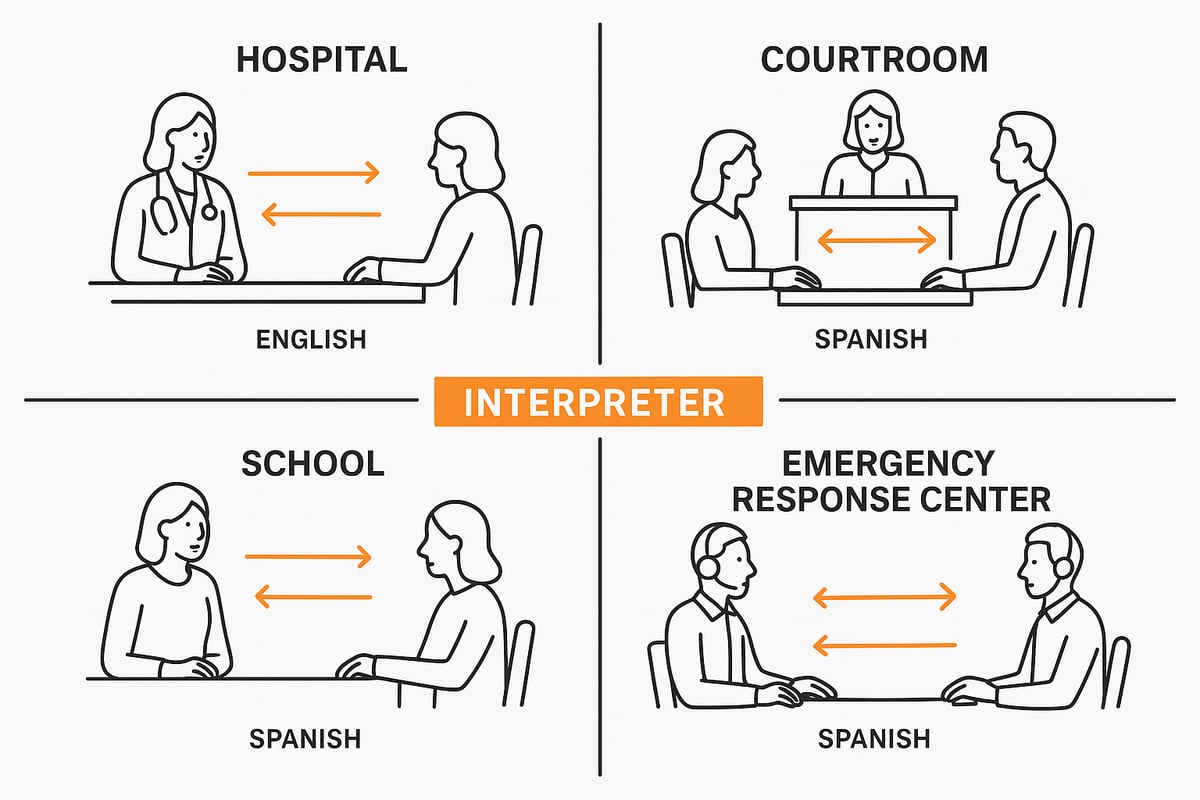

Imagine stepping into 2025, where global conversations flow freely, yet the world of service...
Imagine facing a medical emergency and not understanding the language spoken around you. In moments like these, an over the phone interpreter becomes a crucial lifeline, breaking down barriers instantly.
This guide equips you with essential tips to maximize the effectiveness of over the phone interpreter services in 2025. Whether you work in healthcare, emergency response, or any field serving diverse communities, clear communication saves time and lives.
Discover how over the phone interpretation has evolved, what skills matter most, step-by-step setup advice, best practices, compliance essentials, and the future of language access. Ready to bridge the gap? Start here.
The Evolution of Over the Phone Interpreter Services
Language barriers have long challenged organizations in critical situations. Over the past decade, the over the phone interpreter model has radically transformed how businesses, healthcare providers, and emergency responders connect across languages. Today, it stands as a cornerstone solution for real-time, multilingual communication.

The Rise of Remote Interpretation
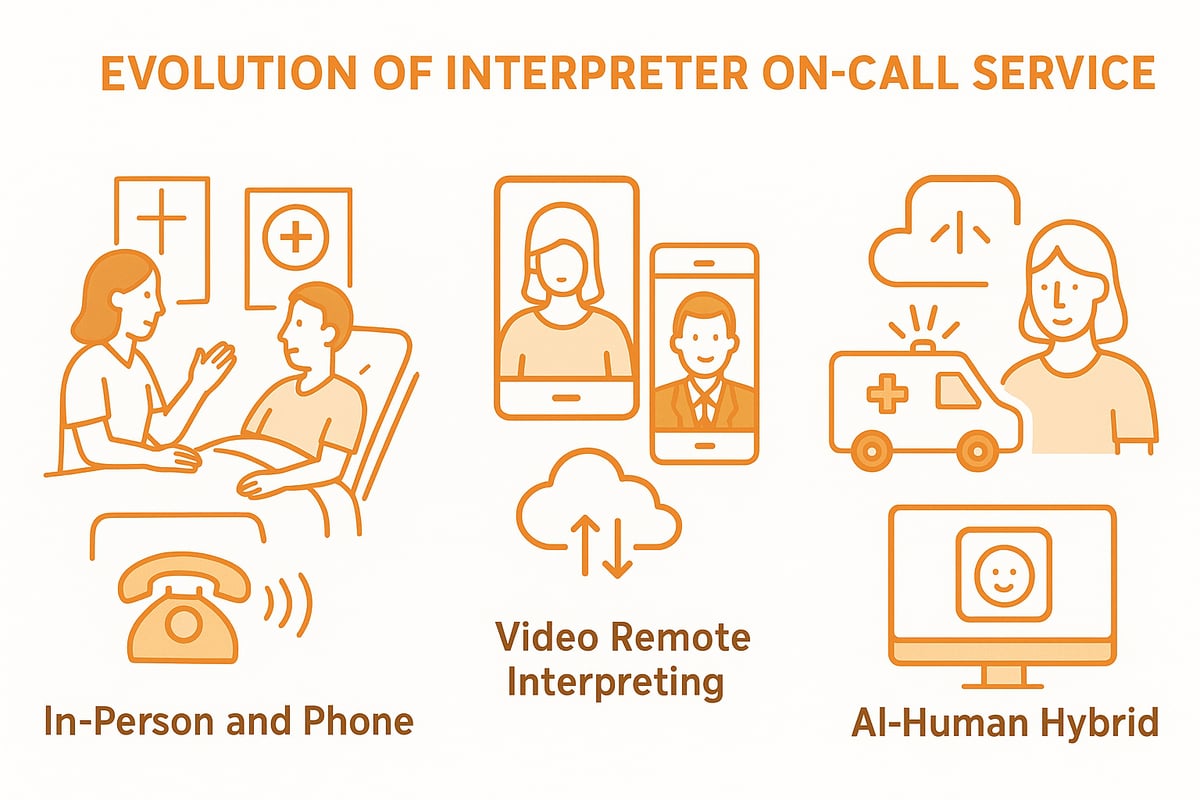
Interpreting services have evolved from face-to-face meetings to highly scalable, remote solutions. The demand for the over the phone interpreter model surged as globalization and remote work changed communication needs. Early adopters in the healthcare and legal fields found OPI invaluable for instant access to language support.
Recent years have seen exponential market growth. Industry projections indicate that the OPI sector will surpass $3.5 billion by 2025, driven by increased reliance on remote services and international collaboration. For further insights into these trends, see the Over-the-Phone Interpreting Services Market Size & Share [2025-2034] report.
The COVID-19 pandemic accelerated the adoption of remote interpreting, as organizations needed safe, contactless solutions. Emergency services, in particular, embraced over the phone interpreter systems to reduce response times and eliminate language barriers in urgent situations. In healthcare, OPI enabled doctors to communicate with diverse patient populations without delay.
Key drivers of OPI adoption include:
- Cost-effectiveness compared to in-person services
- Immediate accessibility to interpreters worldwide
- Rapid deployment for urgent or high-volume scenarios
Technological advancements have further elevated performance. Artificial intelligence now supports real-time voice recognition, while intelligent call routing ensures the right interpreter is available on demand. These innovations allow over the phone interpreter platforms to deliver reliable, high-quality service at scale.
Benefits and Limitations of OPI
Over the phone interpreter solutions offer distinct advantages for organizations with diverse language needs. The most notable benefit is immediate access to qualified interpreters in more than 200 languages, making it possible to serve geographically dispersed or multilingual clients at any hour.
Key benefits:
- 24/7 interpreter availability
- Scalability for fluctuating call volumes
- Quick connection in emergencies
However, OPI is not without its limitations. The lack of visual cues can hinder understanding, especially when dealing with complex or emotional topics. Call quality and technical issues may also impact the clarity of communication.
Primary limitations:
- No visual context for interpreters
- Potential for miscommunication
- Dependence on phone and network quality
The table below summarizes how OPI compares with other interpretation methods:
| Feature | Over the Phone Interpreter | Video Interpretation | In-Person Interpretation |
|---|---|---|---|
| Accessibility | High | Moderate | Low |
| Visual Cues | None | Yes | Yes |
| Response Time | Instant | Fast | Slow |
| Cost | Low | Moderate | High |
| Scalability | Excellent | Good | Limited |
Over the phone interpreter services excel in urgent, multilingual, or geographically dispersed situations, such as 911 calls or telehealth appointments. When visual information is less critical, OPI delivers speed and efficiency unmatched by other methods.
Essential Skills and Qualities of Effective Over the Phone Interpreters
Being an effective over the phone interpreter in 2025 requires more than just bilingualism. The remote nature of these conversations demands a unique blend of skills, adaptability, and professional ethics. As organizations rely increasingly on phone-based interpretation, the right competencies can make the difference between seamless communication and critical misunderstandings.
Core Competencies for 2025
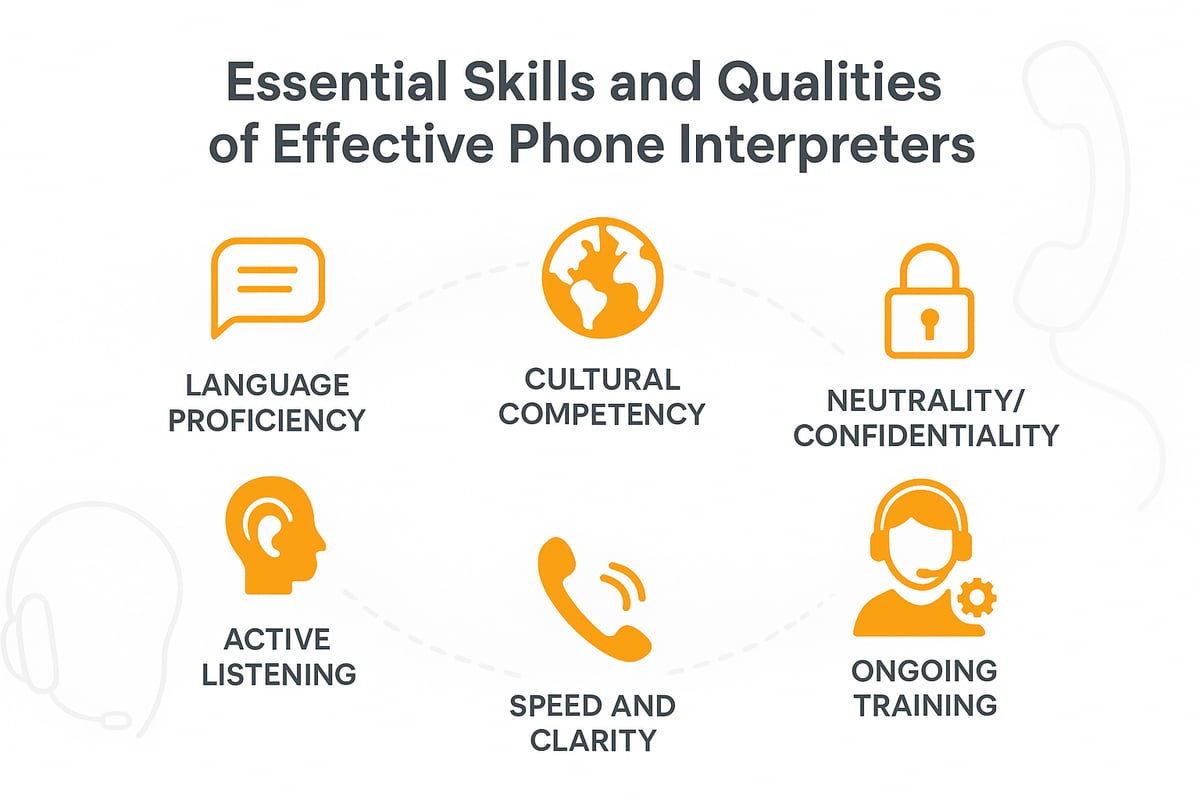
The foundation of every over the phone interpreter’s success is native-level fluency in both source and target languages. Mastery of grammar, vocabulary, and pronunciation ensures clients receive accurate information every time. However, fluency alone is not enough.
Cultural competency is critical. Interpreters must navigate idioms, cultural references, and sensitive topics with care. Understanding regional variations and social norms allows interpreters to bridge more than just words—they bridge entire worldviews.
Active listening is a defining trait. Effective over the phone interpreter professionals use techniques such as note-taking, summarizing, and clarifying questions to ensure nothing is lost in translation. This is especially important over the phone, where visual cues are absent.
Neutrality and confidentiality are non-negotiable. An over the phone interpreter must remain impartial, never offering opinions or influencing the conversation. They are also bound by strict privacy standards to protect sensitive information.
Speed and clarity set top interpreters apart. In urgent situations, a skilled over the phone interpreter conveys information quickly, yet never sacrifices accuracy. Clear enunciation and concise delivery are essential, especially in high-stress calls.
For actionable tips on excelling in these areas, consider the Interpreter On Call Best Practices guide, which offers insights into optimizing performance and client satisfaction.
Table: Essential Skills for Over the Phone Interpreters
| Skill | Why It Matters | Example Application |
|---|---|---|
| Language Proficiency | Ensures accuracy and trust | Medical terminology in triage |
| Cultural Competency | Avoids misunderstandings | Legal idioms in court calls |
| Active Listening | Captures full context | Emergency details in 911 calls |
| Neutrality | Maintains professional boundaries | Family mediation |
| Confidentiality | Protects personal and legal info | Healthcare consultations |
| Speed & Clarity | Reduces response time, increases safety | Disaster response coordination |
Training, Certification, and Specialization
Training standards for over the phone interpreter professionals have evolved rapidly. Recognized bodies such as the National Board of Certification for Medical Interpreters and the American Translators Association set rigorous benchmarks for interpreter competency. Earning these credentials demonstrates a commitment to quality and professionalism.
Ongoing education is essential. Interpreters must stay current with new terminology, technology, and industry best practices. Many participate in workshops, online courses, and peer learning groups to sharpen their skills.
Specialization is now common. Over the phone interpreter specialists work in fields like medical, legal, emergency, and customer service interpretation. For instance, interpreters embedded in 911 call centers have helped reduce language assistance wait times from 10 to under 2 minutes, directly impacting emergency outcomes.
Technology plays a growing role in interpreter excellence. AI-powered tools assist with terminology lookup, real-time voice recognition, and performance analytics, allowing interpreters to focus on accuracy and client needs.
Ultimately, the most effective over the phone interpreter brings together rigorous training, ethical standards, and adaptability. Their commitment to ongoing improvement ensures organizations can trust them in every high-stakes conversation.
Step-by-Step Guide: Setting Up and Using Over the Phone Interpreter Services
Setting up an effective over the phone interpreter system in 2025 requires a strategic approach. Organizations must address language needs, choose the right provider, integrate technology, train staff, and routinely monitor performance. This step-by-step guide will help you maximize outcomes and ensure seamless multilingual communication.
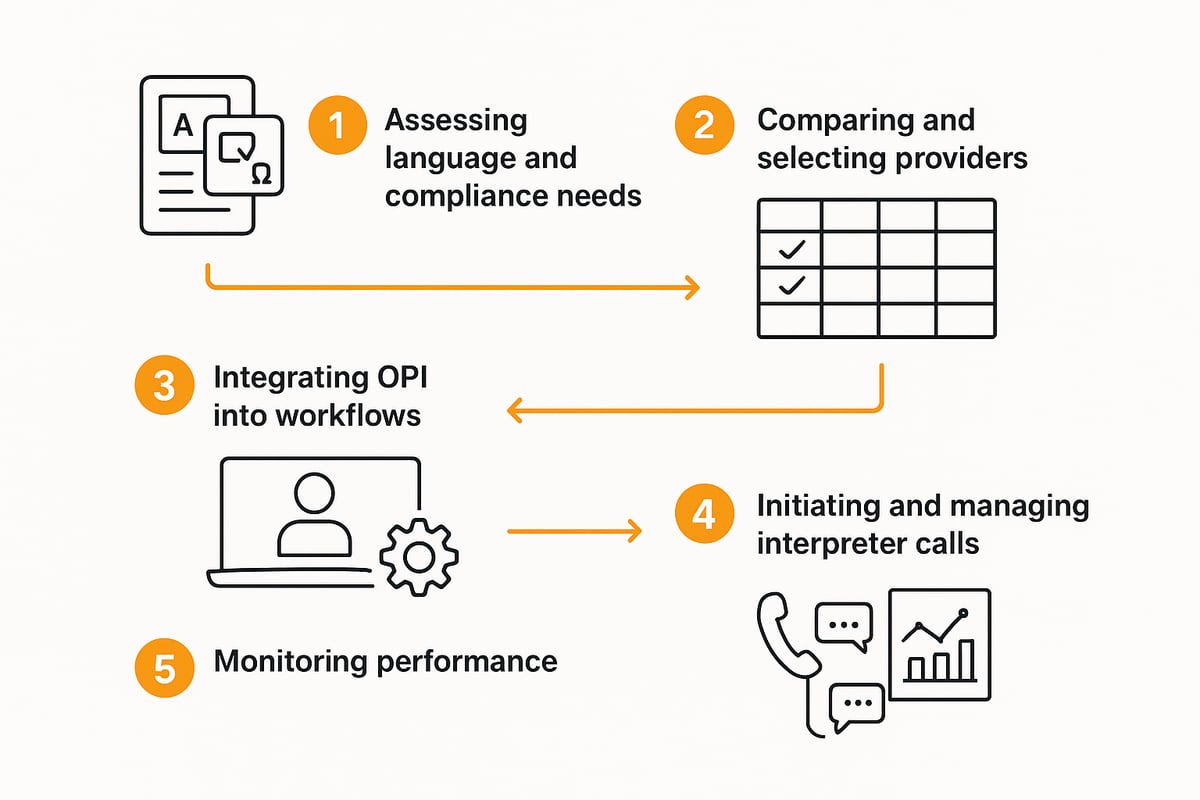
Step 1: Assessing Your Organization’s Needs
The first step is to understand your organization’s specific requirements for over the phone interpreter services. Begin by analyzing call data to identify which languages are most frequently requested. Community demographics and historical call trends can reveal hidden needs, especially in diverse service areas.
Next, estimate your average and peak call volumes. This helps determine the scale of interpreter support required and ensures you choose a provider capable of handling your busiest periods.
Compliance is also crucial. Review regulations such as HIPAA, GDPR, and local mandates to ensure your over the phone interpreter solution meets legal standards for privacy and language access. Documenting compliance requirements upfront avoids costly issues later.
Step 2: Selecting an OPI Provider
Selecting the right over the phone interpreter provider is vital for quality and reliability. Focus on these key criteria:
- Language coverage: Does the provider offer all languages your community needs?
- Interpreter qualifications: Are interpreters certified and experienced in your sector?
- Response times: How quickly can you access an interpreter, especially during emergencies?
- Integration options: Can the solution connect with your current phone systems or digital platforms?
A sample comparison table for quick evaluation:
| Provider | Languages Supported | Avg. Response Time | Certifications | Integration |
|---|---|---|---|---|
| Provider A | 200+ | 30 sec | Medical, Legal | API, Mobile |
| Provider B | 150+ | 60 sec | General | Phone Only |
Security and privacy are non-negotiable. Confirm that your chosen over the phone interpreter platform uses encryption, secure data storage, and holds up-to-date certifications.
Step 3: Integrating OPI Into Workflows
Seamless integration is essential for over the phone interpreter services to work efficiently. Start by ensuring technical compatibility with your phone system, whether that’s through direct dial, API, or mobile access. Test integrations to confirm stability before full deployment.
Prepare your team with onboarding and scenario-based training. Staff should practice how to initiate interpreter calls, manage multi-party conversations, and use any platform features. For actionable guidance on effective training and communication strategies, consult Best Practices for Phone & Virtual Interpretation.
Consider real-world scenarios. For example, emergency dispatchers often use over the phone interpreter solutions to handle multilingual calls quickly, reducing miscommunication and improving outcomes.
Step 4: Initiating and Managing Interpreter Calls
Connecting with an over the phone interpreter should be straightforward. Typically, staff dial a dedicated number or access a portal, select the desired language, and are promptly connected to a qualified interpreter.
During calls, introduce all parties and clarify roles. Encourage turn-taking and speak clearly to facilitate accurate interpretation. When managing complex or sensitive calls, brief the interpreter on context if possible.
Be prepared to troubleshoot common issues, such as dropped calls or poor audio quality. Establish backup procedures, like redialing or switching devices, to minimize disruptions. Document any recurring problems for future improvement.
Step 5: Monitoring and Optimizing OPI Performance
Continuous monitoring helps you get the most from your over the phone interpreter investment. Track metrics like call duration, interpreter response times, and satisfaction rates. User feedback is invaluable for identifying gaps or areas for training.
Establish feedback loops with both staff and clients. Use their insights to refine workflows and address pain points. Reporting tools can help you document compliance, analyze trends, and generate actionable performance analytics.
Optimization is an ongoing process. Regular reviews of your over the phone interpreter program ensure you stay compliant, efficient, and responsive to evolving needs.
Best Practices for Over the Phone Interpretation in 2025
Effective use of over the phone interpreter services in 2025 requires more than just connecting calls. It demands preparation, clear communication, and the right technology to ensure every conversation is understood. By following these best practices, organizations can bridge language gaps and deliver better outcomes for all involved.
Ensuring Effective Communication
Preparation is essential before engaging an over the phone interpreter. Start by collecting as much context as possible about the call. Brief all participants, making sure everyone understands the purpose of the conversation and the role of the interpreter.
During the call, use clear and concise language. Speak slowly, pause often, and avoid idioms or jargon that may not translate well. If complex terms arise, refer to prepared glossaries or clarify meanings to prevent misunderstandings. This is especially important in high-stress environments like 911 calls, where accuracy can be life-saving.
Handling sensitive situations, such as trauma or medical emergencies, requires a trauma-informed approach. Interpreters should maintain professionalism and empathy, ensuring that non-English speakers feel heard and respected. For more on avoiding common pitfalls in emergency scenarios, see Why Language Lines Fail in 911 Emergencies.
In summary, effective communication during over the phone interpreter sessions comes down to preparation, clarity, and empathy. These steps help ensure that every voice is understood, no matter the language.
Overcoming Common Challenges
Over the phone interpreter services can encounter hurdles, but proactive strategies minimize disruptions. Technical issues, such as poor call quality or dropped connections, can derail communication. Always test equipment before calls and have backup procedures ready, like alternative phone lines or devices.
Dealing with emotional callers is another challenge. Interpreters trained in de-escalation techniques can maintain calm and ensure the message is delivered accurately. When multiple parties are on the line, clear turn-taking protocols and active facilitation keep the conversation organized.
A recent study found that 60 percent of users report higher satisfaction with over the phone interpreter services when interpreters are specifically trained for high-stress situations. The table below summarizes satisfaction rates based on interpreter training:
| Interpreter Training | User Satisfaction Rate |
|---|---|
| General | 75% |
| De-escalation/Trauma-Informed | 90% |
By anticipating obstacles and investing in interpreter training, organizations can deliver more reliable and effective over the phone interpreter experiences.
Convey911: Emergency Language Interpretation Solutions
Convey911 is at the forefront of over the phone interpreter innovation, offering real-time language identification and access to over 30,000 qualified interpreters in 185 languages. The platform is tailored for emergency services, integrating AI-powered translation and seamless 911 system connectivity.
Key features include rapid interpreter response, with connections established in under two seconds. This speed can dramatically improve outcomes for non-English speakers in critical situations, reducing wait times from up to ten minutes to nearly instant. The system also supports integration into existing emergency workflows for public safety answering points and first responders.
Trusted by agencies across North America, Convey911 helps ensure that over the phone interpreter services are not just fast, but also accurate and secure. By empowering emergency personnel with immediate language support, they make sure no call goes unanswered due to language barriers.
Compliance, Security, and Ethical Considerations in OPI
Navigating compliance, security, and ethics is critical for any organization utilizing over the phone interpreter services in 2025. As reliance on these solutions grows, strict adherence to regulatory standards and ethical practices ensures not only legal protection but also the trust of every caller.
Regulatory Requirements for 2025
For any over the phone interpreter solution, compliance with evolving regulations is non-negotiable. Organizations must align with HIPAA for healthcare privacy, GDPR for data protection in the EU, and a host of federal, state, and local language access mandates. Each regulation sets unique requirements for safeguarding personal data and ensuring language services are accessible to all.
A summary of key compliance standards:
| Regulation | Scope | Key Requirement |
|---|---|---|
| HIPAA | US Healthcare | Patient privacy, secure transmission |
| GDPR | EU Data | Consent, right to be forgotten |
| Local Mandates | Regional | Language access, interpreter credentialing |
Maintaining proper documentation is essential. This includes accurate call logs, interpreter credentials, and consent records. Providers should implement robust systems for recordkeeping, making audits and compliance reviews straightforward.
Security is another pillar. Encryption during calls and secure storage of any recordings or transcripts are now industry-standard. Many organizations also require certified platforms that pass regular security audits. For a deeper dive, the Compliance and Language Access Requirements guide offers a comprehensive look at these obligations and how they impact over the phone interpreter workflows.
Ethical Standards and Interpreter Conduct
Ethical conduct is foundational to any over the phone interpreter interaction. Interpreters must uphold strict confidentiality, ensuring that any information shared during calls remains private. Neutrality is equally important, as interpreters should never inject personal opinions or advocate for any party.
Consent is a legal and ethical necessity. All parties must be informed when an interpreter is present and understand how their information will be used. Failure to maintain confidentiality can have serious consequences. For example, a breach in interpreter discretion during a sensitive emergency call led to legal action and eroded public trust. To avoid such pitfalls, organizations must provide clear guidance and regular training for their teams.
Further strategies for managing ethical dilemmas and maintaining professional boundaries are discussed in Bridging the Language Gap in 911, which highlights the unique pressures of real-time interpretation in critical scenarios. By prioritizing these ethical standards, over the phone interpreter services can deliver reliable and respectful communication.
Risk Management and Quality Assurance
Risk management in over the phone interpreter services starts with thorough vetting. Providers should conduct background checks and verify interpreter certifications before onboarding. Regular training and upskilling keep interpreters up to date with evolving compliance requirements and industry best practices.
Incident response protocols are essential. If a security breach or ethical violation occurs, immediate reporting and investigation are required. Organizations should have clear steps for addressing issues, from temporary suspension of interpreters to notifying affected parties.
Continuous improvement is the hallmark of a robust over the phone interpreter program. Regular audits, user feedback, and performance analytics help identify gaps and drive enhancements. Security measures, such as encrypted call handling and secure storage, protect sensitive information and ensure compliance with all regulations.
By embedding these practices, organizations can maintain the highest standards for over the phone interpreter services, safeguarding both their clients and their reputation.
The Future of Over the Phone Interpretation: Trends and Innovations for 2025
The landscape for over the phone interpreter solutions is rapidly evolving. Organizations are seeking faster, more accurate, and more accessible services to support multilingual communication. As technology advances, the future promises new levels of efficiency and inclusivity.
Advances in AI and Automation
Artificial intelligence is transforming the over the phone interpreter industry. In 2025, AI-powered systems can process speech in real time, enabling rapid language detection and preliminary translation before a human interpreter even joins the call. This collaboration between AI and human expertise significantly reduces wait times, especially in urgent scenarios.
AI-driven voice recognition tools are now benchmarked for accuracy, with projects like LingVarBench: Benchmarking LLM for Automated Named Entity Recognition revealing how large language models improve call transcription and entity recognition. These advances help interpreters focus on context and emotional nuance, while AI handles repetitive or straightforward exchanges.
Despite these breakthroughs, the over the phone interpreter role remains essential for complex conversations. Human interpreters provide cultural sensitivity and ethical judgment that AI cannot replicate. The best results come from a hybrid model, leveraging both AI speed and human intuition.
Comparison Table: AI vs Human Interpreter in OPI
| Feature | AI Interpreter | Human Interpreter |
|---|---|---|
| Speed | Instantaneous | Seconds to connect |
| Cultural Context | Limited | Deep, nuanced |
| Emotional Sensitivity | Minimal | High |
| Consistency | High | Varies |
| Ethics/Ethics | Programmed | Professional standards |
Expanding Language Access and Equity
One of the most promising trends in over the phone interpreter services is the expansion of language coverage. By 2025, providers are adding more indigenous, rare, and even sign languages to their platforms. This growth addresses the needs of increasingly diverse populations and ensures equitable access for all callers.
Accessibility features are also improving. Many services now support communication for individuals with speech impairments, using AI to interpret non-verbal sounds or assist with text-to-speech. As a result, organizations can serve more people, regardless of their language or communication abilities.
Demand for rare language interpreters is surging, with industry projections showing a 30 percent increase by 2025. This trend is driven by global migration, changing demographics, and a commitment to inclusivity in public services.
Integration with Omnichannel Communication
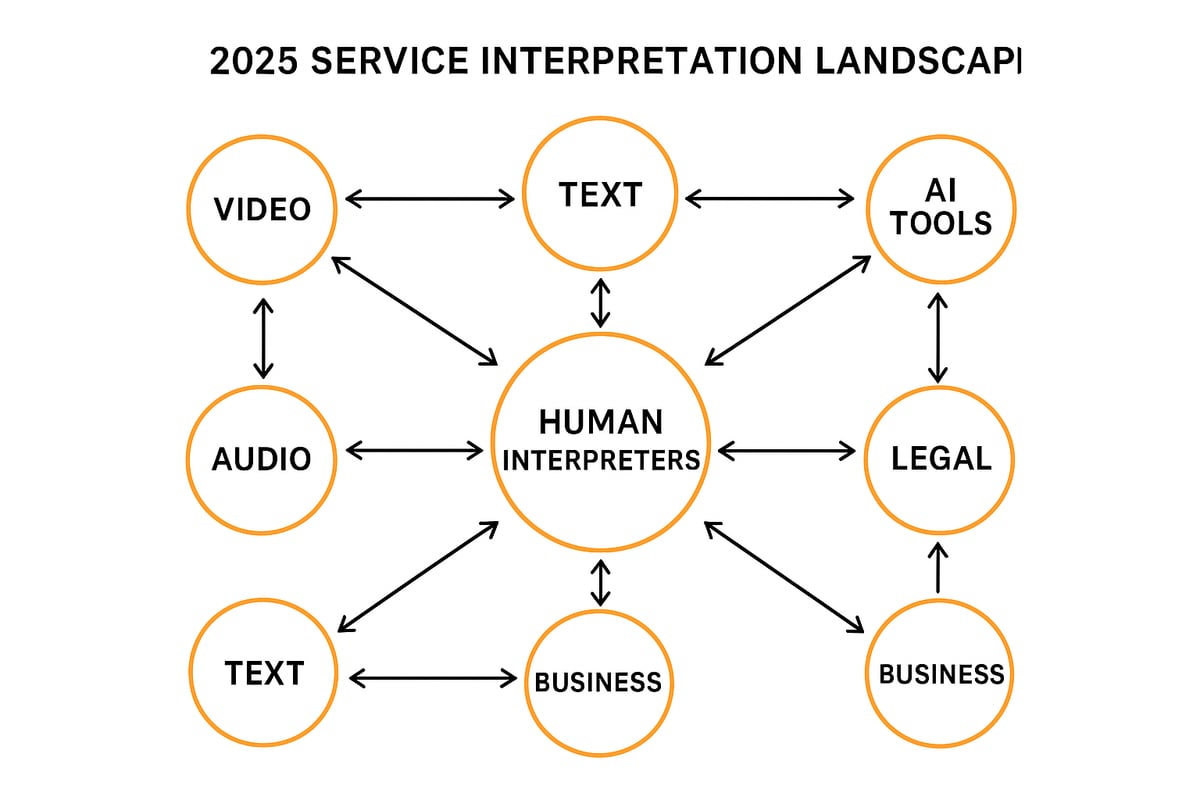
For many organizations, over the phone interpreter services are no longer standalone. Instead, they form part of a broader omnichannel strategy, supporting communication across voice, video, and text platforms. Unified communication systems now allow seamless transition between OPI, video remote interpreting (VRI), and in-person modalities as needed.
This integration means that a single call can begin with OPI and shift to video if visual cues are required, or move to secure text messaging for documentation. Healthcare providers, emergency services, and customer support teams benefit from this flexibility, ensuring that language support is always available in the format that best fits the situation.
A well-integrated omnichannel approach also improves user satisfaction and operational efficiency. Staff can access interpreters through their preferred channels, reducing friction and ensuring timely responses in high-pressure scenarios.
Preparing for Evolving User Expectations
As technology and user needs evolve, over the phone interpreter services must adapt to higher standards of personalization, speed, and reliability. In 2025, personalization means matching interpreters to callers based on language, dialect, and even cultural background for the most effective communication.
Speed remains a top priority. Industry benchmarks indicate that leading providers can connect users to interpreters in under 10 seconds. Reliability is equally important, with robust backup systems and compliance protocols in place.
To stay ahead, organizations are investing in platforms that offer advanced analytics, user feedback, and continuous improvement. According to the Interpreting Market Size, Share & Outlook Report 2034, the sector is expected to see sustained growth as clients demand ever-better service and broader language access. By embracing innovation, businesses can future-proof their over the phone interpreter strategies and ensure they are ready for whatever comes next.
As you prepare to enhance your organization’s emergency response in 2025, remember that bridging language gaps quickly can make all the difference. The right over the phone interpreter service streamlines communication, supports your team in high stakes situations, and ensures that no one is left waiting for help. If you’re ready to see firsthand how real time language identification and rapid access to 30,000 interpreters can transform your operations, let’s take the next step together. Book a Demo and discover what seamless emergency language support truly looks like.