


In 2025, online English translation tools have reached new heights, offering instant access to...
Are you ready to unlock the secrets behind top queries shaping data success in 2026? As data volumes surge and technology evolves, knowing which top queries drive performance, security, and analytics is more important than ever.
This guide reveals the 8 top queries every data professional, analyst, and IT leader must master for the year ahead. You’ll discover actionable insights for optimizing database operations, meeting compliance, and staying ahead of emerging trends.
Stay with us for expert strategies and future-focused knowledge that will keep you competitive in the rapidly changing data landscape.
The Evolution of Top Queries: Why 2026 Is Different
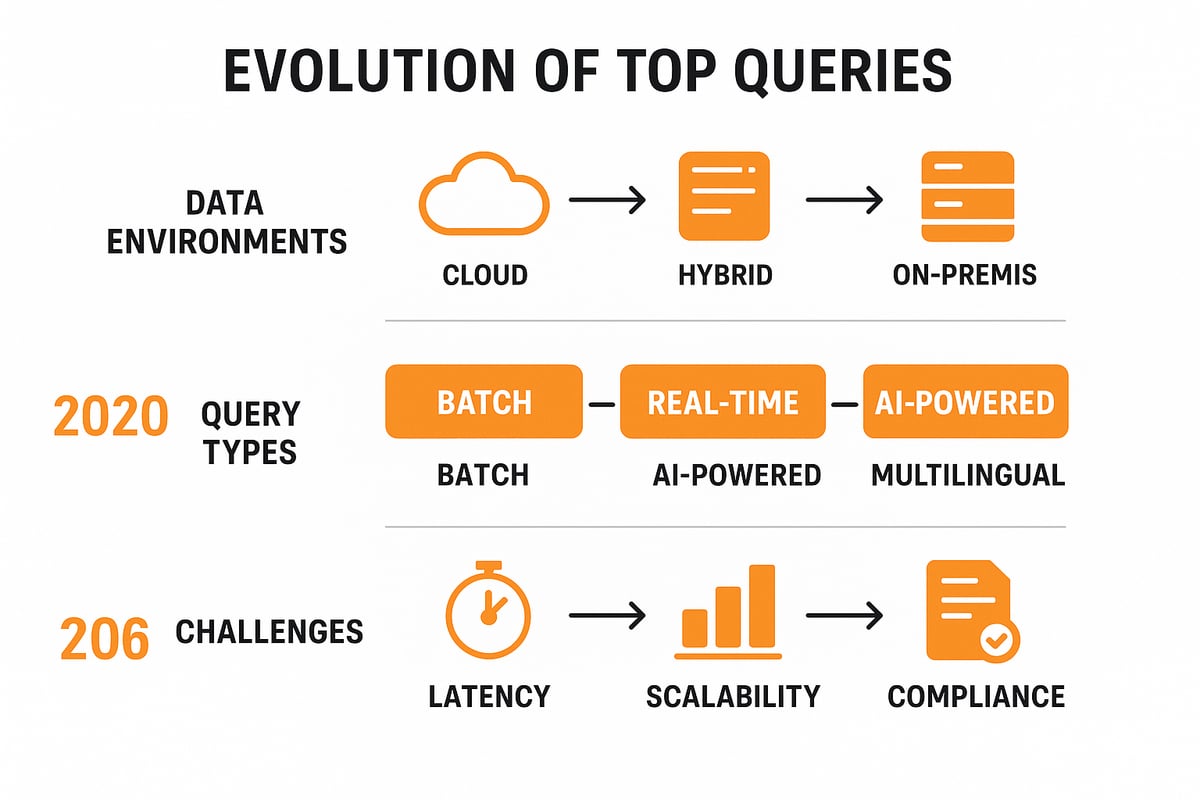
The landscape for top queries has changed dramatically as we approach 2026. Data professionals are navigating environments that are more complex, intelligent, and dynamic than ever before. Understanding how top queries have evolved is essential for anyone aiming to stay competitive in this fast-paced digital era.
Shifting Data Environments and Real-Time Demands
Between 2020 and 2026, top queries have shifted focus due to the widespread adoption of cloud, hybrid, and edge computing. Data is no longer stored in isolated silos, but flows continuously across platforms and geographies. The rise of real-time analytics has transformed how organizations approach top queries, with business leaders demanding instant insights from streaming data sources.
The global data volume is exploding, projected to reach 180 zettabytes by 2025. This surge is powered by big data, IoT, and multi-modal sources like text, images, and sensor feeds. As a result, traditional batch processing has given way to real-time and event-driven top queries. According to Real-Time Analytics Market Growth, the need for immediate business intelligence is driving rapid expansion in this sector.
Rising Complexity and the Need for Optimization
Modern top queries must handle structured, semi-structured, and unstructured data. The complexity increases as organizations ingest information from mobile devices, social media, and IoT sensors. This trend demands queries that are not only powerful but also efficient.
Optimizing top queries is now a critical business priority. In cloud and hybrid environments, resource consumption directly impacts costs. Query optimization strategies, such as indexing, partitioning, and caching, are vital for maintaining performance and controlling expenses. Businesses are leveraging AI to automate analysis and tuning, ensuring top queries remain fast and cost-effective.
Security, Compliance, and Emerging Challenges
Security and compliance have become integral to top queries. Regulations like GDPR and CCPA require organizations to monitor data access, track anomalies, and prove regulatory adherence. This means queries must now support audit trails, detect suspicious activities, and protect sensitive information.
The challenges do not end there. The rise of multi-language search, the need for low-latency responses, and the demand for scalable solutions all put pressure on top queries. Professionals are now expected to master queries that can perform across languages, adapt to spikes in traffic, and scale with business growth.
Key Challenges Impacting Top Queries in 2026
| Challenge | Description |
|---|---|
| Latency | Need for instant query results |
| Scalability | Ability to handle massive, diverse workloads |
| Multi-language | Support for global user bases |
| Security/Compliance | Meet strict regulatory requirements |
Why Mastery Matters
Staying ahead means understanding the evolution of top queries and the forces shaping them. Organizations that master these queries will not only improve database performance, but also gain a strategic edge in business intelligence and regulatory compliance.
Key Criteria for Defining “Top” Queries in 2026
Understanding which queries rise to the level of "top queries" in 2026 is crucial for data professionals. It helps organizations focus resources, optimize systems, and align analytics with business goals. But what exactly sets these queries apart?
What Makes a Query “Top”?
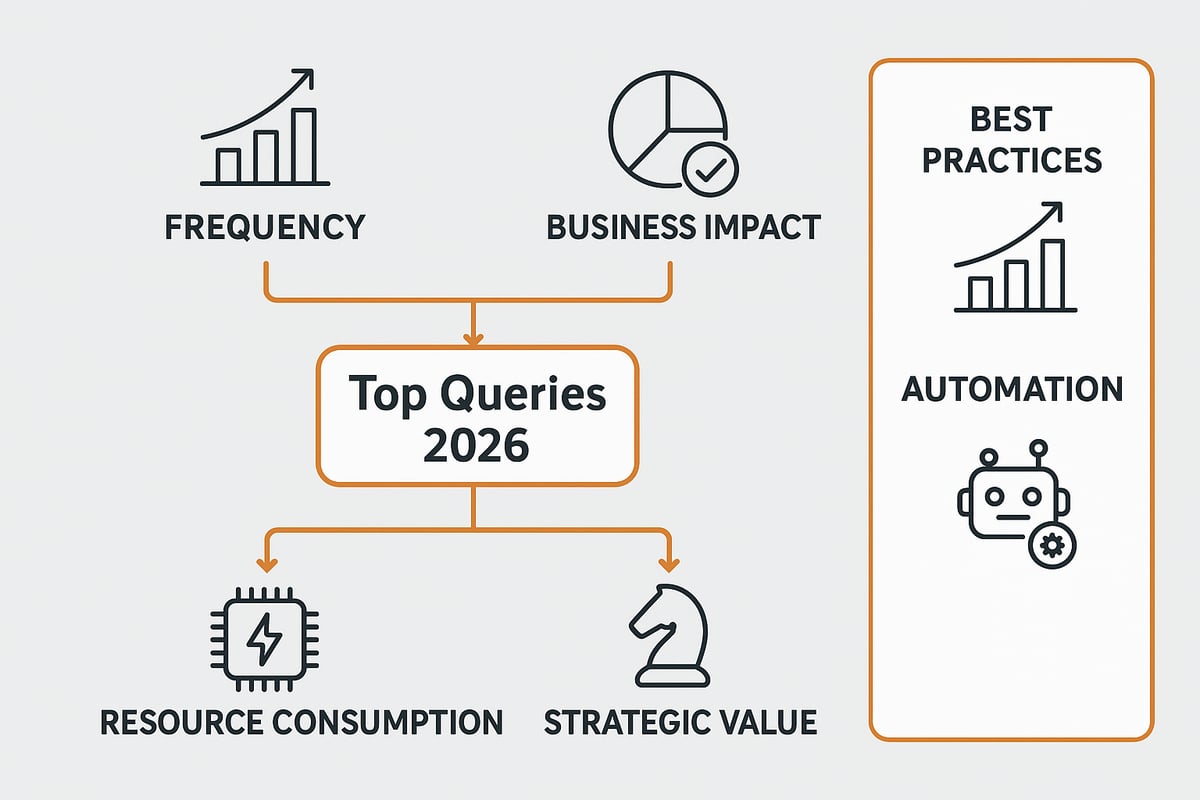
A query is considered among the top queries when it consistently impacts system performance, business operations, or strategic outcomes. These queries are not just frequent, but also critical in terms of their effect on resources and business value.
Common factors include:
- High frequency of execution during business hours
- Significant influence on application speed or user experience
- Direct connection to revenue, compliance, or security goals
Top queries often serve as the backbone of reporting, analytics, or operational monitoring, making them a priority for optimization.
Metrics and Measurement for Top Queries
Defining top queries requires clear metrics. The most important include CPU and IO usage, execution time, and how closely the query aligns with business objectives.
| Metric | Why It Matters | Example Use Case |
|---|---|---|
| CPU/IO Usage | Reveals resource-heavy top queries | Troubleshooting slow dashboards |
| Execution Time | Highlights latency issues | Optimizing real-time analytics |
| Business Relevance | Aligns with strategic priorities | Revenue reporting, compliance checks |
Regularly tracking these metrics helps teams identify which top queries need attention and where optimization will deliver the greatest impact.
Best Practices and Automation
Monitoring and improving top queries is not a one-time activity. Industry leaders use automated tools and AI to analyze performance, flag anomalies, and suggest improvements.
Platforms like OpenSearch and SQL Server provide built-in features for query profiling. Advanced solutions, such as the Delta: Learned Query Optimization Framework, offer AI-driven insights for continuous optimization.
Automation ensures that top queries remain efficient as data volumes and business requirements evolve. In fact, 70% of IT leaders now consider query optimization a critical factor in controlling cloud costs.
Holistic Approach to Top Queries
A robust strategy for top queries blends technical, business, and compliance perspectives. It is not enough to focus solely on performance or resource usage.
Teams should:
- Collaborate across IT, analytics, and compliance roles
- Balance operational monitoring with insight-driven analysis
- Incorporate security and regulatory requirements into query design
By taking a holistic approach, organizations ensure their top queries support agility, compliance, and business growth well into the future.
8 Top Queries You Need to Know in 2026
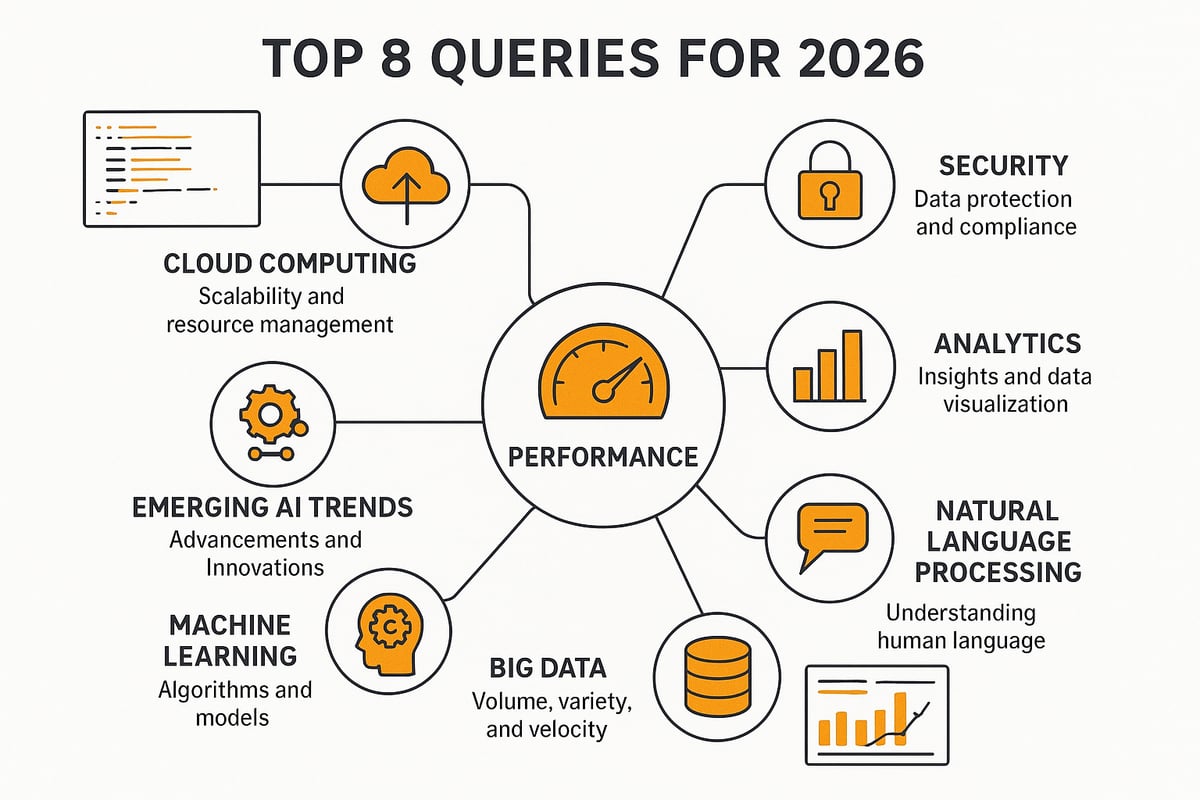
Understanding the top queries shaping 2026 is vital for every data professional, IT leader, and analyst. This section explores the eight most impactful queries you need to master to drive business intelligence, enhance security, and optimize database performance. Each query spotlights modern requirements, from real-time insights to AI-powered search. Mastering these top queries ensures you can address evolving technical demands and keep your organization ahead.
1. Real-Time Analytics Query
Real-time analytics queries are at the forefront of the top queries for 2026. They enable organizations to process and analyze streaming data instantly, powering dashboards and immediate insights.
These queries often use SELECT statements with window functions, such as:
SELECT
  user_id,
  COUNT(*) OVER (PARTITION BY user_id ORDER BY event_time RANGE BETWEEN INTERVAL '5 MINUTES' PRECEDING AND CURRENT ROW) AS activity_count
FROM
  streaming_events
WHERE
  event_time > NOW() - INTERVAL '1 HOUR'
Key features include low latency, scalability, and seamless integration with visualization tools. The primary benefit is immediate business intelligence. For example, monitoring website spikes or IoT sensor readings enables teams to respond in real time.
Pros:
- Rapid decision-making
- Supports anomaly detection
Cons:
- Requires robust cloud infrastructure
Over 60% of enterprises deploy real-time analytics, making these top queries essential for competitive advantage. For deeper insight into how AI-driven solutions are redefining real-time communication and analytics, see Real-time AI communication solutions.
2. Top Queries by CPU Usage
Monitoring the top queries by CPU usage is pivotal for optimizing performance and controlling costs in 2026. These queries help identify resource-intensive operations that can bottleneck systems.
A common approach uses system views like SQL Server’s sys.dm_exec_query_stats:
SELECT TOP 10
  qs.total_worker_time/qs.execution_count AS [Avg CPU Time],
  qs.execution_count,
  qs.sql_handle
FROM
  sys.dm_exec_query_stats qs
ORDER BY
  [Avg CPU Time] DESC
Features:
- Sorts queries by CPU time
- Pinpoints bottlenecks
Benefits include direct improvements in application speed and resource allocation. For instance, troubleshooting slow applications often starts by analyzing the top queries consuming the most CPU.
Pros:
- Cuts cloud/hardware costs
- Enables targeted optimization
Cons:
- May need deep technical expertise
As data environments grow, tracking these top queries becomes a cornerstone of performance management.
3. Security Audit Query
Security audit queries are indispensable among top queries, especially as compliance and data protection standards rise. These queries detect suspicious activities, such as failed logins or unauthorized access attempts.
Example:
SELECT
  user_name,
  event_time,
  action
FROM
  security_logs
WHERE
  action = 'FAILED_LOGIN'
  AND event_time > NOW() - INTERVAL '24 HOURS'
Key features:
- Integration with security analytics
- Real-time alerts
Benefits:
- Enhances protection
- Supports regulatory compliance (GDPR, CCPA)
Use case: Detecting brute-force attacks or privilege escalations before they escalate.
Pros:
- Essential for risk mitigation
Cons:
- Can generate vast data volumes
Modern organizations rely on these top queries to stay compliant and secure in a rapidly changing threat landscape.
4. Vector Search Query
Vector search queries represent a major innovation among top queries for 2026, enabling semantic and similarity search using AI embeddings. These are crucial for handling unstructured data, natural language, and image searches.
Example in OpenSearch:
{
  "knn": {
    "field": "vector_field",
    "query_vector": [0.12, 0.98, 0.45],
    "k": 10
  }
}
Features:
- Supports AI-driven applications
- Handles vast, diverse data types
Benefits:
- Improves result accuracy
- Powers recommendations, document retrieval
Use case: E-commerce product recommendations based on user behavior or image similarity.
Pros:
- Future-proof, scales with AI adoption
Cons:
- Requires specialized infrastructure and vector databases
As AI and big data converge, these top queries are foundational for modern search and discovery.
5. Top Queries by IO Usage
Another critical category of top queries focuses on IO usage, highlighting queries that drive high disk read/write activity. Monitoring these queries uncovers inefficient access patterns and helps optimize storage.
Example SQL:
SELECT
  qs.sql_handle,
  SUM(qs.logical_reads) AS total_reads,
  SUM(qs.logical_writes) AS total_writes
FROM
  sys.dm_exec_query_stats qs
GROUP BY
  qs.sql_handle
ORDER BY
  total_reads DESC
Features:
- Aggregates reads/writes
- Identifies high-IO operations
Benefits:
- Reduces latency
- Optimizes storage costs
Use case: Diagnosing slow ETL jobs or report generation due to inefficient queries.
Pros:
- Drives efficiency and cost savings
Cons:
- May require index or schema redesign
Keeping track of these top queries ensures data platforms remain agile and responsive as data volumes surge.
6. Multilingual Search Query
Multilingual search queries are gaining prominence among top queries as organizations serve increasingly global audiences. These queries allow users to search in multiple languages, improving accessibility and reach.
Example in OpenSearch:
{
  "query": {
    "multi_match": {
      "query": "emergency",
      "fields": ["title", "description"],
      "analyzer": "language_specific"
    }
  }
}
Features:
- Auto-detects and processes 100+ languages
- Integrates with language analyzers
Benefits:
- Expands user base
- Improves inclusivity
Use case: E-commerce platforms enabling search for international customers.
Pros:
- Inclusive and scalable
Cons:
- Complex to configure and maintain
As the world becomes more connected, these top queries are essential for delivering seamless user experiences across regions.
7. Generative AI-Powered Query
Generative AI-powered queries are transforming how users interact with data in 2026. These top queries leverage large language models (LLMs) to generate, optimize, or interpret complex queries from natural language.
Example:
# Using an LLM to translate natural language to SQL
prompt = "Show total sales by region for the last quarter."
response = ai_model.generate_sql(prompt)
Features:
- Integrates with platforms like OpenAI or Amazon Bedrock
- Democratizes access to data
Benefits:
- Enables business users to query databases without SQL expertise
- Boosts productivity
Use case: Marketing teams generating ad-hoc reports without technical help.
Pros:
- Reduces technical barriers
- Scales business intelligence
Cons:
- Needs robust guardrails to prevent misuse
Generative AI is rapidly reshaping the landscape of top queries, making advanced analytics accessible to all.
8. Observability and Performance Baseline Query
Observability and performance baseline queries are vital for proactive monitoring and capacity planning. These top queries aggregate historical performance stats to establish operational baselines.
Example:
SELECT
  AVG(response_time) AS avg_response,
  MAX(response_time) AS max_response
FROM
  query_performance
WHERE
  event_time > NOW() - INTERVAL '30 DAYS'
Features:
- Feeds dashboards
- Triggers alerts for anomalies
Benefits:
- Prevents downtime
- Supports predictive maintenance
Use case: Setting and monitoring thresholds for query response times.
Pros:
- Enables proactive intervention
Cons:
- Needs continuous tuning and review
With data environments growing more complex, mastering these top queries ensures stable, reliable operations.
Mastering these 8 top queries in 2026 is not just about technical excellence. It is about future-proofing your data strategy, ensuring compliance, and unlocking new business value. Stay ahead by making these top queries a core part of your professional toolkit.
How to Monitor, Analyze, and Optimize Top Queries
Staying ahead in data-driven environments requires a robust approach to monitoring, analyzing, and optimizing top queries. As business demands grow and data systems become more complex, understanding how to manage your top queries is essential for both operational efficiency and strategic success.
Monitoring Top Queries: Tools and Techniques
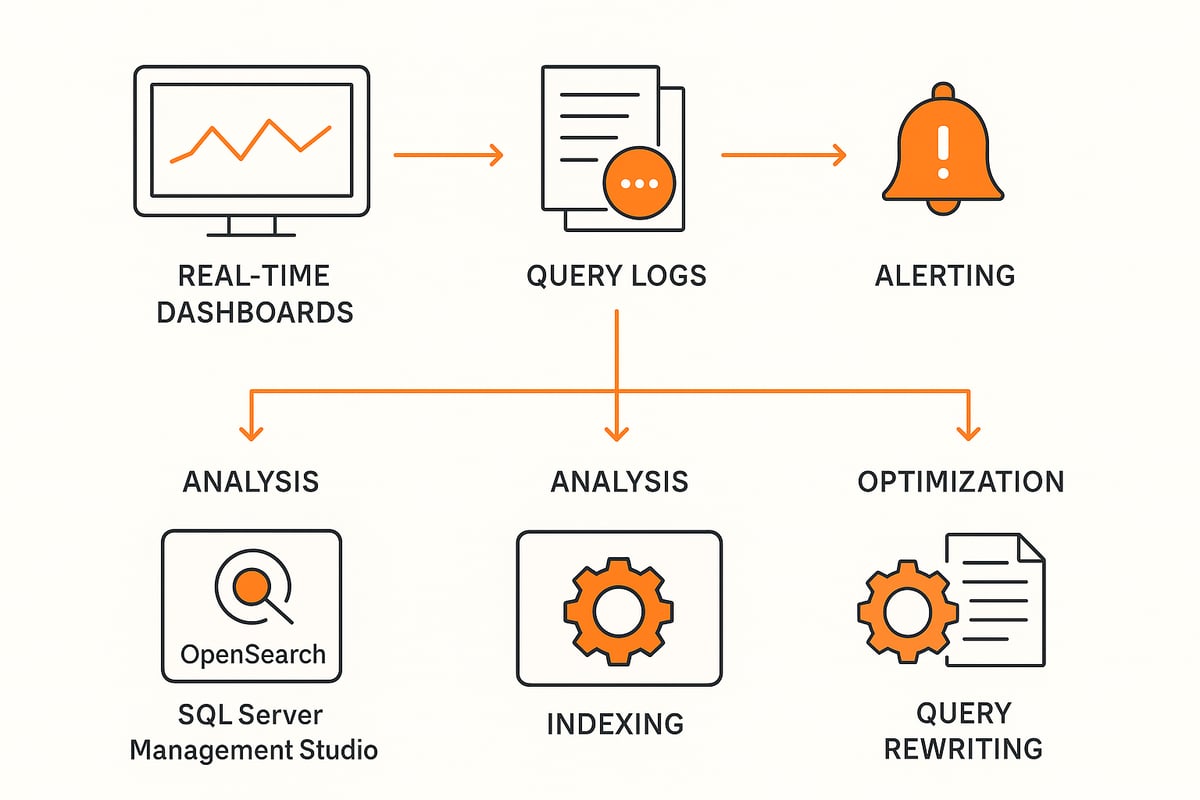
Effective monitoring begins with visibility. Real-time dashboards offer instant insights into top queries, helping teams spot performance issues before they escalate. Scheduled reports and automated alerts further ensure that high-impact queries are always under watch.
Leverage tools like OpenSearch and SQL Server Management Studio to track query execution, resource usage, and frequency. Cloud-native monitoring suites provide additional layers of observability, integrating seamlessly with hybrid and multi-cloud environments. By consistently monitoring top queries, organizations can quickly adapt to changing workloads and prevent costly downtime.
Analyzing and Optimizing for Performance
Once top queries are identified, thorough analysis is key. Start by profiling query frequency, CPU and IO consumption, and overall business impact. Use dynamic management views (DMVs) in SQL Server or OpenSearch’s Top N Queries feature to drill into performance metrics.
Optimization techniques include indexing, query rewriting, partitioning, and leveraging caching strategies. Regularly review execution plans to uncover inefficiencies and apply targeted improvements. For a deeper dive into workflow optimization and real-world performance gains, see this guide on emergency communication workflow optimization.
A structured analysis and optimization process not only enhances speed and reliability but also reduces cloud and hardware costs tied to inefficient top queries.
The Role of Collaboration and Automation
Optimizing top queries is not a solo task. Effective results require collaboration between DBAs, developers, and business analysts. By sharing insights and aligning on business priorities, teams can ensure that query tuning supports both technical and organizational goals.
Automation and AI now play a critical role in ongoing optimization. Automated analysis tools can flag anomalies, suggest index changes, and even rewrite queries for better performance. For example, teams have reduced CPU time by up to 30 percent through targeted index tuning.
Continuous improvement, driven by teamwork and intelligent automation, ensures that your top queries remain efficient and aligned with evolving business needs.
Future Trends: What’s Next for Database Queries Beyond 2026?
The landscape of top queries is poised for dramatic transformation after 2026. Artificial intelligence is set to redefine how databases are queried, shifting from static scripts to dynamic, context-aware generation. AI-powered engines will not only craft and optimize queries on the fly but also learn from user behavior and system feedback, creating self-optimizing databases. According to industry forecasts, by 2028, more than 50% of queries in large enterprises will be AI-assisted, reshaping the nature of top queries. For a deeper dive into this rapid evolution, see Generative Engine Optimization Trends.
Privacy-preserving and federated queries will gain prominence as organizations strive to balance data utility and compliance. Federated query systems will enable secure analysis across distributed, siloed data sources, without centralizing sensitive information. Privacy-aware query engines will integrate differential privacy and encryption by default, ensuring that top queries do not compromise personal or proprietary data. Meanwhile, quantum computing is on the horizon, promising entirely new paradigms for query processing, especially for complex analytical workloads and optimization tasks.
Unified data platforms are also emerging, merging search, analytics, and communication into seamless experiences. Users will interact with top queries through conversational interfaces, enabling natural language search and real-time analytics. This trend is mirrored in sectors like emergency communications, where AI interpreters bridge language gaps and streamline information flow, as seen in AI and human interpreters in 911.
To stay competitive, data professionals must embrace continuous learning. The future of top queries will demand adaptability, with autonomous anomaly detection and AI-driven recommendations becoming the norm. By understanding these trends and investing in the right skills, organizations can ensure their query strategies remain agile and future-ready.
As you’ve seen, mastering the top queries for 2026 isn’t just about keeping up with technology—it’s about ensuring your data strategies are future-ready and accessible, no matter the language or situation. If you’re ready to see how seamless, multilingual communication and real time translation can transform your emergency response or data operations, I invite you to experience it firsthand. Discover how Convey911 bridges the gap between complex queries and life saving clarity—Book a Demo today and take the next step toward smarter, more inclusive emergency communications.