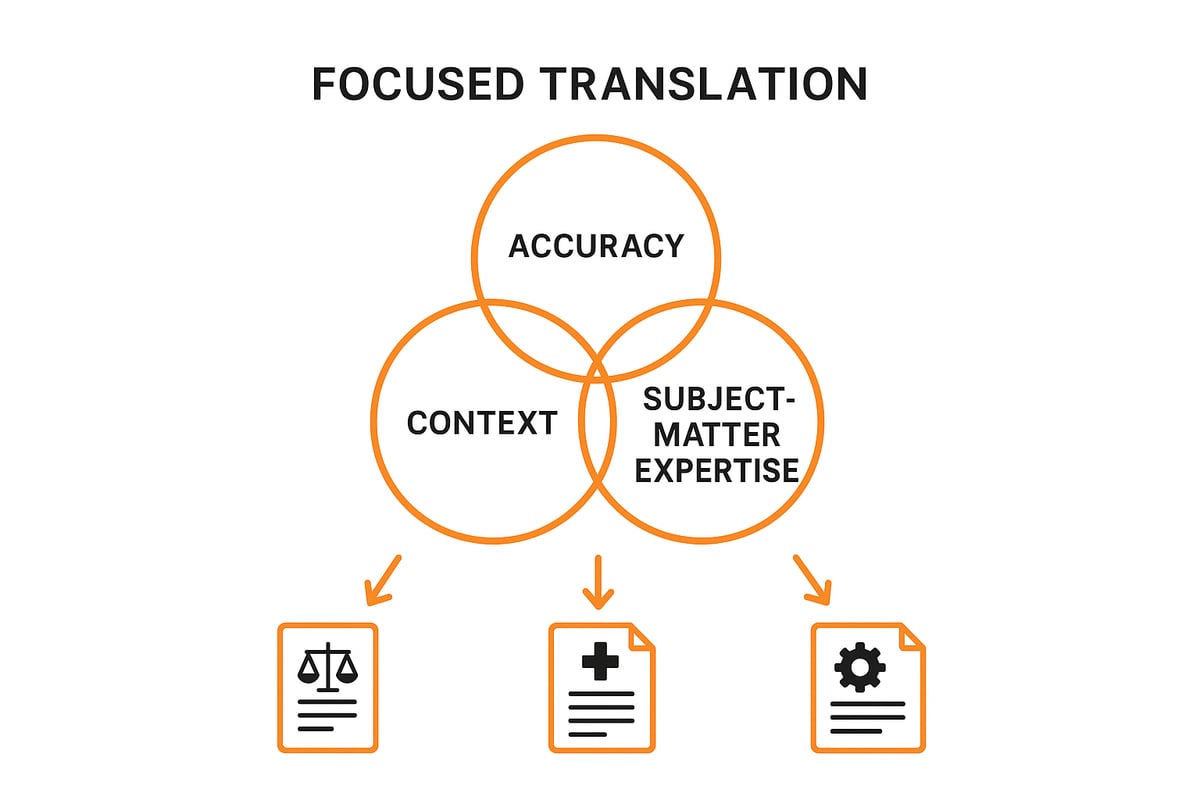


Imagine instantly connecting with anyone, anywhere, regardless of language barriers. In 2026,...
Translation engines have transformed how we bridge language barriers in critical situations. These sophisticated systems process billions of words daily, converting messages from one language to another with increasing accuracy and speed. For emergency communication providers, understanding how these engines work isn't just technical curiosity, it's essential to delivering life-saving services across diverse communities. When seconds matter and miscommunication can have devastating consequences, the reliability of translation technology becomes paramount.
The Architecture Behind Modern Translation Engines
Modern translation engines operate on fundamentally different principles than their predecessors from just a decade ago. Neural machine translation has replaced rule-based and statistical methods as the dominant approach, fundamentally changing how machines understand and convert language.
Neural Networks and Deep Learning
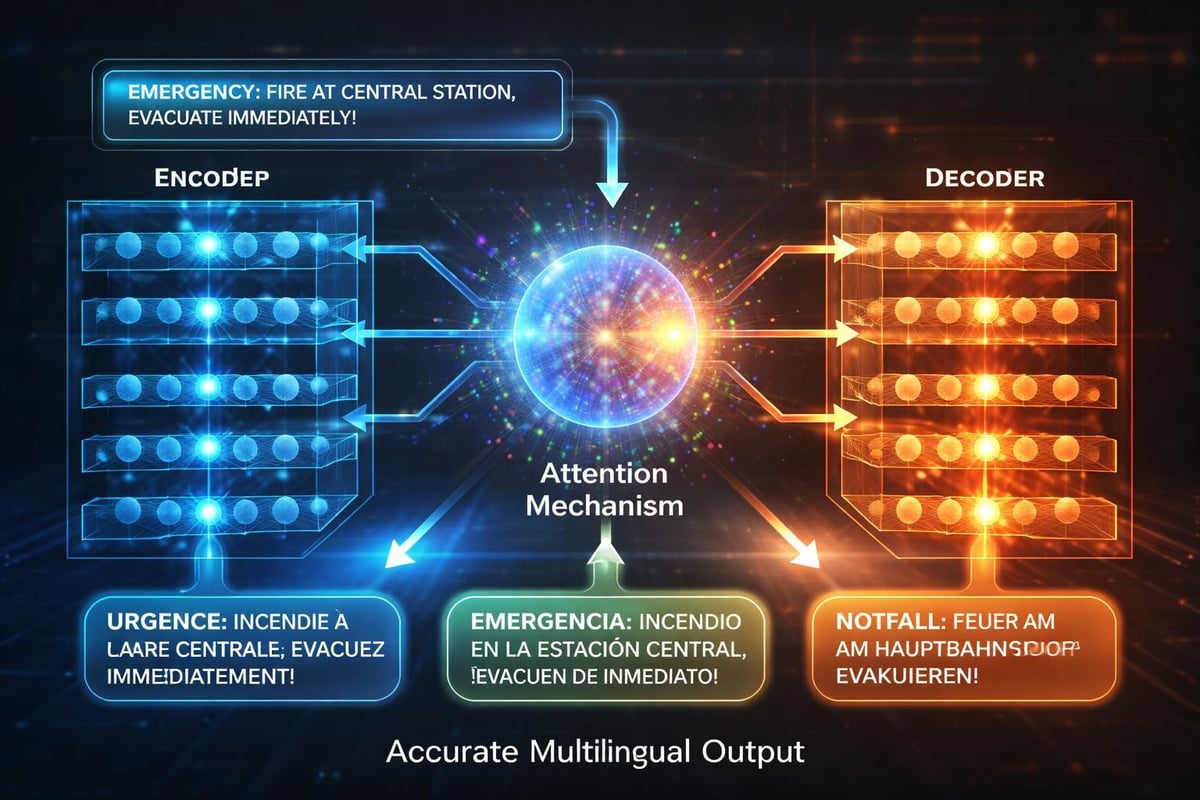
At their core, contemporary translation engines utilize deep neural networks trained on millions of parallel text examples. These networks learn patterns, context, and linguistic nuances rather than relying on hardcoded grammar rules. The Nematus toolkit demonstrates how neural approaches achieve higher translation accuracy while maintaining usability for developers implementing these systems.
Key components of neural translation engines include:
- Encoder networks that process source language input
- Attention mechanisms that focus on relevant context
- Decoder networks that generate target language output
- Training algorithms that continuously improve accuracy
The transformation from input to output happens through multiple layers of processing. Each layer identifies progressively complex patterns, from individual characters to words, phrases, and entire semantic concepts.
Training Data and Quality Considerations
Translation engines require enormous datasets to achieve professional-grade accuracy. Resources like DGT-TM, which provides translation memories covering 22 languages, illustrate the scale of data needed. However, quantity alone doesn't guarantee quality.
Domain-specific training remains critical for specialized applications. Emergency communication presents unique challenges: urgent terminology, location information, and medical descriptions require precise translation. Generic translation engines trained primarily on web content or literature may struggle with phrases like "chest pain radiating to left arm" or "multiple vehicle collision at mile marker 47."
Translation Engines in Emergency Services Context
Emergency response demands exceed typical translation requirements in several critical dimensions. The stakes, time constraints, and terminology complexity create a unique operating environment.
Real-Time Processing Requirements
When someone calls 911, every second counts. Translation engines serving emergency services must process incoming messages in near real-time while maintaining accuracy. TranSmart's interactive machine translation system demonstrates how modern engines balance quality with efficiency, a critical consideration for multilingual communication in crisis situations.
| Performance Metric | Emergency Standard | Typical Commercial Use |
|---|---|---|
| Response Time | Under 2 seconds | 5-10 seconds acceptable |
| Accuracy Threshold | 95%+ required | 85-90% often sufficient |
| Availability | 99.99% uptime | 99.5% typical |
| Concurrent Sessions | Hundreds simultaneously | Limited scaling needs |
This table illustrates why purpose-built solutions matter. General consumer translation engines weren't designed for the demands of public safety operations.
Handling Critical Terminology
Medical emergencies, fire incidents, and law enforcement situations involve specialized vocabulary. Translation engines must recognize that "code blue" doesn't refer to colors, "10-33" is an emergency radio code, and "breaching tool" has specific meaning in fire communication contexts.
Domain adaptation techniques allow translation engines to prioritize emergency-specific terminology. This involves fine-tuning pre-trained models with curated emergency services datasets, ensuring that critical terms translate correctly even when general-purpose engines might fail.
Evolution and Continuous Improvement
Translation engines don't remain static after deployment. The most sophisticated systems incorporate feedback mechanisms that enable ongoing refinement and adaptation.
Adaptive Learning Systems
EvolveMT's ensemble approach showcases how translation engines can improve themselves through usage. Each interaction provides data points that help the system recognize patterns and adjust its translation strategies.
For emergency services, this adaptive capability proves invaluable. As new terminology emerges, community demographics shift, or dialect variations appear, the translation engine evolves to maintain accuracy. This dynamic improvement contrasts sharply with traditional dictionary-based machine translation, which requires manual updates to expand capabilities.
Benefits of adaptive translation engines include:
- Automatic recognition of new emergency terminology
- Improved handling of regional dialects and variations
- Reduced need for manual dictionary updates
- Better performance with rare language pairs
- Continuous accuracy improvements over time
Quality Assurance Mechanisms
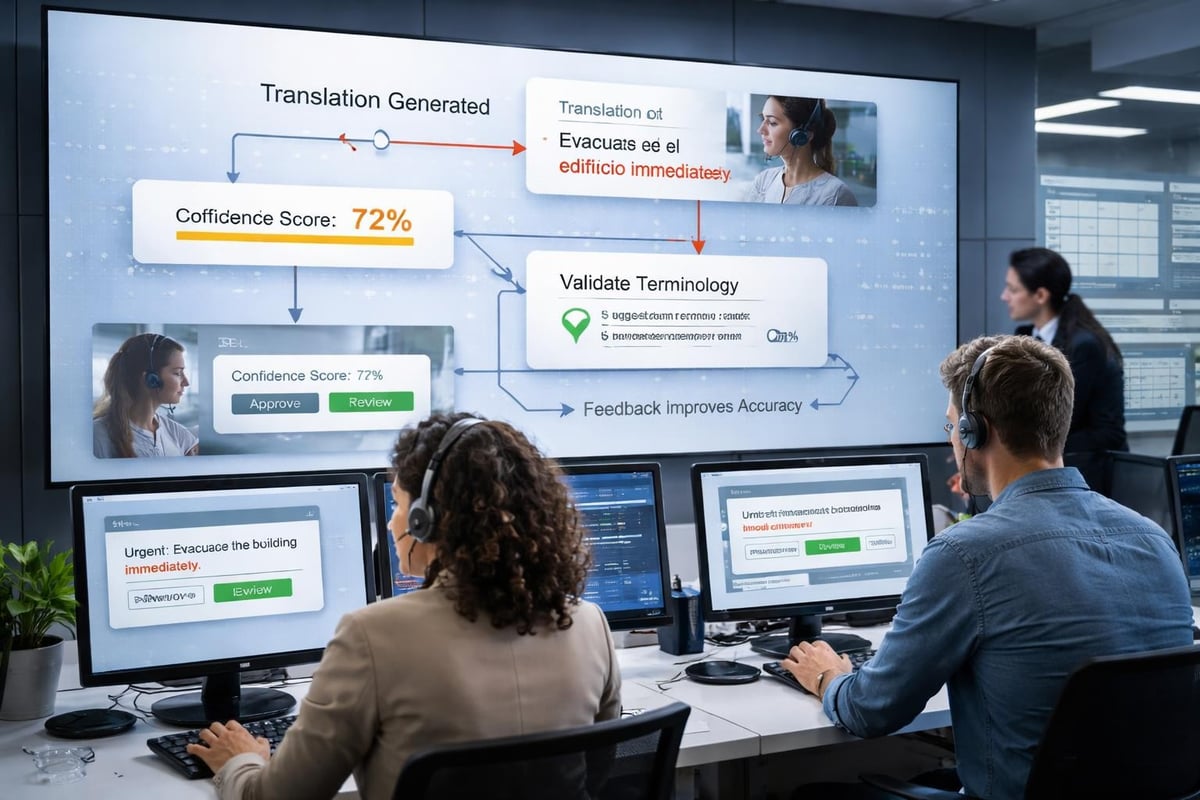
Even the most advanced translation engines require validation mechanisms. In emergency contexts, automated quality checks run alongside human oversight to catch potential errors before they impact response operations.
Confidence scoring helps dispatchers identify translations that may need verification. When the engine produces a translation with lower confidence scores, the system can automatically flag it for human review or suggest alternative phrasings. This hybrid approach combines machine efficiency with human judgment.
Technical Infrastructure and Integration
Translation engines don't operate in isolation. They function as components within larger emergency communication ecosystems, requiring careful integration with existing systems.
API Architecture and Connectivity
Modern translation engines expose their capabilities through application programming interfaces (APIs) that other systems can access. When a 911 call center receives a text message in Mandarin, the text translation software makes API calls to the translation engine, receives the English output, and displays it to the dispatcher within seconds.
This architecture demands robust error handling. If network connectivity fails or the translation engine experiences downtime, backup systems must activate seamlessly. Redundant engine instances, caching of common phrases, and graceful degradation strategies ensure continuous operation.
Multi-Modal Translation Capabilities
Contemporary emergency communication extends beyond text. Translation engines now process voice, video, and multimedia content. Each modality presents distinct challenges:
- Voice translation requires speech recognition before translation, then optional text-to-speech synthesis
- Video content may include sign language interpretation requiring specialized computer vision
- Image translation processes text within photos, useful for translating identification documents
Comprehensive platforms integrate these capabilities into unified systems. When a caller shares a photo of medication packaging in Korean, the translation engine extracts the text, translates it, and presents it to emergency responders who need to understand what substance is involved.
Comparison of Translation Approaches
Different translation engine architectures suit different use cases. Understanding the tradeoffs helps organizations select appropriate solutions.
| Approach | Accuracy | Speed | Resource Requirements | Best For |
|---|---|---|---|---|
| Rule-Based | 70-80% | Fast | Low computing, high development | Controlled vocabulary |
| Statistical | 75-85% | Moderate | Moderate both | General purpose |
| Neural (Standard) | 85-95% | Moderate | High computing | Most modern applications |
| Neural (Specialized) | 95-99% | Moderate | Very high | Domain-specific needs |
Emergency services typically require specialized neural approaches. The investment in computing resources and domain-specific training data pays dividends through superior accuracy in critical situations.
Human Translation as the Benchmark
Despite impressive advances, human translation processes remain the gold standard for accuracy and nuance. Translation engines aim to approximate human performance while offering speed and scalability advantages.
Hybrid models combining automated translation with human post-editing represent pragmatic approaches. The translation engine handles initial conversion, then human translators review and refine the output. This workflow processes content faster than pure human translation while maintaining quality above pure machine output.
For emergency services, this might mean using translation engines for initial dispatcher understanding while having certified interpreters available for complex medical histories or legal proceedings. Understanding English to language translation capabilities helps organizations deploy appropriate resources efficiently.
Language Coverage and Rare Language Support
Translation engines vary dramatically in their language coverage. While major languages like Spanish, Mandarin, and Arabic receive extensive development attention, emergency services must support entire communities, including speakers of less common languages.
Building Comprehensive Language Support
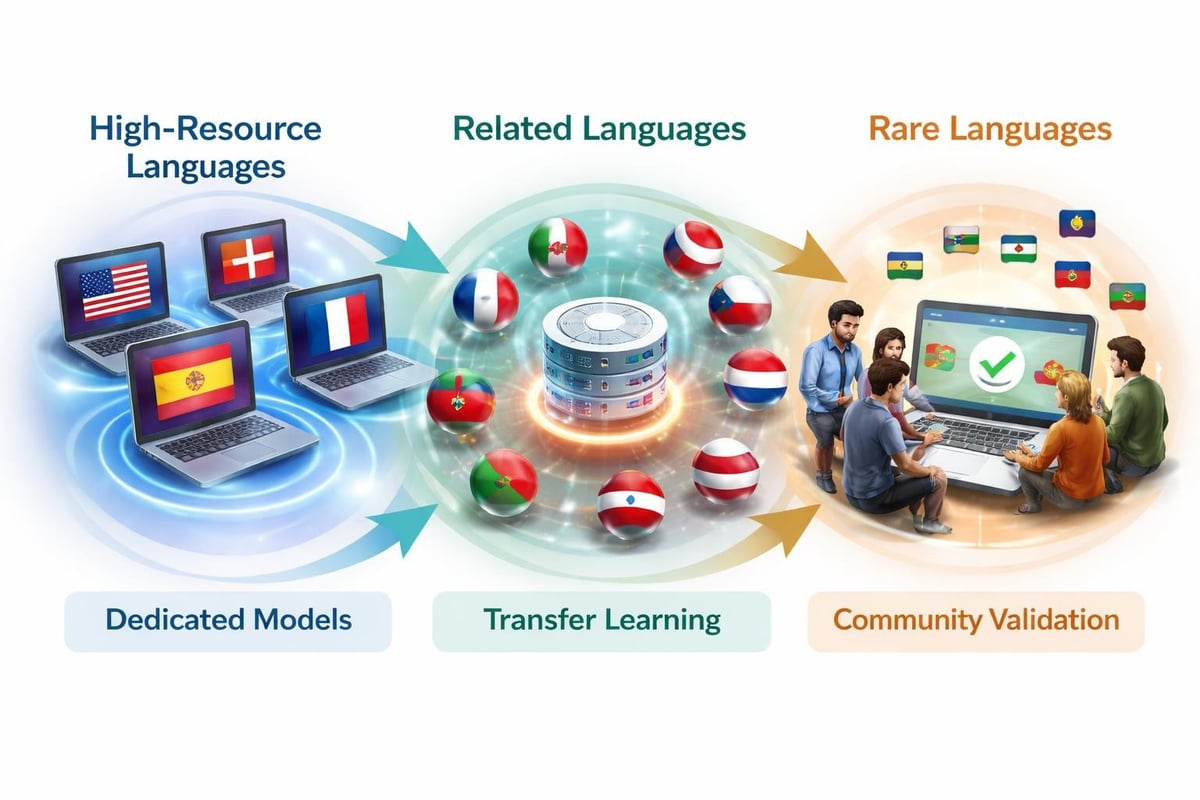
Achieving translation capabilities across 185+ languages requires diverse strategies. High-resource languages benefit from abundant training data and sophisticated models. Low-resource languages may rely on transfer learning, where models trained on related languages provide starting points.
Strategies for expanding language coverage include:
- Transfer learning from linguistically similar languages
- Community contribution programs for native speakers
- Synthetic data generation for rare languages
- Multilingual models that share learning across languages
- Partnerships with cultural organizations for validation
This comprehensive approach ensures that even speakers of indigenous or regional languages can communicate with emergency services in their native tongues.
Dialectal Variations and Regional Differences
Languages aren't monolithic. Spanish spoken in Puerto Rico differs from Mexican Spanish or Castilian Spanish. Translation engines must navigate these variations without confusing dialects with errors.
Advanced engines incorporate dialect detection and adaptation. When processing input, the system identifies not just the language but the specific regional variant, then adjusts its translation approach accordingly. This prevents misunderstandings where identical words carry different meanings across regions.
Performance Optimization for Critical Applications
Emergency services cannot tolerate slow or unreliable translation. Optimization focuses on multiple dimensions simultaneously: speed, accuracy, availability, and resource efficiency.
Latency Reduction Techniques
Several technical approaches minimize translation delay:
- Pre-computation: Common phrases get translated in advance and cached
- Incremental translation: Engines begin processing before complete input arrives
- Model compression: Smaller, faster models that maintain accuracy
- Edge deployment: Processing happens locally rather than in distant data centers
- Hardware acceleration: Specialized chips optimized for neural network operations
These optimizations reduce translation time from seconds to milliseconds, creating the real-time experience emergency operations demand.
Scaling for Surge Capacity
Natural disasters and major incidents create sudden spikes in emergency communication volume. Translation engines must scale elastically to handle hundred-fold increases in demand without degradation.
Cloud-based architectures with auto-scaling capabilities automatically provision additional computing resources when load increases. This ensures consistent performance whether handling five simultaneous translations or five hundred.
Integration with Broader Communication Platforms
Translation engines deliver maximum value when integrated within comprehensive translation language services platforms that address the full spectrum of emergency communication needs.
Complementary Technologies
Effective emergency communication platforms combine translation engines with:
- Location services that pinpoint caller position regardless of language barriers
- Multimedia sharing enabling photos and videos with embedded translation
- Recording and documentation preserving translated interactions for records
- Analytics dashboards tracking language usage patterns and system performance
- Interpreter integration seamlessly connecting human interpreters when needed
This ecosystem approach recognizes that translation engines, while powerful, function best as components within larger solutions. The application to translate languages becomes part of an integrated workflow rather than a standalone tool.
Training and User Experience
The most sophisticated translation engine delivers limited value if dispatchers don't trust or properly use it. User interface design and training programs ensure emergency personnel understand both capabilities and limitations.
Clear confidence indicators help dispatchers assess translation reliability. When encountering unfamiliar terminology or ambiguous phrasing, the system communicates uncertainty rather than presenting questionable translations as definitive. This transparency enables informed decision-making under pressure.
Privacy and Security Considerations
Emergency communications contain sensitive personal information. Translation engines must process this data securely while maintaining compliance with privacy regulations.
Data Protection Strategies
Security measures for translation engines in emergency services include:
- End-to-end encryption for all transmitted content
- Ephemeral processing that doesn't retain personal information
- Access controls restricting translation data to authorized personnel
- Audit trails documenting all translation activities
- Compliance with HIPAA, CJIS, and other relevant regulations
These protections ensure that translation capabilities don't create new vulnerabilities. The same advanced comprehensive overview of machine translation techniques that enable accurate translation must incorporate privacy-preserving architectures.
Regulatory Compliance
Different jurisdictions impose varying requirements on emergency communication systems. Translation engines must adapt to these regulatory landscapes, supporting required features like mandatory recording, data retention, or specific accuracy thresholds.
Compliance frameworks ensure that automated translation meets legal standards. This becomes particularly important when translated communications serve as evidence in legal proceedings or medical records. Documentation proving translation accuracy and methodology helps satisfy regulatory scrutiny.
Future Developments and Emerging Capabilities
Translation engine technology continues advancing rapidly. Several emerging capabilities promise to further enhance emergency communication effectiveness.
Contextual Intelligence
Next-generation translation engines will better understand context beyond individual messages. By analyzing conversation history, caller location, time of day, and current incidents, these systems will provide increasingly nuanced translations.
For example, if multiple callers from the same neighborhood report similar issues in different languages, the translation engine could recognize the pattern and suggest it to dispatchers, even when individual translations don't explicitly connect the incidents.
Emotional Intelligence and Tone Detection
Advanced natural language processing enables translation engines to recognize emotional states and urgency levels. A panicked caller's tone and word choices signal distress that goes beyond literal translation. Future systems will preserve and communicate this emotional context, helping dispatchers appropriately prioritize and respond.
These sophisticated capabilities transform translation engines from simple word converters into communication facilitators that preserve the full meaning and urgency of emergency calls.
Translation engines have evolved from experimental technology into mission-critical infrastructure for emergency services. Their ability to process multiple languages in real-time enables public safety agencies to serve increasingly diverse communities effectively. As these systems continue improving through neural networks, adaptive learning, and specialized training, they'll play ever-larger roles in saving lives across language barriers. Convey911 delivers purpose-built emergency communication solutions with translation capabilities spanning 185+ languages, ensuring that every community member can access help when they need it most, regardless of the language they speak.