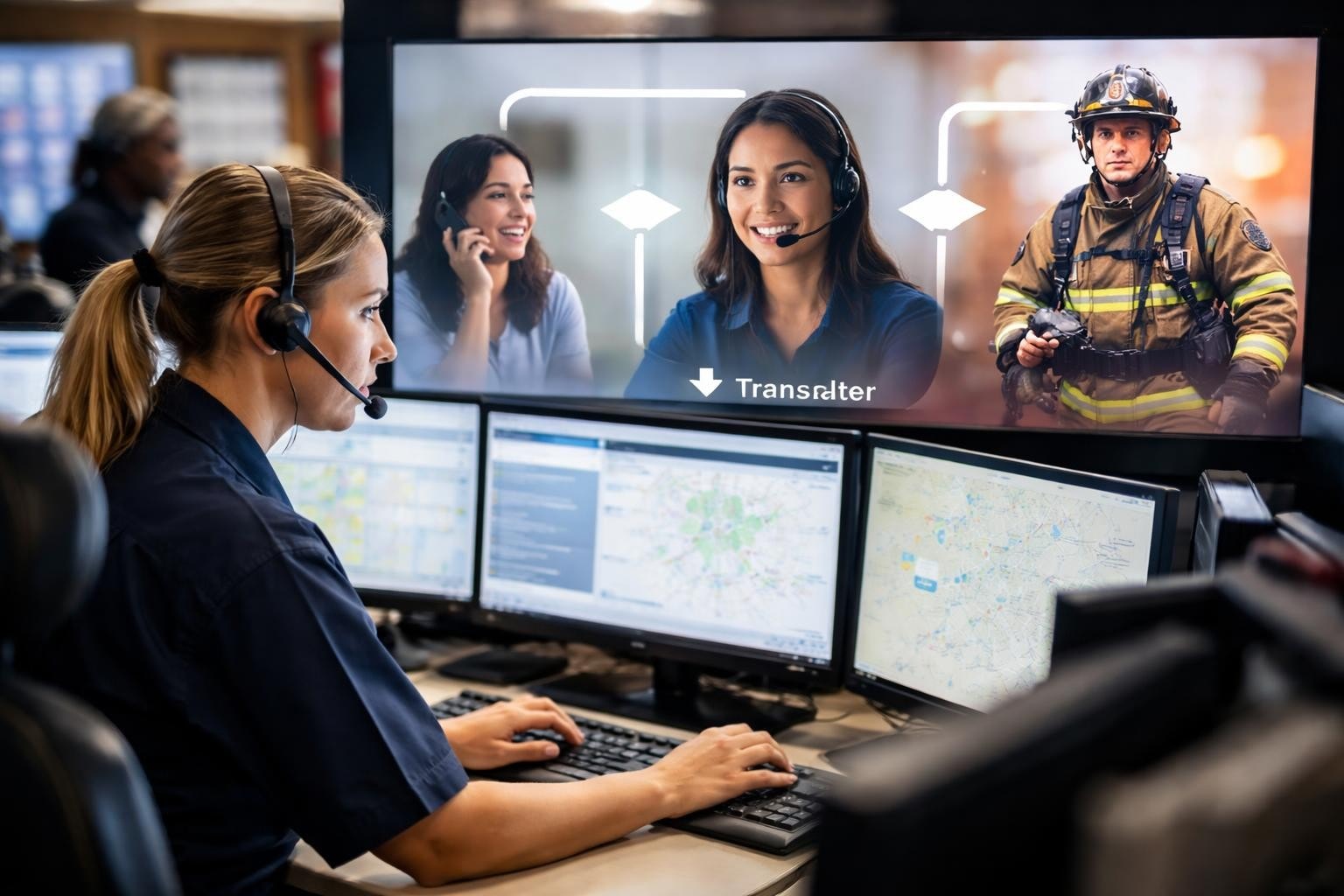

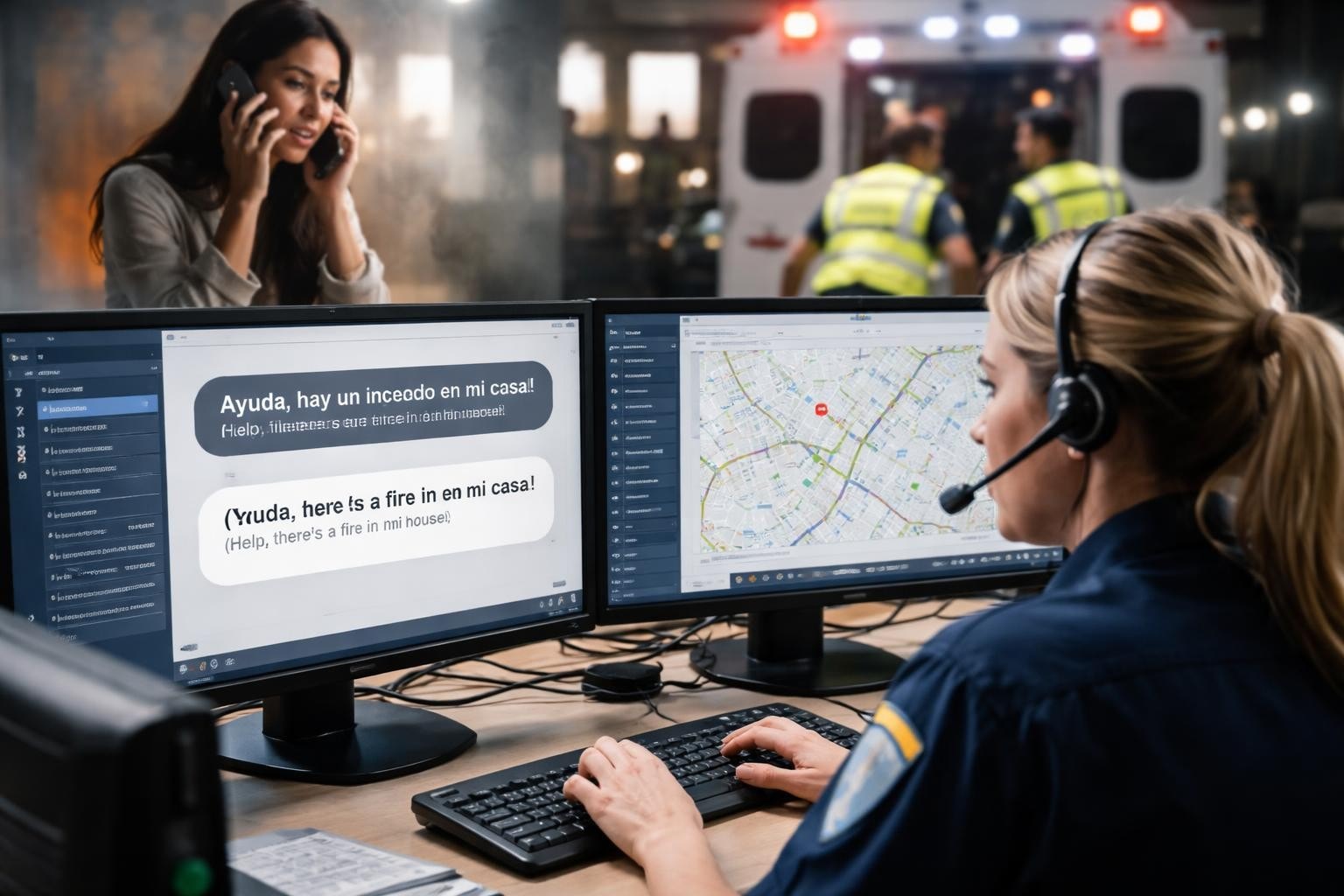
In emergency situations, every second counts. When language barriers exist between callers and...
Emergency situations demand immediate, accurate communication across language barriers. When seconds count and lives hang in the balance, audio video translation becomes a critical technology that bridges communication gaps between first responders and diverse communities. Public safety agencies now face increasing linguistic diversity, requiring sophisticated translation solutions that work seamlessly across multiple communication channels. Modern emergency response systems must integrate real-time translation capabilities that support voice calls, video interactions, and text-based communications while maintaining the speed and accuracy essential for effective crisis management.
Understanding Audio Video Translation in Emergency Contexts
Audio video translation combines multiple communication modalities to create comprehensive language solutions. This technology processes spoken language, visual cues, and contextual information simultaneously to deliver accurate translations in real-time scenarios.
For emergency services, audio video translation extends beyond simple word-for-word conversion. The technology must interpret urgent tone, recognize emergency-specific terminology, and maintain context across complex multi-party interactions. Public safety agencies require translation systems that understand the nuances of crisis communication, including regional dialects, technical terminology, and culturally specific emergency protocols.
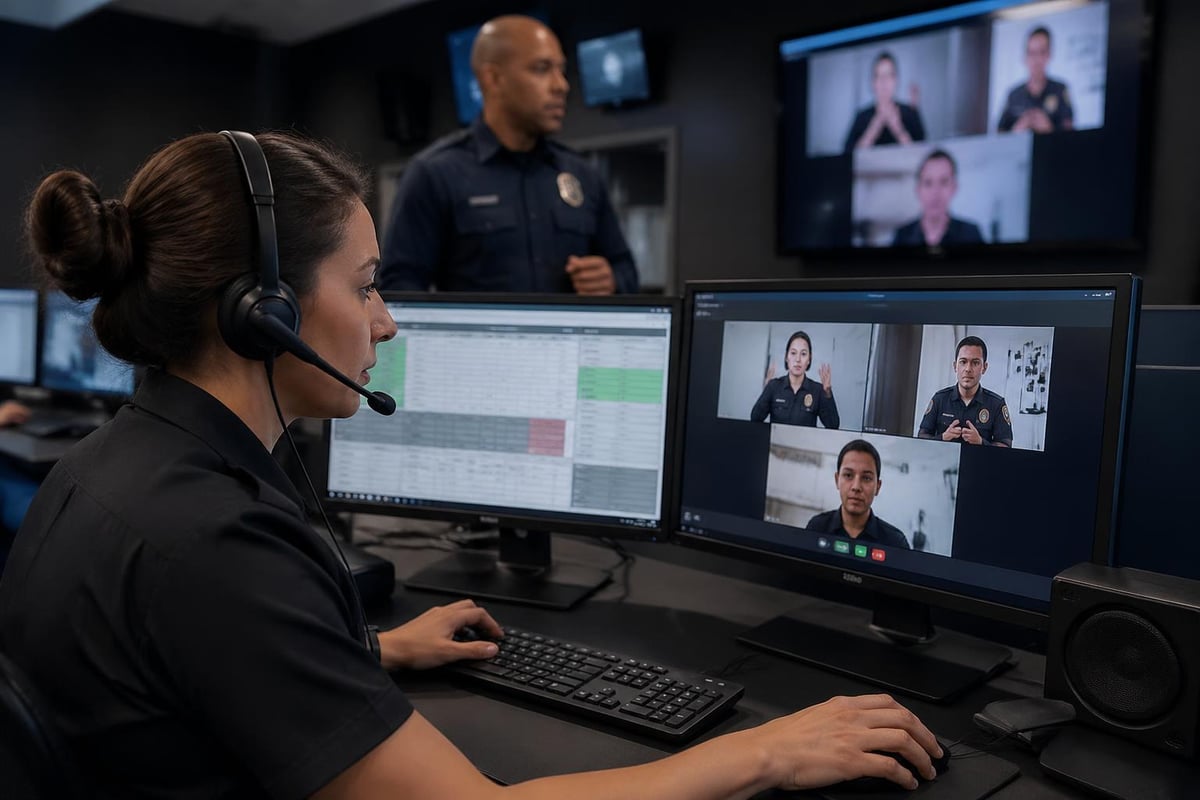
The integration of video elements enhances translation accuracy significantly. Visual information provides context that audio alone cannot capture, enabling translation systems to interpret gestures, environmental cues, and non-verbal communication patterns. This multimodal approach proves especially valuable when working with sign language video translator capabilities or assisting individuals with hearing impairments during emergencies.
Key Components of Effective Translation Systems
Modern audio video translation platforms rely on several interconnected technologies:
- Speech recognition engines that accurately capture spoken language in challenging acoustic environments
- Natural language processing systems that understand context and intent
- Video processing capabilities that analyze visual information alongside audio streams
- Real-time rendering technology that delivers translations with minimal latency
- Quality assurance mechanisms that verify translation accuracy before delivery
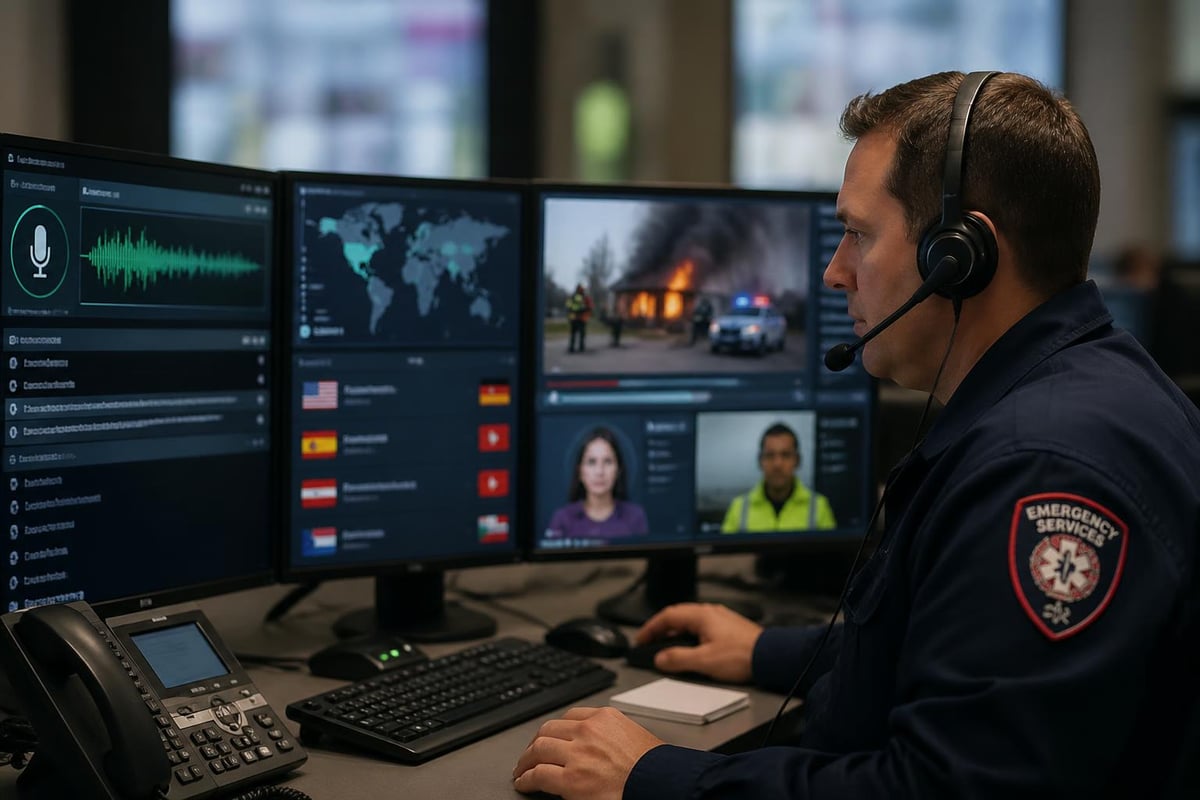
Emergency communication scenarios present unique challenges that standard consumer translation tools cannot address. Background noise from sirens, multiple speakers talking simultaneously, and emotional distress all impact translation quality. Advanced systems designed for public safety environments incorporate noise cancellation, speaker separation, and stress detection to maintain accuracy under pressure.
Best Practices for Emergency Audio Video Translation
Implementing effective audio video translation requires careful attention to technical specifications, operational protocols, and quality standards. Emergency services must establish clear guidelines that ensure consistent performance across all communication channels.
Technical Setup and Environment Optimization
The foundation of quality translation begins with proper technical infrastructure. Following best practices for audio translation quality ensures clear source material that translation engines can process accurately.
Critical technical considerations include:
| Component | Requirement | Emergency Impact |
|---|---|---|
| Microphone Quality | Professional-grade, noise-canceling | Reduces background interference during crisis calls |
| Network Bandwidth | Minimum 5 Mbps upload/download | Ensures uninterrupted video translation streams |
| Video Resolution | 720p minimum, 1080p preferred | Enables clear visual context for accurate interpretation |
| Latency Tolerance | Under 2 seconds end-to-end | Maintains conversation flow during emergencies |
Emergency dispatch centers should invest in dedicated recording environments that minimize ambient noise. However, mobile response units and field operations require robust systems capable of functioning in unpredictable acoustic conditions. Modern video voice translation solutions must adapt to varying environmental factors while maintaining translation accuracy.
Content and Context Management
Translation quality depends heavily on contextual understanding. Emergency communications contain specialized vocabulary, procedural language, and location-specific references that generic translation tools struggle to process accurately.
Building comprehensive terminology databases proves essential for consistent emergency translation. These databases should include:
- Medical terminology in all supported languages with standardized translations
- Law enforcement protocols and common emergency response procedures
- Geographic identifiers including street names, landmarks, and facility designations
- Equipment names and technical specifications used by first responders
- Cultural considerations that affect communication styles and emergency protocols
The field of translation continues evolving, with emergency-specific applications demanding specialized expertise beyond general language services. Public safety agencies benefit from working with translation language services that understand the unique requirements of crisis communication.
Cultural Adaptation and Localization
Effective audio video translation extends beyond linguistic accuracy to cultural appropriateness. Emergency situations amplify cultural sensitivities, making culturally competent translation essential for building trust and obtaining critical information.
Understanding best practices for translating audio and video content helps agencies develop culturally relevant communication strategies. Different communities may have varying comfort levels with authority figures, unique ways of describing medical symptoms, or cultural taboos that affect emergency reporting.
Cultural considerations for emergency translation:
- Formal versus informal address conventions in different languages
- Gender-specific communication preferences in certain cultures
- Religious or cultural factors affecting medical treatment acceptance
- Community-specific emergency response expectations
- Historical relationships between specific populations and law enforcement
Training call takers and first responders on cultural context enhances the effectiveness of audio video translation technology. Technology provides the bridge, but human understanding creates connection. Agencies implementing emergency communication system upgrades should include cultural competency training alongside technical implementation.

Implementation Strategies for Public Safety Agencies
Deploying audio video translation across emergency response operations requires systematic planning, phased implementation, and continuous quality monitoring. Successful integration balances technological capabilities with operational realities.
Assessment and Planning Phase
Before implementing audio video translation, agencies should conduct comprehensive needs assessments. This evaluation identifies language demographics, communication volume patterns, and existing language access gaps.
Planning considerations include:
- Analyzing emergency call data to determine most frequently encountered languages
- Mapping geographic distribution of non-English speaking populations
- Evaluating current language access methods and their limitations
- Assessing technical infrastructure readiness for new systems
- Calculating total cost of ownership including training and maintenance
Public safety agencies must also consider regulatory requirements. Many jurisdictions mandate language access services for emergency communications, with specific standards for response time and translation accuracy. Compliance planning should address these requirements while identifying opportunities to exceed minimum standards.
Integration with Existing Systems
Audio video translation platforms must integrate seamlessly with existing emergency communication infrastructure. Modern solutions connect with computer-aided dispatch systems, radio networks, and mobile applications used by field personnel.
| Integration Point | Translation Capability | Operational Benefit |
|---|---|---|
| 911 Call Systems | Real-time voice translation | Immediate understanding of emergency nature |
| Video Calls | Combined audio-visual translation | Enhanced context through visual information |
| Text Messaging | Bidirectional text translation | Written record of translated communications |
| Mobile Apps | On-demand translation access | Field responder language support |
| Radio Systems | Voice translation for radio traffic | Multilingual coordination during incidents |
Understanding how two-way translation functions within emergency contexts helps agencies select appropriate technology. Bidirectional communication proves essential when callers and responders need to exchange detailed information quickly.
The application to translate languages within emergency frameworks requires specialized features beyond consumer applications. Emergency-grade systems must provide guaranteed availability, secure communications, and audit trails for quality assurance and legal documentation.
Training and Quality Assurance
Successful audio video translation implementation depends on comprehensive user training. Call takers, dispatchers, and first responders need clear protocols for accessing translation services and understanding system capabilities and limitations.
Essential training components:
- System activation procedures for initiating translation services during emergencies
- Quality indicators that help users assess translation accuracy
- Escalation protocols when translation quality concerns arise
- Documentation requirements for translated communications
- Backup procedures when primary translation systems experience issues
Quality assurance programs should monitor translation accuracy, system performance, and user satisfaction continuously. Regular audits comparing original audio video content against translations identify areas requiring improvement. Agencies can leverage insights from best practices for achieving high transcription accuracy to enhance their quality monitoring processes.
Advanced Features and Future Developments
Audio video translation technology continues advancing rapidly, with emerging capabilities offering enhanced functionality for emergency services. Understanding these developments helps agencies plan for long-term technology investments.
Artificial Intelligence and Machine Learning
Modern translation systems increasingly incorporate artificial intelligence to improve accuracy and reduce latency. Machine learning algorithms analyze vast datasets of emergency communications, identifying patterns that enhance translation quality over time.
AI-powered systems offer several advantages for emergency translation:
- Contextual awareness that improves accuracy based on emergency type and situation
- Continuous learning from corrected translations and user feedback
- Predictive text that accelerates translation of common emergency phrases
- Sentiment analysis that identifies caller distress levels across languages
- Speaker identification that distinguishes between multiple parties in complex situations
Research developments like MuAViC, a multilingual audio-visual corpus, demonstrate ongoing advancement in cross-language communication technology. These innovations eventually flow into commercial emergency communication platforms, expanding capabilities available to public safety agencies.
Multi-Channel Integration
Modern emergency response increasingly operates across diverse communication channels simultaneously. Audio video translation must function consistently whether callers use traditional phone lines, mobile video calls, text messaging, or social media platforms.
Multi-channel translation capabilities include:
- Seamless language continuity across channel transitions
- Unified translation history accessible to all responders
- Platform-appropriate formatting for different media types
- Consistent terminology across all communication methods
- Cross-channel quality assurance and monitoring
Agencies implementing comprehensive real-time translation strategies benefit from unified platforms that manage all communication channels through single interfaces. This integration reduces training complexity while ensuring consistent service quality.
Accessibility and Inclusion Features
Audio video translation serves broader accessibility goals beyond language services. Modern systems incorporate features supporting individuals with disabilities, creating more inclusive emergency communication ecosystems.
Advanced platforms combine multiple accessibility technologies:
| Feature | Supported Population | Emergency Application |
|---|---|---|
| Sign Language Recognition | Deaf and hard-of-hearing | Video call interpretation |
| Text-to-Speech | Visually impaired | Converting written translations to audio |
| Speech-to-Text | Hearing impaired | Real-time captioning of voice communications |
| Simplified Language Modes | Cognitive disabilities | Clear, direct translation output |
| Visual Enhancement | Low vision | High-contrast, large-text display options |
Integrating these accessibility features with audio video translation creates comprehensive communication solutions that serve entire communities. Public safety agencies committed to equitable service delivery benefit from platforms designed with universal accessibility principles.
Measuring Success and Return on Investment
Implementing audio video translation represents significant investment for public safety agencies. Measuring outcomes helps justify expenditures and identify opportunities for optimization.
Key Performance Indicators
Effective measurement requires tracking multiple success metrics across operational and community impact dimensions:
- Translation accuracy rates measured through quality audits and user feedback
- Response time improvements for non-English emergency calls
- Community satisfaction scores from multilingual populations
- Call resolution rates comparing translated versus non-translated interactions
- Cost per translated interaction tracking operational efficiency
Agencies should establish baseline measurements before implementation, enabling accurate assessment of improvement. Comparing pre-implementation language access metrics against post-implementation performance quantifies translation system value.
Community Impact Assessment
Beyond operational metrics, successful audio video translation creates measurable community benefits. These outcomes include increased emergency service utilization by non-English speakers, improved health outcomes in multilingual communities, and enhanced trust between diverse populations and public safety agencies.
Community impact indicators:
- Emergency call volume from non-English speaking populations
- Response time equity across language groups
- Community survey results regarding language access satisfaction
- Incident outcome comparisons between language groups
- Public safety engagement in multilingual community events
Documenting these broader impacts helps agencies communicate translation program value to stakeholders and secure ongoing funding. The return on investment extends beyond immediate operational efficiency to long-term community health and safety improvements.
Continuous Improvement Processes
Audio video translation quality requires ongoing attention and refinement. Successful agencies establish continuous improvement cycles that regularly assess performance, identify gaps, and implement enhancements.
Regular review processes should examine:
- Translation accuracy trends across different languages and emergency types
- System performance under various load conditions
- User adoption rates and satisfaction levels
- Technical reliability and uptime statistics
- Cost efficiency and resource utilization
These assessments inform technology upgrades, training enhancements, and process modifications that keep translation systems performing optimally. Agencies committed to excellence in multilingual emergency communication treat audio video translation as evolving capabilities requiring sustained investment and attention.
Understanding video localization best practices provides additional insights for agencies seeking to optimize their emergency translation programs. While emergency communications differ from marketing localization, underlying principles of cultural adaptation and quality assurance apply across contexts.
Audio video translation transforms emergency communication by enabling first responders to serve diverse communities effectively regardless of language barriers. Quality implementation requires careful attention to technical infrastructure, operational protocols, and continuous improvement processes that maintain accuracy and reliability. Public safety agencies seeking to bridge language gaps and enhance emergency response effectiveness can benefit from comprehensive translation platforms designed specifically for crisis communication. Convey911 provides emergency communication and language translation software supporting over 185 languages across text, video, and voice channels, enabling agencies to communicate effectively with any caller during critical moments when clear understanding saves lives.