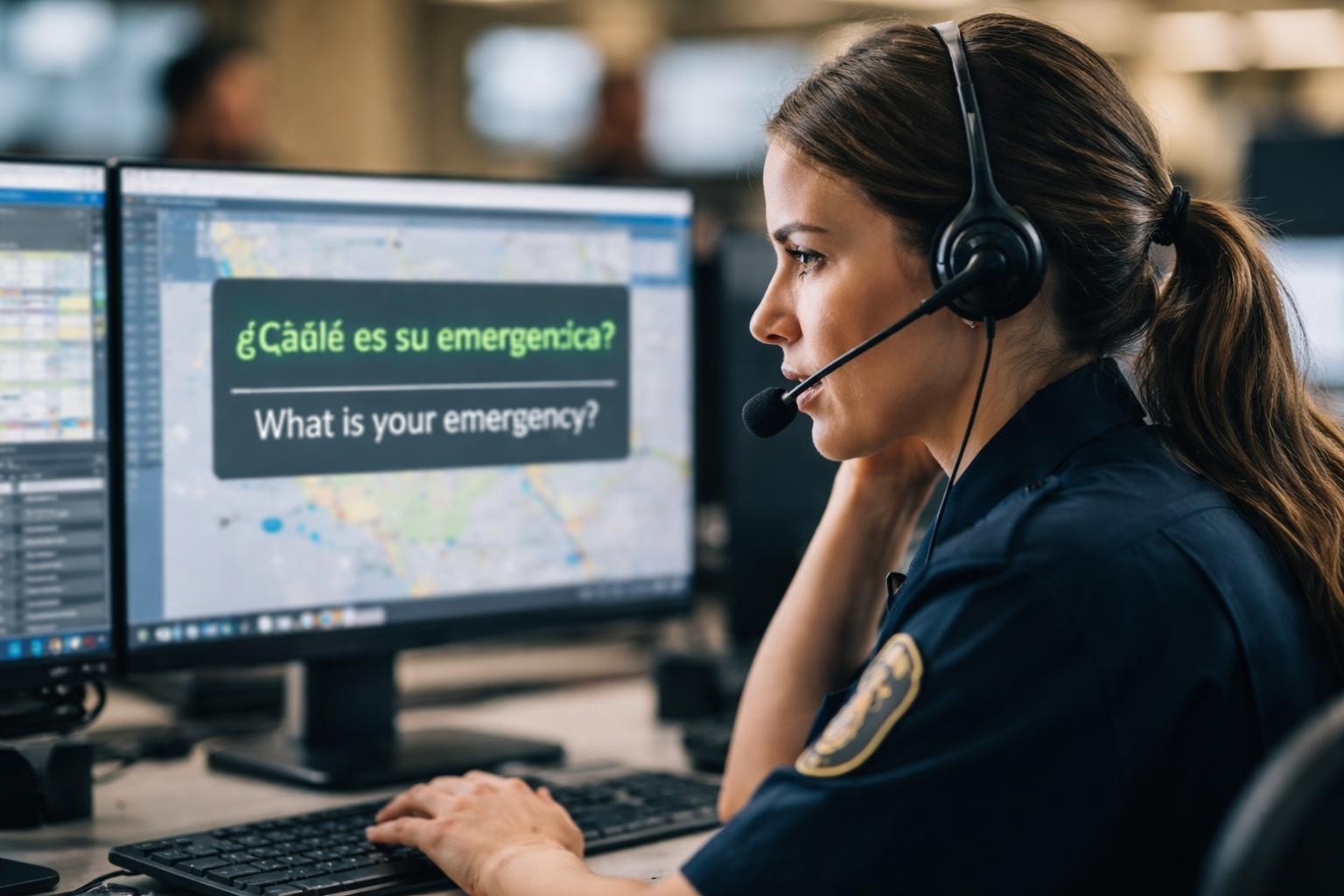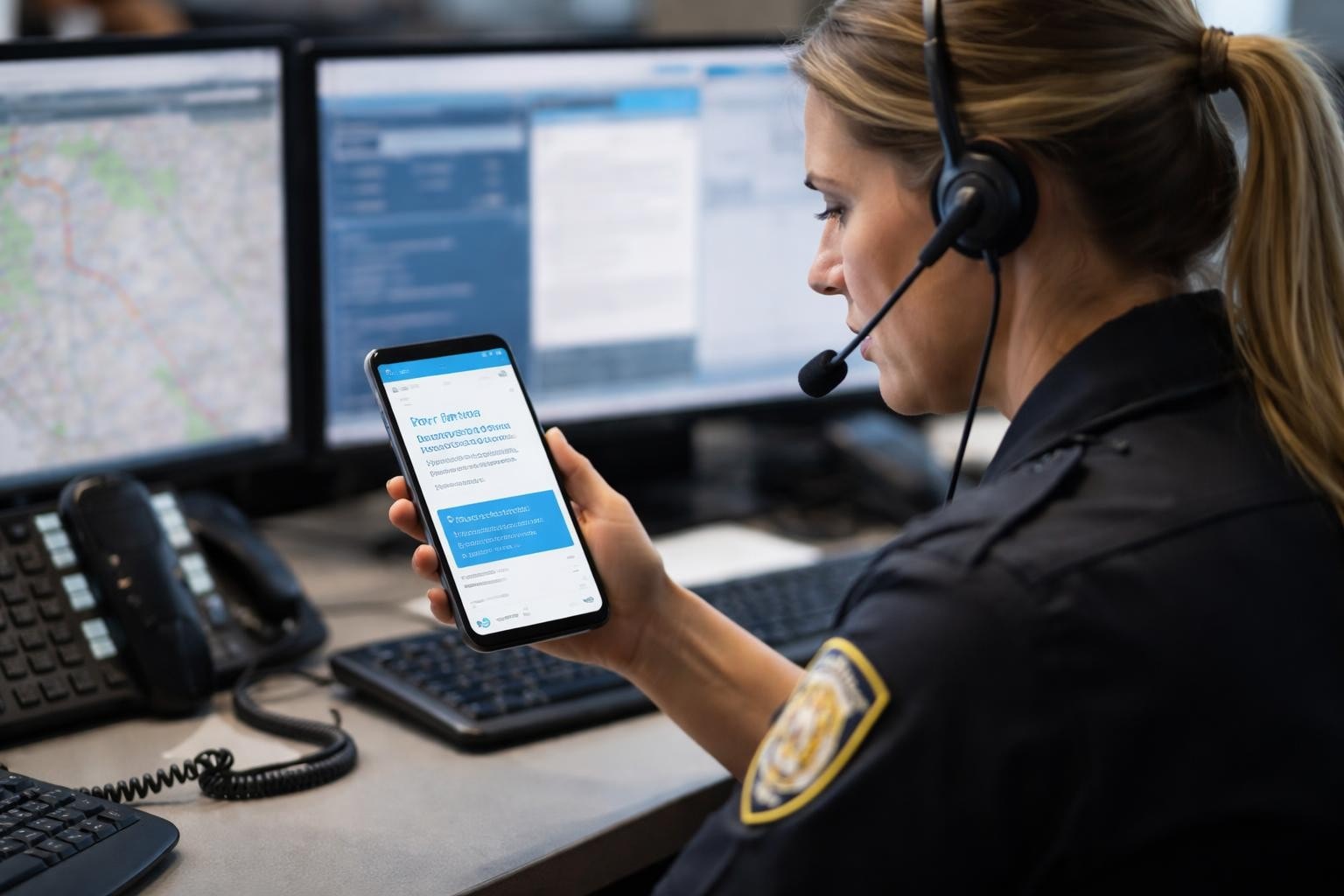

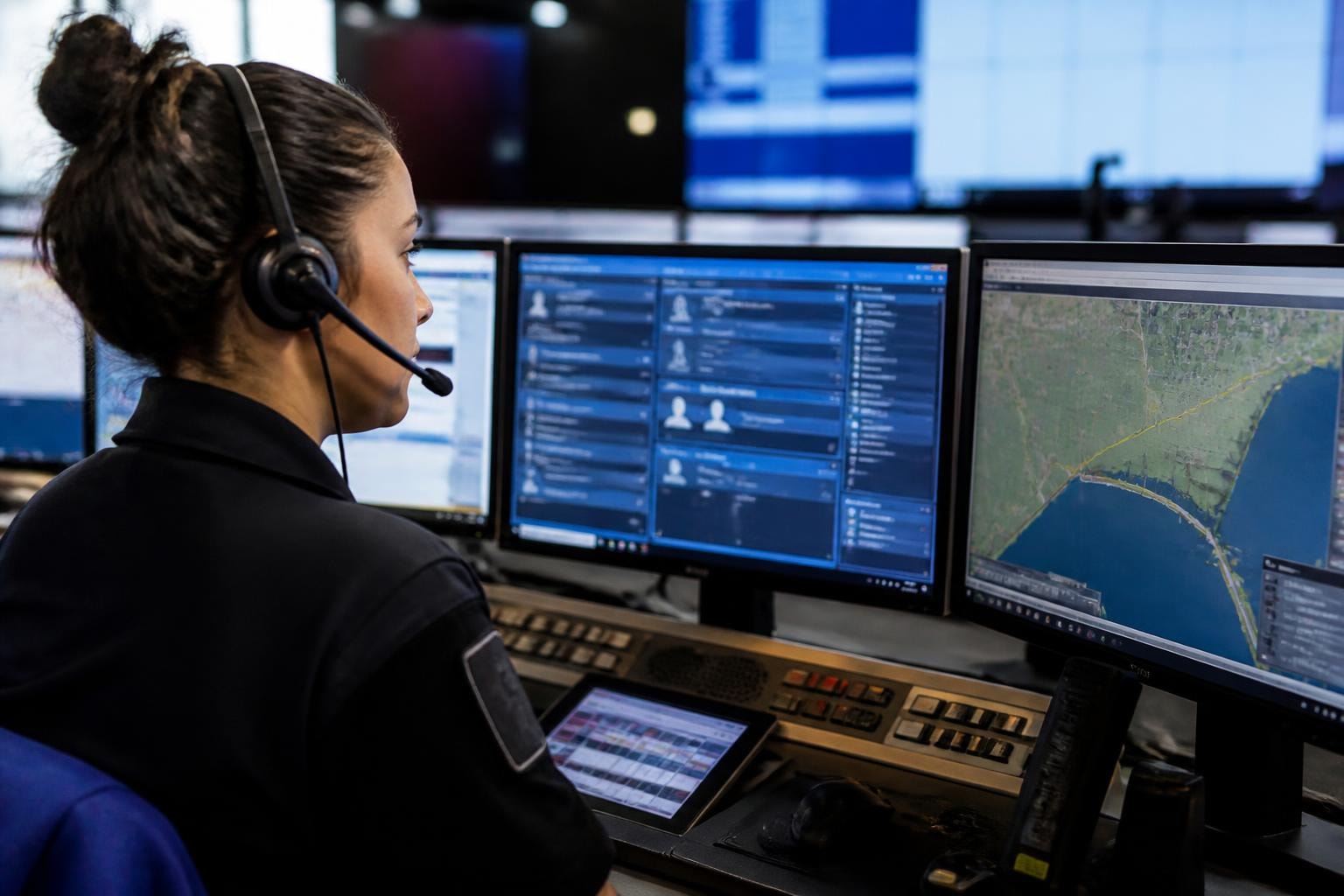
When seconds matter in emergency situations, language barriers cannot become life-threatening...
When emergencies strike, every second counts. For public safety agencies serving diverse communities, language barriers can mean the difference between life and death. Real time translation technology has emerged as a critical tool that enables first responders, 911 operators, and emergency personnel to communicate instantly with individuals who speak different languages. This technology breaks down communication barriers during the most critical moments, ensuring that help reaches everyone regardless of their primary language.
The Technology Behind Real Time Translation Systems
Real time translation operates through sophisticated combinations of artificial intelligence, machine learning, and natural language processing. Modern systems leverage automatic speech recognition and neural machine translation to achieve near-instantaneous communication across language barriers.
The process begins when someone speaks into the system. Speech recognition software converts the audio into text in the source language. Neural machine translation engines then process this text, applying contextual understanding and linguistic rules to generate accurate translations. Finally, text-to-speech technology converts the translated text back into audio for the recipient.
Key components that make real time translation possible include:
- Advanced speech recognition algorithms trained on diverse accents and dialects
- Neural networks that understand context and cultural nuances
- Low-latency processing infrastructure
- Continuous learning systems that improve accuracy over time
- Multi-modal support across text, voice, and video channels
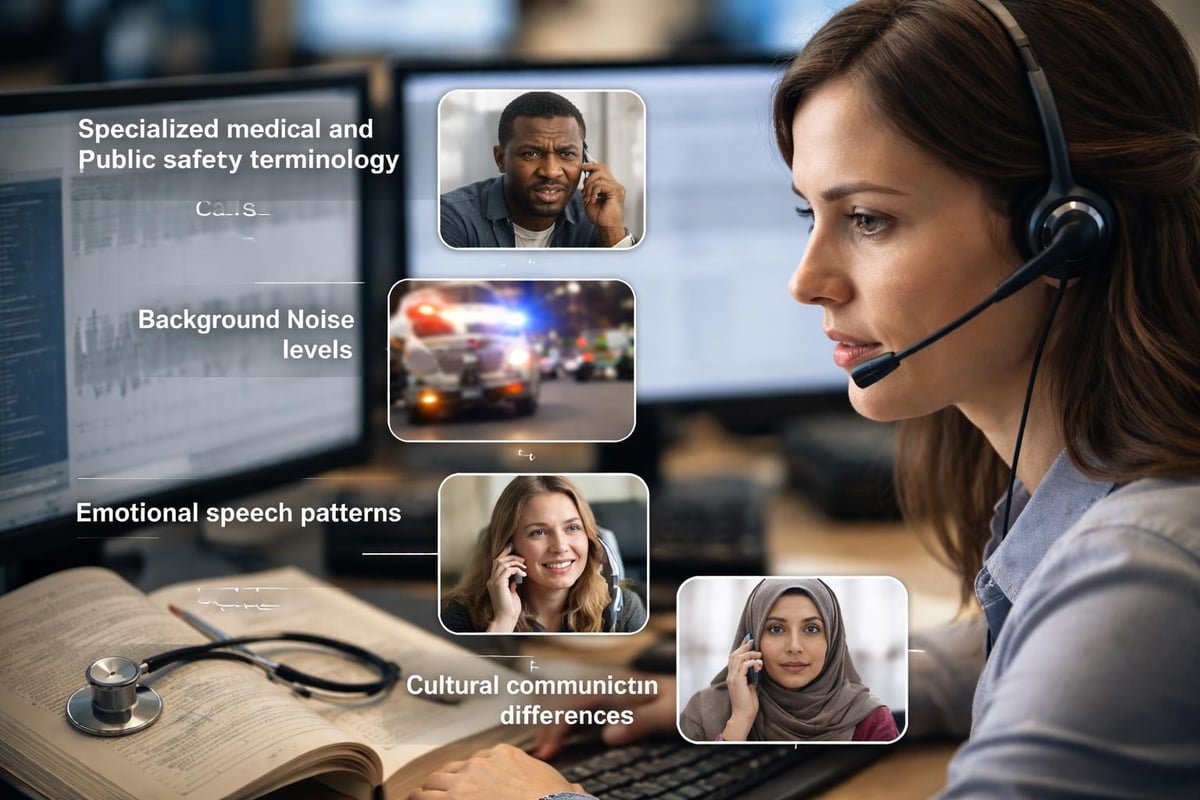
Emergency communication platforms require additional capabilities beyond consumer translation apps. They must handle stressed voices, background noise, technical terminology, and the urgency inherent in crisis situations.
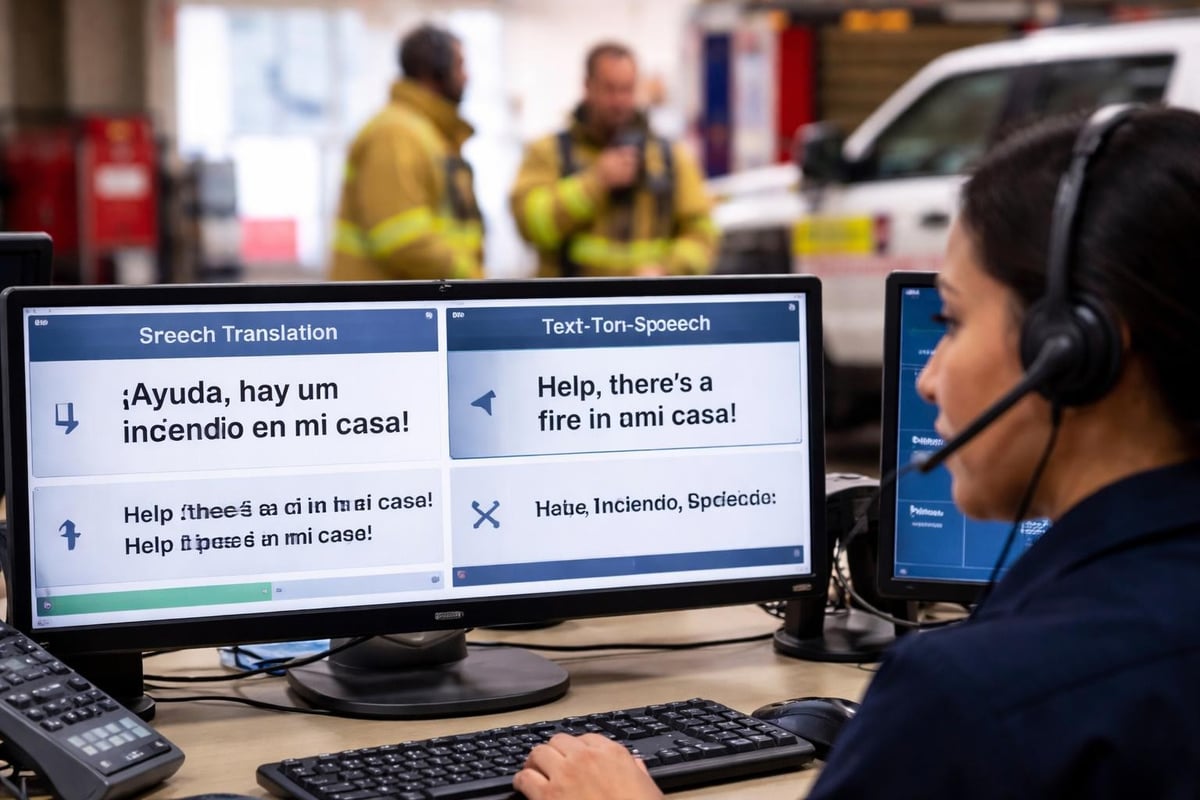
Applications in Public Safety and Emergency Response
The implementation of real time translation in emergency services has transformed how agencies serve multilingual communities. 911 call centers represent the frontline application where instant language support saves lives daily.
Call Center Operations
Telecommunicators face unique challenges when non-English speakers contact emergency services. Traditional approaches relied on over-the-phone interpretation services that introduced delays during critical moments. Real time translation eliminates these delays by providing immediate, bidirectional communication.
Modern emergency communication systems integrate translation capabilities directly into call-taking workflows. Operators can identify the caller's language and activate translation services without transferring the call or placing anyone on hold.
Field Response Integration
First responders arriving at emergency scenes frequently encounter individuals who don't speak English. Mobile translation applications enable paramedics, firefighters, and police officers to gather vital information immediately.
| Scenario | Traditional Approach | Real Time Translation Approach |
|---|---|---|
| Medical Emergency | Wait for interpreter, rely on gestures | Immediate symptom communication |
| Fire Evacuation | Limited instruction delivery | Clear, translated evacuation orders |
| Crime Reporting | Delayed witness statements | Instant witness interviews |
The speed advantage becomes particularly crucial when gathering time-sensitive information about medical conditions, suspect descriptions, or ongoing threats.
Mass Notification Systems
During large-scale emergencies, public safety agencies must communicate with entire communities quickly. Real time translation enables simultaneous message delivery across multiple languages, ensuring that non-English speaking residents receive critical warnings and instructions without delay.
Accuracy and Reliability Challenges
While real time translation technology has advanced significantly, common problems with real-time translation apps still affect emergency communication contexts. Understanding these limitations helps agencies implement effective solutions.
Terminology and Context Issues
Emergency situations involve specialized vocabulary that differs from everyday conversation. Medical terms, law enforcement codes, and technical fire service language require precise translation. Standard consumer translation tools often struggle with this specialized terminology.
Factors affecting translation accuracy:
- Regional dialects and accents within the same language
- Background noise from sirens, crowds, or environmental conditions
- Emotional states that affect speech patterns and clarity
- Cultural differences in how emergencies are described
- Homophones and words with multiple meanings
Agencies implementing translation tools must prioritize systems specifically trained on emergency communication vocabulary and scenarios.
Latency Considerations
True real time translation aims for zero perceptible delay between speaking and hearing the translation. However, research on real-time speech-to-text AI translation reveals gaps between laboratory performance and real-world effectiveness.
In emergency contexts, even delays of two to three seconds can disrupt natural conversation flow and increase stress levels. The most effective platforms achieve sub-second latency through optimized processing pipelines and edge computing architectures.
Implementation Strategies for Emergency Agencies
Successful deployment of real time translation technology requires careful planning and integration with existing emergency communication infrastructure. Agencies should approach implementation systematically to maximize effectiveness and adoption.
Assessment and Planning
Before selecting a translation platform, agencies must evaluate their specific needs based on community demographics and call volume patterns. Understanding which languages appear most frequently in emergency calls helps prioritize translation resources.
Effective translation in communication starts with data-driven decisions about language support requirements. Agencies should analyze historical call data to identify:
- Primary non-English languages spoken in their service area
- Peak times when multilingual support is most needed
- Specific call types that frequently involve language barriers
- Current costs associated with interpretation services
- Response time impacts from existing language support methods
This analysis provides the foundation for vendor evaluation and system configuration.
Technology Selection Criteria
Not all real time translation platforms meet the stringent requirements of emergency services. Agencies should evaluate potential solutions against specific public safety criteria.
| Evaluation Factor | Why It Matters | Key Questions |
|---|---|---|
| Language Coverage | Must support community languages | Does it include all needed languages and dialects? |
| Integration Capability | Seamless workflow integration | Can it connect with existing CAD and phone systems? |
| Reliability | System uptime during emergencies | What are guaranteed uptime and failover capabilities? |
| Compliance | Legal and regulatory requirements | Does it meet privacy, security, and accessibility standards? |
| Training Support | User adoption success | What training resources and ongoing support are available? |
The ideal platform combines comprehensive language support with robust technical infrastructure and emergency-specific features. Solutions like voice and text translator capabilities ensure multi-channel communication options.
Training and Adoption
Technology alone doesn't solve communication challenges. Emergency personnel must understand how to effectively use translation tools under pressure. Training programs should cover both technical operation and best practices for communicating through translation.
Essential training components include:
- System activation and language selection procedures
- Speaking techniques that optimize translation accuracy
- Managing conversations with translation delays
- Verifying understanding and confirming critical information
- Fallback procedures when technology encounters difficulties
Regular practice scenarios help personnel develop confidence using translation technology before facing real emergencies. Simulation exercises that incorporate language barriers prepare teams for actual multilingual incidents.
Quality Assurance and Continuous Improvement
Implementing real time translation isn't a one-time project but an ongoing process requiring monitoring and refinement. Agencies must establish quality assurance protocols to ensure translation accuracy and identify improvement opportunities.
Performance Monitoring
Tracking key metrics helps agencies understand how well their translation systems perform and where enhancements are needed. Important metrics include:
- Translation accuracy rates across different languages
- Average latency between speech and translated output
- System availability and uptime statistics
- User satisfaction ratings from both operators and callers
- Incident outcomes when translation was utilized
According to current research on what works and what doesn't, ongoing evaluation helps organizations optimize their translation implementations for specific use cases.
Feedback Mechanisms
Establishing channels for operator feedback ensures that front-line users can report issues and suggest improvements. Call reviews that involved translation provide valuable insights into system performance under actual emergency conditions.
Regular review sessions where telecommunicators discuss translation experiences help identify patterns in accuracy issues, challenging scenarios, and training needs. This feedback loop drives continuous enhancement of both technology and protocols.

Integration with Multi-Channel Communication
Modern emergency communication extends beyond traditional phone calls. Real time translation must function across text messaging, video calls, and digital platforms to support comprehensive accessibility.
Text-Based Translation
Text messaging has become an increasingly important emergency communication channel. Many 911 centers now accept text messages, which particularly benefit individuals who are deaf, hard of hearing, or in situations where speaking isn't safe.
Two-way translation in text format enables rapid, written communication across languages. The asynchronous nature of text can actually improve translation accuracy by allowing systems additional processing time without creating awkward conversation pauses.
Text translation offers several advantages in emergency contexts:
- Permanent record of communication for documentation
- Ability to review and verify critical information
- Reduced impact from background noise
- Support for individuals with speech difficulties
- Easier handling of complex information like addresses
Video Translation Services
Video communication adds visual context that enhances understanding during emergencies. For deaf and hard-of-hearing individuals who use sign language, video interpreter services provide essential accessibility.
Real time translation for video calls combines spoken language translation with the ability to see facial expressions, gestures, and environmental context. This multi-sensory communication often resolves ambiguities that audio-only translation might miss.
Unified Platform Approaches
The most effective emergency translation solutions integrate all communication channels into unified platforms. This approach ensures consistent translation quality whether someone contacts 911 by phone, text, or video.
Unified platforms also maintain conversation continuity when communication channels change. If a text conversation needs to escalate to a voice call, the translation system preserves context and language settings without requiring re-initialization.
Privacy, Security, and Compliance Considerations
Emergency communication involves sensitive personal information that requires stringent protection. Real time translation systems must meet the same privacy and security standards as other emergency communication technologies.
Data Protection Requirements
Translation platforms process spoken and written content that may include protected health information, personal identifying details, and sensitive incident information. Agencies must ensure their translation vendors comply with relevant regulations including HIPAA, CJIS, and state-specific privacy laws.
Critical security considerations include:
- End-to-end encryption for all transmitted content
- Secure storage of translated conversations for record-keeping
- Access controls limiting who can review translated communications
- Vendor security certifications and regular audits
- Clear data retention and deletion policies
Understanding how effective real-time AI translation truly is requires examining not just speed and accuracy, but also security architecture and compliance capabilities.
Regulatory Compliance
Public safety agencies operate under various federal and state regulations governing emergency communications. Translation systems must support compliance with these requirements while maintaining operational effectiveness.
Translation platforms should provide audit trails showing when translation services were used, which languages were involved, and how long interactions lasted. This documentation supports quality assurance reviews and regulatory reporting obligations.
Future Developments in Emergency Translation Technology
The field of real time translation continues advancing rapidly. Emerging technologies promise even greater accuracy, lower latency, and broader language support for emergency applications.
Artificial Intelligence Enhancements
Next-generation translation systems leverage increasingly sophisticated AI interpreting capabilities that better understand context, emotion, and urgency. Machine learning models trained specifically on emergency communications data deliver superior performance compared to general-purpose translation tools.
Advanced AI systems can:
- Detect stress or panic in voices and adjust processing priorities
- Recognize emergency-specific terminology across languages
- Learn from corrections and improve accuracy over time
- Handle code-switching when speakers mix multiple languages
- Adapt to individual speech patterns and accents
Edge Computing and On-Device Processing
Moving translation processing from cloud servers to local devices reduces latency and enhances privacy. Recent developments like on-device real-time AI translation demonstrate the feasibility of this approach for mobile emergency response.
Edge computing architectures also improve reliability by reducing dependency on internet connectivity. First responders in areas with limited network coverage can still access translation capabilities through local processing.
Multimodal Understanding
Future translation systems will integrate multiple input types simultaneously, combining audio, text, images, and video to develop richer understanding of emergency situations. This multimodal approach can resolve ambiguities and improve accuracy in complex scenarios.
For example, a system might combine a caller's spoken description with photos they share via text message, using visual context to enhance translation accuracy and provide responders with comprehensive situation awareness.
Best Practices for Communicating Through Translation
Even the most advanced translation technology requires human skill to maximize effectiveness. Emergency personnel should follow proven practices when communicating across language barriers.
Speaking Techniques
How people speak significantly impacts translation quality. Clear, deliberate speech produces better results than rapid or mumbled words.
Effective speaking practices include:
- Speak at a moderate pace with natural pauses
- Use complete sentences rather than fragments
- Avoid idioms, slang, and culturally-specific references
- Pronounce words clearly without shouting
- Allow the translation system to complete before speaking again
These techniques apply whether using voice and text translator systems or other translation platforms.
Verification Strategies
In emergency contexts, confirming accurate understanding is essential. Operators should employ verification techniques to ensure critical information translates correctly.
| Information Type | Verification Method | Example |
|---|---|---|
| Address | Request confirmation using different phrasing | "You are at 123 Main Street, is that correct?" |
| Medical Symptoms | Ask descriptive questions about specific details | "Where exactly does it hurt?" |
| Incident Description | Summarize and ask for confirmation | "So someone broke into your home?" |
| Instructions | Request acknowledgment of each step | "Can you perform CPR? Yes or no?" |
This verification approach catches translation errors before they impact emergency response outcomes.
Cultural Sensitivity
Effective communication across languages requires awareness of cultural differences in how people describe emergencies, interact with authority figures, and respond to crisis situations. Translation conveys words, but understanding requires cultural competence.
Emergency personnel should receive training on cultural considerations relevant to their service communities. This cultural awareness complements translation technology to enable truly effective cross-cultural emergency communication.
Real time translation technology has fundamentally transformed how emergency services communicate with multilingual communities, eliminating language barriers that once delayed critical assistance. As these systems continue advancing, public safety agencies gain increasingly powerful tools for serving diverse populations effectively. Convey911 provides comprehensive emergency communication and language translation software supporting over 185 languages across text, video, and voice channels, enabling first responders to bridge communication gaps instantly during life-threatening situations. Contact our team to learn how real time translation can enhance your agency's emergency response capabilities and ensure no one goes without help due to language barriers.