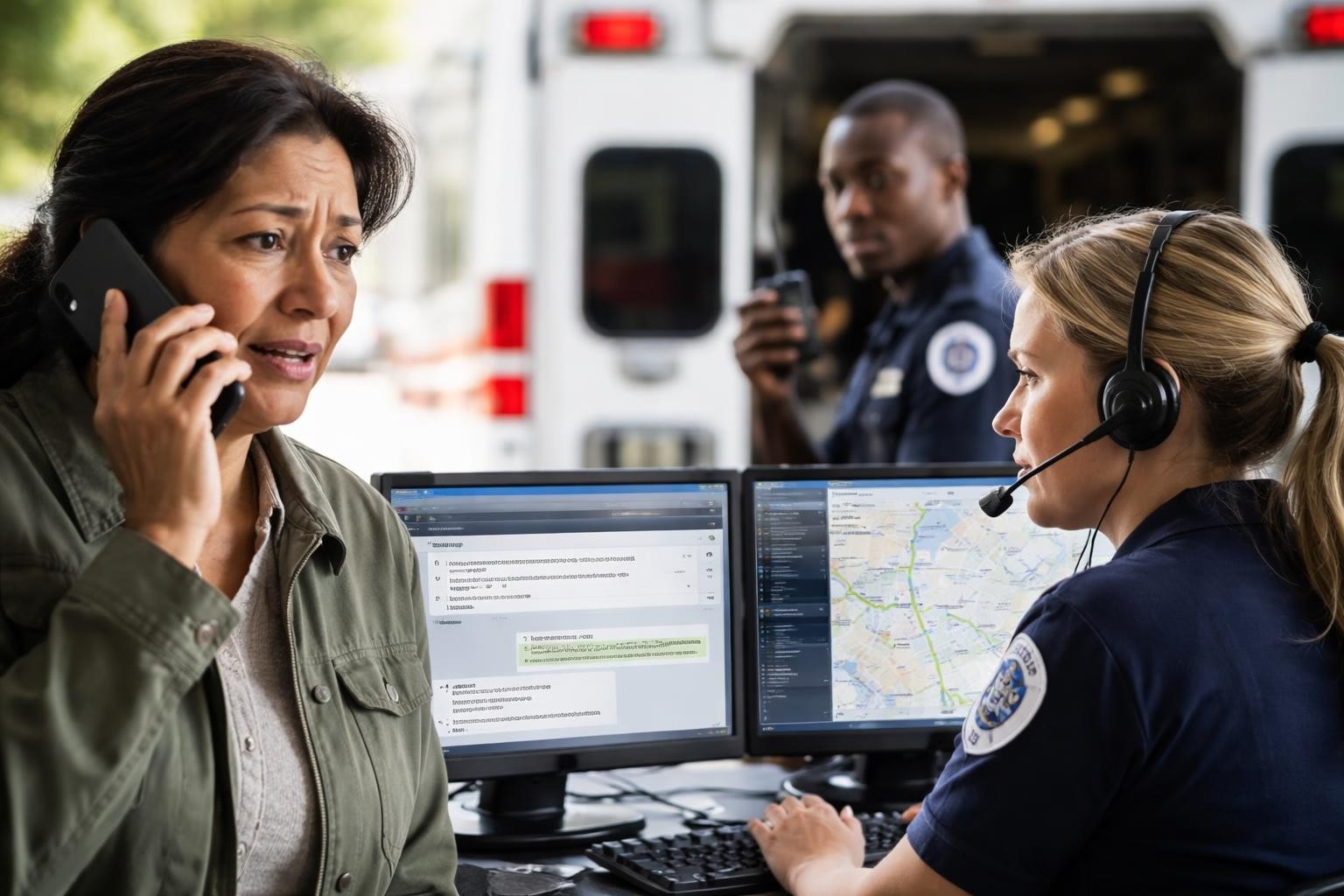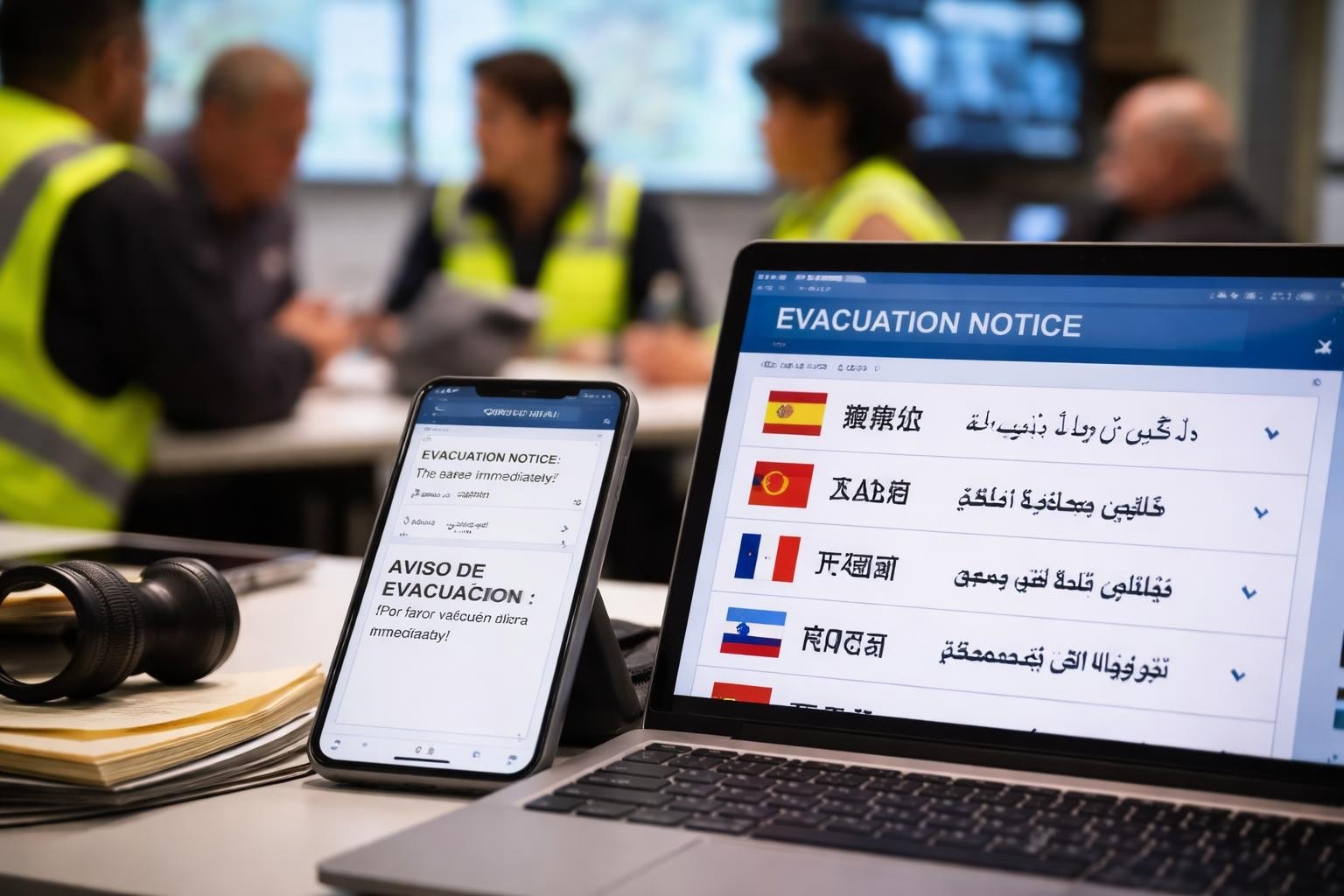

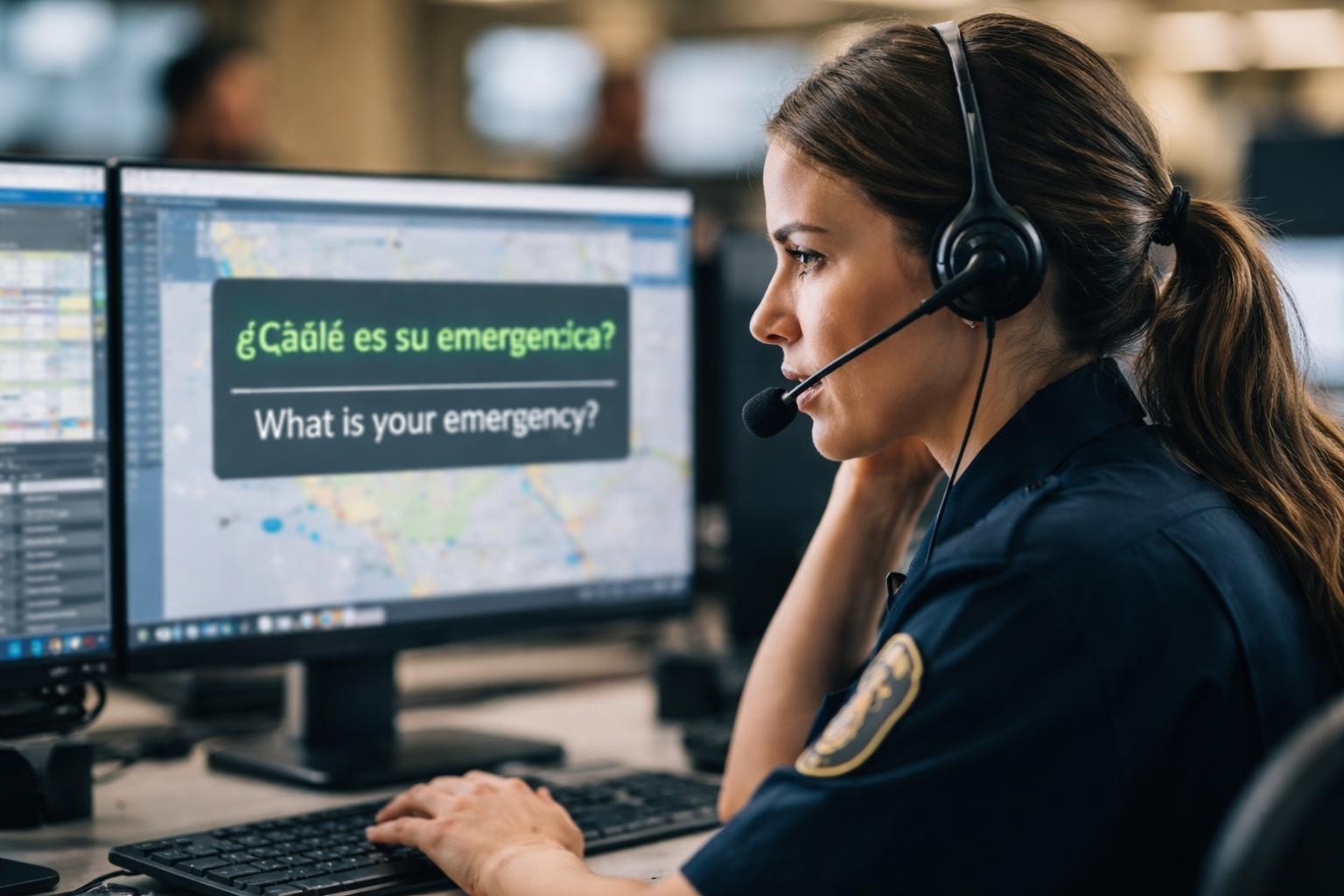
Emergency situations demand instant, accurate communication regardless of language barriers....
Emergency situations demand immediate action, and communication delays can mean the difference between life and death. When public safety agencies receive calls for help, they need to understand and respond to emergencies as they unfold, not minutes or hours later. The ability to process information, translate languages, and coordinate responses in real time has become a critical requirement for modern emergency services, transforming how dispatchers, first responders, and community members interact during crisis situations.
Understanding Real Time Communication in Emergency Services
Real time communication refers to the instantaneous exchange and processing of information with minimal latency between transmission and reception. In emergency contexts, this means dispatchers receive caller information immediately, translators process languages within seconds, and field units access updated intelligence as situations develop.
The Technical Foundation of Real Time Systems
The architecture supporting real time operations relies on several interconnected components working simultaneously. Real-time data streaming enables continuous information flow through ingestion layers, processing engines, and delivery mechanisms that minimize delays. Unlike batch processing systems that handle data in scheduled intervals, real time platforms process each piece of information as it arrives.
For emergency services, this technical foundation includes:
- Event-driven architecture that triggers immediate responses to incoming calls or alerts
- Low-latency networks ensuring millisecond-level transmission speeds
- Distributed processing systems that handle multiple simultaneous events
- Redundant failover mechanisms maintaining operations during outages

Modern emergency communication systems integrate these components to create seamless experiences for both emergency personnel and the public they serve. The difference between real time and near-real-time processing might seem negligible, but in emergency scenarios, even three-second delays can impact response effectiveness.
Real Time Translation Technologies for Public Safety
Language barriers present critical challenges during emergencies when callers may only speak languages unfamiliar to dispatchers. Real time translation bridges these gaps instantly, enabling communication across 185+ languages without waiting for human interpreters to join calls.
How Instant Translation Processing Works
Translation engines process spoken or written input through neural networks trained on emergency-specific terminology and contexts. The system captures audio or text, analyzes linguistic patterns, identifies the source language, and generates translated output within one to two seconds.
| Processing Stage | Function | Typical Latency |
|---|---|---|
| Audio Capture | Convert speech to digital signal | 50-100 milliseconds |
| Speech Recognition | Transform audio to text | 200-500 milliseconds |
| Language Detection | Identify source language | 50-100 milliseconds |
| Translation | Generate target language output | 300-800 milliseconds |
| Synthesis/Display | Deliver to recipient | 100-300 milliseconds |
Video and voice translation technologies have advanced significantly, incorporating visual context and tone analysis to improve accuracy. When a Spanish-speaking caller reports a medical emergency, the system translates their description to English for the dispatcher while simultaneously converting the dispatcher's questions back to Spanish, maintaining natural conversation flow.
Protocol Selection for Emergency Communications
Selecting appropriate real-time communication protocols determines system reliability and performance. WebSocket connections enable bidirectional communication between callers and dispatchers, while Server-Sent Events (SSE) push updates to multiple recipients simultaneously.
Emergency platforms typically implement multiple protocols:
- WebSocket for interactive voice and video sessions requiring constant two-way data exchange
- MQTT for lightweight message delivery to field units with limited bandwidth
- WebRTC for peer-to-peer audio and video connections with end-to-end encryption
- gRPC for high-performance service-to-service communication between system components
The technical implementation of these protocols ensures real time translation maintains conversation continuity without introducing artificial pauses that might confuse callers or responders.
Benefits of Real Time Processing for Emergency Response
The advantages of processing information in real time extend throughout the entire emergency response chain, from initial contact through resolution and after-action analysis.
Immediate Situational Awareness: Dispatchers receive location data, caller information, and incident details instantaneously rather than through delayed systems. This immediate awareness enables faster unit deployment and more accurate resource allocation.
Reduced Response Times: Studies show that real time systems decrease average response times by 15-30% compared to traditional batch-processing approaches. Every second saved during the dispatch process translates to earlier arrival at emergency scenes.
Enhanced Coordination: Multiple agencies can view updated incident information simultaneously through real-time data platforms, improving coordination between police, fire, and medical services responding to complex emergencies.
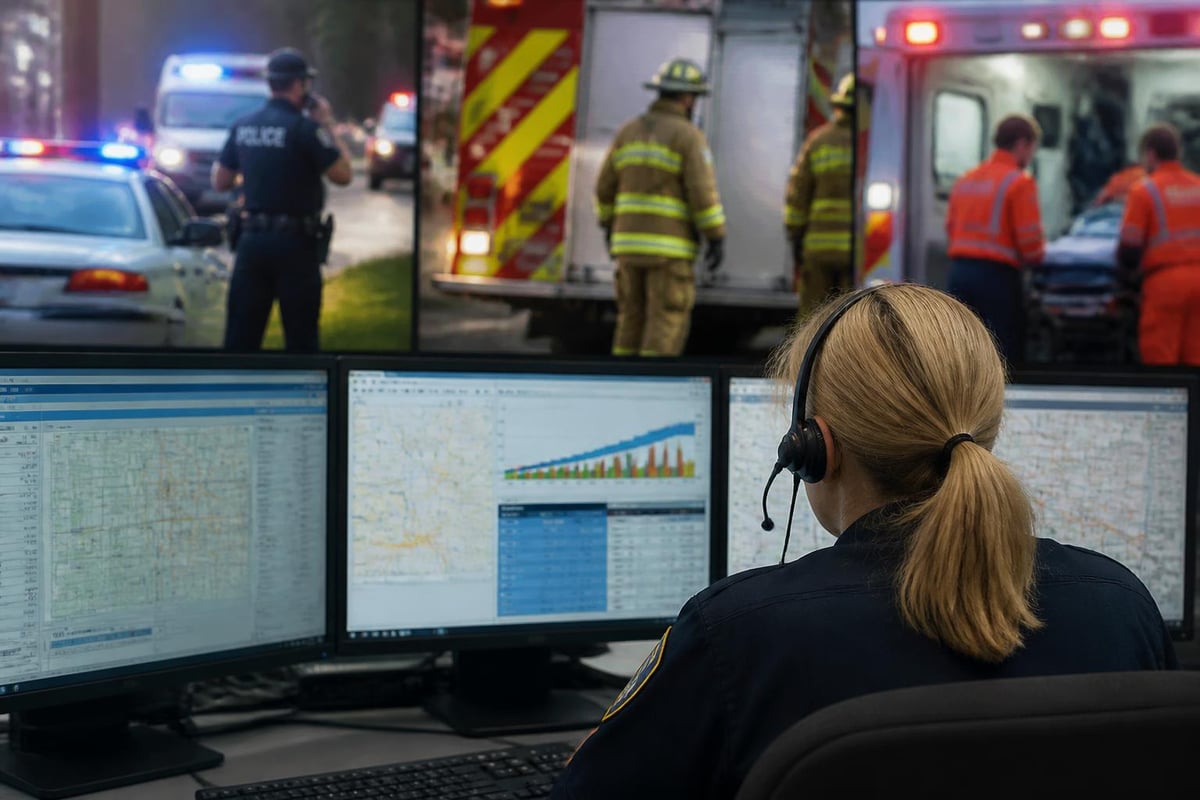
Real time processing also enables dynamic resource management. As new calls arrive, the system automatically updates unit availability, adjusts deployment priorities, and notifies supervisors of capacity issues requiring mutual aid requests.
Impact on Caller Experience
From the caller's perspective, real time capabilities create confidence that help is coming quickly. When translation happens instantly during emergency communication, callers speaking any language receive immediate acknowledgment and appropriate questions about their situation.
The psychological impact of immediate response cannot be overstated. Callers in crisis need reassurance that their emergency is being addressed, and real time systems provide that confirmation through rapid callbacks, status updates, and arrival notifications.
Implementation Challenges and Solutions
Despite the clear benefits, implementing real time emergency communication systems involves technical, operational, and organizational challenges that agencies must address strategically.
Technical Infrastructure Requirements
Real time processing demands robust infrastructure capable of handling peak loads without degradation. Emergency call volumes can spike dramatically during major incidents, requiring systems that scale elastically.
Infrastructure considerations include:
- Network bandwidth sufficient for simultaneous voice, video, and data transmissions
- Server capacity with automatic scaling to accommodate demand surges
- Database performance enabling sub-second query responses for caller histories
- Geographic redundancy ensuring service continuity during regional outages
Many agencies partner with cloud providers offering the distributed architecture necessary for truly real time operations. Understanding real-time data processing helps technical teams design systems that maintain performance under stress.
Data Quality and Accuracy
Processing information in real time introduces potential accuracy challenges since there's limited opportunity for validation before use. Translation engines must balance speed with precision, particularly when processing critical details like addresses or medical conditions.
| Quality Factor | Challenge | Mitigation Strategy |
|---|---|---|
| Audio Clarity | Background noise affects recognition | Noise cancellation algorithms and caller coaching |
| Dialect Variation | Regional language differences | Expanded training datasets with dialectal examples |
| Technical Terms | Specialized vocabulary translation | Emergency-specific terminology databases |
| Context Understanding | Ambiguous statements or slang | Contextual analysis and clarification protocols |
Quality assurance processes for real time systems include continuous monitoring, automated accuracy scoring, and feedback loops that improve translation models over time.
Training and Adoption Challenges
Even the most sophisticated real time technology fails without proper training and user adoption. Dispatchers accustomed to traditional workflows may initially resist new systems that change familiar processes.
Successful implementation requires:
- Comprehensive training programs covering both technical operation and best practices
- Gradual rollout strategies allowing users to adapt progressively
- Champion identification within departments to advocate for new technologies
- Performance metrics demonstrating tangible improvements
- Ongoing support addressing issues as they emerge
Call takers particularly benefit from hands-on practice with real time translation tools before handling actual emergencies, building confidence and proficiency through simulated scenarios.
Real Time Data Streaming Architecture
The underlying architecture enabling real time emergency communication consists of interconnected layers that ingest, process, store, and deliver information continuously.
Ingestion Layer Components
The ingestion layer captures data from multiple sources simultaneously, including telephone systems, text-to-911 platforms, mobile applications, and IoT sensors. This layer must handle various data formats and transmission protocols while maintaining consistent timestamps for correlation.
Stream processing frameworks consume this data as it arrives, applying immediate transformations and routing information to appropriate destinations. Real-time data streaming architecture typically implements publish-subscribe patterns allowing multiple consumers to access the same data streams without interference.
Critical ingestion layer features include:
- Schema flexibility accommodating evolving data structures
- Guaranteed delivery ensuring no information loss during transmission
- Backpressure handling managing situations when downstream systems cannot keep pace
- Protocol translation converting between different communication standards
Processing and Enrichment
Once ingested, data streams through processing pipelines that enrich, validate, and route information. For translation services, this processing includes language detection, sentiment analysis, and terminology standardization.
Processing engines execute complex event processing (CEP) rules that identify patterns requiring immediate attention. When multiple callers report similar incidents from nearby locations, the system correlates these events and alerts dispatchers to potential large-scale emergencies.
State management within processing layers maintains context across related events. If a caller disconnects and calls back, the system retrieves their previous interaction history in real time, enabling seamless conversation continuation.
Delivery and Presentation
The final layer delivers processed information to end users through interfaces optimized for rapid comprehension and action. Dispatcher workstations display translated conversations, caller locations, and unit statuses in unified dashboards updated continuously.
Mobile applications for field responders receive push notifications and streaming updates as incident details evolve. This ensures responding officers or paramedics have current information throughout their approach and on-scene operations.

Measuring Real Time System Performance
Quantifying real time system performance requires metrics beyond traditional IT benchmarks, focusing on factors directly impacting emergency response effectiveness.
Latency Metrics and Standards
Latency measurement captures the time elapsed between event occurrence and information availability. For emergency communications, acceptable latency thresholds vary by data type:
Voice translation: 800 milliseconds to 1.5 seconds end-to-end latency maintains conversational flow while ensuring accuracy. Shorter latencies may sacrifice translation quality, while longer delays disrupt natural dialogue.
Text messaging: 200-500 milliseconds enables real time text conversation comparable to consumer messaging applications.
Location data: 500 milliseconds to 2 seconds provides sufficiently current position information for dispatching and routing.
Video streams: 1-3 seconds balances quality with immediacy for sign language video translation and visual situational assessment.
Reliability and Availability Measurements
Beyond speed, real time systems require exceptional reliability since emergencies don't pause for system maintenance or failures. Industry standards for emergency communications target 99.999% availability (five nines), permitting only about five minutes of downtime annually.
| Metric | Target | Measurement Method |
|---|---|---|
| System Uptime | 99.999% | Continuous availability monitoring |
| Translation Accuracy | 95%+ | Automated quality scoring and human review |
| Call Connection Time | Under 2 seconds | Connection timestamp analysis |
| Failover Speed | Under 30 seconds | Disaster recovery testing |
| Concurrent Session Capacity | Agency-specific | Load testing and capacity planning |
Monitoring these metrics in real time allows technical teams to identify and address performance degradation before it impacts emergency response operations.
Future Developments in Real Time Emergency Technology
The trajectory of real time emergency communication technology points toward increased intelligence, predictive capabilities, and seamless integration across platforms and jurisdictions.
Artificial Intelligence Enhancement
AI integration will enable systems to anticipate needs and automate routine decisions. Natural language processing already powers translation engines, but future systems will recognize caller stress levels, predict emergency types from initial descriptions, and recommend optimal resource deployment.
Machine learning models trained on historical emergency data will identify patterns humans might miss. When translation engines encounter ambiguous phrases, AI can consider context from previous interactions, caller demographics, and incident type to select most likely interpretations.
Edge Computing for Ultra-Low Latency
Distributing processing to edge devices closer to data sources will further reduce latency. Instead of sending audio to centralized translation servers, edge processors in communication equipment could perform initial language detection and basic translation locally before transmitting to central systems.
This distributed approach particularly benefits areas with limited network connectivity where sending all data to remote data centers introduces unacceptable delays.
Cross-Platform Integration Standards
Industry standardization efforts aim to enable seamless real time information sharing between different vendor systems, jurisdictions, and agency types. When police, fire, and medical services use different communication platforms, interoperability challenges impede coordinated response.
Emerging standards for emergency broadcast systems and data exchange will ensure that real time information flows freely across organizational boundaries, improving regional response to major incidents.
Predictive Analytics and Proactive Response
Beyond processing current events in real time, future systems will analyze streaming data to predict emerging situations. Machine learning models might identify patterns suggesting imminent large-scale emergencies, enabling proactive resource positioning.
Weather data, social media monitoring, traffic patterns, and historical incident data all contribute to predictive models that generate alerts before situations escalate, transforming emergency services from purely reactive to increasingly proactive organizations.
Effective emergency response in 2026 depends on processing information and communication in real time, eliminating delays that compromise public safety. Translation technology, data streaming architecture, and intelligent processing systems work together to ensure immediate, accurate communication regardless of language barriers or technical complexity. Convey911 delivers comprehensive real time emergency communication solutions supporting over 185 languages through text, video, and voice platforms, enabling public safety agencies to bridge communication gaps instantly and respond more effectively to every emergency.