
Effective communication transcends language barriers, especially in critical moments when every...
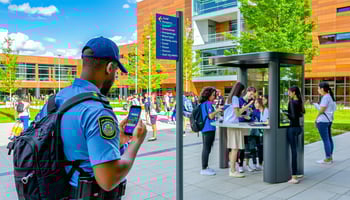
Language barriers in emergency situations can mean the difference between life and death. When a non-English speaker calls 911 or when first responders arrive at a scene where no common language exists, communication breaks down at the worst possible moment. A translation interpreter service provides the critical bridge that connects emergency personnel with the communities they serve, regardless of language. These services have evolved from simple telephone interpretation to sophisticated platforms offering real-time translation across multiple channels, enabling public safety agencies to deliver effective emergency response in an increasingly diverse society.
Understanding Translation Interpreter Service Options
A translation interpreter service encompasses various delivery methods designed to facilitate communication between parties who speak different languages. Unlike written translation that focuses on documents, interpretation deals with real-time spoken or signed communication.
Core Service Delivery Models
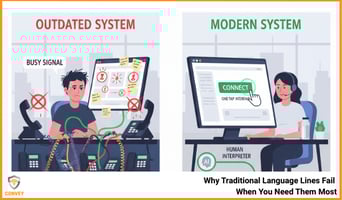
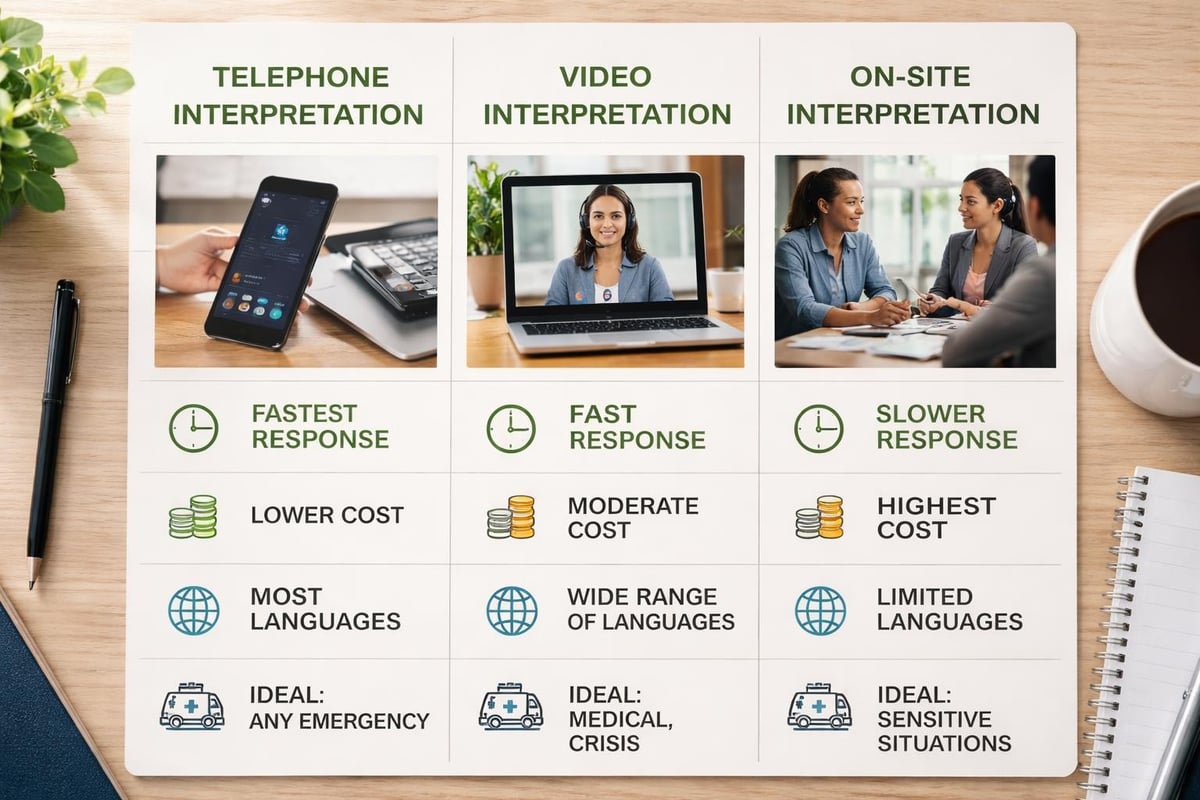
Telephone interpretation remains the most widely adopted approach for emergency communication. Responders dial a service number, select the target language, and connect with a qualified interpreter within seconds. This method works reliably even in areas with limited technology infrastructure.
Video interpretation has gained significant traction since 2020, particularly for American Sign Language and situations requiring visual context. Emergency dispatchers can see facial expressions, hand gestures, and environmental factors that add crucial context to verbal communication. The United Nations Interpretation Service demonstrates how professional interpretation supports critical international communication.
On-site interpretation involves physically dispatching an interpreter to emergency scenes. While this provides the highest quality interaction, response times typically exceed the critical window for emergency situations.
Modern emergency communication systems now integrate all three modalities into unified platforms. This ensures first responders can access the appropriate interpretation method based on the specific emergency scenario.
Language Coverage and Specialization Requirements
The effectiveness of a translation interpreter service depends heavily on language availability and interpreter expertise. Public safety agencies serve increasingly diverse populations requiring access to dozens or even hundreds of languages.
Essential Language Capabilities
Major language support typically includes Spanish, Mandarin, Cantonese, Vietnamese, Korean, Arabic, Russian, and Haitian Creole. These languages represent the largest non-English speaking populations across most American cities.
Rare language access separates comprehensive services from basic offerings. True emergency readiness requires coverage for Karen, Somali, Hmong, Nepali, and other languages spoken by refugee and immigrant communities.
| Language Category | Examples | Typical Availability | Emergency Priority |
|---|---|---|---|
| Tier 1 (High Volume) | Spanish, Mandarin, Vietnamese | 24/7 immediate | Critical |
| Tier 2 (Common) | Arabic, Korean, Tagalog, Polish | 24/7 within 2 minutes | High |
| Tier 3 (Regional) | Somali, Karen, Amharic | 24/7 within 5 minutes | Medium |
| Tier 4 (Rare) | Mixteco, Q'anjob'al, Chuukese | On-demand | As needed |
Dialect awareness proves critical in emergency contexts. An interpreter fluent in Modern Standard Arabic may struggle with Iraqi or Moroccan dialects. Services must match interpreters not just to languages but to specific regional variations.
Understanding different translator types helps agencies select qualified professionals with appropriate emergency communication training.
Professional Qualifications and Certification Standards
Quality in a translation interpreter service stems directly from interpreter credentials and ongoing training. Emergency interpretation demands specific skills beyond general language fluency.
The American Translators Association sets professional standards, though emergency interpretation requires additional specialized training. Interpreters must master terminology for medical emergencies, criminal justice procedures, fire response protocols, and natural disaster scenarios.
Critical Competencies for Emergency Interpreters
- Medical terminology for accurate symptom description and treatment explanation
- Legal vocabulary for Miranda rights, arrest procedures, and witness statements
- Crisis communication skills to maintain calm during high-stress situations
- Cultural mediation to bridge not just language but cultural understanding gaps
- Ethical standards including confidentiality and impartiality requirements
Many jurisdictions require certification from recognized bodies. The National Accreditation Authority for Translators and Interpreters in Australia exemplifies rigorous credentialing processes that ensure interpreter competency.
Healthcare interpreters face particularly stringent ethical requirements. Research on healthcare interpreting ethics reveals how professional standards protect patients and ensure accurate medical communication.
First responders benefit when agencies invest in video interpreter services staffed by certified professionals trained specifically in emergency scenarios.
Technology Infrastructure and Integration
Modern translation interpreter service platforms extend far beyond simple phone connections. Advanced systems integrate directly with Computer-Aided Dispatch (CAD) software, emergency notification systems, and incident management platforms.
Platform Architecture Components
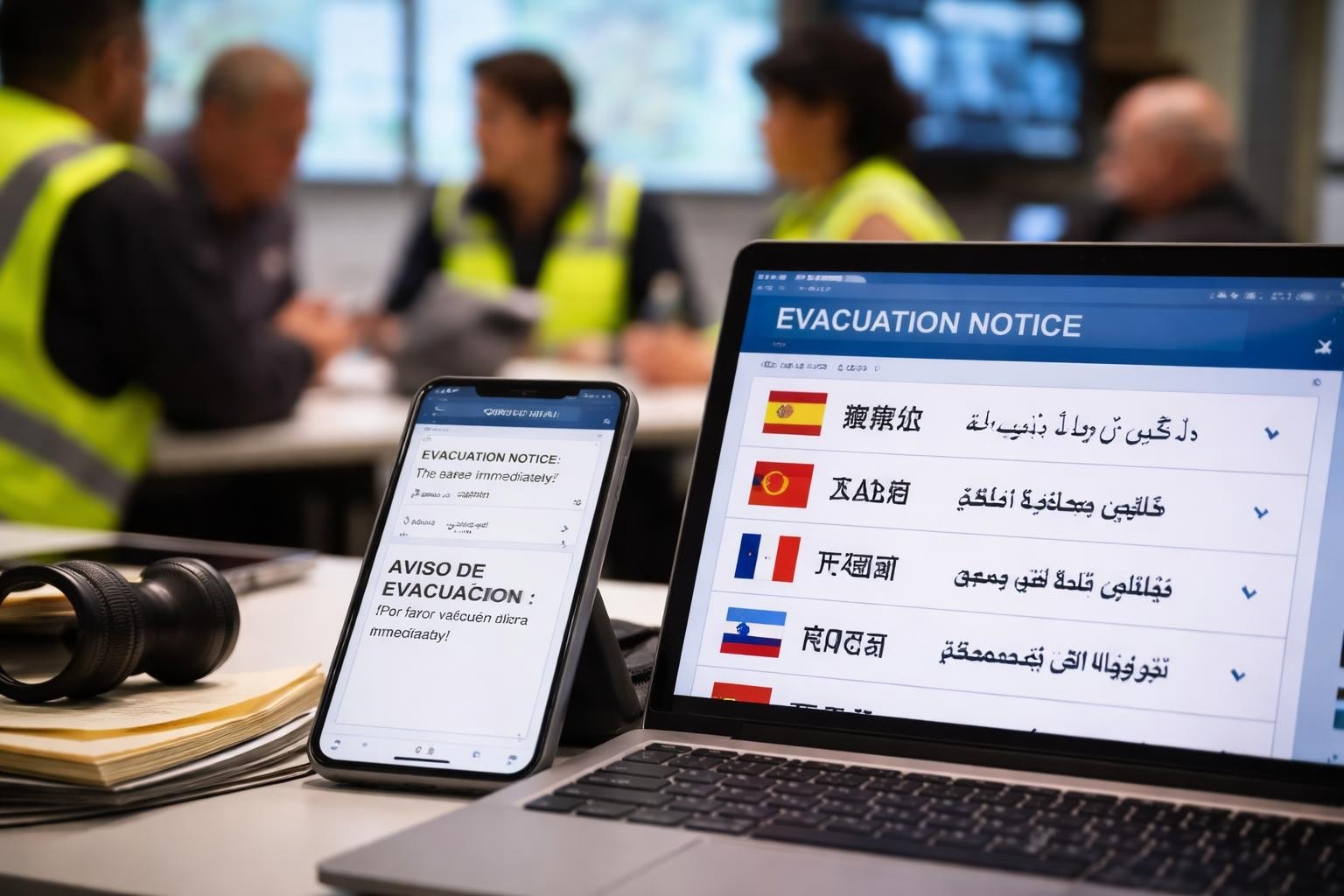
Multi-channel support enables seamless switching between voice, video, and text interpretation within a single incident. A 911 call may start with telephone interpretation, transition to video when the caller uses sign language, then continue via text if connectivity drops.
Automatic language detection accelerates response times by identifying the caller's language through speech patterns and immediately routing to appropriate interpreters. This eliminates the frustrating language menu navigation that delays emergency response.
Real-time text translation supplements voice interpretation, particularly valuable for situations where speaking aloud endangers the caller. Domestic violence victims or people hiding from active threats can communicate silently through two-way translation systems.
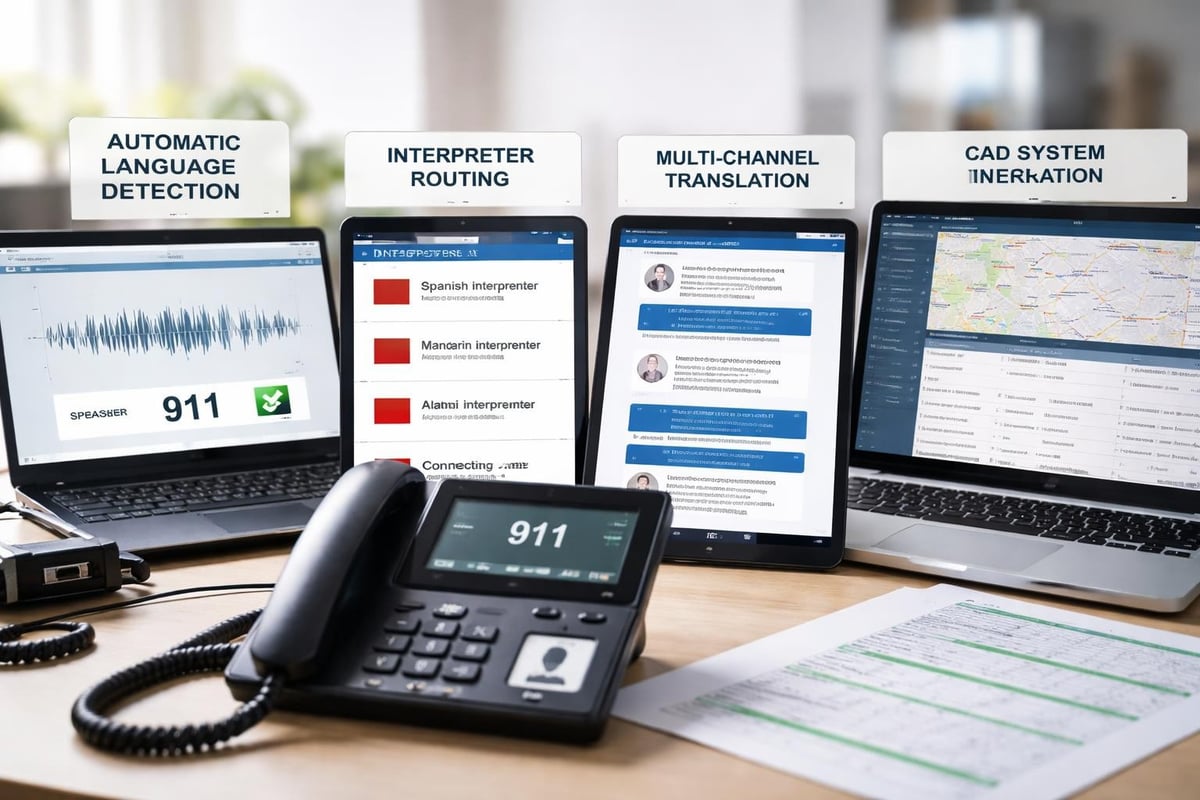
Geographic routing intelligence connects callers with interpreters familiar with local context. An interpreter supporting a Los Angeles emergency understands local geography, cultural dynamics, and regional terminology better than someone unfamiliar with the area.
Quality translation interpreter service platforms track performance metrics including:
- Average time to interpreter connection
- Call completion rates by language
- Caller satisfaction scores
- Technical failure incidents
- Interpreter availability by hour and language
These analytics help agencies identify gaps in language coverage and optimize service delivery. Exploring emergency translation strategies reveals how data-driven approaches improve outcomes.
Response Time and Availability Factors
In emergency communication, every second counts. The value of a translation interpreter service correlates directly with how quickly it connects qualified interpreters to active emergencies.
Speed Benchmarks for Emergency Services
Tier 1 languages should connect within 30 seconds for telephone interpretation and 60 seconds for video. Spanish interpretation, given its prevalence, often connects in under 15 seconds through dedicated interpreter pools.
Tier 2 and 3 languages typically target 90-second connection times, though actual performance varies by provider and time of day. Agencies serving diverse populations should verify guaranteed response times in their service agreements.
Overnight and holiday coverage presents particular challenges. Some translation interpreter service providers maintain smaller staffing during off-peak hours, increasing wait times precisely when many emergencies occur.
Redundancy and backup systems prevent single points of failure. Premium services maintain multiple data centers, diverse telecommunications pathways, and backup interpreter pools to ensure uninterrupted availability.
The importance of speed translation in emergency contexts cannot be overstated-delays cost lives.
Cost Structure and Budget Considerations
Translation interpreter service pricing varies widely based on delivery model, language availability, connection speed guarantees, and usage volume. Public safety agencies must balance cost constraints against the legal obligation to provide meaningful language access.
Common Pricing Models
| Pricing Approach | How It Works | Best For | Typical Cost Range |
|---|---|---|---|
| Per-Minute | Charged for actual talk time | Low-volume agencies | $1.50-$3.50/minute |
| Per-Incident | Flat fee per call regardless of length | Predictable budgeting | $15-$45/incident |
| Monthly Subscription | Unlimited usage within caps | High-volume agencies | $2,000-$15,000/month |
| Hybrid | Base fee plus overage charges | Medium-volume agencies | Varies significantly |
Hidden costs often emerge in contracted translation interpreter service agreements. Setup fees, minimum monthly commitments, premium language surcharges, video interpretation add-ons, and technical support charges can substantially increase total expenditure.
Rare language pricing typically commands premium rates. While Spanish interpretation might cost $1.95 per minute, Karen or Nepali could reach $4.50 per minute due to limited interpreter availability.
Grant funding often supports language access initiatives. Federal Department of Justice grants, Department of Homeland Security preparedness funding, and state emergency management allocations can offset implementation costs.
Compliance and Legal Obligations
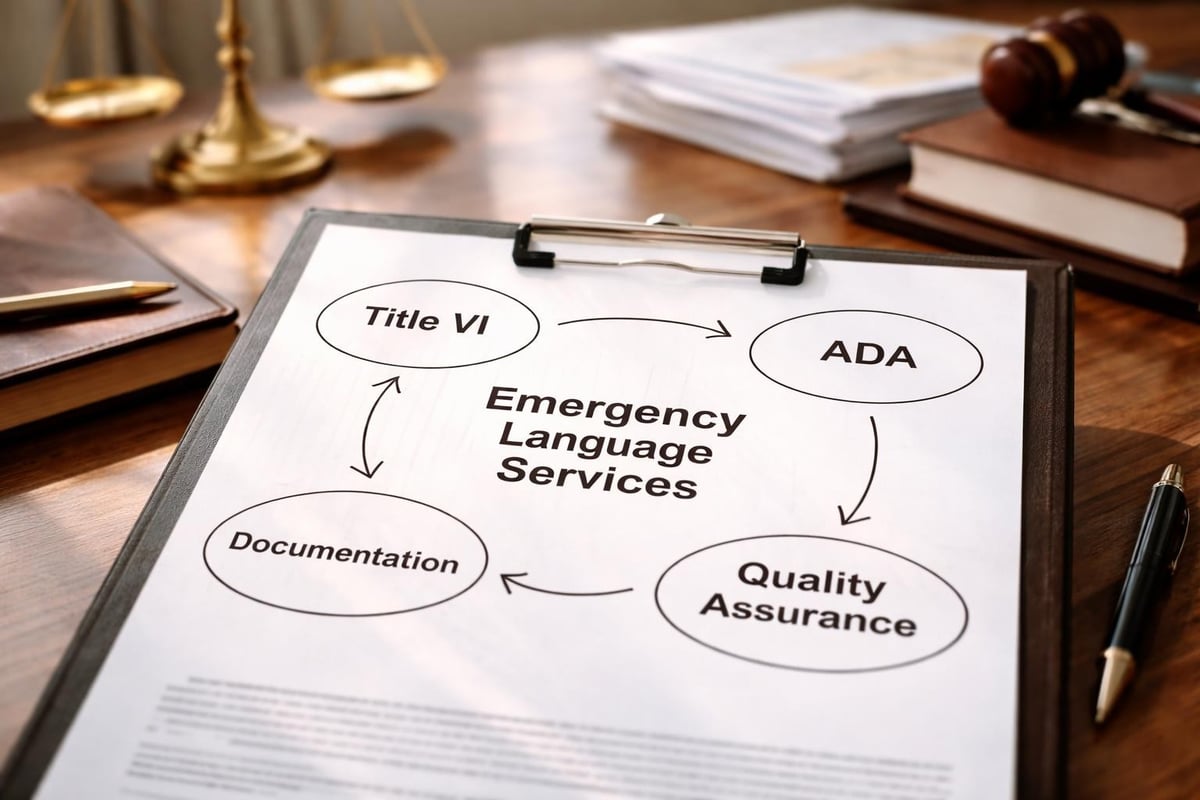
Federal civil rights laws mandate meaningful language access in emergency services. Title VI of the Civil Rights Act, the Americans with Disabilities Act, and Executive Order 13166 establish clear requirements for translation interpreter service provision.
Regulatory Framework Essentials
Language Access Plans document how agencies will provide interpretation services, identify frequently encountered languages, establish response time standards, and outline staff training requirements. The Department of Justice regularly audits public safety agencies for compliance.
Documentation requirements extend beyond simply offering services. Agencies must track language access requests, interpreter utilization rates, complaint resolution, and quality assurance measures. This documentation proves compliance during federal reviews.
Quality standards protect both agencies and the communities they serve. Using untrained bilinguals-such as family members or bystanders-for emergency interpretation creates liability exposure and often violates department policies.
Implementing comprehensive language access programs demonstrates organizational commitment to equitable emergency services.
Training and Integration for First Responders
Even the most sophisticated translation interpreter service fails without proper user training. First responders must understand when to engage interpreters, how to communicate effectively through interpretation, and which service modality suits different emergency scenarios.
Essential Training Components
Dispatcher training emphasizes rapid language identification and seamless interpreter connection without losing caller engagement. Effective dispatchers maintain calm, explain the interpretation process briefly, and keep callers connected during interpreter routing.
Field responder training covers different techniques for telephone versus video interpretation. Officers learn to speak in short, clear segments, avoid idioms and jargon, address the subject directly rather than the interpreter, and verify understanding throughout the interaction.
Common mistakes include speaking too rapidly, using complex terminology, attempting to communicate multiple concepts simultaneously, and showing frustration when interpretation takes longer than direct communication. Quality training programs address these pitfalls explicitly.
Regular drills incorporating translation interpreter service scenarios build muscle memory. Simulated emergency calls in various languages, staged incidents requiring on-scene interpretation, and tabletop exercises testing language access protocols all strengthen organizational readiness.
Future Developments in Interpretation Technology
Translation interpreter service capabilities continue evolving rapidly. Artificial intelligence, machine learning, and neural network advances promise to supplement-though not replace-human interpreters in emergency contexts.
Real-time automatic speech recognition combined with neural machine translation now handles basic emergency communications with increasing accuracy. These systems work best for high-resource languages and straightforward scenarios but still struggle with dialects, accents, background noise, and emotionally charged speech.
Augmented reality interpretation represents an emerging frontier. First responders wearing AR glasses could see real-time translated captions of spoken language or receive visual translations of written signs and documents in their field of view.
Biometric stress analysis may soon help interpreters and responders identify when callers are experiencing medical emergencies even before explicit symptoms are described. Voice pattern analysis can detect cardiac events, stroke symptoms, or severe pain through speech characteristics.
However, technology must augment rather than replace human interpreters. The cultural competence, contextual understanding, and emotional intelligence that professional interpreters provide remain irreplaceable in high-stakes emergency communication.
Understanding languages for the future helps agencies plan language service investments strategically.
Measuring Service Effectiveness and Quality
Implementing a translation interpreter service represents just the first step. Ongoing quality assessment ensures the service delivers meaningful language access rather than simply checking a compliance box.
Key Performance Indicators
Connection speed metrics track average time from language selection to active interpreter engagement. Best-in-class services maintain detailed dashboards showing performance by language, time of day, and service type.
Call completion rates reveal whether technical issues or interpreter unavailability force call abandonment. Rates below 95% indicate serious service deficiencies requiring immediate attention.
Post-incident surveys gather feedback from both first responders and community members. Questions should cover interpreter proficiency, technical quality, cultural appropriateness, and overall satisfaction.
User feedback often reveals issues invisible in quantitative metrics. Responders might report that certain interpreters lack emergency-specific terminology, or community members might indicate discomfort with interpreters from specific regions due to historical or political tensions.
Mystery shopping programs test translation interpreter service quality through staged emergency scenarios. These assessments verify that services perform as contracted and identify training opportunities for both interpreters and first responders.
Agencies should review quality metrics quarterly and conduct comprehensive annual assessments. This data drives contract renewal decisions, identifies service gaps, and justifies budget requests for enhanced capabilities.
Selecting the Right Service Provider
Not all translation interpreter service providers offer equivalent emergency communication capabilities. Public safety agencies must evaluate vendors carefully against mission-critical requirements.
Evaluation Criteria Checklist
- Guaranteed maximum connection times for Tier 1, 2, and 3 languages
- 24/7/365 availability with documented uptime percentages
- Interpreter certification and emergency-specific training verification
- Integration capabilities with existing CAD and dispatch systems
- Redundancy and disaster recovery infrastructure
- CJIS compliance for law enforcement applications
- Transparent pricing without hidden fees or surcharges
- References from comparable public safety agencies
- Quality assurance programs and performance reporting
- Contract flexibility and scalability options
Request detailed proposals from multiple vendors and conduct proof-of-concept testing before final selection. Test services during overnight hours and weekends when interpreter availability often decreases.
Check references thoroughly, specifically asking about service reliability during high-volume incidents, technical support responsiveness, and contractual disputes. The translation and communication guide for global success offers additional vendor evaluation frameworks.
Pilot programs lasting 60-90 days allow agencies to assess real-world performance before committing to multi-year contracts. Track all metrics during pilots and solicit user feedback from dispatchers, field responders, and community stakeholders.
Multi-Agency Coordination and Regional Partnerships
Individual agencies often lack the call volume to justify premium translation interpreter service contracts. Regional partnerships and mutual aid agreements can provide access to sophisticated capabilities while distributing costs across multiple jurisdictions.
County-wide language access programs serve all municipalities within a region through consolidated contracts. This approach typically reduces per-incident costs by 30-40% compared to individual agency agreements while ensuring consistent service quality.
Interoperability standards become crucial in multi-agency environments. Services must integrate with various CAD systems, radio networks, and notification platforms used across different departments.
Shared training programs ensure consistent interpreter utilization practices across participating agencies. Regional exercises test coordination during major incidents requiring multiple jurisdictions to communicate with non-English speaking populations simultaneously.
State-level coordination can extend these benefits further. Several states now maintain centralized translation interpreter service contracts available to all public safety agencies, negotiating favorable terms through collective purchasing power.
Effective emergency response in our multilingual society requires sophisticated translation interpreter service capabilities that connect first responders with the communities they protect. The technology, training, and organizational commitment necessary to deliver meaningful language access continue evolving as both demographics and capabilities advance. Public safety agencies that prioritize comprehensive interpretation services demonstrate their commitment to equitable emergency response while meeting legal obligations and improving operational effectiveness. Convey911 provides emergency communication and language translation software enabling public safety agencies to communicate in any language through integrated text, video, and voice platforms supporting over 185 languages-bridging communication gaps when every second counts.