

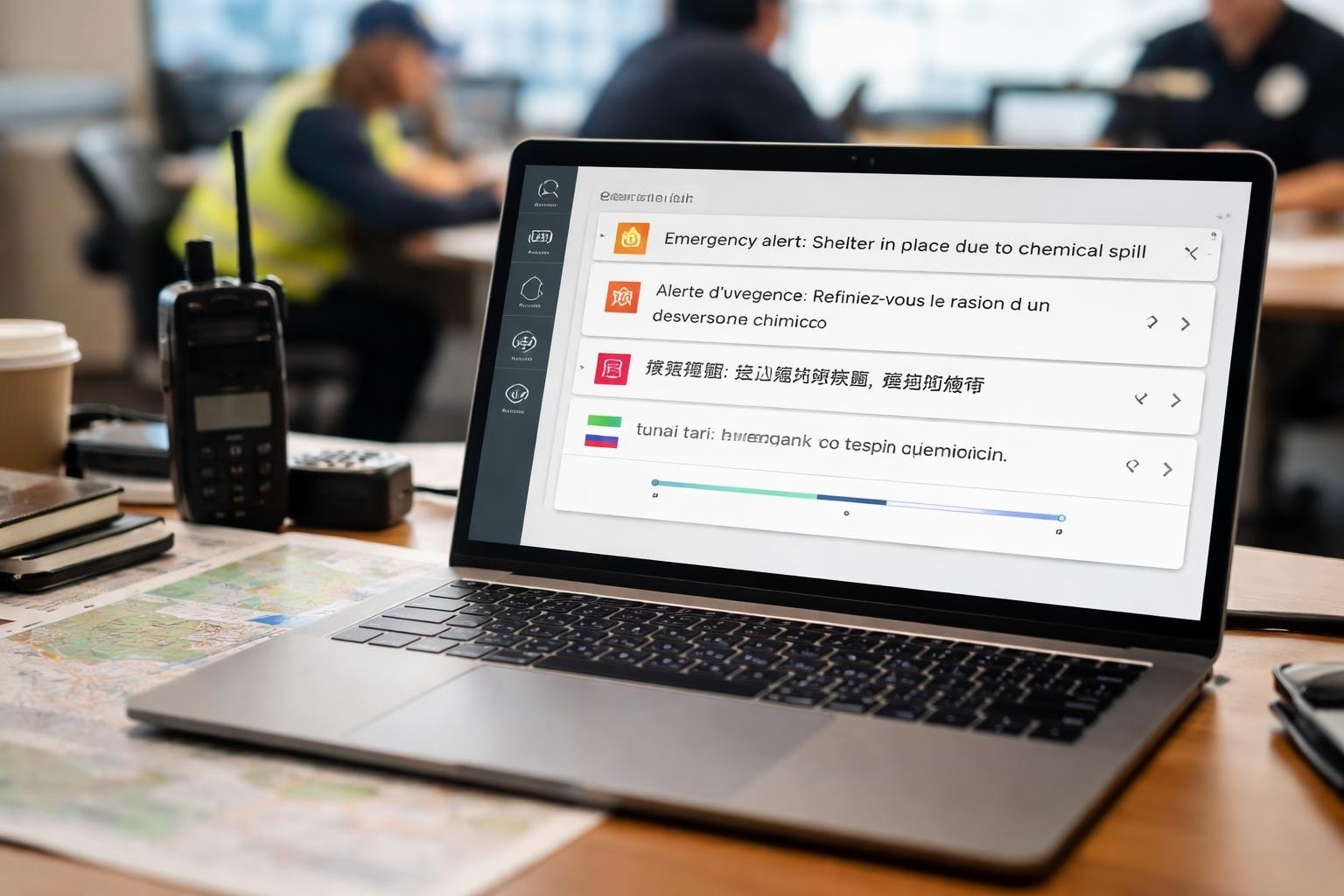
Effective communication during emergencies can mean the difference between life and death. When...
A translation programme serves as the backbone of effective multilingual communication, particularly in high-stakes environments where every second counts. For public safety agencies, emergency responders, and dispatch centers, implementing a robust translation programme means the difference between confusion and clarity during critical incidents. These structured frameworks combine technology, training, and protocols to ensure seamless language access across all communication channels, enabling organizations to serve diverse communities with precision and speed.
Understanding Translation Programme Fundamentals
A translation programme encompasses far more than simply converting words from one language to another. It represents a comprehensive system that integrates linguistic resources, technological platforms, training protocols, and quality assurance measures to deliver consistent, accurate communication across language barriers.
The modern translation programme builds on principles established in academic translation studies while addressing real-world operational demands. These programmes must handle multiple communication modes simultaneously, including text, voice, and video, while maintaining accuracy under pressure.
Core Components of Effective Translation Programmes
Every successful translation programme requires several fundamental elements working in concert:
- Technology infrastructure supporting real-time translation across multiple platforms
- Quality assurance protocols ensuring accuracy and consistency
- Training frameworks for both users and administrators
- Performance metrics tracking speed, accuracy, and user satisfaction
- Compliance standards meeting regulatory and accessibility requirements
Organizations implementing a translation programme must consider both immediate operational needs and long-term scalability. The framework should accommodate growing language demands while maintaining response time standards critical to emergency operations.
Technology Integration Within Translation Programmes
Modern translation programmes rely heavily on sophisticated technology platforms that deliver instant language conversion. The integration of artificial intelligence and machine learning has transformed how these programmes function, enabling real-time translation capabilities that were impossible just a decade ago.
Platform Selection Criteria
Choosing the right technology platform determines a translation programme's effectiveness. Emergency communication contexts demand platforms that meet specific criteria:
| Requirement | Why It Matters | Impact on Operations |
|---|---|---|
| Sub-second latency | Critical incidents require immediate communication | Reduces response times by 40-60% |
| 99.9% uptime | Emergency services operate 24/7/365 | Ensures continuous language access |
| Multi-modal support | Callers use text, voice, and video | Accommodates diverse communication preferences |
| Scalability | Call volumes fluctuate dramatically | Handles surge capacity during emergencies |
The best translation programme platforms integrate seamlessly with existing emergency communication systems, eliminating the need for dispatchers to switch between multiple applications during critical calls. This integration reduces cognitive load and minimizes errors when seconds matter most.
Language Coverage and Accuracy
A comprehensive translation programme must support extensive language coverage while maintaining high accuracy across all supported languages. While many platforms claim broad language support, the quality varies significantly between major languages and less common dialects.
Professional translation programmes typically support 100+ languages, with the most robust systems covering 185 or more distinct languages and dialects. This extensive coverage ensures that emergency responders can communicate effectively with virtually any caller, regardless of their native language.
Understanding language interpretation and translation differences helps organizations select appropriate tools for specific scenarios. While interpretation involves spoken language conversion, translation typically applies to written text, though modern programmes often blur these distinctions with unified platforms.
Implementation Strategies for Public Safety Agencies
Rolling out a translation programme within public safety organizations requires careful planning and phased implementation. Successful deployments follow structured approaches that minimize disruption while maximizing adoption.
Planning Phase Essentials
Before deploying any translation programme, agencies must conduct thorough assessments of their current communication landscape. This includes analyzing call volume patterns, identifying primary language demographics, and evaluating existing technological infrastructure.
Key planning considerations include:
- Current language access methods and their limitations
- Staff technical proficiency and training requirements
- Budget allocation for technology, training, and maintenance
- Integration points with existing CAD and dispatch systems
- Compliance requirements under federal and state regulations
The planning phase should involve stakeholders from dispatch operations, IT departments, training divisions, and community outreach teams. This collaborative approach ensures the translation programme addresses real operational challenges rather than theoretical scenarios.
Training and Adoption
Even the most sophisticated translation programme fails without proper user training and organizational buy-in. Call takers and dispatchers need hands-on experience with translation tools before handling live emergency calls.
Effective training programmes typically span 8-12 weeks and include:
- Technical orientation covering platform navigation and features
- Scenario-based exercises simulating multilingual emergency calls
- Quality assessment reviewing translated communications for accuracy
- Troubleshooting protocols addressing common technical issues
- Ongoing education updating staff on new features and languages
Organizations should designate translation programme champions within each shift who receive advanced training and serve as peer resources. This distributed expertise model ensures 24/7 support availability.

Measuring Translation Programme Effectiveness
Quantifying translation programme performance enables continuous improvement and demonstrates return on investment to stakeholders. Public safety agencies must track both operational metrics and outcome measures.
Performance Metrics Framework
| Metric Category | Specific Measures | Target Benchmarks |
|---|---|---|
| Speed | Translation latency, call handling time | <2 seconds, <30 seconds added |
| Accuracy | Post-call quality reviews, error rates | >95% accuracy, <2% critical errors |
| Coverage | Languages accessed, caller satisfaction | 100% language access, >90% satisfaction |
| Reliability | System uptime, failover success | 99.9% uptime, 100% failover |
Organizations implementing text translation software should establish baseline measurements before deployment, then track improvements monthly. This data-driven approach identifies optimization opportunities and validates programme effectiveness.
Quality Assurance Protocols
Translation programme quality extends beyond technical accuracy to encompass cultural appropriateness and emergency-specific terminology. Quality assurance reviews should examine random samples of translated communications, evaluating both linguistic precision and operational appropriateness.
Professional quality assurance programmes typically review 5-10% of all translated interactions, with higher percentages for rare languages and critical incidents. These reviews identify patterns requiring additional training, platform adjustments, or protocol modifications.
Advanced Features in Modern Translation Programmes
Contemporary translation programmes incorporate sophisticated capabilities that extend far beyond basic language conversion. These advanced features address specific emergency communication challenges.
Context-Aware Translation
The most effective translation programmes understand emergency context, adapting terminology and phrasing to match specific incident types. A medical emergency requires different vocabulary than a traffic accident, and quality translation programmes recognize these distinctions automatically.
Context-awareness improves translation accuracy by 15-25% compared to generic translation approaches. This enhancement proves particularly valuable when translating emergency communications where precise medical or technical terminology determines response effectiveness.
Multi-Party Communication Support
Emergency incidents often involve multiple parties speaking different languages simultaneously. Advanced translation programmes handle these complex scenarios through parallel translation streams, enabling dispatchers to coordinate between English-speaking responders and non-English-speaking callers or witnesses.
Multi-party translation capabilities include:
- Simultaneous translation for up to 6 participants
- Language auto-detection for each speaker
- Conversation threading maintaining context across exchanges
- Recording and transcription in all languages
- Real-time written transcripts for reference
These features prove essential during major incidents involving multiple agencies, witnesses, or victims requiring coordinated multilingual communication.
Integration with Emergency Response Workflows
A translation programme achieves maximum impact when fully integrated into established emergency response workflows rather than functioning as a standalone tool. This integration ensures language access becomes automatic rather than requiring conscious activation during stressful situations.
CAD System Integration
Computer-Aided Dispatch (CAD) systems serve as the central nervous system of emergency operations. Translation programme integration with CAD platforms enables automatic language flagging, historical language preference tracking, and seamless handoff between call takers and field units.
When a dispatcher activates translation services, the CAD system automatically notes the language and translation method used. This information travels with the incident record, informing responding units about potential language barriers before arrival.
Field Responder Access
Translation programmes must extend beyond dispatch centers to field personnel. Mobile applications providing video and voice translation enable officers, firefighters, and paramedics to communicate directly with non-English speakers at emergency scenes.
Field integration typically includes:
- Lightweight mobile applications optimized for public safety devices
- Offline capability for areas with limited connectivity
- Quick-access language buttons for common scenarios
- Photo translation for documents and signs
- Secure cloud synchronization with dispatch records
This comprehensive approach ensures language barriers never impede emergency response, regardless of where communication occurs.

Regulatory Compliance and Translation Programmes
Public safety agencies operate under multiple regulatory frameworks requiring language access. A properly designed translation programme ensures compliance while exceeding minimum standards.
Federal Requirements
Title VI of the Civil Rights Act and subsequent regulations mandate meaningful access to emergency services regardless of English proficiency. Translation programmes provide documented, consistent language access that demonstrates compliance during audits and reviews.
Agencies must maintain records proving translation programme availability, utilization rates, and effectiveness measures. These records protect organizations legally while identifying underserved language communities requiring enhanced outreach.
State and Local Mandates
Beyond federal requirements, many states and municipalities impose additional language access obligations. Academic programmes in translation often examine these regulatory frameworks, providing insights applicable to emergency communication contexts.
Organizations should conduct annual compliance reviews ensuring their translation programme meets all applicable requirements. This proactive approach prevents violations while improving community service quality.
Cost Considerations and Budget Planning
Implementing a comprehensive translation programme requires significant investment, but the costs must be weighed against legal liability, service quality improvements, and community safety enhancements.
Total Cost of Ownership
Translation programme expenses extend beyond initial licensing fees to encompass:
- Platform licensing and maintenance (40-50% of total cost)
- Infrastructure and integration (20-25% of total cost)
- Training and change management (15-20% of total cost)
- Quality assurance and monitoring (10-15% of total cost)
- Ongoing support and updates (5-10% of total cost)
Organizations should budget for a 3-5 year implementation cycle, with costs typically decreasing after the second year as training requirements diminish and utilization becomes routine.
Return on Investment
While translation programme costs appear substantial, the return on investment manifests through multiple channels. Reduced liability exposure alone often justifies the investment, as language barrier incidents can result in multimillion-dollar settlements.
Additional ROI factors include improved response times for multilingual calls, enhanced community trust and cooperation, reduced reliance on expensive telephonic interpretation services, and measurable improvements in emergency outcomes for limited English proficient populations.
Future Trends in Translation Programme Development
Translation programme technology continues evolving rapidly, with emerging capabilities promising even greater effectiveness. Understanding these trends helps organizations make future-ready investment decisions.
Artificial Intelligence Advancement
Machine learning algorithms powering translation programmes improve continuously through exposure to billions of language samples. The accuracy gap between human and machine translation narrows yearly, with emergency-specific terminology benefiting from specialized training datasets.
Future translation programmes will likely achieve near-human accuracy across all major languages, with continuous learning from actual emergency communications further refining performance. Organizations exploring AI and human interpreters can prepare for this hybrid future combining technological efficiency with human judgment.
Specialized Emergency Language Models
Generic translation programmes optimize for common conversational scenarios. The next generation focuses specifically on emergency communication, understanding medical terminology, criminal justice vocabulary, and disaster response coordination language.
These specialized models recognize context clues indicating emergency type, automatically adjusting translation to match the situation. A cardiac arrest call receives different terminological treatment than a burglary report, improving both accuracy and response appropriateness.
Building Community Trust Through Translation Programmes
Beyond operational efficiency, translation programmes demonstrate organizational commitment to serving all community members equally. This commitment builds trust within immigrant and refugee populations who might otherwise hesitate to contact emergency services.
Outreach and Education
Organizations should actively promote their translation programme capabilities through community outreach. Many limited English proficient residents avoid calling 911 due to language concerns, unaware that comprehensive translation services exist.
Effective outreach strategies include multilingual public education campaigns, partnerships with community organizations serving immigrant populations, and participation in cultural events where translation programme capabilities can be demonstrated.
Measuring Community Impact
Translation programme success extends beyond internal metrics to encompass community-level outcomes. Agencies should track emergency service utilization rates across different language communities, comparing pre- and post-implementation patterns.
Increased 911 utilization from previously underserved language groups indicates growing trust and awareness. These trends validate translation programme investments while identifying opportunities for enhanced community engagement.
Best Practices for Translation Programme Optimization
Organizations achieving maximum translation programme effectiveness share common approaches that optimize performance and user adoption.
Proven optimization strategies include:
- Regular quality audits with multilingual reviewers
- Continuous training refreshers for all personnel
- Technology updates implementing latest translation models
- Community feedback integration improving cultural appropriateness
- Performance dashboards providing real-time visibility
- Incident reviews examining translation effectiveness during major events
These practices ensure translation programmes remain dynamic, responsive resources rather than static technology deployments. Organizations committed to enhancing translation capabilities continuously refine their approaches based on performance data and user feedback.
A well-designed translation programme transforms emergency communication by eliminating language barriers that historically impeded effective response. Organizations investing in comprehensive translation capabilities improve outcomes for all community members while meeting regulatory obligations and reducing liability exposure. Convey911 provides emergency communication and language translation software supporting over 185 languages across text, video, and voice channels, enabling public safety agencies to communicate seamlessly with any caller regardless of language. Discover how Convey911's platform can enhance your organization's multilingual emergency response capabilities.

