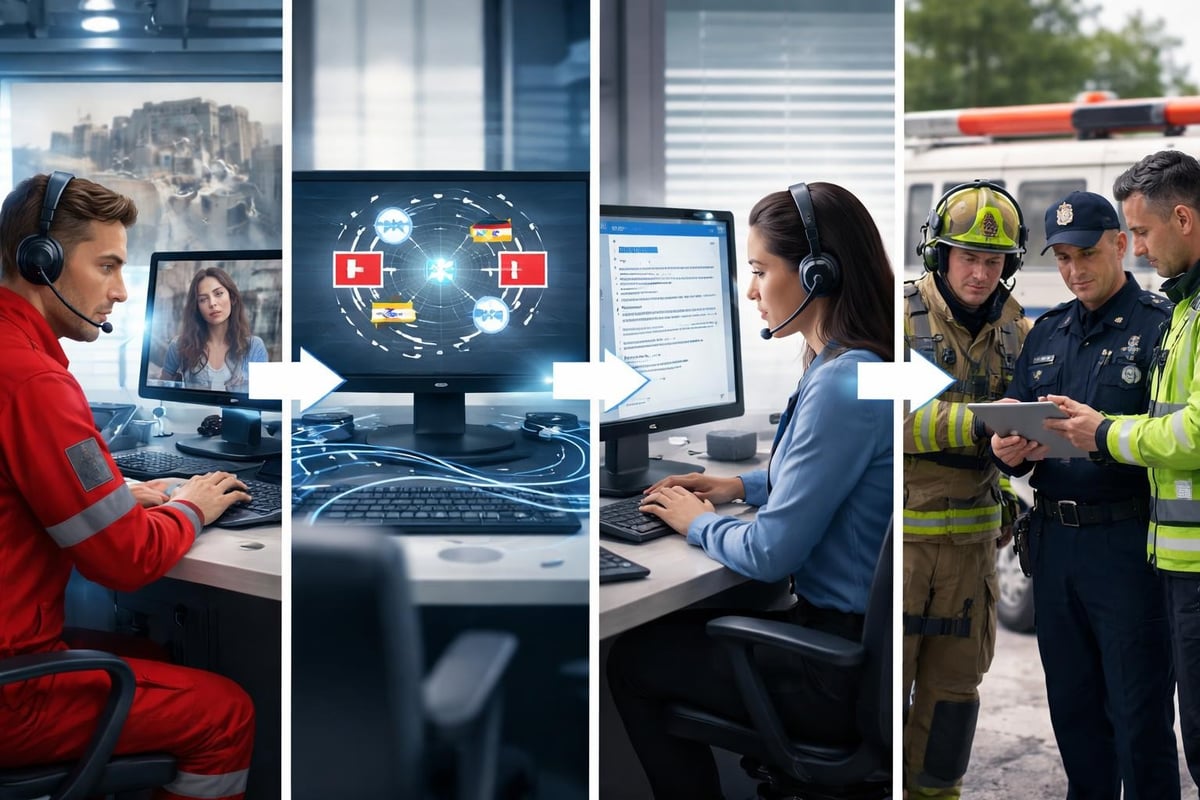

The emergence of ai translation video technology represents a transformative shift in how emergency...
The landscape of emergency communication has undergone a remarkable transformation with the integration of artificial intelligence into translation systems. Public safety agencies now face unprecedented linguistic diversity, requiring solutions that deliver accurate, real-time translation across hundreds of languages. As communities become increasingly multilingual, the ability to communicate effectively during critical moments can mean the difference between life and death. AI in translation has emerged as a powerful tool that bridges these language gaps, enabling first responders to serve everyone regardless of their native language.
Understanding AI-Powered Translation Technology
Modern AI translation systems leverage neural networks to process and convert text, voice, and video communications between languages. Unlike earlier rule-based approaches, these systems learn from vast datasets containing millions of translated documents, allowing them to recognize patterns, context, and nuances across linguistic structures.
The technology operates through multiple layers of processing that analyze input, identify language pairs, and generate output in target languages. Neural machine translation represents the current standard, utilizing deep learning algorithms that consider entire sentences rather than translating word-by-word. This contextual approach significantly improves accuracy and produces more natural-sounding results.
Key Components of AI Translation Systems
- Natural Language Processing (NLP) engines that understand syntax and semantics
- Machine learning models trained on billions of translation pairs
- Speech recognition technology for voice-based communications
- Real-time processing capabilities for immediate translation delivery
- Continuous learning mechanisms that improve accuracy over time
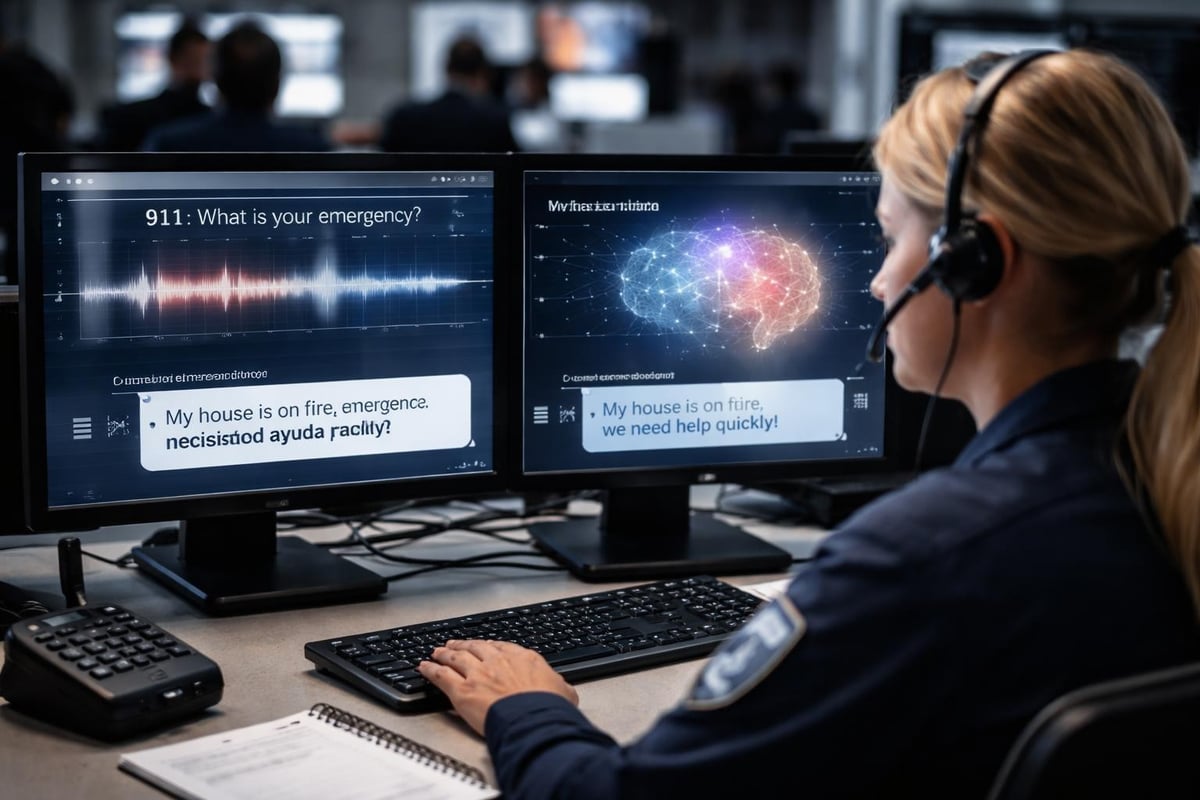
For emergency services, these components must function seamlessly under high-stress conditions. When a dispatcher receives a call from someone speaking an unfamiliar language, the system must instantly recognize the language, process the speech, and deliver accurate translations within seconds.
Critical Applications in Emergency Response
Public safety agencies deploy ai in translation across multiple communication channels. Text-to-911 services benefit tremendously from automated translation, allowing individuals to report emergencies through messaging when voice calls aren't possible. The technology processes incoming texts, identifies the source language, and presents dispatchers with translated content while maintaining the original message for reference.
Voice translation presents unique challenges in emergency contexts. Background noise, emotional distress, and regional dialects can complicate speech recognition. Advanced AI systems account for these variables through adaptive algorithms that filter ambient sounds and recognize speech patterns even under suboptimal conditions.
Real-World Implementation Scenarios
| Communication Type | Translation Method | Average Processing Time | Accuracy Rate |
|---|---|---|---|
| Text Messages | Neural MT | 0.5-2 seconds | 94-97% |
| Voice Calls | Speech-to-Text + MT | 2-5 seconds | 88-93% |
| Video Calls | Multi-modal Processing | 3-6 seconds | 90-95% |
| Document Translation | Batch Processing | 5-30 seconds | 95-98% |
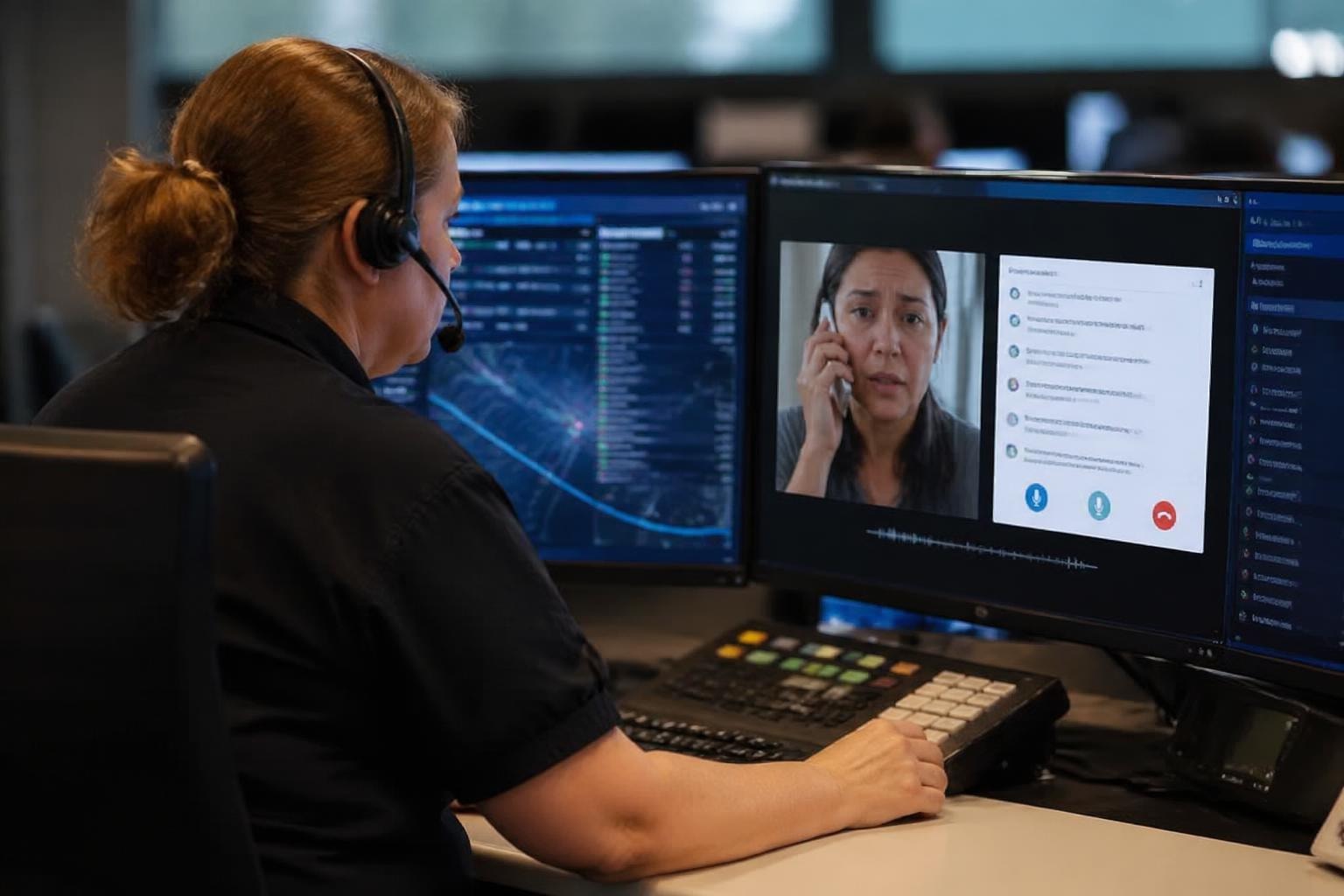
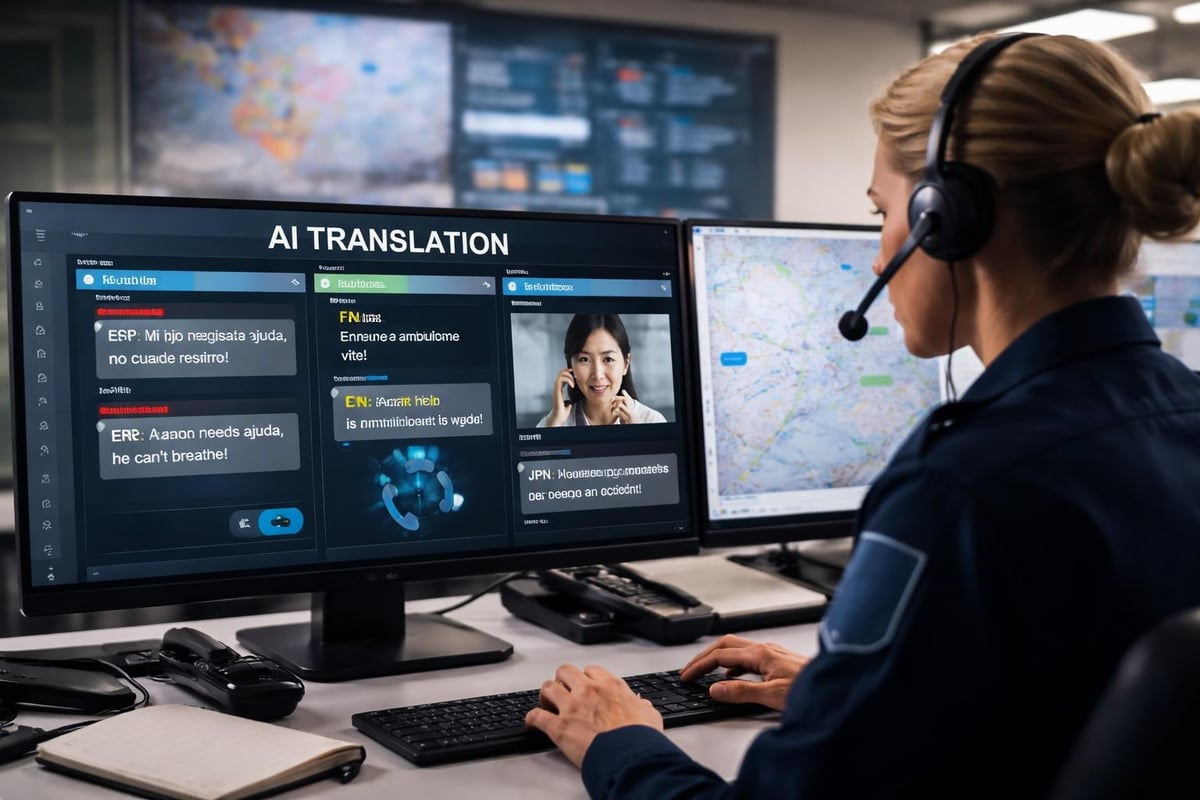
Video interpreter services have evolved significantly with AI assistance, providing visual context alongside linguistic translation. This multi-modal approach proves especially valuable when communicating medical information or gathering descriptions of suspects and incidents.
Accuracy Factors and Quality Assurance
The effectiveness of ai in translation depends on numerous variables that public safety professionals must understand. Language pair availability ranks as a primary consideration, as some language combinations receive more training data than others. Common pairs like English-Spanish typically achieve higher accuracy than less-represented combinations.
Domain-specific terminology presents another critical factor. Emergency services utilize specialized vocabulary that general-purpose translation systems may not handle optimally. Terms related to medical conditions, law enforcement procedures, and public safety protocols require specialized training data for accurate translation.
Measuring Translation Quality
Quality metrics extend beyond simple accuracy percentages. Translation specialists evaluate multiple dimensions:
- Semantic accuracy: Does the translation convey the intended meaning?
- Grammatical correctness: Does the output follow target language rules?
- Cultural appropriateness: Are idioms and expressions properly adapted?
- Contextual relevance: Does the translation fit the emergency scenario?
- Completeness: Is all information from the source preserved?
Human oversight remains essential for critical communications. While AI translation tools have advanced significantly, trained interpreters provide verification and handle complex scenarios where machine translation may struggle.
The American Translators Association emphasizes that AI serves as a powerful assistant rather than a complete replacement for human expertise, particularly in high-stakes environments like emergency services.
Integration Strategies for Public Safety Agencies
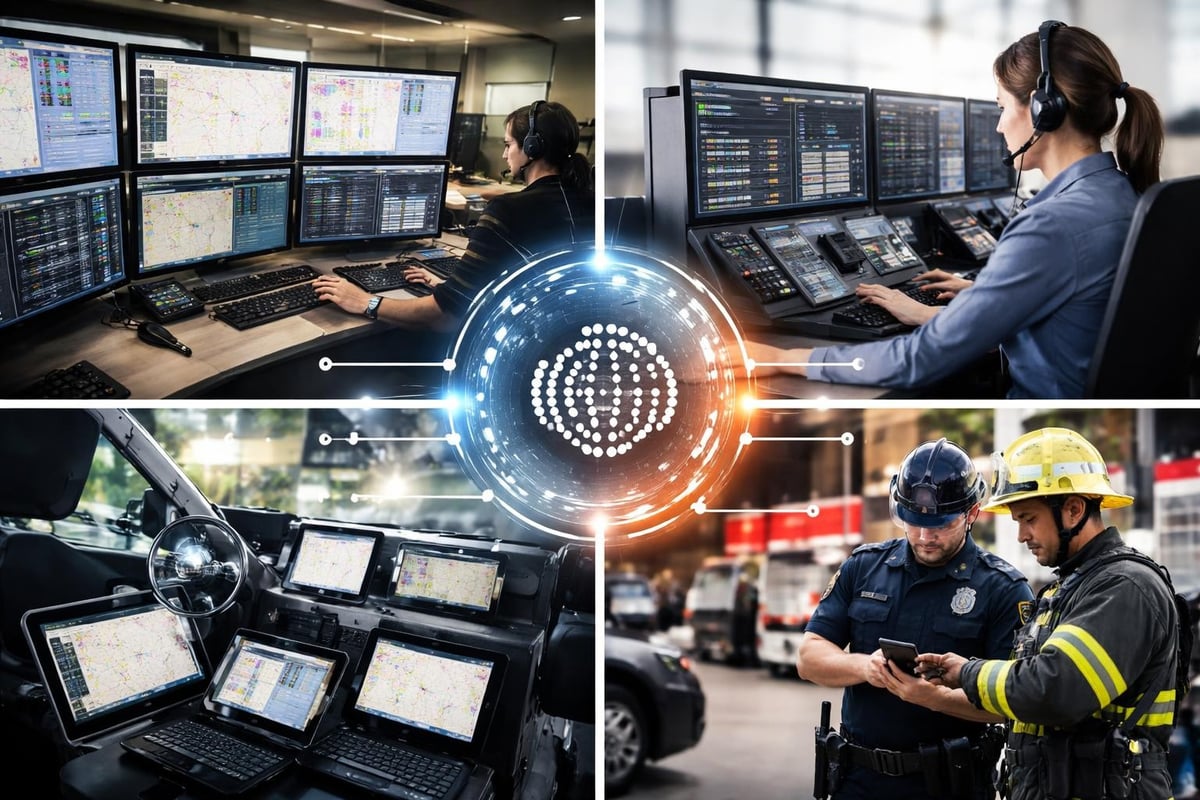
Implementing ai in translation within existing emergency communication infrastructure requires careful planning and phased deployment. Agencies must assess their current systems, identify integration points, and establish protocols that blend automated translation with human expertise.
Implementation Roadmap
Phase 1: Assessment and Planning Begin by analyzing current language access gaps and call volume patterns. Document which languages appear most frequently and identify situations where translation delays have impacted response effectiveness.
Phase 2: System Selection Evaluate translation software platforms based on language coverage, integration capabilities, accuracy ratings, and compliance with public safety standards. Consider solutions specifically designed for emergency services rather than general-purpose tools.
Phase 3: Technical Integration Connect translation systems with Computer-Aided Dispatch (CAD) software, radio communications, and text-to-911 platforms. Ensure compatibility with existing hardware and establish redundant systems for mission-critical reliability.
Phase 4: Training and Testing Train dispatchers and first responders on proper system usage, including when to rely on AI translation and when to escalate to human interpreters. Conduct simulated scenarios across multiple languages to validate system performance.
Phase 5: Continuous Improvement Monitor translation quality metrics, gather feedback from users, and update systems regularly. Machine learning models improve through use, making ongoing assessment valuable for maintaining optimal performance.
Overcoming Language Access Challenges
Public safety agencies face specific obstacles when deploying ai in translation technology. Budget constraints often limit access to premium translation services, forcing agencies to balance cost considerations against quality requirements. Many jurisdictions mandate language access but provide insufficient funding for comprehensive solutions.
Technical limitations also present challenges. Network connectivity issues can disrupt cloud-based translation services during emergencies when communication proves most critical. Agencies in rural areas or regions with unreliable infrastructure must implement hybrid approaches that combine cloud services with on-premise capabilities.
Addressing Common Obstacles
- Low-resource languages: Partner with linguistic experts to build specialized datasets
- Dialect variations: Implement region-specific models trained on local speech patterns
- Technical jargon: Create custom glossaries for emergency services terminology
- Privacy concerns: Deploy secure, compliant systems that protect caller information
- User adoption: Provide comprehensive training and demonstrate value through metrics
Understanding how translation models work helps agencies make informed decisions about system selection and deployment strategies.
Comparing AI Translation Approaches
Different AI methodologies offer distinct advantages for emergency communication applications. Statistical machine translation, while older, provides predictable performance and operates efficiently with limited computational resources. Neural machine translation delivers superior quality but requires more processing power.
| Approach | Best For | Limitations | Typical Use Cases |
|---|---|---|---|
| Rule-Based | Controlled vocabulary | Limited flexibility | Standardized forms |
| Statistical | Resource efficiency | Moderate accuracy | High-volume text |
| Neural Networks | Complex communications | Resource intensive | Critical incidents |
| Hybrid Systems | Balanced performance | Implementation complexity | Multi-channel operations |
Modern emergency services benefit most from hybrid approaches that leverage multiple methodologies. Oracle's analysis of AI translation demonstrates how combining techniques optimizes both accuracy and performance across diverse scenarios.
Emergency translation requirements differ significantly from commercial applications, necessitating specialized solutions designed for public safety contexts.
Enhancing Multi-Modal Communication
The evolution of ai in translation extends beyond text and voice to encompass video communications and visual interpretation. Video calls enable richer communication through facial expressions, gestures, and environmental context that supplement linguistic content.
AI systems now process multiple data streams simultaneously, analyzing spoken language while interpreting visual cues. This multi-modal approach proves particularly valuable when language barriers combine with other communication challenges, such as hearing impairments or situations requiring visual documentation.
Video Translation Capabilities
Recent advances like Meta's AI-powered video translation demonstrate the potential for real-time video content adaptation. While these technologies currently target social media, similar approaches could transform emergency video communications.
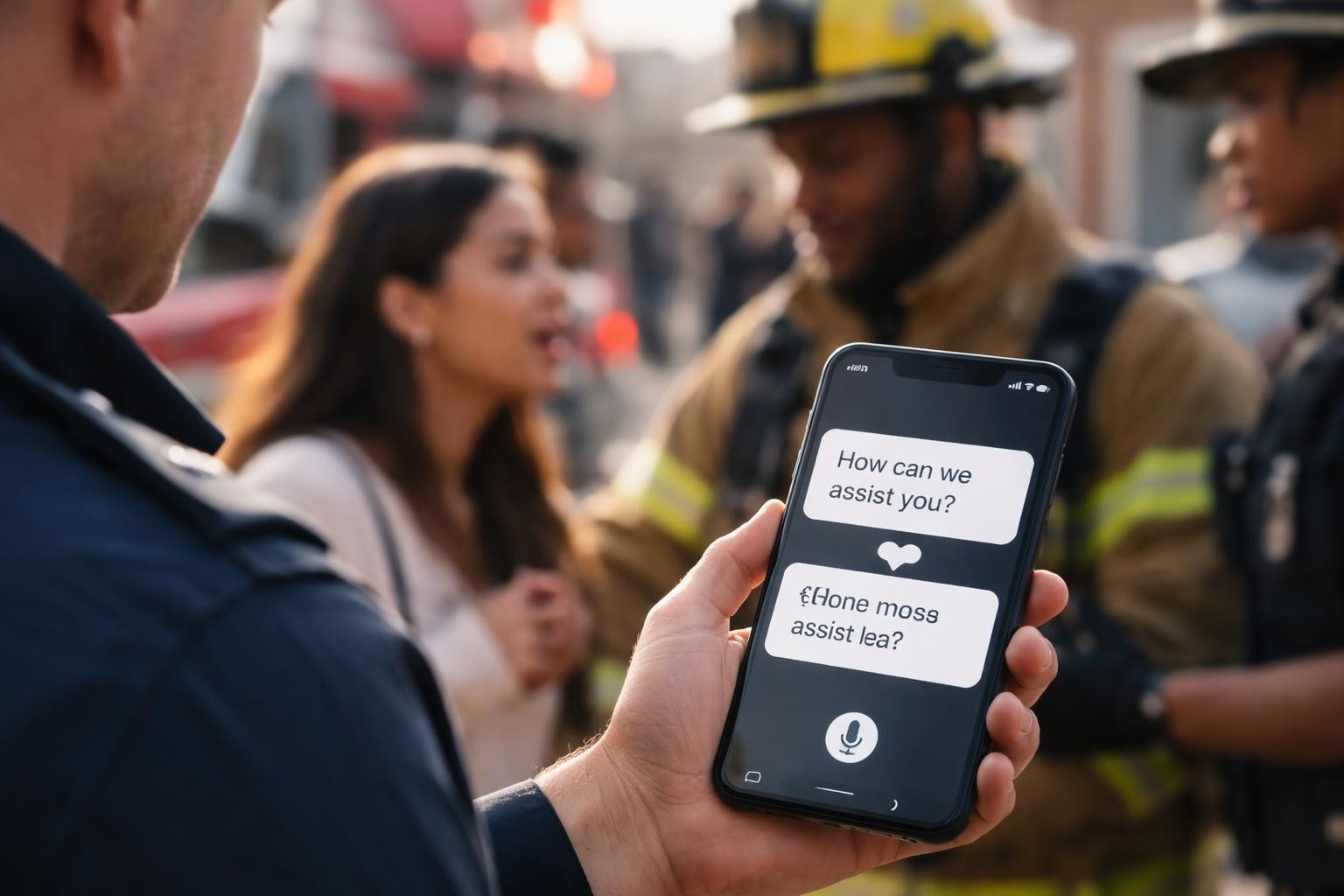
First responders increasingly utilize body cameras, dash cameras, and mobile video devices. Integrating translation capabilities into these systems would enable real-time communication assistance during field operations, allowing officers and paramedics to interact effectively with non-English speakers without waiting for interpreter arrival.
Data Security and Privacy Considerations
Deploying ai in translation within public safety operations raises important privacy and security questions. Emergency communications contain sensitive personal information, medical details, and potentially criminal evidence. Translation systems must protect this data while maintaining functionality and accessibility.
Compliance requirements vary by jurisdiction but typically mandate encryption, access controls, and audit capabilities. Public safety agencies must ensure translation platforms meet standards like Criminal Justice Information Services (CJIS) requirements and Health Insurance Portability and Accountability Act (HIPAA) regulations when handling medical information.
Security Best Practices
- End-to-end encryption for all translated communications
- Role-based access controls limiting system access to authorized personnel
- Comprehensive audit logging tracking all translation activities
- Data retention policies defining storage duration and deletion procedures
- Regular security assessments identifying and addressing vulnerabilities
Organizations must also consider data sovereignty issues, particularly when translation services process information through cloud servers located in different jurisdictions. Some agencies opt for on-premise solutions despite higher costs to maintain complete control over sensitive data.
Training and Professional Development
Effective use of ai in translation requires ongoing education for emergency services personnel. Dispatchers must understand system capabilities and limitations, knowing when automated translation suffices and when human interpreters become necessary. This judgment proves critical during complex medical emergencies or situations involving legal rights.
Training programs should cover technical operation, quality assessment, and cultural competency. Understanding that translation guidelines extend beyond literal word conversion helps personnel recognize when translations may miss cultural nuances or contextual meanings.
Professional development should also address bias recognition. AI systems can inadvertently perpetuate biases present in their training data. Awareness of these potential issues enables users to apply appropriate scrutiny and seek verification when translations seem questionable.
Future Developments and Emerging Trends
The trajectory of ai in translation points toward increasingly sophisticated capabilities specifically tailored for emergency services. Research focuses on context-aware systems that understand emergency scenarios and adapt translations accordingly. Future platforms may recognize caller stress levels, adjust communication approaches, and prioritize critical information extraction.
Advances in neural machine translation continue pushing accuracy boundaries while reducing processing latency. Edge computing enables faster processing by performing translation locally rather than routing data to distant cloud servers, particularly beneficial for mobile first responders.
Emerging Technologies
Real-time dialect adaptation will allow systems to handle regional language variations more effectively. Emotional intelligence integration may help systems recognize and preserve the emotional tone of communications, ensuring translations convey urgency and emotional context alongside literal meanings.
Augmented reality integration could overlay translated text onto video feeds, enabling first responders to see translated signage, documents, or written information through smart glasses or mobile devices. These capabilities would extend language access beyond interpersonal communication to environmental interpretation.
The question "will businesses be lost in AI translation" applies equally to public safety agencies. Organizations that strategically implement these technologies while maintaining human oversight will deliver superior service to linguistically diverse communities.
Measuring Return on Investment
Quantifying the value of ai in translation investments helps agencies justify expenditures and optimize deployments. Traditional ROI calculations focus on cost savings from reduced interpreter fees, but emergency services must also consider improved outcomes and enhanced community trust.
Performance Metrics
| Metric Category | Key Indicators | Measurement Method |
|---|---|---|
| Operational Efficiency | Response time reduction, Call handling capacity | System analytics |
| Cost Management | Interpreter expenses, Technology costs | Financial tracking |
| Service Quality | Translation accuracy, User satisfaction | Quality audits, Surveys |
| Community Impact | Service accessibility, Incident outcomes | Demographic analysis |
| Staff Performance | Training completion, System utilization | Personnel records |
Reduced response times represent tangible benefits. When dispatchers access instant translations rather than waiting for interpreters, critical minutes are saved. These time savings directly impact survival rates for medical emergencies and safety outcomes for various incident types.
Community confidence also improves when residents know they can communicate with emergency services regardless of their English proficiency. This enhanced trust encourages earlier reporting and better cooperation during incidents.
Regulatory Compliance and Legal Considerations
Public safety agencies operate within complex regulatory frameworks that govern language access. Title VI of the Civil Rights Act requires entities receiving federal funding to provide meaningful access to services for limited English proficient individuals. Language access requirements extend to emergency services, mandating effective communication solutions.
AI translation systems must demonstrate compliance with these mandates while maintaining the accuracy and reliability required for legal proceedings. Translated emergency communications may become evidence in criminal or civil cases, necessitating documentation of translation methods and quality assurance processes.
Agencies should maintain records demonstrating:
- System validation showing translation accuracy across supported languages
- Quality control procedures ensuring consistent performance
- Training documentation proving personnel competency
- Incident logs recording all translated communications
- Compliance audits verifying regulatory adherence
Legal counsel should review translation system implementations to ensure they meet jurisdictional requirements and provide adequate protection during litigation. Understanding translation approaches helps organizations select solutions that balance technological capability with legal defensibility.
AI in translation represents a transformative advancement for emergency communication, enabling public safety agencies to serve linguistically diverse communities with unprecedented effectiveness. The technology continues evolving rapidly, offering increasingly sophisticated capabilities specifically designed for high-stakes scenarios. When deployed strategically with appropriate human oversight and continuous quality monitoring, these systems dramatically improve response times and service accessibility. Convey911 delivers comprehensive emergency communication and translation solutions supporting over 185 languages across text, video, and voice channels, empowering public safety agencies to communicate effectively with every community member during critical moments.