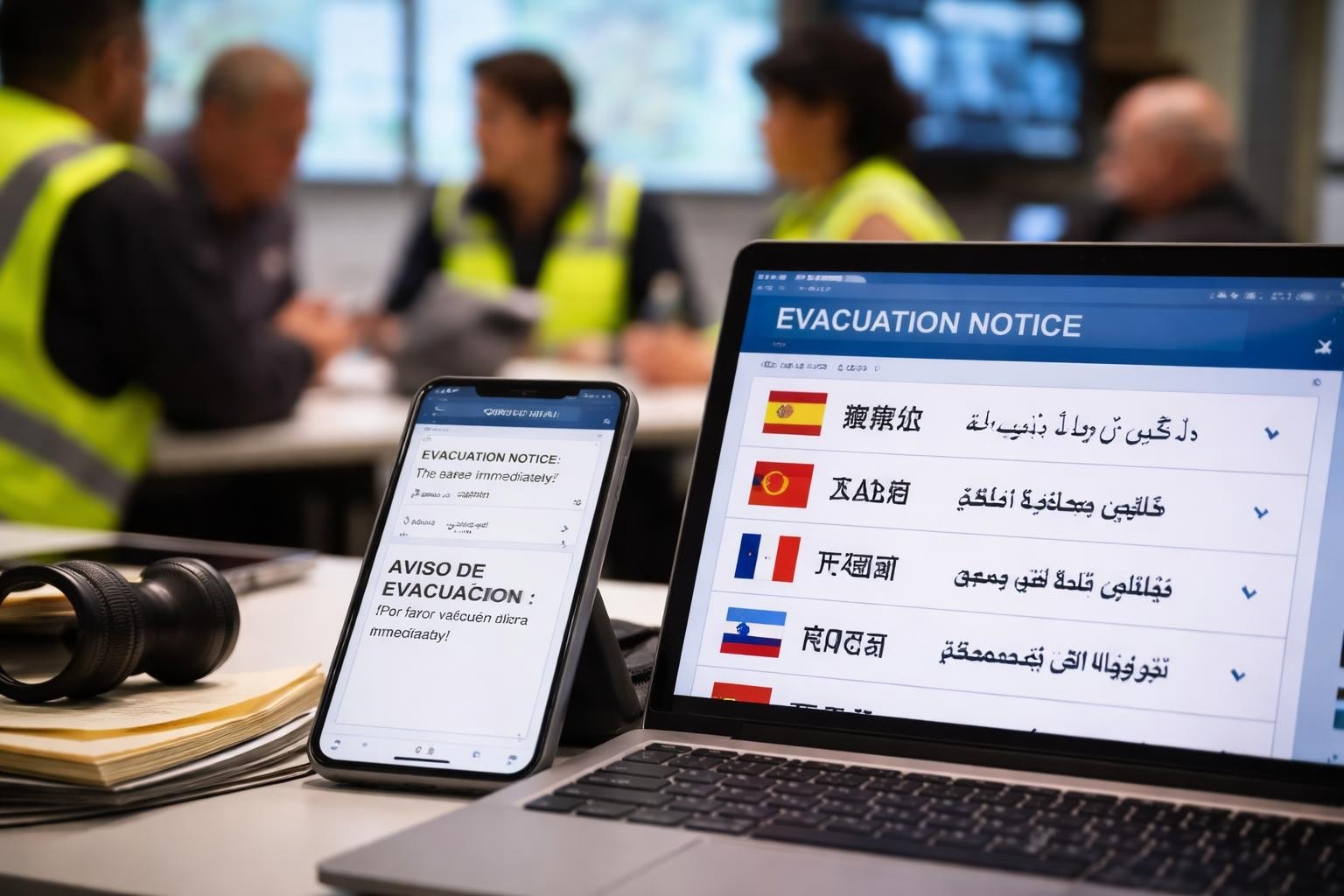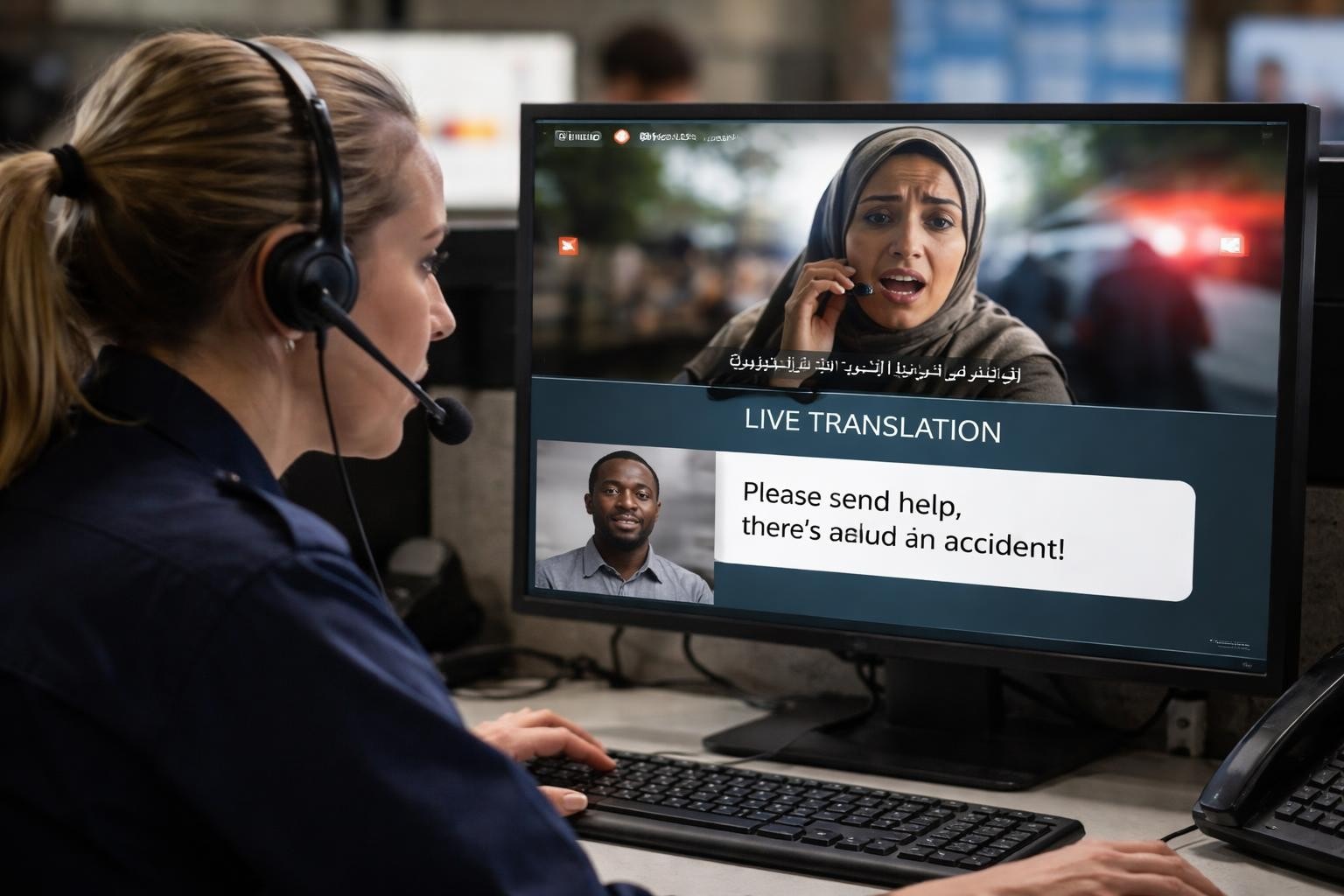

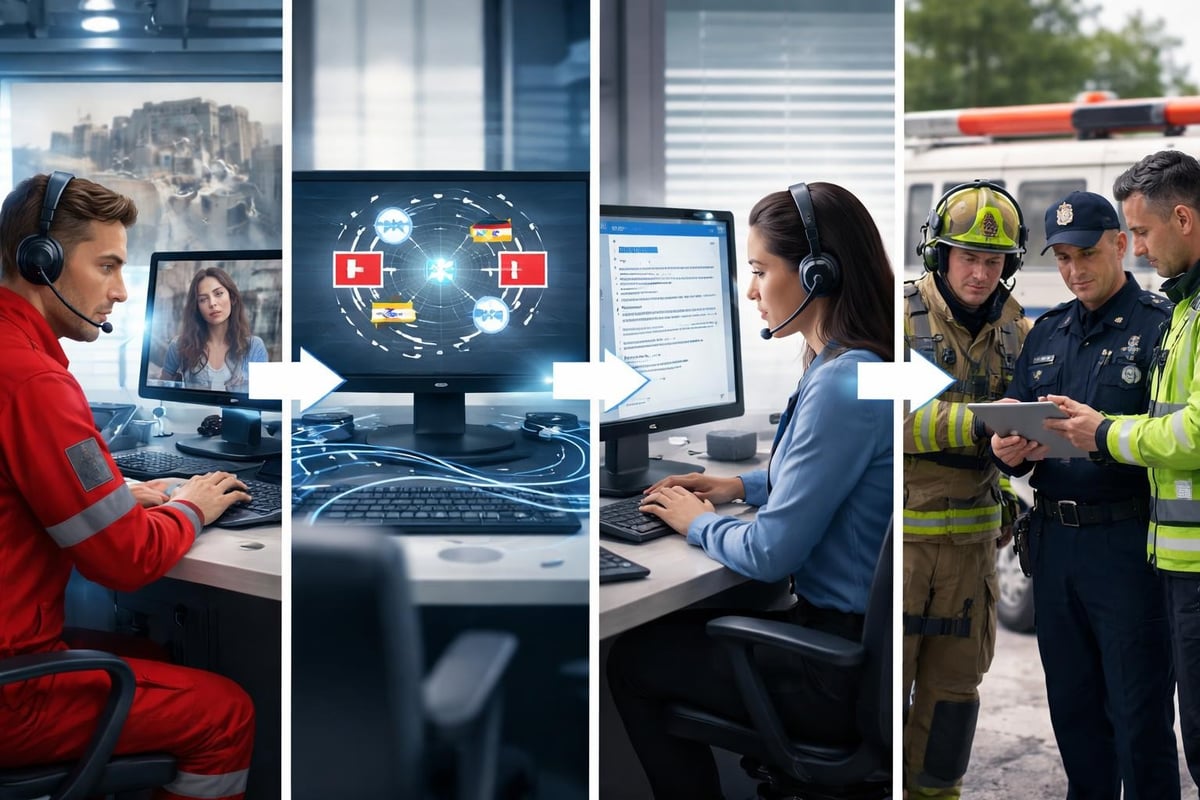
Emergency communication transcends language barriers when lives hang in the balance. Translation...
Emergency situations demand instant, accurate communication regardless of language barriers. When public safety agencies receive calls from individuals who don't speak English, every second counts in providing appropriate assistance. Any language translation technology has transformed how first responders, dispatchers, and emergency personnel handle these critical interactions, enabling them to deliver life-saving services to diverse communities without delay or miscommunication.
The Critical Need for Multilingual Emergency Communication
Public safety agencies across the United States serve increasingly diverse populations. In major metropolitan areas, emergency calls may come in dozens of different languages on any given day. Traditional approaches using human interpreters create delays that can prove dangerous in time-sensitive situations.
Any language translation systems address this challenge by providing immediate access to communication tools that work across text, voice, and video channels. These platforms eliminate the wait time associated with traditional interpreter services while maintaining accuracy and cultural sensitivity.
Key Benefits for Emergency Services
Modern translation platforms deliver measurable advantages for public safety operations:
- Immediate response capability without waiting for interpreter availability
- 24/7 access to translation services across all shifts
- Cost reduction compared to maintaining on-call interpreter networks
- Improved caller outcomes through faster, more accurate communication
- Documentation support with translated transcripts for reports and records
The impact extends beyond individual calls. Agencies implementing comprehensive translation solutions report higher community trust, improved response times, and better resource allocation across their operations.
Technology Behind Any Language Translation Systems
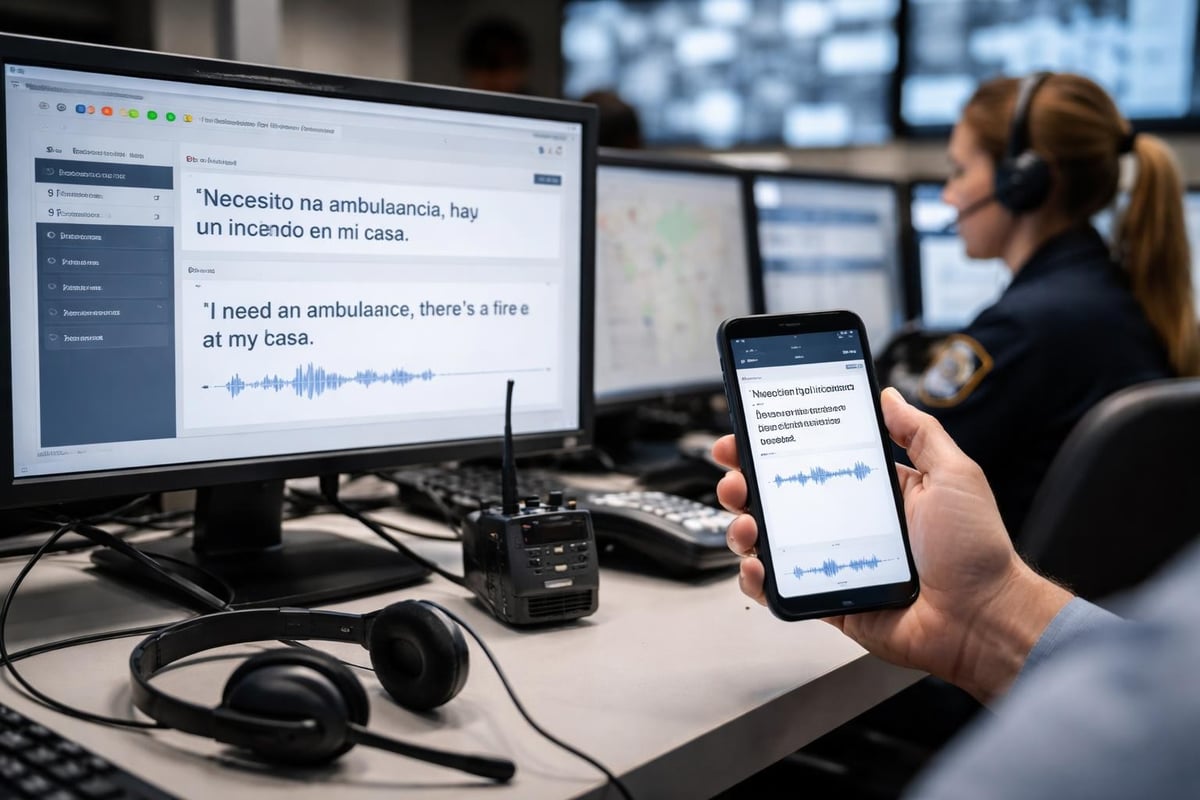
Understanding how translation technology works helps agencies select and implement the right solutions. Modern platforms combine multiple technological approaches to deliver reliable, fast translations in emergency contexts.
Core Translation Components
| Component | Function | Emergency Application |
|---|---|---|
| Speech Recognition | Converts spoken words to text | Captures caller statements in real-time |
| Language Detection | Identifies source language automatically | Eliminates need for caller to specify language |
| Translation Engine | Processes text between languages | Provides accurate meaning conversion |
| Text-to-Speech | Converts translated text to audio | Enables voice communication flow |
| Quality Assurance | Validates translation accuracy | Ensures critical information remains correct |
Neural machine translation has significantly improved accuracy rates, particularly for emergency-specific terminology. These systems learn from vast datasets including public safety communications, medical terminology, and cultural context to deliver translations that preserve meaning and urgency.
Professional translation services emphasize the importance of industry-specific translation approaches that account for specialized vocabulary and context. Emergency communication represents one of the most demanding applications, where errors can have serious consequences.
Implementing Any Language Translation in Emergency Operations
Successful implementation requires careful planning and integration with existing emergency communication infrastructure. Agencies must consider technical requirements, training needs, and operational workflows to maximize the value of translation systems.
Implementation Phases
Phase 1: Assessment and Planning
Begin by analyzing current language access challenges. Review call data to identify the most common non-English languages in your service area. This information guides configuration priorities and helps justify the investment to stakeholders.
Phase 2: System Integration
Translation platforms must connect seamlessly with Computer-Aided Dispatch (CAD) systems, recording equipment, and other critical infrastructure. Emergency communication technology should enhance existing workflows rather than disrupting them.
Phase 3: Staff Training
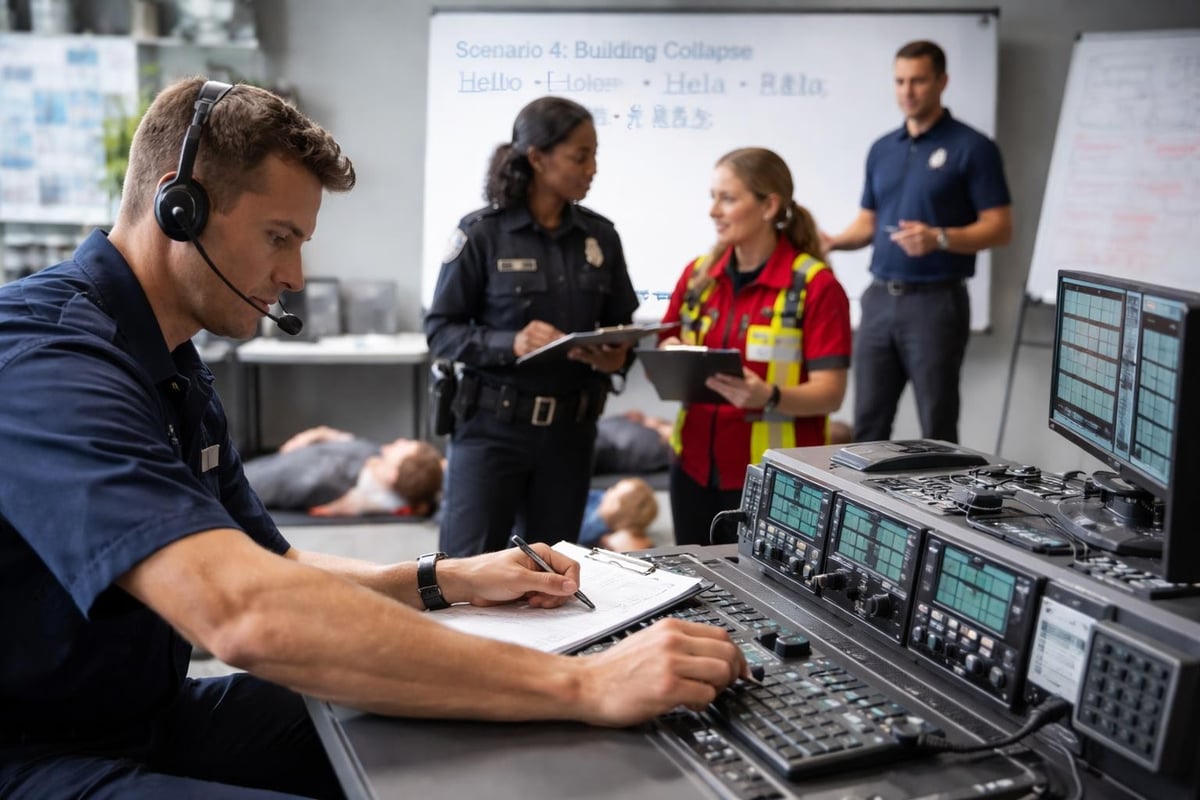
Dispatchers and first responders need hands-on training with translation tools. Practice scenarios should cover common situations and stress-test the system under realistic conditions.
- Introduce basic system navigation and language selection
- Practice with pre-scripted emergency scenarios
- Conduct live drills using the translation system
- Establish protocols for system failures or limitations
- Create quick reference guides for common situations
Phase 4: Pilot Testing
Start with a limited deployment to identify issues before full rollout. Monitor performance metrics, gather user feedback, and adjust configurations based on real-world use.
Best Practices for Emergency Translation Quality
Quality matters immensely in emergency contexts where mistranslations can endanger lives. Following established translation best practices helps ensure any language translation systems deliver reliable results.
Accuracy Optimization Strategies
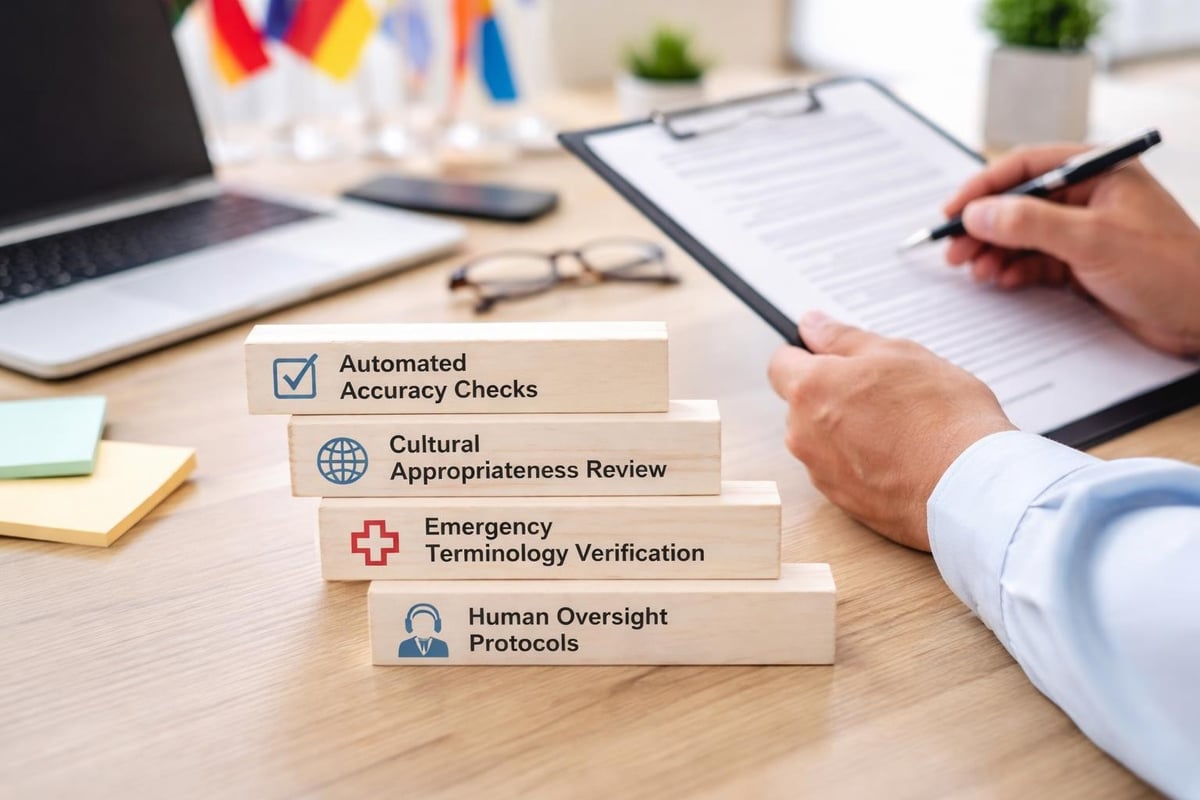
Maintain a glossary of emergency-specific terms and their approved translations. Standard phrases like "stay on the line," "help is on the way," and "what is your emergency" should have verified translations readily available.
Context preservation is equally critical. Translation systems must recognize that emergency communication often involves fragmented speech, background noise, and high-stress conditions. Modern platforms account for these factors through specialized training data and algorithms.
The localization process extends beyond word-for-word translation to include cultural adaptation. Certain concepts or instructions may need adjustment to maintain their intended meaning across cultures.
Cultural Competency Considerations
- Directness levels vary across cultures in emergency situations
- Authority perception affects how instructions are received
- Medical terminology may not translate directly in all languages
- Address formats differ internationally, affecting location identification
- Time references can create confusion without proper context
Understanding these nuances helps agencies configure their any language translation systems appropriately and train staff to recognize when additional clarification may be necessary.
Measuring Translation System Performance
Data-driven evaluation ensures translation systems meet operational needs and deliver return on investment. Public safety agencies should track specific metrics that reflect both technical performance and real-world outcomes.
Key Performance Indicators
| Metric | Target | Measurement Method |
|---|---|---|
| Translation Accuracy Rate | >95% | Periodic quality audits |
| Average Connection Time | <10 seconds | System analytics |
| Call Resolution Time | Match or improve baseline | CAD integration data |
| User Satisfaction | >4.0/5.0 | Dispatcher surveys |
| Language Coverage | All top 10 community languages | Usage reports |
Regular reporting helps identify trends and opportunities for improvement. For example, if certain languages show lower accuracy rates, agencies can work with their translation provider to enhance those specific language pairs.
Beyond quantitative metrics, qualitative feedback from dispatchers and field personnel provides valuable insights. They can identify situations where the system excels and scenarios that need additional support or alternative approaches.
Integration with Emergency Communication Infrastructure
Any language translation technology delivers maximum value when fully integrated with existing emergency communication systems. Standalone solutions create workflow disruptions and reduce adoption rates among busy emergency personnel.
Critical Integration Points
Modern emergency operations centers rely on interconnected systems that share information and streamline operations. Translation capabilities should connect with:
Computer-Aided Dispatch Systems
Translated communications should automatically populate incident records, eliminating duplicate data entry and ensuring accurate documentation. This integration also enables supervisors to review translated interactions during quality assurance processes.
Recording and Logging Equipment
All emergency calls must be recorded for legal, training, and quality purposes. Translation systems should preserve both original audio and translated text or audio for complete documentation.
Mobile Data Terminals
Field units need access to translated information while responding to incidents. Emergency translation capabilities should extend to mobile platforms, allowing officers and firefighters to communicate with individuals on scene.
Text-to-911 Systems
Text-based emergency communication requires specialized translation approaches. The text translation software must handle abbreviated language, emoticons, and other characteristics of text messaging while maintaining accuracy.
Advanced Features in Modern Translation Platforms
The any language translation landscape continues evolving with new capabilities that address specific emergency communication challenges. Agencies evaluating translation solutions should look for advanced features that enhance operational effectiveness.
Multi-Modal Communication
Emergencies don't always allow for voice communication. Comprehensive platforms support:
- Real-time text chat translation for hearing-impaired callers
- Video interpreter services for sign language and visual context
- Image translation for photographed documents or signs
- Pre-recorded message translation for common instructions
This multi-modal approach ensures agencies can communicate regardless of caller capabilities or environmental constraints.
Dialect and Regional Variation Recognition
Languages vary significantly across regions. Spanish spoken in Mexico differs from Puerto Rican or Argentine Spanish in vocabulary, pronunciation, and idioms. Advanced translation systems recognize these variations and adjust accordingly.
Emergency-Specific Vocabulary
Generic translation engines often struggle with specialized terminology. Purpose-built emergency communication platforms include extensive databases of:
- Medical conditions and symptoms
- Law enforcement procedures and legal terms
- Fire service terminology
- Hazardous materials classifications
- Geographic and navigational references
This specialized knowledge improves accuracy in the contexts that matter most for public safety operations.
Training and Change Management
Technology alone doesn't guarantee success. Effective training and change management ensure personnel embrace and properly utilize any language translation tools in their daily operations.
Comprehensive Training Programs
Staff training should address both technical operation and communication best practices. Dispatchers need to understand:
- How to initiate translation services quickly during active calls
- Speaking clearly and concisely to optimize translation accuracy
- Verifying understanding through confirmation questions
- Recognizing when human interpreter escalation is appropriate
- Documenting translated interactions properly
Field personnel require different training focused on mobile applications and on-scene communication. Their needs include quick reference cards, scenario-based practice, and clear protocols for various situations.
Ongoing Support and Improvement
Initial training represents just the beginning. Continuous improvement requires:
- Regular refresher sessions on system updates
- Sharing success stories and lessons learned
- Creating peer mentorship opportunities
- Collecting and acting on user feedback
- Updating protocols based on real-world experience
Agencies that invest in ongoing development see higher adoption rates and better outcomes than those that treat training as a one-time event.
Return on Investment for Translation Technology
Budget-conscious public safety agencies must justify technology investments with clear ROI analysis. Any language translation systems deliver value through multiple channels that extend beyond direct cost savings.
Direct Cost Savings
Traditional interpreter services bill by the minute, with premium rates for emergency availability and rare languages. These costs accumulate quickly:
- Per-minute interpreter fees ranging from $2 to $5
- Minimum billing periods creating waste on short calls
- Rush fees for immediate availability
- Multiple interpreter connections for extended incidents
Translation technology typically operates on flat-rate licensing, dramatically reducing per-interaction costs while improving response times.
Indirect Value Creation
| Benefit Category | Impact |
|---|---|
| Faster Response Times | Improved outcomes, reduced liability exposure |
| Better Documentation | Enhanced legal defensibility, improved case outcomes |
| Expanded Service Capacity | Serve more residents effectively with existing staff |
| Community Relations | Increased trust, higher cooperation rates |
| Staff Efficiency | Reduced stress, better job satisfaction |
The ROI of removing friction in emergency communications extends throughout agency operations, creating compounding benefits over time.
Future Trends in Emergency Translation Technology
The translation industry continues advancing rapidly, with new developments promising even better emergency communication capabilities. Understanding emerging trends helps agencies plan for long-term technology adoption.
Artificial Intelligence Enhancement
Recent AI contributions to translation have dramatically improved accuracy and natural language processing. Machine learning systems trained on emergency communications data can recognize patterns, predict common phrases, and adapt to individual caller speech patterns in real-time.
Context-aware translation represents the next frontier. Future systems will understand not just words but the broader situation, adjusting terminology and tone appropriately based on emergency type, caller emotional state, and other contextual factors.
Augmented Reality Integration
First responders may soon access real-time translation through augmented reality displays in helmets or glasses. This hands-free approach would enable continuous communication while performing other tasks, particularly valuable in fire suppression or rescue operations.
Predictive Language Support
Analytics can identify language trends in specific neighborhoods or during certain times, allowing systems to pre-load relevant translation resources for faster activation. This predictive approach reduces latency and improves first-word accuracy.
Regulatory Compliance and Language Access
Federal regulations require meaningful access to emergency services for Limited English Proficiency (LEP) individuals. Any language translation technology helps agencies meet these obligations while serving their communities effectively.
Legal Requirements
Title VI of the Civil Rights Act prohibits discrimination based on national origin, which courts have interpreted to include language access requirements. Public safety agencies receiving federal funding must provide language assistance to LEP individuals.
The Department of Justice emphasizes that language access plans should include:
- Identification of LEP populations in the service area
- Translation of vital documents and communications
- Staff training on language access protocols
- Regular monitoring and updating of language services
Modern translation platforms help document compliance efforts through detailed usage logs, quality metrics, and coverage reports that demonstrate commitment to equitable service delivery.
Documentation and Accountability
Comprehensive translation guidelines help agencies establish clear protocols that meet legal requirements while maintaining operational efficiency. Written policies should address when translation is required, how to access services, and quality assurance processes.
Selecting the Right Translation Solution
Not all translation platforms meet the demanding requirements of emergency communication. Agencies must evaluate solutions carefully, considering both technical capabilities and operational fit.
Essential Selection Criteria
Language Coverage
Platforms should support all languages commonly encountered in your service area, with the flexibility to add new languages as demographics shift. Supporting 185+ languages ensures readiness for any situation.
Response Time
Connection speed matters critically in emergencies. Evaluate average time to connect with translation services across different languages and communication modes.
Reliability and Redundancy
Emergency services operate 24/7/365. Translation platforms must match this availability with redundant systems, backup capabilities, and guaranteed uptime commitments.
Integration Capabilities
Seamless connection with existing CAD, recording, and mobile systems is essential. Request detailed integration documentation and case studies from similar agencies.
Security and Privacy
Emergency communications contain sensitive personal information. Translation platforms must meet or exceed public safety security standards, including encrypted transmission, secure storage, and appropriate access controls.
Understanding how translation quality is assured helps agencies ask informed questions during the evaluation process and select providers with robust quality management systems.
Effective emergency response demands communication without barriers, regardless of the languages involved. Implementing comprehensive any language translation capabilities transforms how public safety agencies serve diverse communities, delivering faster response times, improved outcomes, and equitable access to life-saving services. Convey911 provides emergency communication and language translation software supporting over 185 languages across text, video, and voice channels, helping public safety agencies bridge communication gaps and enhance response effectiveness. Contact Convey911 today to discover how real-time translation technology can strengthen your agency's ability to serve every community member in their moment of need.