
When cellular networks go down and internet connectivity fails, emergency responders need reliable...
In emergency situations, the ability to communicate a message clearly and effectively can mean the difference between life and death. Public safety professionals face unique challenges when conveying critical information under pressure, particularly when language barriers, technical limitations, or time constraints create obstacles. Understanding how to structure, deliver, and verify your message ensures that essential information reaches the right people at the right time, regardless of the circumstances or communication medium.
Understanding Message Communication Fundamentals
The process to communicate a message involves more than simply transmitting words from sender to receiver. It requires careful consideration of context, audience, and purpose to ensure the intended meaning arrives intact.
Core Components of Effective Message Delivery
Every successful communication exchange relies on several foundational elements working in harmony. The sender must encode information clearly, select an appropriate channel, and account for potential interference or misunderstanding.
Key elements include:
- Clarity of purpose - knowing exactly what outcome you want to achieve
- Audience awareness - understanding who will receive your message and their needs
- Channel selection - choosing the right medium for the situation
- Feedback mechanisms - confirming the message was received and understood correctly
- Context consideration - accounting for environmental and situational factors
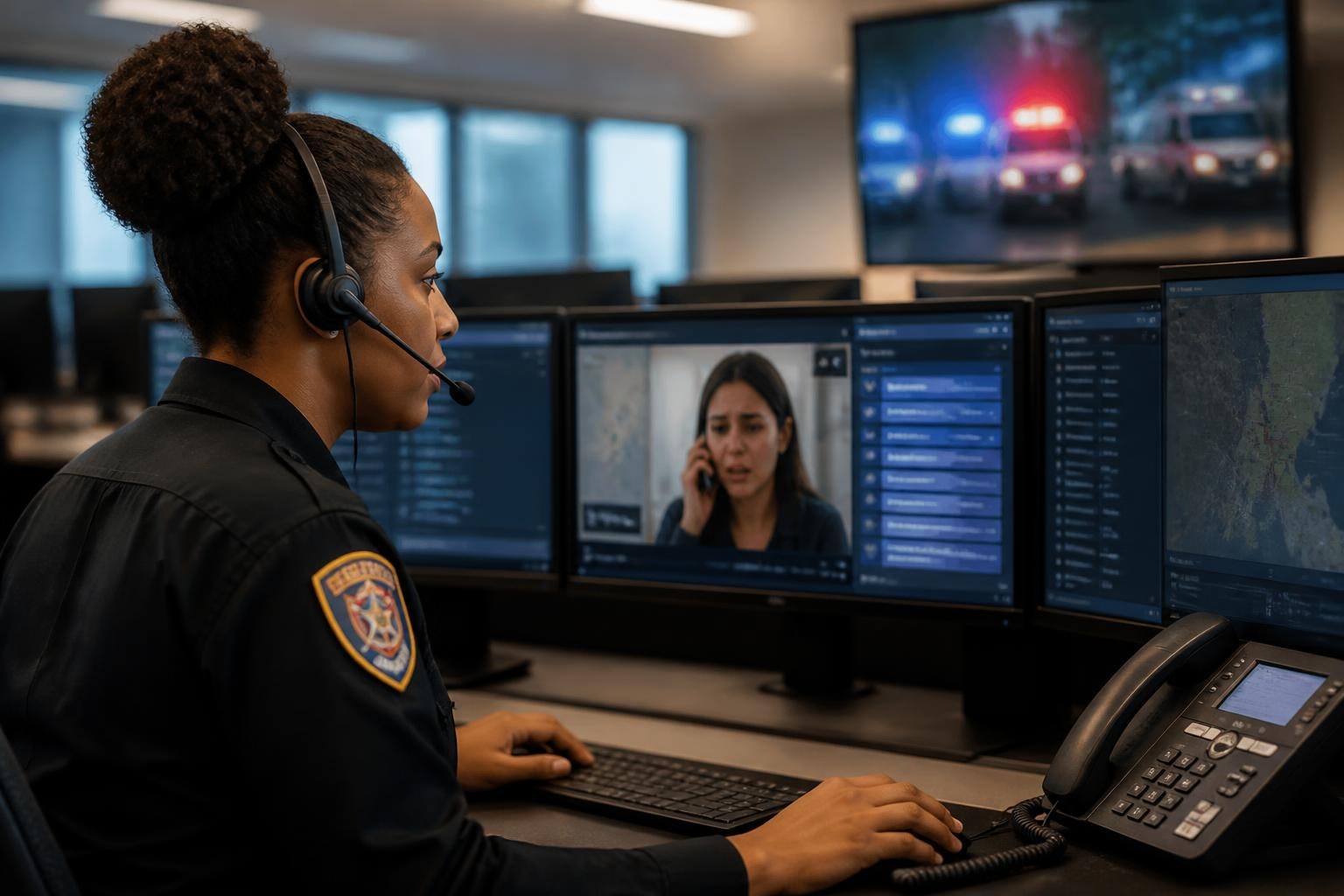
When you communicate a message in emergency contexts, these elements become even more critical. A 911 dispatcher must instantly assess the caller's situation, extract vital information, and relay instructions with precision. Research on communication strategies shows that adapting your approach to different contexts dramatically improves comprehension and response rates.

Language Barriers in Critical Communications
One of the most significant challenges in emergency communication is bridging language gaps. Public safety agencies increasingly serve diverse populations where English may not be the primary language. When you need to communicate a message to someone who speaks a different language, traditional methods fail.
| Challenge | Impact | Solution |
|---|---|---|
| Limited language proficiency | Delayed response times | Real-time translation technology |
| Cultural communication differences | Misunderstood instructions | Culturally-aware interpretation services |
| High-stress environments | Reduced comprehension | Clear, simple language structures |
| Multiple communication channels | Inconsistent messaging | Unified translation across text, voice, and video |
Understanding these barriers is the first step toward implementing solutions that ensure every individual can communicate a message effectively during emergencies.
Strategic Approaches for Emergency Message Delivery
Developing a systematic approach to communication ensures consistency and reliability when stakes are highest. Public safety professionals must master multiple strategies to adapt to rapidly changing situations.
The Five Pillars of Message Structure
Building your communication on a solid framework prevents confusion and ensures completeness. The Five P's approach provides a proven structure for organizing your thoughts before you communicate a message.
- Premise - Establish the foundation of what you're communicating
- Purpose - Clarify why this message matters and what action it requires
- Plan - Organize information in a logical sequence
- Presence - Maintain focus and authority during delivery
- Priming - Prepare your audience to receive and act on the information
This structured approach becomes second nature with practice. A paramedic arriving on scene must quickly communicate a message to emergency room staff that includes patient condition, interventions performed, and anticipated needs. Following this framework ensures nothing critical gets omitted under pressure.
Channel Optimization for Different Scenarios
Different emergency situations demand different communication channels. Selecting the wrong medium can delay response or cause misunderstandings that compromise safety.
Text-based communication works best for:
- Documenting precise details like addresses and unit numbers
- Communicating with hearing-impaired individuals
- Situations where voice communication is dangerous or impossible
- Creating permanent records for dispatch systems
Voice communication excels when:
- Immediate back-and-forth dialogue is needed
- Conveying tone and urgency matters
- The recipient is mobile or unable to read text
- Building rapport quickly is essential
Video communication provides advantages for:
- Visual assessment of situations
- Sign language interpretation
- Demonstrating procedures or techniques
- Verifying identity or locations
Modern emergency communication systems integrate all three channels, allowing responders to communicate a message using the most effective medium for each specific situation.
Overcoming Communication Obstacles in High-Pressure Environments
Emergency responders regularly face conditions that would derail normal conversations. Noise, stress, language differences, and technical failures all threaten to disrupt the flow of critical information.
Noise and Environmental Interference
Physical environments often work against clear communication. Sirens, traffic, crowds, and emergency equipment create acoustic barriers that make it difficult to communicate a message verbally.
Strategies for noisy environments:
- Use text-based systems when audio quality is compromised
- Implement standardized codes and phrases that require fewer words
- Leverage technology that filters background noise
- Establish visual signals as backup communication methods
- Create designated quiet zones for critical communications
Effective workplace communication principles apply equally to emergency contexts, emphasizing the importance of selecting formats that match environmental conditions.

Stress-Induced Communication Breakdown
High-stress situations impair both the ability to communicate a message and to receive one. Adrenaline affects cognitive processing, memory, and verbal fluency. Understanding these effects helps responders adapt their communication style.
Research on essential communication strategies highlights that delivery method significantly impacts how well stressed individuals process information. Short, direct statements work better than complex explanations. Repetition reinforces key points without seeming condescending.
Technology Failures and Backup Systems
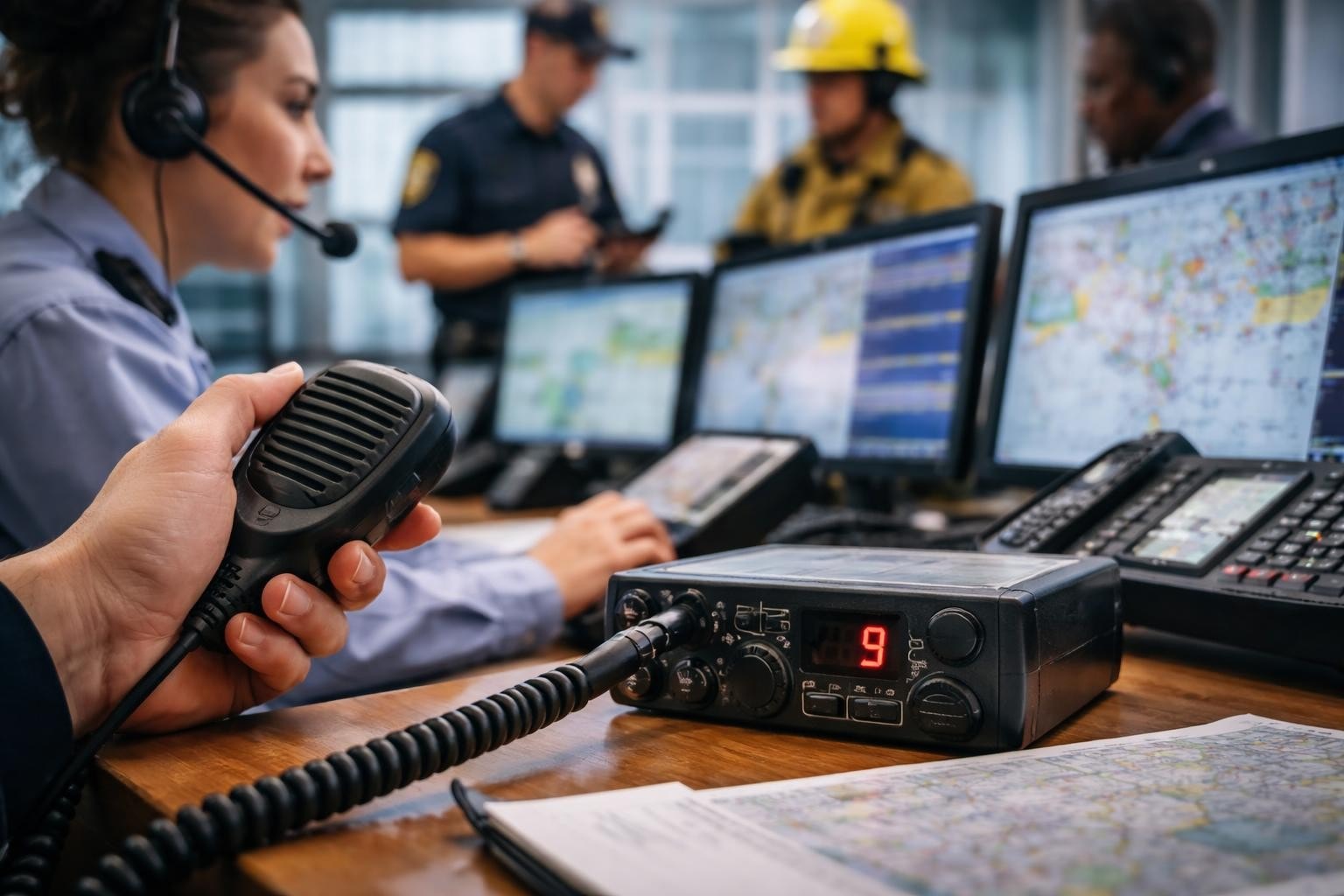
No technology is infallible. Radio systems fail, cell towers become overloaded, and software crashes at the worst possible moments. To reliably communicate a message during emergencies, agencies need redundant systems and fallback protocols.
| Primary System | Backup Option | Use Case |
|---|---|---|
| Digital radio | Analog radio | Network congestion |
| Cellular voice | Satellite phone | Tower damage |
| CAD system | Paper forms | Computer failure |
| Translation software | Human interpreters | Internet outage |
Building redundancy into communication infrastructure ensures that first responders can always communicate a message, regardless of which systems remain operational.
Implementing Multilingual Communication Protocols
As communities become increasingly diverse, the need to communicate a message across language barriers grows more urgent. Traditional interpreter services often introduce dangerous delays in time-sensitive situations.
Real-Time Translation Technology
Modern translation platforms enable instant communication across more than 185 languages. When a 911 operator receives a call from someone who speaks Mandarin, Vietnamese, or Arabic, they can communicate a message immediately without waiting for an interpreter to join the call.
The technology works across multiple modalities:
- Text translation converts written messages instantly, ideal for text-to-911 services
- Voice translation enables spoken conversations through real-time interpretation
- Video translation supports sign language users and visual communication needs
These capabilities transform how agencies serve non-English speaking populations. A dispatcher can communicate a message about evacuation procedures to a Spanish-speaking resident with the same speed and clarity as they would to an English speaker.
Building Language-Inclusive Response Teams
Technology alone isn't sufficient. Organizations must develop language access protocols that ensure every team member knows how to communicate a message when encountering language barriers.
Essential protocol elements:
- Immediate language identification procedures
- Quick access to translation resources
- Training on cultural communication differences
- Documentation standards for multilingual interactions
- Quality assurance measures for translated communications
These protocols ensure consistency regardless of which dispatcher, officer, or paramedic is on duty. Every responder can communicate a message effectively to every community member.
Verification and Feedback Mechanisms
Assuming your message was understood as intended can lead to catastrophic mistakes. Verification closes the communication loop and confirms that the recipient grasped the essential information.
Active Listening and Confirmation Techniques
When you communicate a message in an emergency, you must verify understanding immediately. Active listening strategies help ensure accurate reception.
Effective verification methods include:
- Read-back confirmation - asking the recipient to repeat critical details
- Acknowledgment requests - requiring explicit confirmation of receipt
- Action verification - observing whether the recipient acts correctly
- Question prompts - asking specific questions that reveal comprehension level
- Multiple-choice confirmation - offering options to verify understanding
A paramedic might communicate a message about medication administration, then ask the receiving nurse to confirm the drug name, dosage, and route. This simple step catches errors before they cause harm.

Measuring Communication Effectiveness
Organizations should track metrics that reveal how well teams communicate a message during operations. Data-driven analysis identifies weaknesses before they contribute to poor outcomes.
| Metric | Target | Purpose |
|---|---|---|
| Average call processing time | < 90 seconds | Efficiency measure |
| Message accuracy rate | > 99% | Quality control |
| Translation request frequency | Tracked trend | Language service utilization |
| Callback rate | < 2% | Comprehension verification |
| Complaint frequency | < 0.5% | Satisfaction indicator |
Regular review of these metrics helps agencies refine how they communicate a message across all scenarios and populations.
Training and Continuous Improvement
The ability to communicate a message effectively under pressure requires deliberate practice and ongoing skill development. One-time training sessions prove insufficient for maintaining proficiency.
Scenario-Based Communication Drills
Realistic practice scenarios help responders develop muscle memory for effective communication. These drills should include common challenges like language barriers, environmental noise, and equipment failures.
Effective drill components:
- Time pressure that simulates real emergency conditions
- Language diversity requiring translation resources
- Technical disruptions forcing use of backup systems
- Multi-agency coordination requiring clear handoffs
- High-stress elements that test composure and clarity
Regular participation in these drills ensures that when responders must communicate a message during actual emergencies, the process feels familiar rather than overwhelming.
Incorporating Technology Training
As emergency communication systems become more sophisticated, training must keep pace. Team members need hands-on experience with translation platforms, video communication tools, and integrated dispatch systems.
Training should emphasize not just how to operate the technology, but when to deploy specific features. Understanding that you can communicate a message through video when assessing a medical condition remotely, or through text when the caller cannot speak safely, requires judgment that develops through guided practice.
Performance Feedback and Coaching
Individual performance reviews should include specific feedback on communication effectiveness. Workplace communication tips emphasize that constructive feedback drives improvement far more effectively than criticism.
Supervisors might review recorded calls or radio traffic, noting instances where an operator successfully navigated a language barrier to communicate a message, or where clearer phrasing could have prevented confusion. This personalized coaching accelerates skill development.
Cross-Agency Communication Standards
Major incidents often involve multiple agencies working together. When fire, police, EMS, and other organizations must coordinate, the ability to communicate a message clearly across organizational boundaries becomes critical.
Standardized Terminology and Codes
Different agencies sometimes use different terminology for the same concepts, creating confusion during joint operations. Establishing common language ensures everyone understands when someone tries to communicate a message.
Standardization areas include:
- Incident classification systems
- Resource request procedures
- Status reporting formats
- Priority level designations
- Location identification methods
The NFPA 1221 standard provides guidance for establishing these common frameworks, ensuring interoperability when multiple agencies respond to the same incident.
Information Sharing Protocols
Knowing what information to share, when to share it, and through which channels prevents both information overload and critical gaps. When you communicate a message to partner agencies, relevance and timeliness matter as much as accuracy.
| Information Type | Primary Recipients | Update Frequency | Channel |
|---|---|---|---|
| Incident location | All responding units | Upon change | Radio/CAD |
| Hazard warnings | Scene personnel | Immediately | All available |
| Resource status | Command/Dispatch | Every 15 min | CAD system |
| Investigation details | Law enforcement | As discovered | Secure channel |
| Patient information | Medical facilities | Upon transport | Direct communication |
These protocols ensure that each agency receives the information they need to perform their role effectively, without being overwhelmed by irrelevant details.
Emerging Technologies and Future Capabilities
The landscape of emergency communication continues to evolve rapidly. New technologies create opportunities to communicate a message more effectively than ever before, while also introducing new challenges.
Artificial Intelligence and Message Enhancement
AI-powered systems can analyze how responders communicate a message and provide real-time suggestions for improvement. These systems detect unclear phrasing, missed critical information, or opportunities to use more effective channels.
Machine learning algorithms can also predict what information will be needed next based on incident type, automatically preparing relevant data for quick access. This predictive capability helps dispatchers communicate a message about road closures, weather hazards, or facility layouts before field units even request the information.
Integration with Internet of Things Devices
Smart building systems, connected vehicles, and wearable technology generate data streams that supplement traditional communication. When these systems automatically communicate a message about their status, responders arrive better informed.
A fire alarm system might communicate a message indicating which floor triggered the alarm, how many people typically occupy that space, and whether sprinklers activated. This automated information flow reduces the time humans spend gathering basic facts.
Enhanced Translation Capabilities
Translation technology continues to improve in speed, accuracy, and language coverage. Systems now handle regional dialects, informal speech patterns, and domain-specific terminology with increasing reliability. The ability to communicate a message across any language barrier approaches seamless integration into normal operations.
Advanced platforms combine multiple translation engines, automatically selecting the best option for each language pair and context. This optimization ensures the highest possible accuracy when responders must communicate a message through translation.
Building a Culture of Communication Excellence
Technology and training provide tools, but organizational culture determines whether teams consistently communicate a message effectively. Leadership must prioritize communication as a core competency worthy of continuous investment.
Leadership Communication Modeling
Supervisors and managers set the standard for how their teams communicate a message. When leaders demonstrate clarity, verify understanding, and adapt their approach to different audiences, these behaviors cascade throughout the organization.
Regular communication from leadership about agency priorities, policy changes, and performance expectations establishes expectations. Team communication strategies emphasize that consistent messaging from the top prevents confusion and aligns efforts.
Recognition and Accountability Systems
Organizations should celebrate instances where exceptional communication prevented harm or improved outcomes. When a call taker successfully used translation technology to communicate a message that led to a life-saving response, that achievement deserves recognition.
Conversely, communication failures must be examined honestly to prevent recurrence. A blame-free analysis of what went wrong when trying to communicate a message helps the entire team learn and improve.
Resource Allocation for Communication Infrastructure
Budget decisions reveal organizational priorities. Agencies that invest in modern communication systems, translation services, training programs, and redundant infrastructure demonstrate their commitment to ensuring responders can always communicate a message effectively.
This investment includes not just purchasing technology, but maintaining it, upgrading it regularly, and ensuring adequate staffing to operate it properly. The language interpretation solutions available today require financial commitment but deliver measurable improvements in service quality and community trust.
The ability to communicate a message effectively during emergencies forms the foundation of successful public safety operations. By implementing structured communication frameworks, leveraging modern translation technology, establishing verification protocols, and fostering a culture of continuous improvement, agencies can ensure that critical information flows reliably regardless of circumstances. When language barriers, environmental challenges, or technical obstacles threaten to disrupt communications, having robust systems and well-trained personnel makes the difference. Convey911 provides the emergency communication and language translation platform that enables public safety agencies to deliver clear, accurate messages across more than 185 languages through text, voice, and video, ensuring that every community member receives the help they need when seconds count.