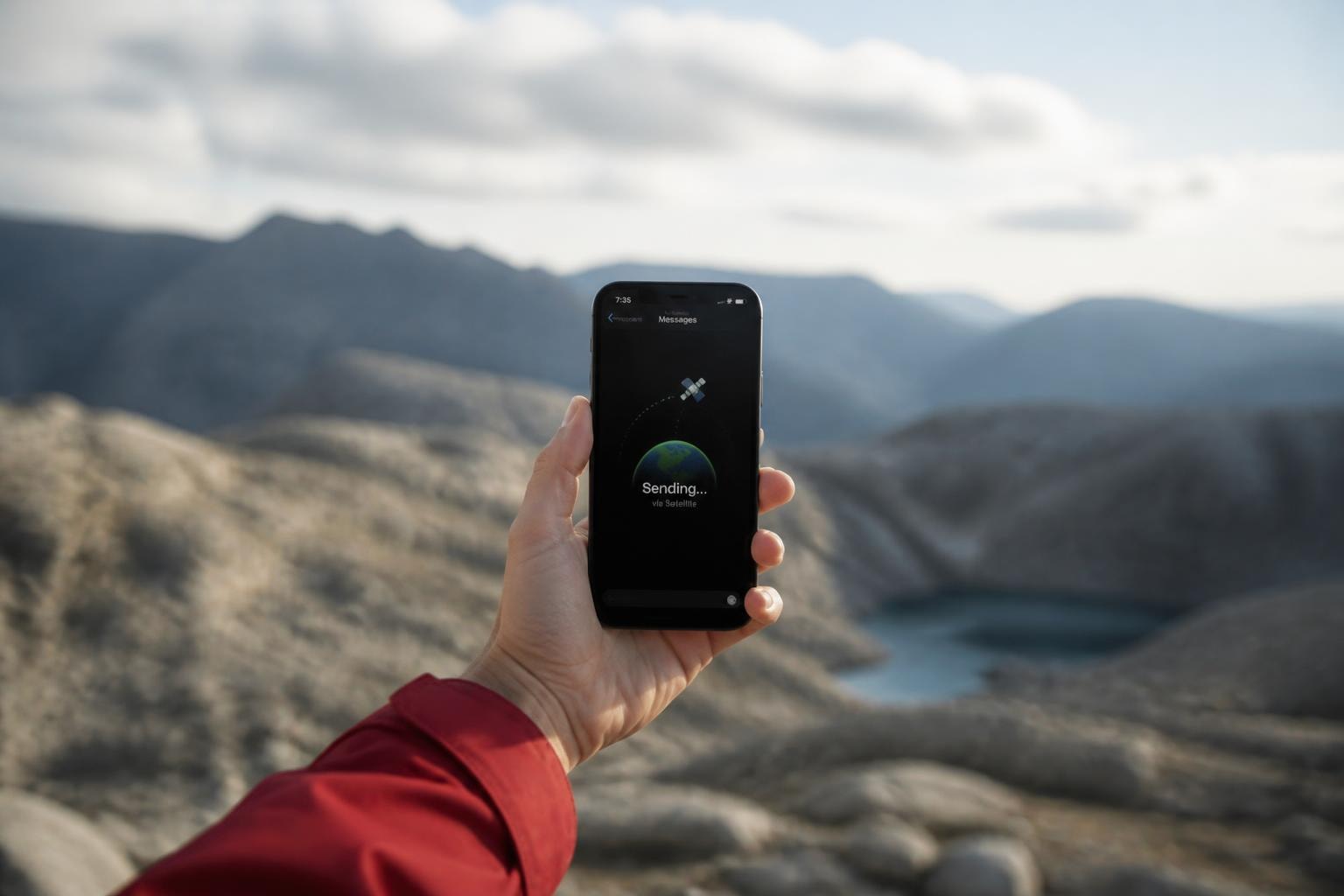


When cellular networks fail or aren't available, emergency communication becomes a critical...
Emergency communication has entered a new era with the introduction of satellite text messaging iPhone capabilities. For public safety agencies and emergency responders, this technology represents a critical breakthrough in maintaining connectivity when traditional cellular networks fail or are unavailable. As of 2026, the integration of satellite messaging into standard consumer devices has fundamentally changed how we approach emergency communications, particularly in remote areas, during natural disasters, or when infrastructure fails. This advancement creates new opportunities for emergency response teams to maintain contact with civilians and coordinate rescue operations in previously unreachable locations.
Understanding Satellite Text Messaging iPhone Technology
The satellite text messaging iPhone feature represents a significant advancement in mobile communication technology. Introduced with the iPhone 14 series and enhanced through subsequent iOS updates, this capability allows users to send messages directly to satellites orbiting Earth when cellular and Wi-Fi connections are unavailable. Unlike traditional satellite phones that require specialized hardware, Apple has integrated this functionality directly into standard iPhone models, making emergency satellite communication accessible to millions of users.
The technology works by connecting the iPhone to communication satellites in low Earth orbit. When a user attempts to send a message in an area without cellular coverage, the device automatically offers the satellite messaging option. The system requires the user to point their iPhone toward the sky in a specific direction, with the device providing on-screen guidance to establish the connection. This process typically takes seconds to minutes, depending on satellite availability and atmospheric conditions.
Technical Requirements and Capabilities
For satellite text messaging iPhone functionality to work properly, several requirements must be met:
- iPhone 14 or later models running iOS 18 or newer
- Clear view of the sky without significant obstructions
- Fully charged or adequately powered device
- Geographic location within supported service areas
- Active Apple ID with emergency services enabled
The Messages via satellite feature on iPhone 14 or later has specific limitations that public safety agencies must understand when incorporating this technology into emergency response protocols. Message length is restricted, and the service primarily supports text-based communication rather than multimedia content. However, these limitations are offset by the reliability and reach of satellite connectivity.

Emergency Response Applications for Public Safety Agencies
Public safety agencies face unique challenges when deploying resources to remote locations or managing large-scale disasters that overwhelm cellular infrastructure. The satellite text messaging iPhone capability provides a critical backup communication channel that can maintain connectivity when traditional systems fail. This technology has already proven valuable during the Verizon outage in January 2026, when thousands of users relied on satellite messaging to contact emergency services.
For 911 call centers and emergency dispatch operations, understanding how civilians use satellite text messaging iPhone features is essential for effective response coordination. When someone contacts emergency services via satellite, the message arrives differently than standard cellular communications, and responders must be prepared to handle these unique interactions. The text-to-911 cloud-based TCC service with integrated language translation becomes even more critical when dealing with satellite-based emergency messages that may come from diverse linguistic backgrounds.
Integration with Emergency Communication Systems
Modern emergency communication platforms must adapt to accommodate satellite text messaging iPhone inputs alongside traditional voice calls and cellular text messages. This integration requires technical infrastructure capable of receiving satellite-relayed messages, processing them with appropriate priority, and routing them to the correct emergency services. Public safety agencies need systems that can seamlessly handle multiple communication channels while maintaining accurate location data and caller information.
The challenge intensifies when considering language barriers in emergency situations. A person sending an emergency message via satellite text messaging iPhone from a remote location may not speak English fluently. Emergency response teams need real-time translation capabilities that work across all communication channels, including satellite-based messages. This ensures that critical information reaches responders regardless of the caller's language or communication method.
| Communication Method | Response Time | Geographic Coverage | Language Support Needs |
|---|---|---|---|
| Traditional 911 Voice | Immediate | Cellular coverage areas | Voice translation required |
| Cellular Text-to-911 | 1-2 minutes | Cellular coverage areas | Text translation required |
| Satellite Text Messaging | 2-5 minutes | Global (with clear sky view) | Text translation critical |
| Two-way radio systems | Immediate | Limited range | Voice translation required |
Practical Implementation for First Responders
First responders and emergency personnel need comprehensive training on how civilians use satellite text messaging iPhone features and how these communications integrate into existing emergency response workflows. Understanding the technical process helps responders set realistic expectations for response times and information quality when receiving satellite-based emergency messages.
When teaching civilians about emergency communication options, first responders should emphasize that satellite text messaging iPhone capabilities are designed for emergencies when other communication methods are unavailable. The step-by-step guide on sending satellite messages demonstrates that the process, while straightforward, requires specific conditions to succeed. This knowledge helps emergency personnel better assist callers who may be attempting to establish satellite connections under stressful circumstances.
Training and Protocol Development
Public safety agencies developing protocols for satellite text messaging iPhone communications should consider several operational factors:
- Message Reception Procedures: Establishing clear workflows for handling satellite-relayed emergency messages
- Location Verification: Implementing systems to confirm and triangulate caller locations from satellite data
- Priority Classification: Determining appropriate triage levels for satellite emergency messages
- Follow-up Communication: Creating protocols for maintaining contact when initial satellite messages succeed
- Resource Deployment: Coordinating response teams for remote locations identified through satellite communications
The integration of video and voice translation capabilities with satellite text messaging iPhone systems represents the next frontier in emergency communications. While current satellite messaging is text-only, future iterations may support multimedia content, requiring emergency response systems to evolve accordingly.

Comparing Satellite Messaging with Traditional Emergency Communications
The satellite text messaging iPhone capability complements rather than replaces traditional emergency communication methods. Understanding the strengths and limitations of each approach helps public safety agencies develop comprehensive communication strategies that ensure connectivity across all scenarios. Traditional cellular-based 911 calls remain the primary emergency communication method in populated areas, but satellite messaging fills critical gaps in coverage.
Amateur radio emergency service systems have long provided backup communications during disasters, and satellite text messaging iPhone technology adds another layer of redundancy. While amateur radio requires specialized equipment and operator licensing, satellite messaging works with devices millions of people already carry daily. This accessibility makes satellite messaging a valuable complement to existing emergency communication infrastructure.
Coverage and Reliability Considerations
The reliability of satellite text messaging iPhone systems depends on several environmental and technical factors. Urban canyons with tall buildings, dense forest canopies, and severe weather conditions can all interfere with satellite signal acquisition. Public safety agencies must educate communities about these limitations while emphasizing the technology's value in truly remote or disaster-affected areas where traditional infrastructure has failed.
Recent developments in satellite communication infrastructure have significantly improved coverage and reliability. The growth of direct-to-device satellite internet industry demonstrates the massive investment flowing into this sector, with major technology companies developing competing systems. This competition drives innovation and improves service quality, benefiting emergency communication applications.
Language Translation Challenges in Satellite Emergency Messages
Language barriers present significant challenges in emergency communications, and satellite text messaging iPhone systems amplify these concerns. When someone sends an emergency message from a remote location via satellite, there is often no opportunity for real-time verbal clarification. The text-based nature of satellite messaging means that text translation software becomes absolutely critical for understanding emergency situations involving non-English speakers.
Public safety agencies handling satellite-based emergency messages need translation capabilities that work seamlessly with their existing systems. The compressed, abbreviated nature of satellite text messages may complicate translation, as users often shorten messages to reduce transmission time. Emergency communication platforms must employ sophisticated translation engines that can interpret context, handle abbreviated text, and maintain accuracy across over 185 languages.
Multilingual Emergency Response Protocols
Developing effective multilingual protocols for satellite text messaging iPhone emergencies requires careful planning and appropriate technology infrastructure:
- Automatic Language Detection: Systems that instantly identify the language of incoming satellite messages
- Priority Translation Routing: Protocols ensuring emergency messages receive immediate translation attention
- Cultural Context Awareness: Training for responders on cultural differences affecting emergency communication
- Follow-up Translation Support: Maintaining translation capabilities throughout the entire emergency response
- Documentation Standards: Creating multilingual records of satellite emergency communications for legal and operational purposes
The language interpretation services that support voice-based emergency calls must be adapted for the unique characteristics of satellite text messaging iPhone communications. Text-based interpretation requires different skills and protocols than voice interpretation, particularly when dealing with the brevity and potential ambiguity of satellite-transmitted emergency messages.
Future Developments in Satellite Emergency Communications
The satellite text messaging iPhone ecosystem continues to evolve rapidly. Major cellular carriers are expanding satellite connectivity beyond Apple devices, with T-Mobile's satellite service expansion bringing similar capabilities to Android users. This expansion means public safety agencies must prepare for increased volume and diversity of satellite-based emergency communications across multiple device platforms and service providers.
Technological advancement is also improving the functionality of satellite messaging systems. Future iterations may support longer messages, multimedia content, and even voice communications via satellite. These enhancements will require emergency response systems to adapt, potentially integrating video language translator capabilities to handle visual emergency information transmitted from remote locations.

Artificial Intelligence in Satellite Emergency Communications
The application of artificial intelligence in satellite communication presents opportunities for improving emergency response effectiveness. AI systems can analyze satellite emergency messages for urgency indicators, automatically classify emergency types, and even predict resource needs based on message content and location data. These capabilities become particularly valuable when handling high volumes of satellite emergency messages during large-scale disasters.
| Technology Integration | Current Status (2026) | Emergency Response Benefit | Implementation Complexity |
|---|---|---|---|
| AI Message Classification | Emerging | Automated triage and routing | Medium |
| Multilingual Translation | Established | Cross-language emergency communication | Low to Medium |
| Location Verification | Established | Accurate responder dispatch | Low |
| Multimedia Support | Development | Enhanced situation assessment | High |
| Voice via Satellite | Limited availability | Improved caller interaction | High |
Operational Considerations for Public Safety Agencies
Public safety agencies incorporating satellite text messaging iPhone capabilities into their emergency response frameworks must address several operational considerations. Budget allocation for technology infrastructure upgrades, staff training programs, and ongoing system maintenance all require careful planning. The vendor selection process for emergency communication systems must now include evaluation criteria specific to satellite messaging integration.
Interoperability between satellite messaging systems and existing emergency communication infrastructure is essential. Agencies using dispatch systems must ensure these platforms can receive, process, and route satellite-based emergency messages alongside traditional communications. This integration requires technical expertise and may necessitate partnerships with specialized emergency communication technology providers.
Testing and Quality Assurance
Regular testing of satellite text messaging iPhone emergency communication pathways ensures system reliability when seconds count. Public safety agencies should conduct:
- Monthly system connectivity tests simulating satellite emergency message receipt
- Quarterly translation accuracy assessments for satellite message content
- Annual full-scale exercises incorporating satellite communications in disaster scenarios
- Continuous monitoring of satellite message response times and completion rates
- Regular training updates for call-takers and dispatchers on satellite message protocols
The functionality of iOS 18's satellite messaging feature continues to expand with each software update, requiring ongoing education for emergency response personnel. Staying current with capability changes ensures public safety agencies can effectively assist civilians using these features during emergencies.
Building Community Awareness and Education
Public education about satellite text messaging iPhone capabilities forms a critical component of effective emergency preparedness. Communities in rural areas, outdoor recreation destinations, and disaster-prone regions benefit most from understanding when and how to use satellite messaging for emergencies. Public safety agencies should develop educational programs that teach civilians the appropriate use of satellite emergency communications while emphasizing that traditional 911 calling remains the preferred method when cellular service is available.
Educational initiatives should address common misconceptions about satellite text messaging iPhone features, such as the belief that satellite messaging works indoors or that response times are equivalent to cellular 911 calls. Clear, accurate information helps set realistic expectations and improves emergency outcomes. Materials should be available in multiple languages, recognizing that emergency translation needs begin with public education, not just emergency response.
Community outreach programs might include demonstration events where participants practice using satellite messaging features under supervised conditions. These hands-on experiences build confidence and competence, increasing the likelihood that civilians will successfully use satellite text messaging iPhone capabilities during actual emergencies. Partnerships with outdoor recreation groups, rural community organizations, and disaster preparedness advocates can extend the reach of these educational efforts.
Satellite text messaging iPhone technology has fundamentally transformed emergency communications by providing reliable connectivity when traditional networks fail. Public safety agencies must adapt their systems, protocols, and training to effectively integrate this capability into comprehensive emergency response frameworks. When cellular networks are unavailable and lives hang in the balance, having robust emergency communication systems that support multiple channels becomes essential. Convey911 specializes in emergency communication and language translation software that enables public safety agencies to communicate effectively across all channels, including satellite-based messages, in over 185 languages through real-time translation over text, video, and voice. Our platform ensures that no emergency message goes unanswered, regardless of how it arrives or what language it's written in.