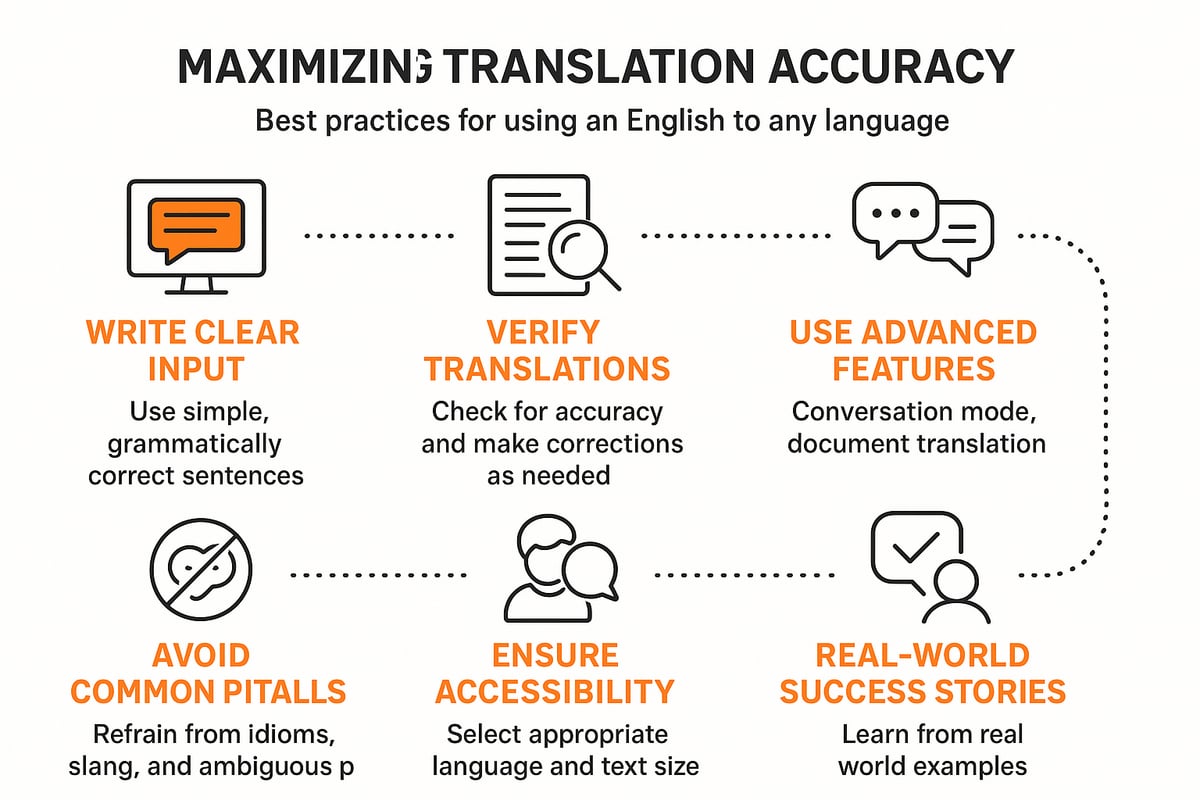

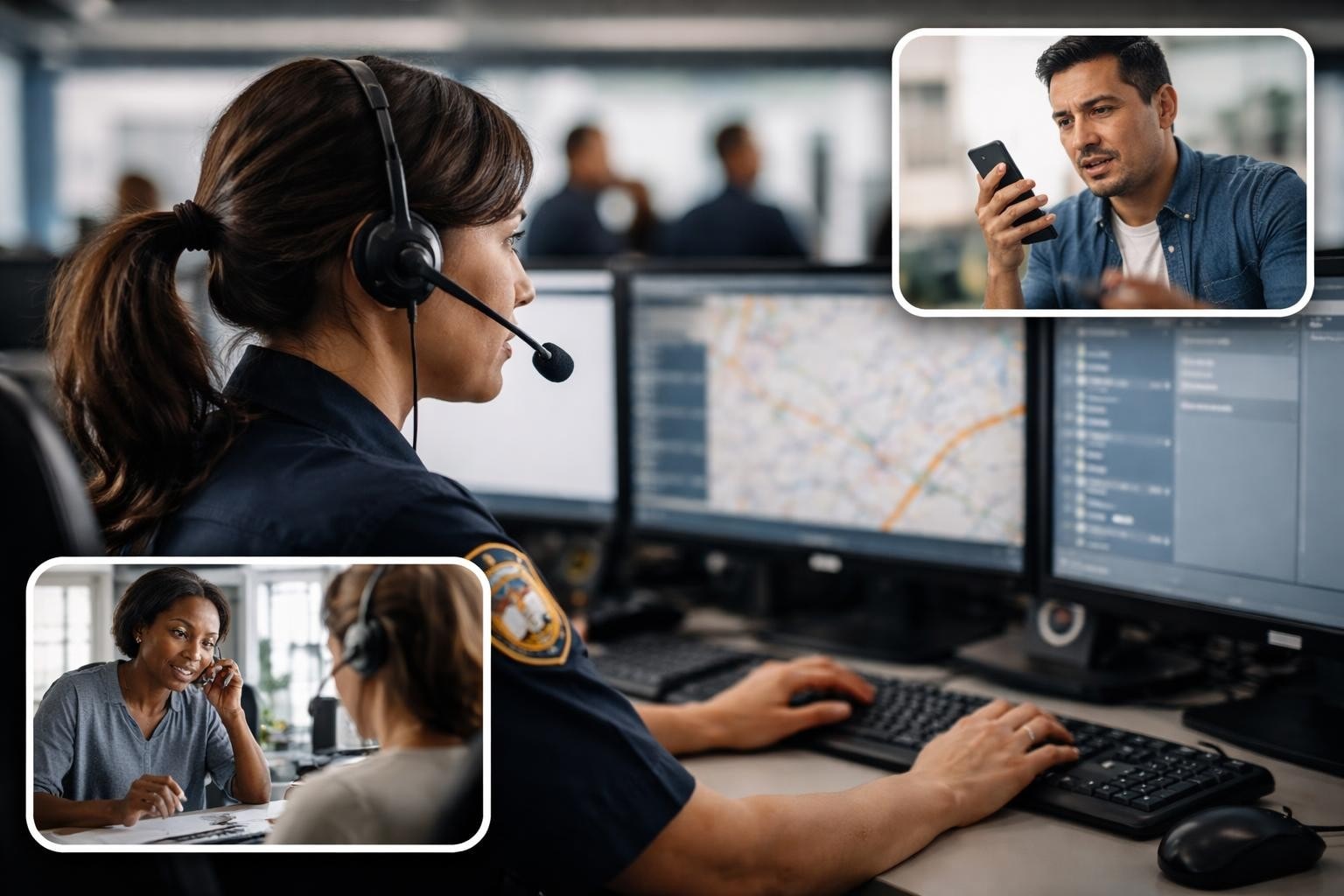
Emergency situations demand clear, immediate communication. When language barriers exist between...
The ability to translate english spanish language effectively has become essential for organizations serving diverse communities, particularly in emergency services where clear communication can save lives. Spanish stands as the second most spoken language in the United States, with over 41 million native speakers and an additional 12 million bilingual speakers. For public safety agencies, dispatch centers, and emergency responders, understanding the complexities of English-Spanish translation isn't just about converting words-it's about ensuring accurate, culturally appropriate communication when every second counts.
Understanding English-Spanish Translation Fundamentals
Translation between English and Spanish presents unique challenges that stem from fundamental structural differences between these languages. While both use the Latin alphabet, they diverge significantly in grammar, syntax, and cultural context.
Core Linguistic Differences
English and Spanish operate on different grammatical frameworks. Spanish employs gendered nouns, requiring every object to be masculine or feminine, while English remains gender-neutral for most nouns. Verb conjugation in Spanish is far more complex, with distinct forms for each person, tense, and mood.
The word order also shifts between languages. English typically follows a Subject-Verb-Object structure, whereas Spanish offers more flexibility with word placement for emphasis. This flexibility can create confusion when attempting direct translation.
Key structural differences include:
- Adjective placement (Spanish generally places adjectives after nouns)
- Verb tense complexity (Spanish has more verb forms)
- Pronoun usage (Spanish often omits subject pronouns)
- Formality levels (Spanish distinguishes between formal and informal "you")
Text expansion represents another critical consideration. Spanish translations typically expand by 15-30% compared to English text, requiring careful space planning in emergency alerts or dispatch software interfaces.
Regional Variations and Dialects
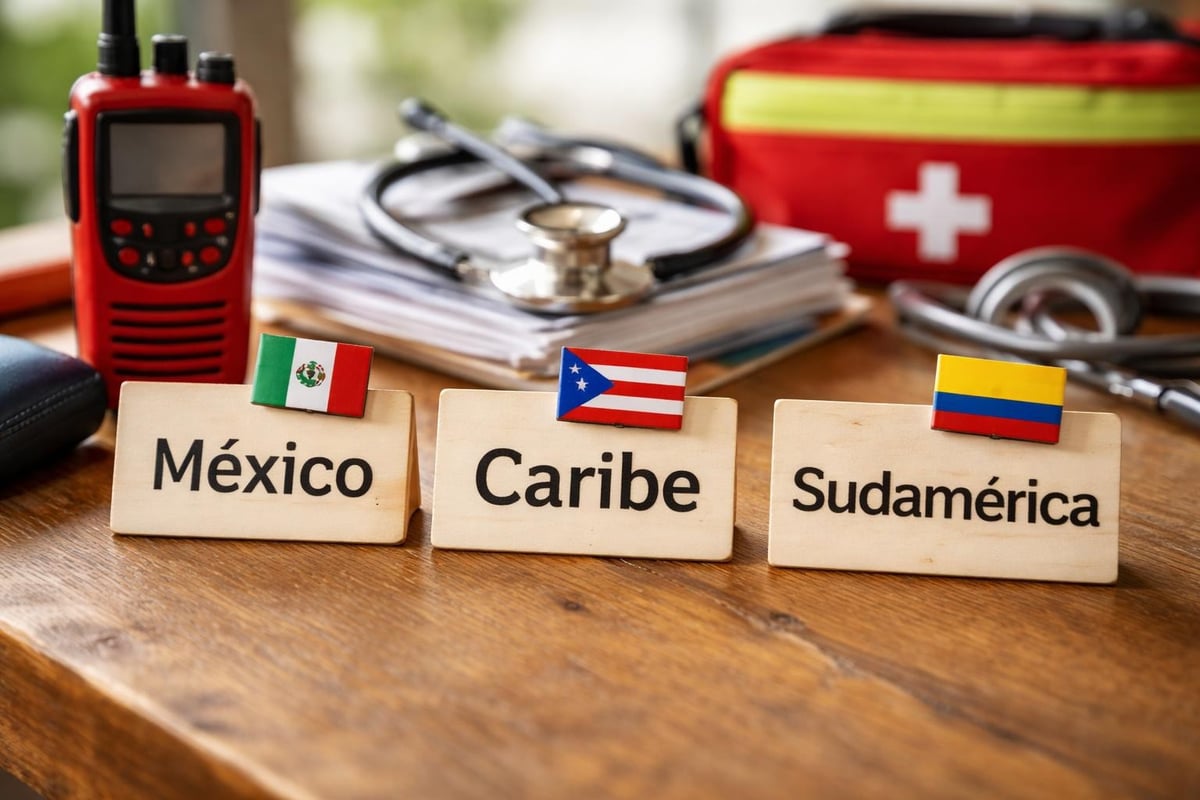
Spanish is not monolithic. The language varies significantly across regions, creating challenges for organizations that need to translate english spanish language for diverse populations.
| Region | Common Terms | Vocabulary Differences |
|---|---|---|
| Mexico | "Computadora" (computer) | Uses more English loanwords |
| Spain | "Ordenador" (computer) | Preserves traditional Spanish terms |
| Caribbean | "Guagua" (bus) | Unique regional vocabulary |
| South America | "Colectivo" (bus) | Varies by country |
Emergency communication platforms must account for these variations. A term perfectly clear to a Mexican Spanish speaker might confuse someone from Argentina. Understanding translation in communication becomes essential for public safety organizations serving multilingual communities.
Translation Methods and Technologies
Modern translation approaches range from human linguists to artificial intelligence systems, each offering distinct advantages for different scenarios.
Human Translation Approaches
Professional human translators remain the gold standard for complex, nuanced content. They understand context, cultural references, and subtle meanings that machines might miss. For emergency services, human oversight ensures that critical safety instructions convey the intended urgency and clarity.
Benefits of human translation:
- Cultural sensitivity and contextual awareness
- Ability to handle idiomatic expressions
- Quality assurance for critical communications
- Adaptation for specific regional dialects
However, human translation requires time-a luxury often unavailable during emergencies. This limitation has driven the development of technology-assisted solutions.
Machine Translation Technologies
Machine translation has evolved dramatically over the past decade. Neural machine translation systems now process entire sentences as units rather than word-by-word, producing more natural-sounding results.
Machine translation and human expertise complement each other, with technology handling routine communications while humans manage complex or sensitive content. For emergency services, real-time translation enables immediate communication across language barriers.
Modern platforms that translate english spanish language employ:
- Neural networks trained on millions of translation pairs
- Context-aware processing that considers surrounding text
- Continuous learning from user corrections
- Integration with emergency dispatch systems
Hybrid Solutions for Emergency Response
The most effective approach combines human expertise with technological speed. Emergency translation systems leverage machine translation for immediate response while offering human verification for critical communications.
This hybrid model allows dispatch centers to communicate instantly with Spanish-speaking callers while ensuring accuracy through professional oversight when time permits.
Common Translation Challenges and Solutions
Successfully navigating English-Spanish translation requires understanding specific obstacles and implementing targeted strategies to overcome them.
False Cognates and Linguistic Traps
False cognates-words that look similar but have different meanings-create frequent confusion. The Spanish word "embarazada" resembles "embarrassed" but actually means "pregnant." In emergency contexts, such mistakes could prove dangerous.
Common challenges in English to Spanish translation include these deceptive word pairs that require careful attention. Emergency responders must be particularly vigilant about medical and safety terminology.
Common false cognates to watch:
| English Word | Similar Spanish Word | Actual Meaning |
|---|---|---|
| Assist | Asistir | To attend |
| Constipated | Constipado | Having a cold |
| Exit | Éxito | Success |
| Actual | Actual | Current/present |
Grammatical Structure Differences
Grammatical and syntax differences require more than word substitution. Spanish subordinate clauses follow different rules, and the subjunctive mood appears far more frequently than in English.
For emergency communications, complex grammatical structures must be simplified without losing meaning. Instructions need to be clear and direct, avoiding conditional phrases that might create confusion during stressful situations.

Cultural Context and Formality
Spanish maintains formal and informal registers through different pronoun usage. The formal "usted" versus informal "tú" affects verb conjugations and overall tone. Emergency services typically use formal address to maintain professional distance and show respect.
Cultural references also require adaptation. American measurements, holidays, and institutional references may need explanation or conversion for Spanish-speaking audiences unfamiliar with U.S. systems.
Quality Assurance for Critical Communications
When translating english spanish language for emergency services, quality cannot be compromised. Errors in safety instructions or medical information could have severe consequences.
Accuracy Metrics and Testing
Professional translation services measure quality through multiple metrics. Accuracy rates, cultural appropriateness, and readability scores all factor into evaluation. Translation tools designed for emergency services undergo rigorous testing to ensure reliability under pressure.
Quality assurance measures include:
- Back-translation verification (translating Spanish back to English to check consistency)
- Native speaker review by regional experts
- Field testing with actual Spanish-speaking community members
- Regular updates based on user feedback
Specialized Emergency Terminology
Emergency services require specialized vocabulary that general translation tools may not handle well. Medical conditions, legal terminology, and public safety protocols demand precise translation by professionals familiar with both fields.
Understanding how to enhance translation for specialized contexts ensures that technical terms maintain their exact meaning across languages. A dispatcher asking about "chest pain" needs the translation to convey the same medical urgency.
Compliance and Legal Considerations
Public safety agencies face legal requirements for language access. Title VI of the Civil Rights Act mandates meaningful access to services regardless of national origin or language ability. Organizations must demonstrate that their translation systems meet these standards.
Documentation of translation quality, maintenance of language access plans, and regular auditing ensure compliance. Voice and text translator systems must maintain audit trails showing when and how translations occurred during emergency interactions.
Implementation Best Practices
Organizations seeking to improve their ability to translate english spanish language should follow structured implementation approaches that prioritize both technology and human expertise.
Selecting Appropriate Translation Resources
Not all translation needs require the same level of sophistication. Routine notifications might utilize machine translation, while critical incident communications demand human review.
| Communication Type | Recommended Approach | Response Time |
|---|---|---|
| Emergency 911 calls | Real-time AI with human backup | Immediate |
| Community alerts | Pre-translated templates | Seconds |
| Public education materials | Professional human translation | Days/weeks |
| Social media updates | Machine translation with review | Minutes |
Application to translate languages should be evaluated based on specific organizational needs, budget constraints, and the criticality of accurate communication.
Training and Continuous Improvement
Staff members using translation systems need training in both the technology and the principles of effective cross-language communication. Understanding when to escalate to human interpreters, recognizing potential translation errors, and maintaining cultural sensitivity all require ongoing education.
Training components should cover:
- Basic Spanish language awareness for English-speaking staff
- Recognition of regional dialect variations
- Proper use of translation technology platforms
- Cultural competency in emergency contexts
- When to request human interpreter assistance
Continuous improvement comes from analyzing translation outcomes, gathering feedback from Spanish-speaking community members, and updating systems based on real-world performance.
Integration with Emergency Communication Systems
The technical infrastructure supporting translation must integrate seamlessly with existing emergency communication platforms. Dispatch systems, computer-aided dispatch (CAD) software, and communication networks all need translation capabilities embedded at appropriate points.
Modern solutions provide translation across multiple channels simultaneously. A single emergency interaction might involve voice and text translation happening in real-time, with transcripts saved for review.
Technology Evolution and Future Trends
The field of language translation continues advancing rapidly, with artificial intelligence and machine learning driving significant improvements in how systems translate english spanish language.
Artificial Intelligence Advancements
Neural networks have transformed translation quality over the past five years. Systems now understand context, maintain consistency across longer texts, and adapt to specialized vocabularies more effectively than ever before.
AI in translation enables emergency services to handle multiple simultaneous conversations in different languages without proportionally increasing staff. The technology learns from corrections, improving accuracy over time.
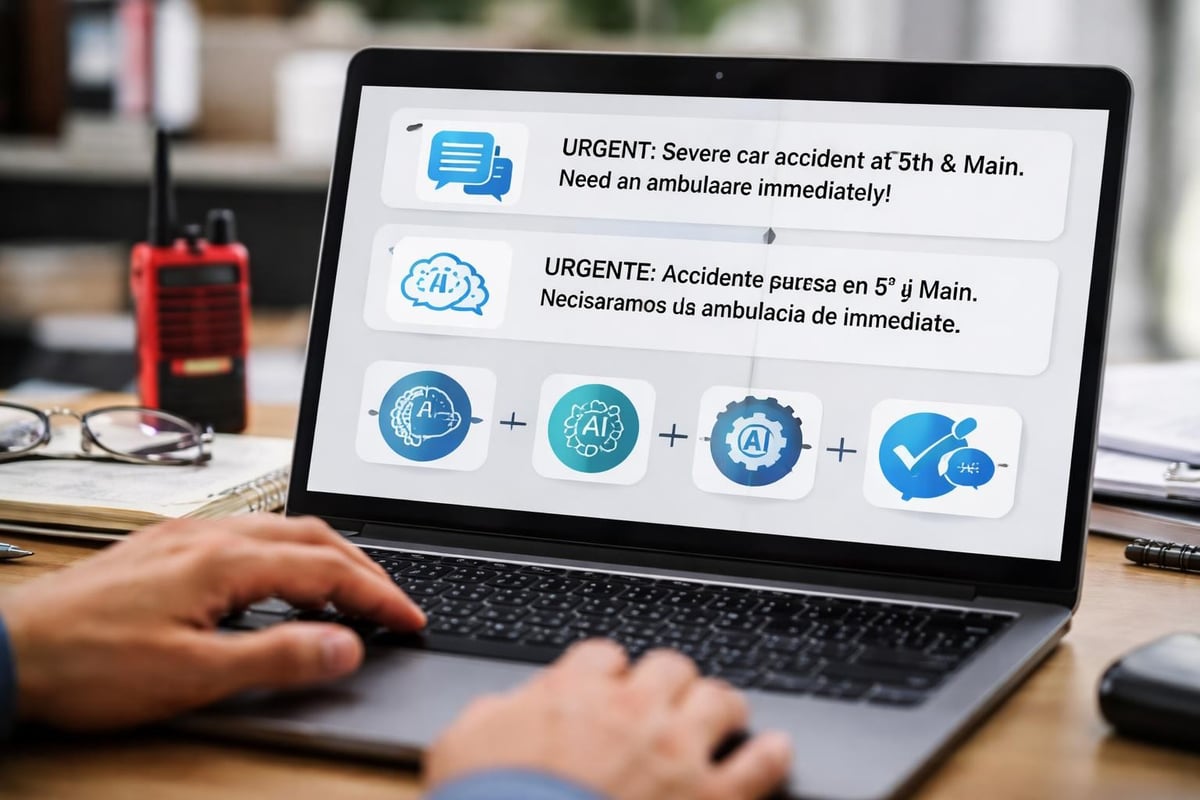
Future developments will likely include:
- Emotion detection to convey urgency appropriately across languages
- Dialect recognition that automatically adjusts for regional variations
- Predictive text suggestions for common emergency scenarios
- Voice cloning that maintains speaker identity across languages
Multimodal Communication
Translation extends beyond text and voice. Video translation AI enables visual communication with Spanish speakers, particularly valuable for American Sign Language users in the Deaf community who may prefer visual Spanish communication.
Multimodal approaches recognize that different situations call for different communication methods. A hearing-impaired Spanish speaker might benefit from sign language video translation, while someone in a noisy environment might prefer text-based communication.
Community-Specific Customization
Advanced translation platforms now allow customization for specific communities. Organizations serving predominantly Mexican-American populations can configure systems to prioritize Mexican Spanish vocabulary and phrasing, while those serving Puerto Rican communities can adjust accordingly.
This customization extends to frequently used phrases, local geographic references, and community-specific terminology. A translation system learns that "the plaza" in one community refers to a specific shopping center, not a generic town square.
Measuring Translation Success
Organizations must establish metrics to evaluate whether their translation efforts effectively serve Spanish-speaking populations.
Performance Indicators
Quantifiable metrics help assess translation quality and effectiveness. Call resolution times, caller satisfaction scores, and incident outcome data all provide insight into how well translation systems perform.
Key performance indicators include:
- Average response time for Spanish-language emergencies versus English
- Rate of misunderstandings or clarification requests
- Community satisfaction with language access
- Percentage of Spanish-speaking population reached by emergency alerts
- Staff confidence in using translation systems
Community Feedback Mechanisms
Direct feedback from Spanish-speaking community members provides invaluable insight. Surveys, focus groups, and community advisory boards help identify gaps in service and opportunities for improvement.
Organizations should actively solicit feedback about translation quality, asking specific questions about clarity, cultural appropriateness, and overall communication effectiveness. This feedback loop drives continuous improvement in how agencies translate english spanish language for their communities.
Compliance Auditing
Regular audits ensure that translation services meet legal requirements and organizational standards. Documentation should demonstrate that Spanish speakers receive equivalent service quality to English speakers across all interaction types.
Audit findings inform resource allocation, training needs, and technology upgrades. Translation language services should be evaluated annually at minimum, with more frequent reviews following system changes or community demographic shifts.
Strategic Planning for Language Access
Long-term success in serving Spanish-speaking populations requires strategic planning that goes beyond simply purchasing translation software.
Needs Assessment
Organizations should conduct comprehensive assessments of their Spanish-speaking populations. Demographic data reveals not just the number of Spanish speakers but their countries of origin, dialect preferences, and primary communication channels.
This assessment informs decisions about which regional variations to prioritize, what specialized vocabulary to emphasize, and where to allocate resources for maximum impact. A community with many recent immigrants from Central America has different needs than one with established multi-generational Mexican-American families.
Resource Allocation
Budget planning must account for both technology costs and human expertise. While software represents a one-time or subscription expense, maintaining a pool of bilingual staff or contract interpreters requires ongoing investment.
| Resource Type | Initial Cost | Ongoing Cost | Best Use Case |
|---|---|---|---|
| Translation software | High | Medium | Routine communications |
| Bilingual staff | Medium | High | Direct service delivery |
| Contract interpreters | Low | Medium | Complex situations |
| Professional translation services | Low | High | Critical documents |
Stakeholder Engagement
Successful implementation requires buy-in from all stakeholders. Dispatch supervisors, field responders, administrative staff, and community members all play roles in effective language access.
Regular communication about translation capabilities, limitations, and improvements helps build trust and ensures appropriate utilization. Spanish-speaking community leaders can serve as ambassadors, helping their neighbors understand how to access services in their preferred language.
Effective English-Spanish translation in emergency services requires balancing technology, human expertise, and cultural awareness to ensure every community member receives timely, accurate communication during critical moments. As language technology continues evolving and Spanish-speaking populations grow, public safety organizations must commit to continuous improvement in their translation capabilities. Convey911 provides emergency communication platforms with real-time translation across 185+ languages, helping public safety agencies bridge language barriers through text, voice, and video to deliver life-saving services to every member of their community regardless of the language they speak.